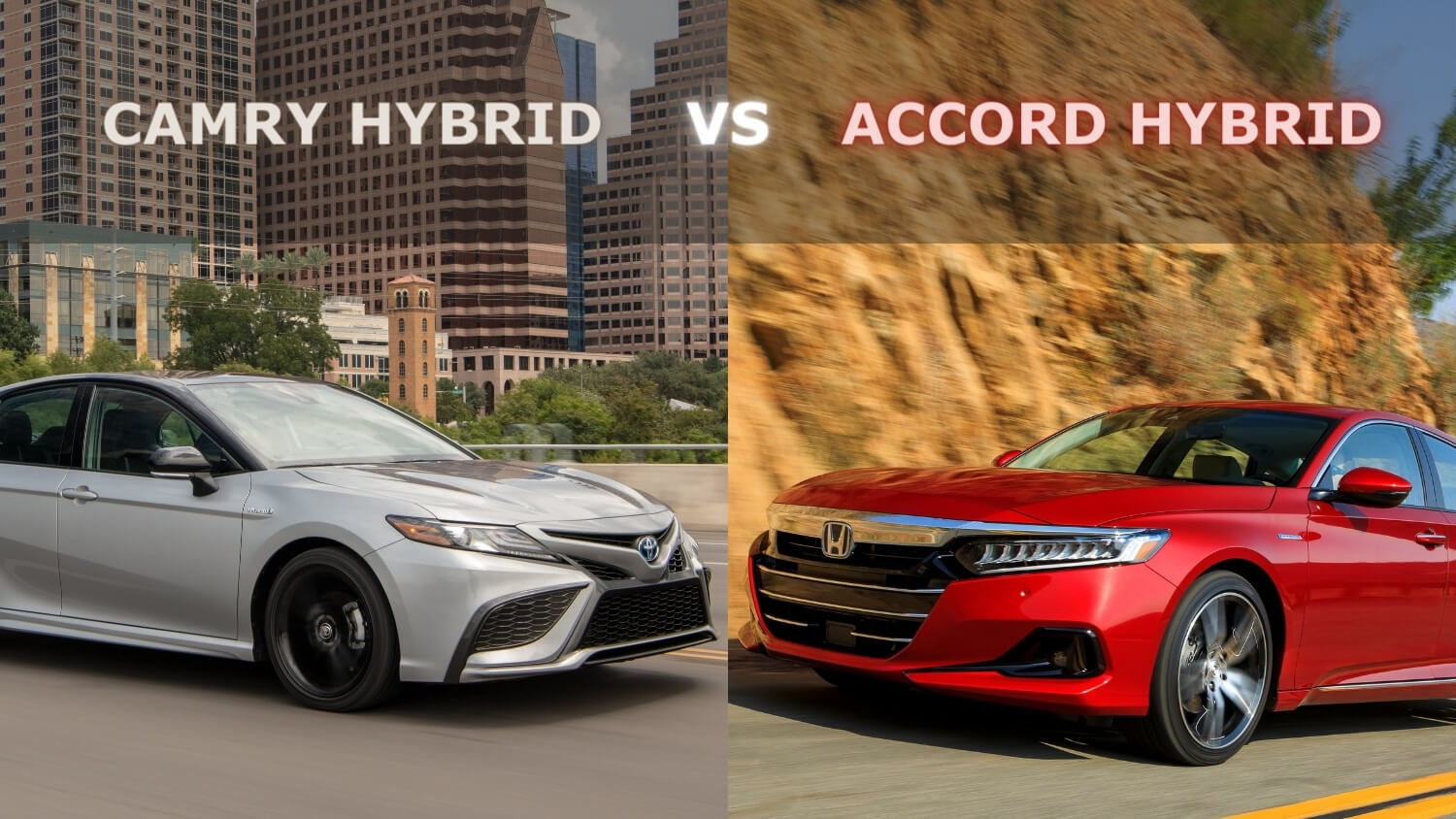
Picture this: a crisp morning, coffee steaming in the cup holder, and two sedans waiting at the edge of the parking lot like well-dressed contenders in an age-old rivalry. One is the 2026 Honda Accord—calm, precise, and quietly confident. The other is the 2026 Toyota Camry—polished, dependable, and stubbornly resilient. Now the playful part: which one will actually make your daily routine feel… dramatically better?
Before anyone declares a winner, here’s the challenge. Pick a random drive day—one with stop-and-go traffic, a few potholes, maybe a detour or two—and ask whether your choice still feels effortless after the novelty wears off. Because “better” isn’t just a brochure word. It’s how the car behaves when life gets slightly chaotic.
Let’s compare the 2026 Honda Accord and the 2026 Toyota Camry across the categories that matter most: design presence, power and drivability, interior atmosphere, technology and connectivity, safety architecture, comfort and practicality, and value over time.
First Impressions: Presence, Proportions, and Personality
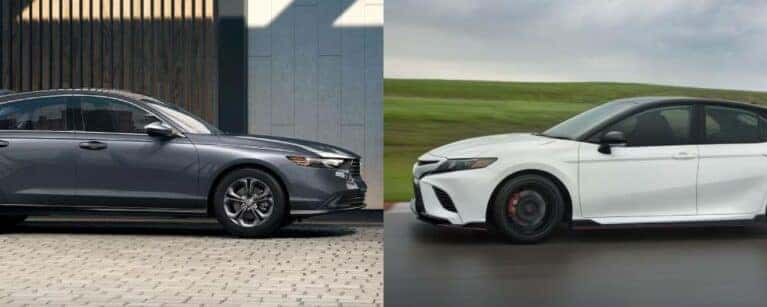
Both the Accord and Camry bring a mature, modern demeanor—but they communicate it differently. The Accord leans toward sharper visual punctuation: crisp character lines, a driver-focused stance, and details that feel intentionally “placed,” not merely “added.” The Camry, by contrast, often reads as a masterclass in understated elegance. Its proportions typically land in that sweet spot between sleek and approachable.
Design isn’t only about aesthetics, either. It affects visibility, perceived spaciousness, and the way the cabin feels when you sit down. If you’re the type who notices how a dashboard “frames” your view, the Accord’s cockpit styling may feel more directional. If you prefer a calmer, more traditional layout that feels easy from the first drive, the Camry’s ergonomics often delivers that familiar comfort.
Powertrain and Performance: Who Feels More Animated?
Performance can be less about horsepower bragging rights and more about how the engine responds when you ask for motion. The Accord tends to emphasize a balanced driving character—smooth acceleration, predictable throttle mapping, and steering that feels composed rather than twitchy. It often has that “thread-the-needle” quality when navigating tight turns or merging into traffic.
The Camry, famous for its practicality, typically aims for consistent performance with an emphasis on refinement and fuel efficiency. If your idea of a great drive is calm momentum and easy passing, the Camry frequently checks the box. If you like a little more immediacy—like the car is listening closely to your inputs—the Accord may feel more engaging.
Now here’s a subtle truth: both vehicles can be quick enough for real-world driving. The question is which one feels better when you’re not driving “on test-day,” but on a normal Tuesday with a full life and a route full of surprises.
Ride Quality and Handling: Calm or Connected?
Ride comfort is where sedans separate into categories: those that glide and those that communicate. The Accord often lands closer to the “connected calm” spectrum—stable on straightaways, confident in corners, and generally forgiving over uneven pavement. Its suspension tuning tends to aim for balance, so bumps don’t feel harsh, but the road doesn’t disappear entirely.
The Camry typically offers a smooth, quiet experience, prioritizing composure and minimizing the sensation of road irregularities. For many drivers, that means fewer distractions and a more relaxing cabin rhythm.
Try this mini-challenge on your next test drive: take the same route in both cars. Hit the same speed over the same patch of rough pavement, then compare steering feel and how the cabin absorbs the impact. The “better” choice will become oddly obvious.
Interior Comfort and Space: Where the Day Actually Happens
The best sedan isn’t necessarily the one with the nicest screen—it’s the one that makes time pass pleasantly. The Accord’s interior design usually favors a modern, driver-centric layout, often with a satisfying sense of control. Materials and fit can feel thoughtfully selected, and the cabin often carries an airy, well-organized vibe.
The Camry typically aims for a friendly, familiar atmosphere. It can feel easy to live with, with an emphasis on comfort and practical storage. Legroom, headroom, and seat usability matter most for real passengers—not just tall drivers or only-commuters.
As you compare, pay attention to small things: how the door panels feel when you close them, whether controls are intuitive without searching, and how the seat shape supports you after 30 minutes—not 3 minutes.
Technology and Infotainment: Navigation for the Modern Mind
Technology is where cars can feel either futuristic or fatiguing. The Accord’s infotainment experience often highlights responsive interfaces, clean menus, and a layout designed to reduce distraction. If you enjoy seamless pairing and quick access to features, it tends to deliver.
The Camry’s approach typically emphasizes usability and reliability. Even if the system feels less “flashy,” it often provides familiar functionality with minimal drama. That matters if you’ve ever had a system that took too long to load maps, or a pairing process that turned a routine drive into a troubleshooting session.

Here’s the practical test: start both cars, connect your phone, and make one simple request—call someone, pull up navigation, adjust climate settings. The car that accomplishes the task with fewer steps is the one you’ll appreciate every day.
Safety and Driver-Assistance: Confidence Without Overconfidence
Safety tech is not about turning you into an autopilot enthusiast. It’s about giving you a safety net that feels calm, not chaotic. The Accord generally incorporates advanced driver-assistance features intended to help with lane awareness, collision mitigation, and adaptive cruise functionality. The goal is to support driving while reducing workload.
The Camry also typically offers a robust suite of driver-assistance technologies. Its focus tends to be on predictable performance and consistent behavior—important because driver-assistance systems should not surprise you.
When evaluating safety systems, test how warnings sound and how interventions feel. Do lane alerts feel helpful or annoying? Does braking engage in a smooth, reassuring way? The “better” sedan is the one that supports you while still respecting your judgment.
Practicality: Trunk Truths, Storage Habits, and Daily Logistics
Most drivers don’t just carry groceries. They carry gym bags, paperwork, sports gear, backpacks, and the occasional “we’re doing something spontaneous today” assortment of items. The Accord often supports practical daily life with sensible storage layouts and user-friendly cabin space.
The Camry generally matches that practicality with a focus on comfort for passengers and straightforward usability. If you’re the family organizer, pay attention to rear-seat access, door-pocket capacity, and how easy it is to load and unload larger items.
Take a bag-sized object with you during the test drive if possible. Load it into the trunk, close the lid, and open it again. Easy loading isn’t glamorous, but it’s profoundly influential on ownership satisfaction.
Fuel Economy and Ownership: The Value That Appears Later
Fuel economy is the quiet accountant of your monthly budget. Both the Accord and Camry are commonly designed with efficiency in mind, though real results depend on trim, driving style, and route conditions. The key is to compare how each car behaves in your patterns: city crawling, highway stretches, or mixed commutes.
Ownership costs include maintenance philosophy, parts availability, and the longevity of components. Toyota’s reputation often emphasizes long-term dependability, while Honda’s track record is known for efficient engineering and broad service support. The “better” value comes down to which brand aligns with your expectations for hassle-free ownership and predictable scheduling.
So… Which Is Better? The Answer Depends on Your Personality
Here’s the honest conclusion. If you want a sedan that feels more driver-engaged, with a modern cockpit vibe, sharp steering feel, and a sense of intentional refinement, the 2026 Honda Accord may feel like the better match. It tends to reward attention, and it makes commuting feel less like a chore.
If you prefer a comfortable, steady ride with a practical temperament, a familiar ownership experience, and an overall calm demeanor, the 2026 Toyota Camry can be the better choice. It’s the kind of vehicle that fits into your life without demanding constant evaluation.
Remember the challenge posed at the start. Test both on a day that resembles your real one—traffic, road surfaces, everyday distractions. Then let the car you trust more with that ordinary chaos win your heart.
Final Thoughts: Choose the Sedan That Makes Your Drive Feel Right
In the end, “better” is not a scoreboard. It’s a feeling that shows up after multiple drives—when the infotainment doesn’t frustrate you, when the ride doesn’t drain you, when the safety suite gives reassurance instead of noise, and when the cabin feels like home on wheels.
So, are you ready to settle the playful debate with your own two hands on the steering wheel? The Accord and Camry both have a lot to offer. The real winner is the one that feels most natural on the road you actually drive.