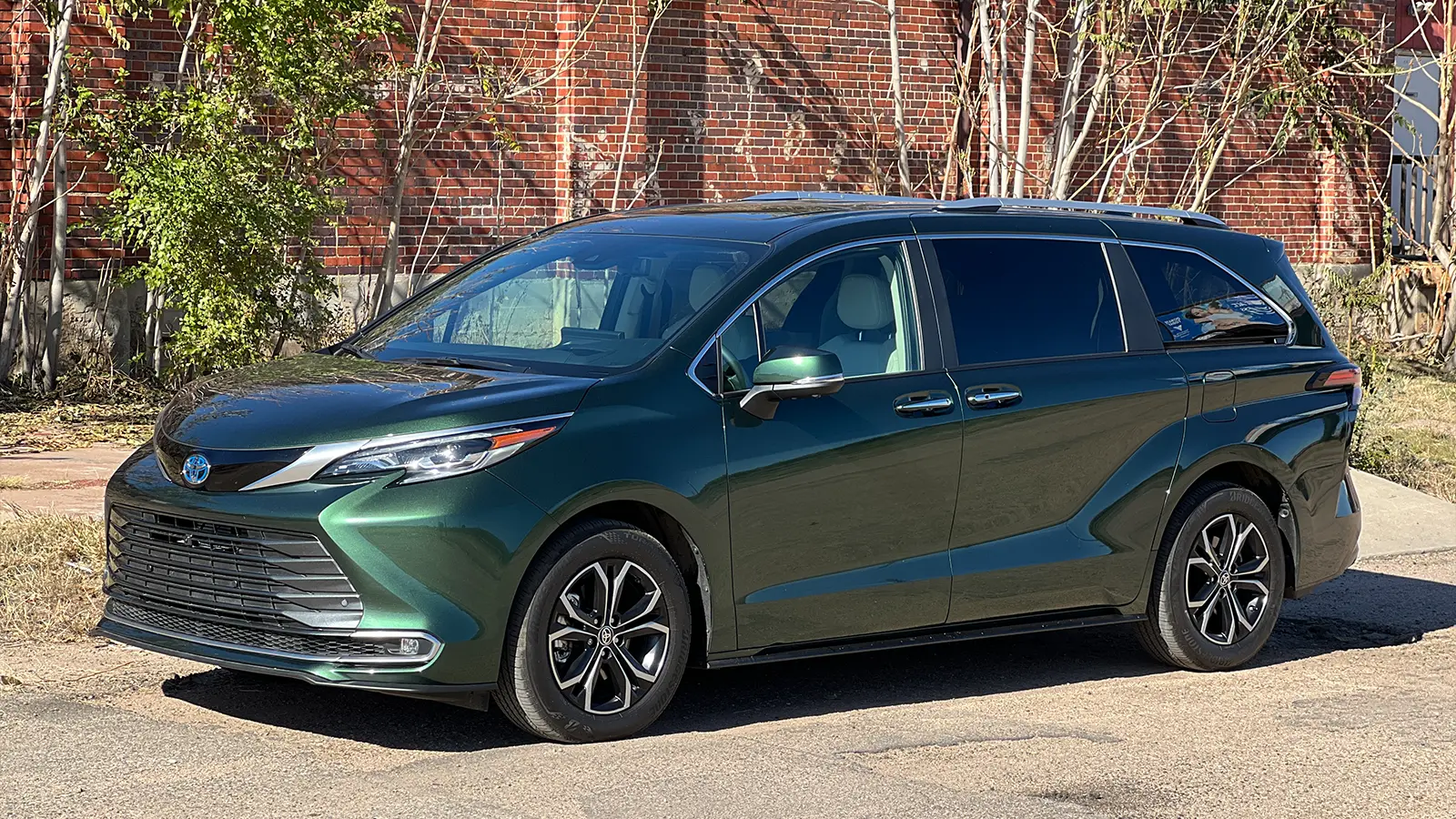
The Toyota Sienna Hybrid glides through the asphalt like a silent alchemist, transforming gasoline and electrons into miles of effortless motion. Its EPA-estimated fuel economy numbers promise a kind of automotive sorcery—numbers so impressive they seem plucked from a future where hybrids sip fuel like fine wine instead of guzzling it like cheap beer. But how does this minivan, draped in the quiet confidence of Toyota’s hybrid mastery, perform when the rubber meets the road in the real world? The gap between EPA estimates and actual MPG is where the magic meets the mundane, where the idealized promises of engineering collide with the unpredictable dance of traffic, terrain, and human whims. Let’s lift the hood on this rolling paradox and see what the Sienna Hybrid truly delivers when it’s not just crunching numbers in a lab, but ferrying soccer gear, groceries, and the occasional family of five across the sprawling American landscape.
The Hybrid Minivan: A Trojan Horse of Efficiency
At first glance, the Toyota Sienna Hybrid appears as unassuming as a minivan can be—practical, boxy, and built for the quotidian grind of family life. Yet beneath its utilitarian exterior lies a powertrain that’s anything but ordinary. The Sienna Hybrid wields a 2.5-liter four-cylinder engine paired with three electric motors, a configuration that doesn’t just sip fuel but performs a delicate ballet of power delivery. The EPA estimates it can achieve up to 36 MPG in the city and 35 MPG on the highway, numbers that would make even the most efficient sedans blush. But these figures are born in controlled environments, where dynamometers and test cycles coax out the best possible performance. The real world, with its stop-and-go traffic, elevation changes, and the occasional lead-footed driver, is a different beast entirely.
Imagine the Sienna Hybrid as a chameleon, shifting its persona based on the environment. In city driving, it’s a nimble urbanite, its electric motors humming to life at every red light, sipping energy like a sommelier savoring a vintage. On the highway, it transforms into a steady cruiser, its hybrid system dialing back the gasoline engine’s workload while the electric motors provide just enough oomph to keep pace without breaking a sweat. The magic lies in its ability to seamlessly toggle between these modes, a feat of engineering that feels almost telepathic. Yet, the chameleon’s true test comes when the road throws curveballs—steep hills, sudden accelerations, or the dreaded summer heat that turns every stoplight into a sauna for the engine. Here, the gap between promise and reality begins to widen.

The EPA Estimate: A Lab-Coat Fantasy
The EPA’s fuel economy ratings are the automotive equivalent of a Michelin-starred recipe—meticulously tested, rigorously controlled, and designed to showcase a vehicle’s potential under ideal conditions. For the Sienna Hybrid, these conditions include a warm, dry test track, a precisely calibrated driving cycle, and a vehicle that’s been pampered with the finest synthetic oils and tire pressures dialed to perfection. The result? A set of numbers that sound almost too good to be true: 36 MPG city, 35 MPG highway, and a combined 36 MPG. These figures are the benchmark against which real-world performance is measured, and they set a standard that’s as aspirational as it is practical.
But let’s be real—life is not a test track. The EPA’s numbers are a fantasy, a carefully curated illusion that ignores the chaos of daily driving. Consider the driver who lives in a hilly region, where every incline demands more from the engine and every descent requires the brakes to work overtime. Or the parent who’s constantly hauling a car full of kids and their assorted paraphernalia, transforming the Sienna into a rolling storage unit where the weight gauge tips into the red. Even the weather plays a role; cold mornings demand more energy from the battery to warm the cabin, while scorching afternoons force the air conditioning to work overtime, draining the hybrid system’s reserves. The EPA estimate is a starting point, a baseline from which reality diverges like a river carving its own path through the landscape.

Real-World MPG: The Unfiltered Truth
So, how does the Sienna Hybrid fare when it’s subjected to the unrelenting gauntlet of real-world driving? The answer, as with most things in life, is nuanced. In ideal conditions—flat terrain, moderate temperatures, and a light foot on the throttle—the Sienna Hybrid can come remarkably close to its EPA estimates. Drivers report achieving 34-35 MPG in mixed driving, a figure that’s only a hair’s breadth away from the official numbers. This is where the hybrid’s magic shines brightest, its ability to recapture energy during braking and seamlessly switch between power sources paying dividends in efficiency.
Yet, the story takes a turn when the conditions grow less than ideal. In stop-and-go traffic, the Sienna Hybrid’s MPG can dip into the low 30s, a testament to the energy lost in constant acceleration and deceleration. The hybrid system, while efficient, isn’t immune to the laws of thermodynamics, and the repeated cycling of the engine and electric motors takes its toll. On long highway stretches, particularly those with sustained speeds above 70 MPH, the MPG can drift downward into the high 20s, as the engine works harder to overcome wind resistance and the hybrid system struggles to keep up with the demand for power. Add in the burden of a heavy load—whether it’s a roof box, a trailer, or a minivan full of rowdy teenagers—and the numbers can plummet further, sometimes into the low 20s.
It’s a reminder that the Sienna Hybrid, for all its technological prowess, is still subject to the same forces that govern all vehicles. Efficiency is a delicate balance, a seesaw that tips in favor of the driver who treats the throttle with reverence and the road with respect. The hybrid system is a marvel, but it’s not a magic wand. It can’t defy the laws of physics, nor can it outrun the realities of daily life. What it can do, however, is offer a level of efficiency that’s nothing short of revolutionary for a minivan, a vehicle class that’s historically been the antithesis of fuel economy.
The Human Factor: Driving Style and Its Discontents
No discussion of real-world MPG would be complete without acknowledging the elephant in the room: the driver. The Sienna Hybrid’s efficiency is as much a product of its engineering as it is of the habits of the person behind the wheel. A lead-footed driver who treats every green light as a starting pistol will see their MPG plummet, as the hybrid system struggles to keep up with the demand for power. Conversely, a patient driver who anticipates traffic, coasts to stops, and avoids unnecessary idling can coax the Sienna Hybrid into delivering numbers that flirt with the EPA estimates.
It’s a lesson in mindfulness, a reminder that efficiency isn’t just about the vehicle—it’s about the symphony of human and machine working in harmony. The Sienna Hybrid rewards those who listen to its subtle cues, who understand that every gentle press of the accelerator is a step toward better fuel economy. It’s a vehicle that demands respect, not just for its capabilities, but for the way it responds to the driver’s intentions. In this sense, the Sienna Hybrid is more than just a minivan; it’s a partner in the journey, a silent collaborator in the quest for efficiency.

The Road Ahead: Is the Sienna Hybrid Worth the Hype?
So, where does this leave us? The Toyota Sienna Hybrid is a marvel of modern engineering, a vehicle that pushes the boundaries of what’s possible in a minivan. Its EPA estimates are ambitious, but not unrealistic, and in the right hands, it can deliver numbers that are nothing short of impressive. Yet, the real-world MPG is a reminder that efficiency is a fleeting thing, a chimera that slips through our fingers the moment we deviate from the ideal.
But perhaps that’s the point. The Sienna Hybrid isn’t just a vehicle; it’s a statement. It’s a testament to Toyota’s commitment to innovation, a bold declaration that even the most utilitarian of vehicles can be a paragon of efficiency. It’s a vehicle that asks us to rethink our assumptions, to see the minivan not as a relic of the past, but as a harbinger of the future. And in that sense, the Sienna Hybrid is more than just a mode of transportation—it’s a symbol of progress, a rolling manifesto of what’s possible when we dare to dream bigger.
The gap between EPA estimates and real-world MPG is a chasm that can’t be bridged, but it’s a chasm that’s worth traversing. Because in the end, the Sienna Hybrid isn’t just about the numbers. It’s about the journey—the miles logged, the memories made, and the quiet satisfaction of knowing that every gallon of gasoline is being used as efficiently as possible. It’s about the future, and the vehicles that will carry us there. And for that, the Toyota Sienna Hybrid deserves our applause.