Picture this: you’re standing in the rental lot, keys jingling in hand, ready to conquer Orlando with the clan. The trunk gapes like a hungry mouth, and your family’s entire universe—strollers, duffels, soccer cleats, and that inflatable unicorn from last summer—needs to vanish inside without a single squeak of protest. But here’s the twist: not all family haulers are created equal when it comes to swallowing gear whole. Some swallow with ease; others leave you playing Tetris at 6 a.m. with a toddler wailing about missing juice boxes. So, which minivan truly flexes its cargo muscles? Let’s crack open the hatch and measure the chaos.
Why Cargo Space Isn’t Just a Number—It’s a Survival Metric
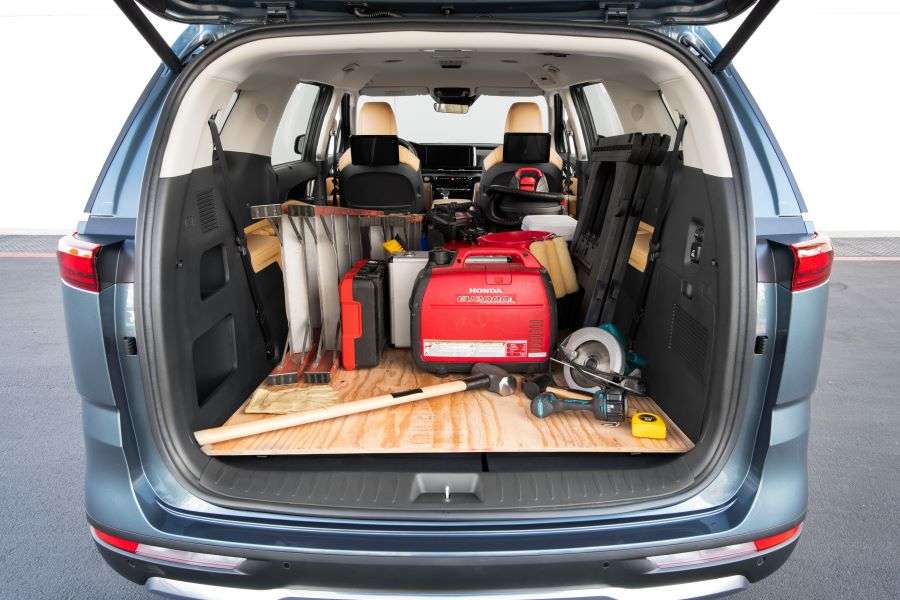
Cargo volume isn’t measured in cubic inches alone; it’s measured in peace of mind. A cavernous trunk can turn a screaming meltdown into a serene road trip. Conversely, a cramped hold turns every mile into a negotiation: “If you stop kicking, you can have the last granola bar.” Most modern minivans tout between 32 and 40 cubic feet behind the third row—enough for two checked bags and a diaper bag, but barely enough for a double stroller plus a weekender. The real magic happens when you fold those seats flat. Suddenly, you’re staring at a rolling cargo hold that could swallow a small sofa. But here’s the catch: not all flat floors are flat. Some minivans have a subtle hump where the drivetrain lives, shaving precious inches from usable depth. Others boast a perfectly level plane, turning your minivan into a mobile storage unit. Always measure the usable length from the back of the third-row seats to the liftgate—because that’s where the real cargo ballet begins.
The Stroller Gauntlet: Can Your Minivan Pass the Test?
Strollers are the silent cargo tyrants of family travel. A single full-size stroller can occupy 10 cubic feet, but when you’re carting two—one for the infant and one for the toddler who refuses to walk—you’re suddenly playing a high-stakes game of cargo Tetris. The UPPAbaby Vista, for example, stretches nearly 4 feet long when unfolded. Can your minivan swallow it without folding the front passenger seat forward? Some minivans, like the Toyota Sienna, offer an optional stroller garage—a nook behind the front seats designed to tuck away folded strollers vertically. Others force you to lay it flat, consuming precious floor space. The trick? Measure your stroller’s folded dimensions and compare them to the minivan’s cargo floor. If the stroller is longer than the cargo floor, you’ll need to fold it diagonally or sacrifice a seat. And don’t forget the accessories: a diaper bag hanging from the handle can add another foot to the equation. The true test? Can you still open the liftgate with the stroller inside? If not, you’ve just turned your minivan into a puzzle box with no exit strategy.
Luggage Tetris: Squaring the Circle of Suitcases and Sports Gear
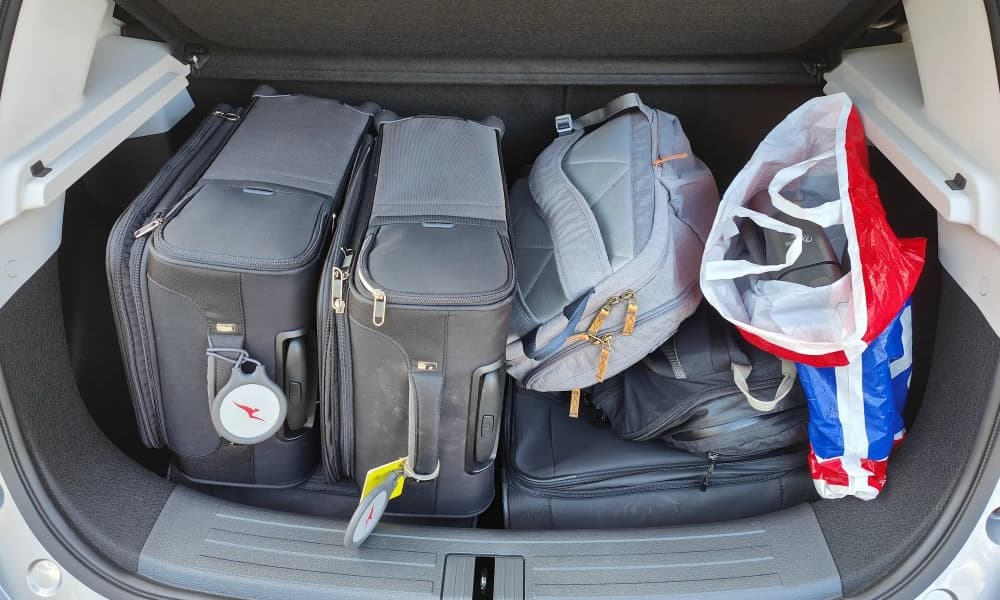
Suitcases are the unruly guests of the cargo world. A family of four can easily generate four medium roller bags, two backpacks, and a duffel stuffed with swimsuits and sunscreen. Add a cooler, a beach umbrella, and a pair of inflatable kayaks, and suddenly your minivan resembles a storage unit more than a family vehicle. The key to luggage harmony lies in vertical stacking. Most minivans allow you to layer suitcases like a Jenga tower—flat on the floor, then upright against the back of the third row. But here’s where the plot thickens: some minivans have a low liftgate opening, forcing you to contort your body like a human shoehorn to slide a bag inside. Others have a wide, low sill that makes loading effortless. The Toyota Sienna and Chrysler Pacifica excel here, offering nearly 2 feet of clearance between the liftgate and the cargo floor. Meanwhile, the Kia Carnival’s high liftgate can make loading a top-heavy suitcase feel like defusing a bomb. Pro tip: pack the heaviest items at the bottom, closest to the front seats, to prevent the tower from toppling during sudden stops. And if you’re traveling with skis or snowboards, check for roof rails—some minivans offer them as an option, turning your vehicle into a mobile gear locker.

Sports Gear: When the Trunk Becomes a Locker Room
Soccer cleats, baseball bats, hockey sticks, and a volleyball net—welcome to the family road trip’s most chaotic cargo challenge. A single hockey bag can occupy 8 cubic feet, while a set of golf clubs stretches nearly 5 feet long. The minivan’s ability to swallow sports gear hinges on two factors: the length of the cargo floor and the presence of tie-down hooks. The Honda Odyssey and Chrysler Pacifica offer the longest cargo floors at around 7 feet when the third row is folded, making them ideal for hockey sticks and lacrosse gear. Meanwhile, the Kia Carnival’s shorter cargo floor can force you to angle gear diagonally or sacrifice a seat. Tie-down hooks are the unsung heroes here—securing gear prevents it from becoming a projectile during sharp turns. Some minivans, like the Toyota Sienna, include them as standard, while others relegate them to an optional accessory kit. If you’re a sports family, prioritize a minivan with a long, flat cargo floor and built-in tie-downs. Otherwise, you’ll spend every trip recalibrating the cargo Tetris board.
The Hidden Cargo Killers: Floor Humps, Wheel Wells, and Seat Belts
Not all cargo space is usable cargo space. Floor humps, wheel wells, and protruding seat belts can turn a seemingly spacious trunk into a cargo wasteland. The Honda Odyssey, for example, has a subtle hump where the driveshaft resides, shaving off 2 inches of usable depth in the center. The Chrysler Pacifica, on the other hand, boasts a perfectly flat floor, maximizing every inch. Wheel wells can also be deceptive—they intrude into the cargo area like stalagmites, forcing you to pack around them. Seat belts, while essential for safety, can become cargo snags, catching straps and zippers like a fishing net. The trick? Map out your cargo layout before you load. Place the heaviest, bulkiest items first, then fill in the gaps with smaller bags. If you’re traveling with a car seat, check for lower anchors in the cargo area—some minivans offer them, allowing you to secure the seat without sacrificing passenger space. And always, always measure the cargo floor’s width at the narrowest point. A minivan might boast 40 cubic feet, but if the width tapers to 24 inches at the wheel wells, you’re suddenly playing a game of cargo limbo.
Real-World Test: Loading a Family of Four and Their Gear
To put theory into practice, let’s load a hypothetical family of four—two adults, a 4-year-old, and a 1-year-old—along with their gear for a week-long trip to Orlando. The cargo list includes: a double stroller, two medium roller suitcases, a backpack, a diaper bag, a cooler, a beach umbrella, a pair of inflatable kayaks, a set of golf clubs, and a hockey bag. The goal? Fit it all without folding the front passenger seat forward. The Toyota Sienna, with its 7-foot cargo floor and optional stroller garage, emerges as the clear winner. The double stroller tucks neatly into the stroller garage, while the suitcases stack vertically against the back of the third row. The cooler and beach umbrella wedge into the remaining gaps, and the golf clubs and hockey bag lay flat along the floor. Total cargo volume used: approximately 35 cubic feet. The Chrysler Pacifica follows closely, thanks to its wide cargo floor and low liftgate. The Honda Odyssey, while spacious, struggles with the hockey bag due to its shorter cargo floor. Meanwhile, the Kia Carnival requires creative packing—folding the stroller flat and angling the hockey bag diagonally to make it fit. The lesson? Always test your cargo load before committing to a rental. A minivan’s cargo volume might look impressive on paper, but real-world packing reveals the true champion.
The open road awaits, and with it, the promise of adventure—or at least a week without stepping on a Lego. But the difference between a smooth journey and a cargo-induced meltdown often comes down to the humble minivan’s trunk. Measure twice, pack once, and may your liftgate always close on the first try. After all, the only thing more frustrating than a cramped trunk is a cramped trunk with a car seat and a hungry toddler.