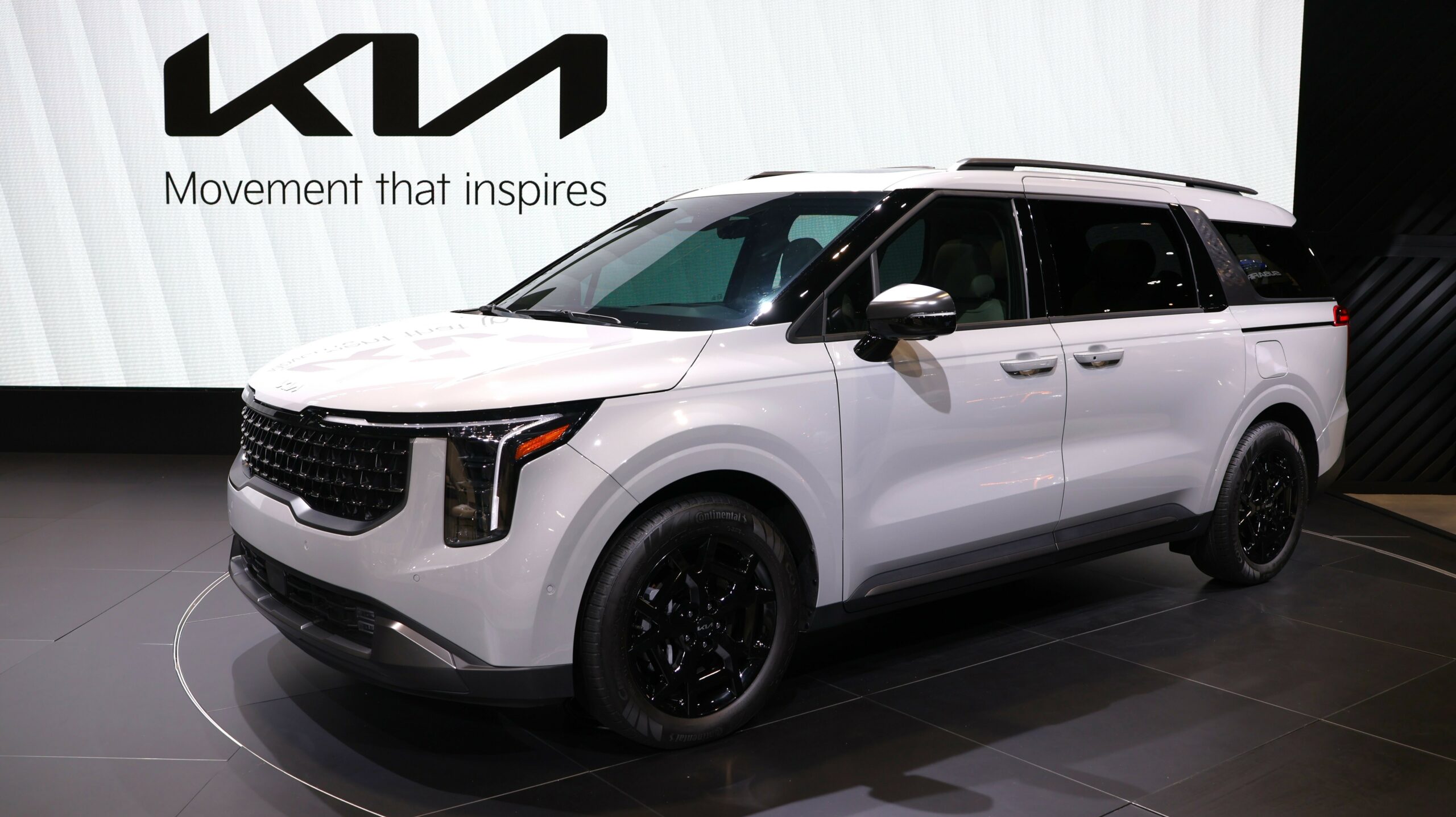
What if the Kia Carnival, the beloved minivan that’s been ferrying families, road-tripping adventurers, and soccer moms alike for years, suddenly swapped its gas-guzzling heart for a whisper-quiet hybrid powertrain? The thought alone sends shivers down the spines of efficiency seekers and eco-warriors. Could this be the minivan that finally silences the naysayers who dismiss these family haulers as gas-guzzling behemoths? The 2025 Kia Carnival Hybrid isn’t here yet—but if it were, what kind of magic could it weave under the hood? Let’s dive into the tantalizing specs, the potential fuel economy breakthroughs, and the unexpected challenges that might come with this eco-friendly titan.
Imagine sliding into the driver’s seat of a Carnival, only to find the usual rumble of a V6 replaced by the serene hum of an electric motor. The Kia Carnival Hybrid, if it ever graces showrooms, promises to redefine what it means to haul your clan in style without guzzling fuel like a thirsty dragon. But before we get ahead of ourselves, let’s ask: Is the minivan finally ready to shed its gas-guzzling reputation?
The Powertrain: A Symphony of Gas and Electric
At the heart of the hypothetical Kia Carnival Hybrid would likely be a parallel hybrid system, blending a turbocharged 1.6-liter four-cylinder engine with an electric motor and a compact battery pack. This isn’t your grandpa’s hybrid—it’s a sophisticated dance of power and efficiency, where the gasoline engine and electric motor work in tandem to deliver spirited acceleration while sipping fuel like a fine wine.
The combined output could flirt with 280 horsepower, a respectable figure for a family hauler that needs to merge onto highways or climb steep mountain passes without wheezing. The electric motor would handle low-speed cruising and initial acceleration, while the gas engine kicks in for highway speeds or when the battery’s charge dips. Regenerative braking would juice up the battery every time you ease off the throttle, turning wasted energy into stored power.
But here’s where it gets interesting: Kia might opt for a more robust hybrid system, possibly borrowing from its sibling, the Kia Sorento Hybrid. This could mean a larger battery pack tucked beneath the floor, allowing for short electric-only jaunts around the neighborhood or silent cruising in a school zone. The result? A minivan that feels eerily quiet at stoplights, a feature that might just make your passengers forget they’re in a vehicle designed to transport seven or eight humans.
Expected MPG: Can a Minivan Really Be Efficient?
The million-dollar question: How many miles per gallon would the Kia Carnival Hybrid squeeze out of a tank of gas? Based on Kia’s track record with hybrids and the segment’s growing efficiency standards, we’re looking at a potential 38-42 MPG combined, with city driving possibly eclipsing 45 MPG. Highway numbers could hover around 35 MPG, a far cry from the Carnival’s current 22-25 MPG in gas-only form.
This leap in efficiency isn’t just about saving a few bucks at the pump—it’s about redefining the minivan’s role in the automotive world. No longer the clunky, fuel-thirsty chariot of yesteryear, the Carnival Hybrid could position itself as a practical choice for eco-conscious families who refuse to sacrifice space for sustainability. Picture this: a cross-country road trip where you’re not constantly calculating whether you can afford the next gas station stop. That’s the kind of freedom the Carnival Hybrid could offer.
Of course, real-world MPG will depend on driving habits, climate, and how aggressively you wield the throttle. But even if the numbers dip slightly in practice, the Carnival Hybrid would still stand as a titan of efficiency in its class.
Interior: Familiar Comfort, Subtle Upgrades
Step inside the hypothetical Kia Carnival Hybrid, and you’ll find the same cavernous interior that’s made the Carnival a favorite among families. The second-row seats slide and recline, the third row folds flat, and the cargo space remains cavernous—because let’s face it, minivans are all about space. But the hybrid model might introduce a few subtle upgrades to enhance the experience.

First, the center console could feature a dedicated hybrid driving mode selector, allowing you to toggle between Eco, Hybrid, and Sport settings. The Eco mode would prioritize battery usage and gentle acceleration, while Sport mode might unleash the full hybrid system’s potential for quicker overtakes. The instrument cluster could display real-time fuel economy, battery charge levels, and energy flow, turning mundane drives into a high-tech experience.
Noise reduction would also be a priority. The hybrid system’s electric motor would dampen road and wind noise, making long drives feel more like a luxury sedan’s serenity than a minivan’s traditional symphony of squeaks and rattles. And let’s not forget the subtle glow of ambient lighting—because even minivans deserve a touch of elegance.
The Elephant in the Room: Weight and Cost
Every hybrid’s Achilles’ heel is its weight. Batteries are heavy, and adding one to the Carnival’s already substantial frame could tip the scales past 4,500 pounds. This extra mass might dull the driving dynamics, making the hybrid feel less nimble than its gas-only counterpart. Kia would need to employ lightweight materials—aluminum for the hood and rear hatch, perhaps carbon-fiber accents—to keep the curb weight in check.
Then there’s the cost. Hybrids typically command a premium, and the Carnival Hybrid would likely start around $45,000, a significant jump from the gas-only model’s $35,000 starting price. For families on a budget, this could be a tough pill to swallow. But consider the long-term savings: lower fuel costs, potential tax incentives, and reduced maintenance (hybrids often have fewer brake replacements due to regenerative braking). Over five years, the hybrid could pay for itself—if you drive enough miles.
There’s also the question of resale value. Will the hybrid retain its value better than the gas model, or will buyers balk at the higher initial cost? Only time will tell, but Kia’s reputation for reliability could give the Carnival Hybrid a leg up in the used market.
Driving Dynamics: A Minivan That Doesn’t Feel Like a Truck
One of the biggest misconceptions about minivans is that they drive like floating barges. The Kia Carnival Hybrid, if engineered well, could shatter that myth. The hybrid system’s instant torque delivery would make acceleration feel brisk, especially in city driving. The electric motor’s low-end grunt would eliminate the turbo lag often associated with Kia’s turbocharged engines, making the Carnival feel more responsive than ever.
The suspension would likely be retuned to accommodate the extra weight, striking a balance between comfort and stability. Expect a ride that’s plush enough to lull kids to sleep but firm enough to handle winding roads without excessive body roll. The steering might feel slightly heavier due to the hybrid system’s drag, but Kia’s engineers would likely tweak the power steering to maintain a natural feel.
And let’s not forget the all-wheel-drive option. Many hybrids offer AWD for improved traction in bad weather, and the Carnival Hybrid could follow suit. This would make it a year-round workhorse, capable of tackling snow-covered roads or muddy soccer fields without breaking a sweat.
Charging and Convenience: The Practical Side of Hybrid Life
Unlike plug-in hybrids, the Carnival Hybrid would likely rely on self-charging, meaning you’d never need to plug it in. The battery would recharge through regenerative braking and the gas engine, making it as convenient as a traditional minivan. No searching for charging stations, no planning pit stops around power outlets—just fill up the gas tank and go.

However, this convenience comes with a trade-off: the battery’s capacity would be limited, meaning the electric-only range would be minimal—perhaps just a mile or two at low speeds. For most families, this won’t be an issue, but it’s worth noting if you’re hoping to sneak out of the house at dawn without waking the kids.
The infotainment system would likely get a hybrid-specific interface, with features like trip planning to maximize fuel efficiency, hybrid system status updates, and even a “quiet mode” to mute unnecessary alerts. After all, the last thing you want during a road trip is a cacophony of beeps and chimes.
Final Verdict: A Minivan for the Modern Age
The Kia Carnival Hybrid, if it ever hits the streets, would be a game-changer for the minivan segment. It would blend the practicality of a family hauler with the efficiency and tech of a hybrid, all while maintaining the Carnival’s signature comfort and space. Yes, it might come with a higher price tag and a few compromises in weight and driving dynamics, but the long-term benefits could outweigh the drawbacks.
For families who need to transport a soccer team, a week’s worth of groceries, and a dog without breaking the bank—or the planet—the Carnival Hybrid could be the perfect solution. It’s a minivan that refuses to be ignored, a vehicle that proves you don’t have to sacrifice space for sustainability. And who knows? Maybe it’ll finally convince the world that minivans aren’t just for soccer moms—they’re for anyone who values efficiency, comfort, and a little bit of magic under the hood.
So, would you trade your gas-guzzling minivan for a hybrid? The future of family hauling is here—and it’s whisper-quiet.