In the quiet hum of a suburban driveway, a curious transformation is underway. Families who once crammed their sedans with weekend essentials are now eyeing wagons—those versatile, elongated chariots of cargo—with a newfound sense of purpose. The 2026 wagon lineup isn’t just about hauling groceries or soccer gear anymore; it’s quietly emerging as the unsung hero for those who dream of towing a nimble boat or a compact camper without the bulk of a full-size SUV. This shift isn’t merely about practicality; it’s a subtle rebellion against the monolithic dominance of trucks and SUVs, a return to elegance with a purpose.
The fascination with wagons as towing workhorses might seem counterintuitive at first. After all, wagons have long been associated with station wagons of yesteryear—boxy, utilitarian, and perhaps a tad unglamorous. Yet, beneath their understated exteriors lies a surprising capacity for adventure. The 2026 models are redefining what it means to tow, blending the agility of a car with the robustness of a trailer-towing machine. For those who crave the freedom of the open road without sacrificing the refinement of a daily driver, these wagons are poised to become the ultimate companions.
The Resurgence of the Wagon: Why 2026 is Different
For decades, the automotive industry seemed to have relegated wagons to the backseat of innovation. Sedans and SUVs dominated the conversation, leaving wagons in a nostalgic limbo. But the tide is turning. The 2026 wagon renaissance is fueled by a confluence of factors: rising fuel prices, urban parking constraints, and a cultural shift toward minimalist living. Wagons, with their elongated rooflines and cavernous cargo holds, are suddenly the perfect antidote to the sprawling, gas-guzzling behemoths that once ruled the roads.
Manufacturers have taken notice. Gone are the days of the lumbering, land-yacht wagons of the 1970s. Today’s models are sleek, aerodynamic, and engineered with precision. The 2026 wagons boast turbocharged engines, adaptive suspension systems, and advanced towing packages that rival those of traditional SUVs. This evolution is not just about aesthetics; it’s about meeting the demands of a new generation of adventurers who refuse to compromise between style and substance.

Towing Capacity: Breaking the Stereotypes
One of the most persistent myths about wagons is that they lack the muscle to tow anything heavier than a bicycle. That couldn’t be further from the truth in 2026. Today’s top-tier wagons are engineered with robust frame structures, reinforced hitches, and high-capacity cooling systems to handle the rigors of towing. Models like the Subaru Outback Wilderness and the Volvo V60 Cross Country are leading the charge, offering towing capacities that rival some midsize SUVs.
Consider the Subaru Outback Wilderness, a wagon that blends rugged off-road capability with surprising towing prowess. With a maximum towing capacity of 3,500 pounds, it can effortlessly pull a small fishing boat or a lightweight teardrop camper. The key lies in its symmetrical all-wheel-drive system, which distributes power evenly to all four wheels, ensuring stability even when hauling a load. Meanwhile, the Volvo V60 Cross Country offers a refined towing experience with its adaptive cruise control and lane-keeping assist, proving that you don’t need a truck to tow like one.
The engineering behind these towing feats is a marvel of modern automotive design. Wagons now feature integrated towing packages that include upgraded radiators, transmission coolers, and heavy-duty wiring harnesses. Some models even come equipped with trailer sway control and blind-spot monitoring, features once reserved for larger vehicles. This attention to detail ensures that towing with a wagon is not just possible but pleasurable.
Fuel Efficiency: The Unseen Advantage
While trucks and SUVs guzzle fuel with abandon, wagons sip it like fine wine. The 2026 wagons are a testament to the efficiency of good aerodynamics and lightweight materials. Take, for example, the Audi A6 Allroad, which combines a turbocharged 2.0-liter engine with a quattro all-wheel-drive system. Despite its towing capabilities, it achieves an impressive 28 miles per gallon on the highway. That’s a figure that would make many SUVs blush.
The fuel efficiency of wagons isn’t just a boon for your wallet; it’s a gift to the environment. In an era where sustainability is no longer optional, wagons offer a compelling alternative to gas-guzzling alternatives. They allow you to tow your boat or camper without the guilt of excessive emissions, all while sipping fuel like a sip of espresso. This efficiency also translates to lower running costs, making wagons an economical choice for those who tow frequently.
Moreover, the compact size of wagons means they’re easier to park and maneuver in tight spaces—a luxury that’s often overlooked in the towing conversation. No more white-knuckling the steering wheel in a crowded campground or struggling to parallel park a trailer. Wagons offer the best of both worlds: the freedom to tow and the convenience of urban living.
The Comfort Factor: Wagons as Rolling Sanctuaries
Towing doesn’t have to mean sacrificing comfort, and the 2026 wagons are proving just that. Step inside a modern wagon, and you’ll find a cabin designed for long-haul journeys. Plush leather seats, ambient lighting, and advanced climate control systems ensure that every mile feels like a retreat. The Volvo V60, for instance, features a panoramic sunroof that bathes the interior in natural light, while the Mercedes-Benz E-Class Wagon offers a Burmester® 400-watt surround sound system for the ultimate audio experience.
But the comfort extends beyond the cabin. Wagons are inherently stable when towing, thanks to their lower center of gravity compared to SUVs. This stability translates to a smoother, more controlled towing experience, especially in crosswinds or on uneven terrain. The adaptive suspension systems in many 2026 models further enhance ride quality, absorbing bumps and imperfections with ease. Whether you’re towing a boat to a serene lake or a camper to a remote campsite, the journey itself becomes part of the adventure.
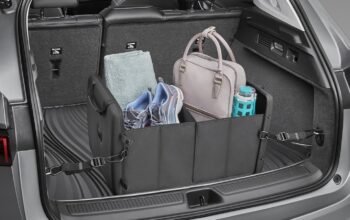
For families, the spacious interiors of wagons are a game-changer. The extended cargo area can easily accommodate not just the essentials but also the luxuries that make towing feel like a vacation. Imagine loading up a cooler, a portable grill, and a stack of board games—all while keeping the kids entertained in the backseat with tablets and snacks. Wagons make it possible to tow without feeling cramped, proving that adventure doesn’t have to come at the expense of comfort.
The Future of Towing: Wagons Leading the Way
The rise of wagons as towing vehicles is more than a fleeting trend; it’s a glimpse into the future of automotive design. As cities grow denser and environmental concerns take center stage, the need for efficient, versatile vehicles will only intensify. Wagons, with their blend of practicality and elegance, are perfectly positioned to meet this demand. They offer a middle ground—a way to enjoy the freedom of towing without the environmental and logistical drawbacks of larger vehicles.
Manufacturers are already looking ahead, with concepts like electric wagons and autonomous towing systems on the horizon. Imagine a wagon that not only tows your camper but also charges it via regenerative braking, or one that can autonomously park itself in a campground while you set up your site. The possibilities are as limitless as the open road itself.
For those who have longed for a vehicle that can do it all—commute to work, tow a boat, and still turn heads at the grocery store—the 2026 wagons are a dream come true. They represent a return to versatility, a celebration of engineering that doesn’t sacrifice one aspect for another. In a world where specialization often comes at a cost, wagons offer a refreshing alternative: the ability to adapt, to explore, and to do it all with style.
So, if you’ve ever found yourself staring at a boat or camper, wondering how you’ll ever tow it without a truck, it’s time to reconsider. The 2026 wagons are here to prove that you don’t need a behemoth to live a life of adventure. All you need is a little ingenuity, a sense of curiosity, and a wagon that’s ready to roll.