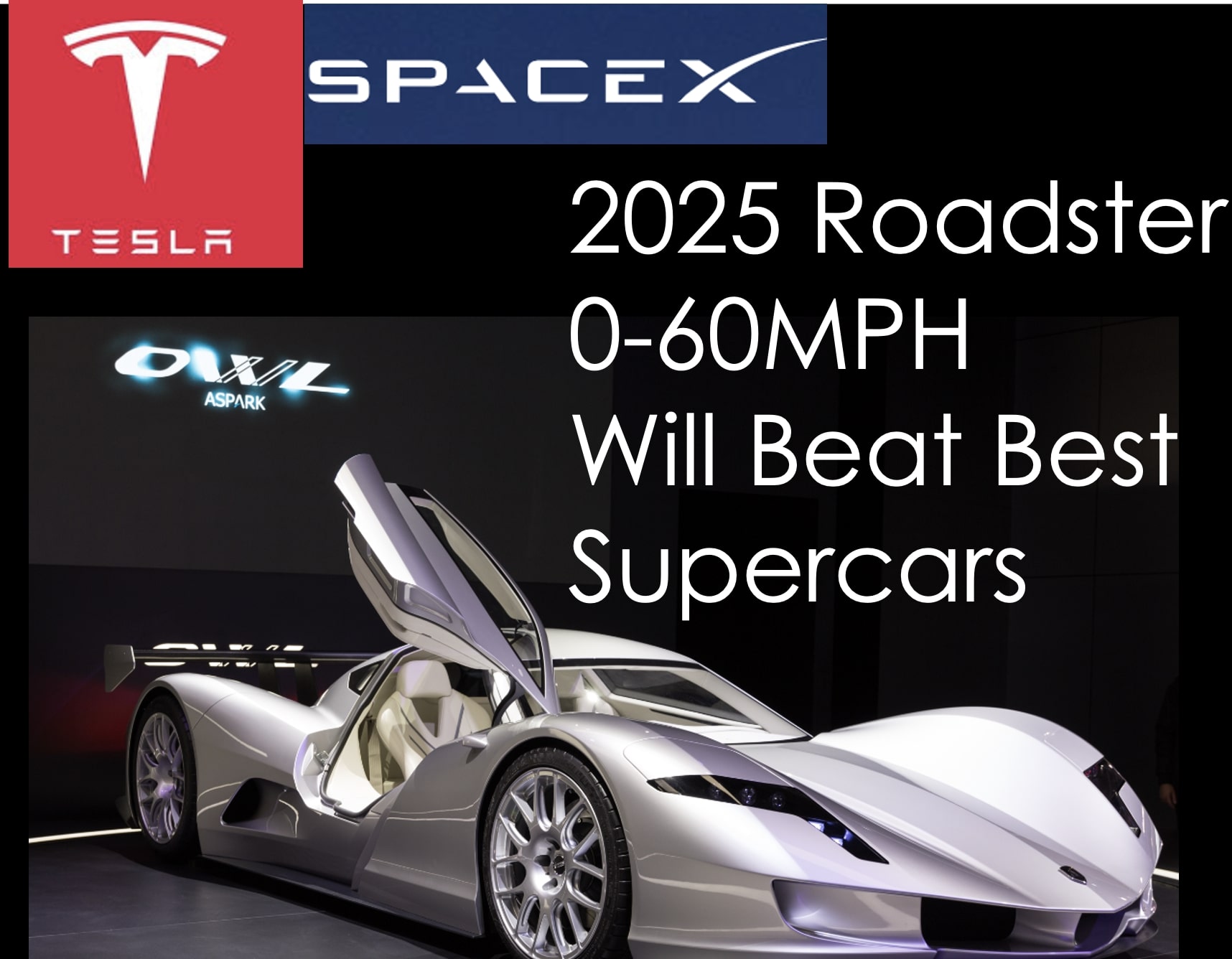
The Tesla Roadster isn’t just another electric car—it’s a lightning bolt wrapped in carbon fiber, a machine that dares to defy the laws of physics while whispering promises of a future where speed and sustainability coexist. When Elon Musk first teased the Roadster’s 0-60 mph time of under two seconds, skeptics scoffed. Yet, as the years have passed, that audacious claim has only grown more tantalizing, not less. What is it about this vehicle that ignites such fervor? Is it the raw, unfiltered acceleration that makes your soul question its own mortality? Or is it the deeper, almost philosophical allure of a machine that redefines what’s possible? Buckle up. We’re about to peel back the layers of this automotive enigma.
The Myth of the Sub-2-Second 0-60: Fact or Fiction?
To the uninitiated, a sub-2-second 0-60 time sounds like something plucked from a sci-fi flick rather than a production car. Yet, the Tesla Roadster’s projected performance isn’t mere hyperbole—it’s a calculated assault on the limits of physics. Traditional combustion engines rely on gear ratios, torque curves, and brute force to catapult a vehicle forward. The Roadster, however, leverages instant torque from its tri-motor all-wheel-drive system, eliminating the lag inherent in internal combustion. With 200 kWh of battery capacity and a power output north of 1,000 horsepower, the Roadster doesn’t just accelerate—it *erupts*. The real question isn’t whether it can hit 0-60 in under two seconds, but whether the human body can survive the experience without leaving behind a faint outline of the driver’s soul on the seat.
Critics argue that such acceleration is impractical, even dangerous. After all, most roads aren’t designed for vehicles that can outrun a bullet train in its first few strides. But practicality has never been the Roadster’s forte. It’s a statement—a rolling testament to the idea that technology should push boundaries, not just meet them. The sub-2-second claim isn’t just a marketing gimmick; it’s a challenge to the automotive status quo, a dare to the world to rethink what a car can do.
The Alchemy of Electric Torque: Why It Changes Everything
At the heart of the Roadster’s mind-bending acceleration lies the magic of electric torque. Unlike combustion engines, which require time to spool turbos or rev through gears, electric motors deliver maximum torque instantaneously. This isn’t just a performance advantage—it’s a paradigm shift. The Roadster’s tri-motor setup, with one motor on the front axle and two on the rear, ensures that power is distributed with surgical precision. The result? A launch so violent it feels less like driving and more like being catapulted by an unseen force.
But torque alone doesn’t explain the Roadster’s allure. It’s the way Tesla has married this raw power with cutting-edge battery technology. The 200 kWh battery pack isn’t just a power source; it’s a vault of untamed energy, capable of sustaining the Roadster’s fury for hundreds of miles. This isn’t the kind of acceleration that fades after a few seconds—it’s the kind that lingers in your bones, a reminder that electricity, when harnessed correctly, can be as brutal as it is beautiful.
The psychological impact of electric torque is equally profound. There’s no gearbox to babysit, no clutch to master. Just stomp the throttle, and the world dissolves into a blur of speed and sound. It’s a primal experience, one that harks back to the early days of drag racing when drivers relied solely on instinct and the raw power of their machines. The Roadster doesn’t just drive—it *commands*.
The Aesthetic of Speed: Designing a Car That Looks Like It’s Breaking the Sound Barrier
A car that can hit 0-60 in under two seconds isn’t just fast—it *looks* fast. The Tesla Roadster’s design isn’t merely functional; it’s a visual symphony of aerodynamics and aggression. The sleek, low-slung body isn’t just for show—it’s a tool to slice through the air with minimal resistance, ensuring that every ounce of the Roadster’s power is translated into forward motion. The butterfly doors, a signature Tesla flourish, aren’t just a nod to futurism; they’re a statement that this car doesn’t belong in the past.
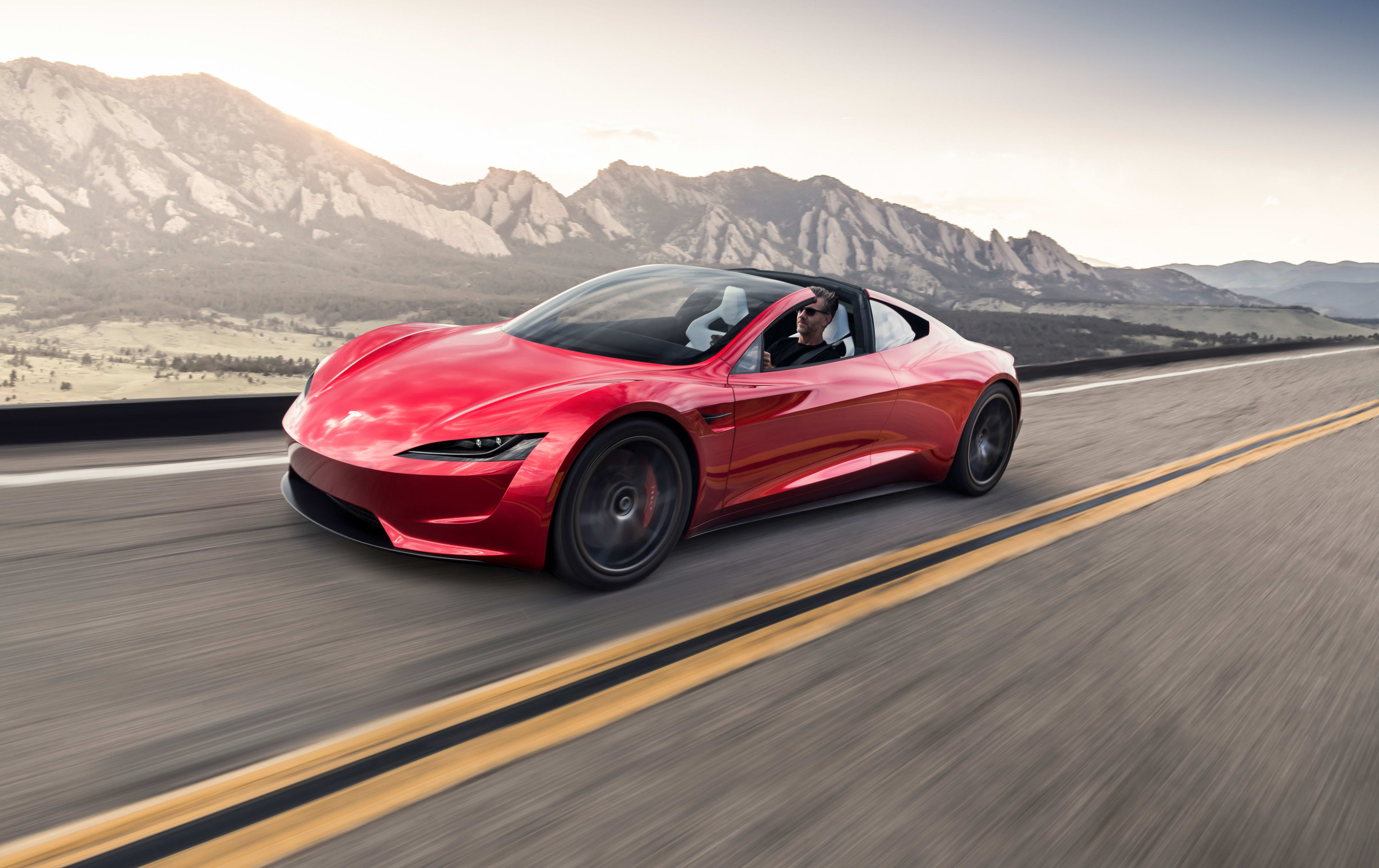
The Roadster’s proportions are deliberately exaggerated, with a wide stance and a long hood that hint at the power lurking beneath. Even when stationary, it exudes a sense of restless energy, as if it’s straining against the shackles of gravity. The LED headlights, sharp and angular, pierce the darkness like the eyes of a predator. Every line, every curve, every surface is optimized not just for speed, but for the *illusion* of speed. It’s a car that doesn’t just move through space—it *conquers* it.
But the Roadster’s design isn’t just about intimidation. It’s also about elegance. The carbon fiber body, the polished aluminum accents, the minimalist interior—all of it speaks to a philosophy that luxury and performance aren’t mutually exclusive. This is a car that can dominate a drag strip at dawn and glide into a high-end gala at dusk without missing a beat. It’s the automotive equivalent of a tuxedo-clad assassin—effortlessly sophisticated, yet capable of annihilating anything in its path.
The Human Factor: Can a Driver Survive 0-60 in Under Two Seconds?
Here’s where things get truly fascinating. The Tesla Roadster’s acceleration isn’t just a technical marvel—it’s a test of human endurance. The G-forces involved in a sub-2-second launch are enough to make even seasoned drivers question their life choices. At full throttle, the Roadster doesn’t just push you back into your seat—it *mashes* you into it, as if the laws of physics have temporarily been rewritten to favor the car over the driver.
Most production cars take around 3-4 seconds to hit 60 mph. The Roadster does it in under half that time. To put that into perspective, the difference between a 4-second 0-60 and a 2-second 0-60 isn’t linear—it’s exponential. The forces at play aren’t just about speed; they’re about *acceleration*, the rate at which your body is subjected to those forces. At 2 seconds, the G-forces are so intense that peripheral vision can start to tunnel, and the brain struggles to process the sensory overload. It’s not just a physical challenge—it’s a neurological one.
Yet, for all its brutality, the Roadster’s acceleration is oddly *smooth*. There’s no lurch, no jerk—just a seamless, relentless surge of power that leaves you breathless. It’s the kind of experience that rewires your perception of speed. After driving a Roadster, even a “fast” supercar feels sluggish, as if it’s moving through molasses. The Roadster doesn’t just set a new benchmark—it erases the old one entirely.
The Bigger Picture: Why the Roadster Matters Beyond the Numbers
The Tesla Roadster isn’t just a car—it’s a cultural artifact, a symbol of humanity’s relentless pursuit of progress. In a world where most vehicles are designed to be efficient, comfortable, or practical, the Roadster dares to ask: What if a car could be *all* of those things, and then some? What if speed wasn’t just a luxury, but a fundamental right?
There’s a deeper fascination at play here, one that transcends mere performance metrics. The Roadster represents the culmination of decades of innovation, from the earliest electric experiments to the cutting-edge battery technology of today. It’s a reminder that the future isn’t something that happens to us—it’s something we create. Every time someone straps into a Roadster and mashes the throttle, they’re not just driving a car; they’re participating in a revolution.
The Roadster also challenges our preconceptions about what electric vehicles can be. For years, EVs were dismissed as slow, boring, or impractical. The Roadster shatters that myth with a single, decisive stomp of the accelerator. It proves that electric cars aren’t just the future—they’re the *now*, a force to be reckoned with. In doing so, it forces the entire automotive industry to rethink its priorities. If a Tesla can hit 0-60 in under two seconds, what’s stopping the rest of the industry from following suit?
The Road Ahead: What’s Next for the Tesla Roadster and Beyond
The Tesla Roadster’s arrival—whenever it finally materializes—will mark a turning point in automotive history. But its true legacy may lie in what it inspires. Already, competitors are scrambling to match its performance, and startups are dreaming up even wilder concepts. The sub-2-second barrier, once a pipe dream, is now within reach for a handful of vehicles. What comes next? Sub-1-second launches? Vehicles that accelerate so fast they blur the line between car and rocket?
The Roadster’s impact extends beyond the track. It’s a catalyst for change, pushing the boundaries of what’s possible in battery technology, aerodynamics, and driver experience. It’s also a testament to the power of vision. Elon Musk didn’t just want to build a fast car—he wanted to build a car that would redefine speed itself. In that sense, the Roadster isn’t just a machine; it’s a manifesto.
As for the skeptics who doubt the Roadster’s claims? History has a way of proving them wrong. From the first steam engines to the first supersonic jets, every leap forward in technology has been met with skepticism. Yet, time and again, those skeptics have been silenced by the sheer force of progress. The Tesla Roadster may be just another car to some. But to those who understand its significance, it’s nothing less than the future, wrapped in a sleek, carbon-fiber package and ready to leave the rest of the automotive world in the dust.
The road to the future isn’t just paved with asphalt—it’s paved with ambition, innovation, and the unshakable belief that the impossible is merely a challenge waiting to be conquered. The Tesla Roadster isn’t just a car that can hit 0-60 in under two seconds. It’s a car that reminds us why we fell in love with speed in the first place. And when the day finally comes that it roars to life on the open road, the world won’t just watch—it will bear witness to history.