The Subaru BRZ has long been celebrated as a driver’s car—nimble, balanced, and brimming with mechanical empathy. Yet, when winter’s first flakes descend, even the most ardent enthusiasts often hesitate. The myth persists: rear-wheel-drive sports cars are winter outcasts, consigned to hibernation while their all-wheel-drive cousins conquer the slush. But what if the BRZ defies this assumption? What if, beneath its summer-born soul, lies a latent prowess waiting to be awakened by the season’s chill? To test this hypothesis, we ventured into the frozen hinterlands, where black ice lurks beneath pristine snow and the wind howls like a disgruntled spectator. Our mission? To uncover whether the BRZ, armed with the right winter footwear, can transform from a fair-weather flirt into a seasoned winter warrior.
The Myth of the Winter-Incapable Sports Car
For decades, the automotive world has peddled a seductive narrative: all-wheel drive is the only path to winter confidence. While this holds true for many, it overlooks a critical truth—the difference between capability and character. The Subaru BRZ, with its low-slung chassis and rear-wheel bias, isn’t designed to plow through drifts like a snowcat. Instead, it’s engineered to dance on the edge of control, to tease the limits of grip with surgical precision. Winter driving, when stripped of its intimidation, reveals a different kind of thrill—one where the driver becomes a co-pilot in a ballet of physics.
Yet, the BRZ’s Achilles’ heel in cold weather is undeniable: its stock summer tires. Hard compounds stiffen in subzero temperatures, losing pliability and grip. The result? A car that feels sluggish, unresponsive, and—dare we say—boring. But here’s the revelation: winter tires don’t just improve traction; they redefine the BRZ’s entire personality. They unlock a latent agility, turning the car from a reluctant participant into a willing accomplice in the snow’s unpredictable waltz.
Selecting the Right Winter Footwear: A Primer
Not all winter tires are created equal, and the BRZ demands a specific blend of performance and finesse. The ideal candidates are studless winter tires, prized for their ability to grip ice and snow without the mechanical clatter of studded options. Leading the charge are models like the Nokian Hakkapeliitta R5 SUV, the Michelin Pilot Alpin PA4, and the Continental WinterContact SI. Each excels in different conditions, but all share a common trait: a tread compound formulated to remain supple in freezing temperatures.
For the BRZ, tire width also plays a pivotal role. A narrower footprint—think 225mm instead of the stock 245mm—reduces the surface area in contact with snow, allowing the tire to bite deeper into the slush. This sacrifices some dry-road grip but enhances floatation in powder. Conversely, wider tires offer better lateral stability on packed snow, trading a bit of floatation for sharper turn-in. The choice hinges on your local winter’s temperament: if you’re battling deep drifts, lean narrower. If the roads are merely damp and slushy, wider is the way to go.
Wheel size matters too. The BRZ’s fenders swallow 17-inch wheels with ease, and this diameter strikes a balance between sidewall height and steering feel. A taller sidewall absorbs imperfections, while a shorter one sharpens responsiveness. Opt for a 17-inch setup with a 40-45% aspect ratio, and you’ll strike the perfect compromise between comfort and control.
On the Ice: The BRZ’s Winter Personality Unveiled
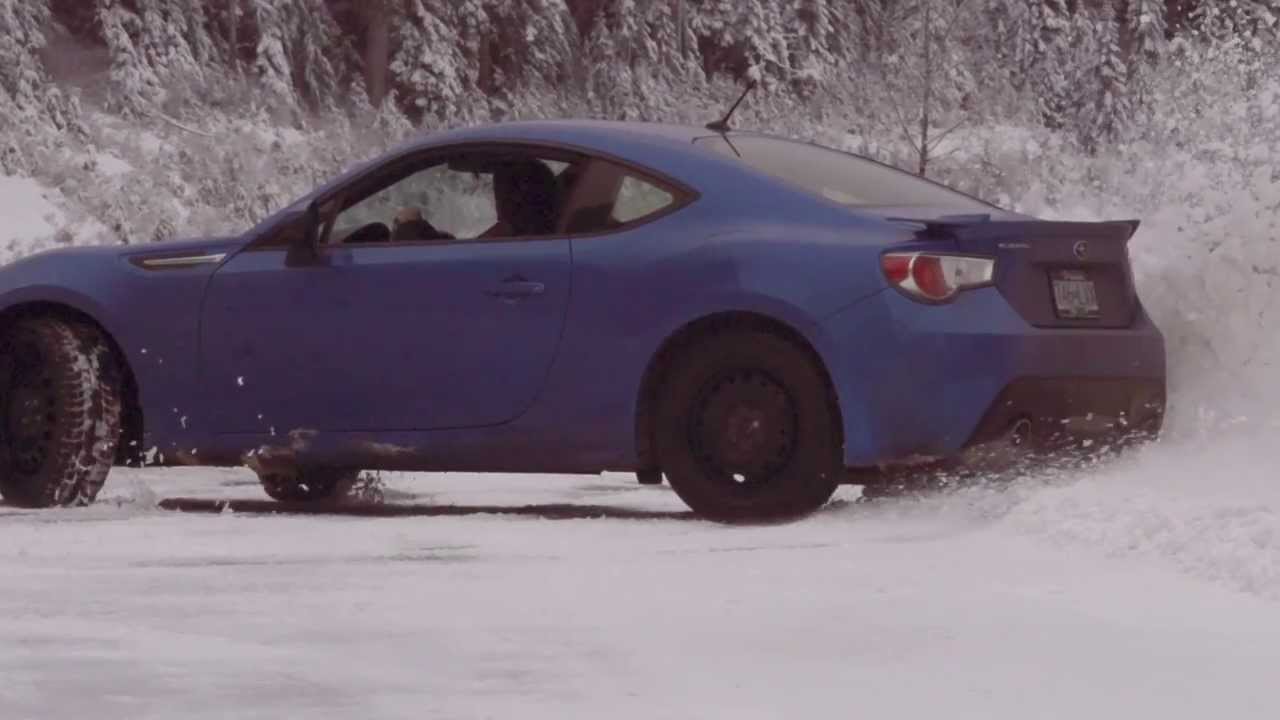
The moment the BRZ rolls onto an icy parking lot, the transformation is immediate. The steering, once light and devoid of feedback, now hums with tension. The tires, no longer rigid slabs of rubber, cling to the surface like magnets, their edges digging into the ice with surgical precision. The car responds to the slightest nudge of the wheel, its rear end twitching in protest before settling into a controlled drift. This is where the BRZ’s true winter soul emerges—not as a brute-force conqueror, but as a precision instrument, rewarding finesse over force.
Acceleration is where the BRZ’s rear-wheel-drive nature shines. Unlike its all-wheel-drive counterparts, which distribute power seamlessly, the BRZ’s thrust is concentrated at the rear. This demands a delicate dance: too much throttle, and the tail steps out; too little, and momentum fades. But master this rhythm, and the car becomes a living extension of your will. The limited-slip differential, a standard feature on higher trims, becomes your best ally, channeling power to the wheel with traction, smoothing out the inevitable hiccups of a winter launch.
Braking, however, is where winter tires truly earn their keep. The difference between stock summer rubber and dedicated winter compounds is stark—a gap that widens with each degree the thermometer drops. On a sheet of glare ice, the BRZ’s nose dives under braking, but the tires bite with such authority that the car slows with confidence. The pedal feel is linear, predictable, and devoid of the panic-inducing skittering that plagues summer tires. This is the moment the BRZ sheds its fair-weather facade, revealing a machine that’s just as at home in the cold as it is under a summer sun.
The Dance of Drifting: Embracing the BRZ’s Winter Quirks
There’s a peculiar joy in coaxing a rear-wheel-drive car through a winter twist—one that all-wheel-drive drivers will never know. The BRZ, with its rear-wheel bias, invites controlled slides, rewarding patience and precision. The key lies in understanding the car’s limits. Unlike a front-wheel-drive machine, which understeers when pushed, the BRZ oversteers, its tail stepping out in a graceful arc. This isn’t a flaw; it’s an invitation to dance.
To initiate a drift, approach a corner with moderate speed, then lift off the throttle mid-turn. The weight shifts forward, unloading the rear, and the tires lose grip. A gentle correction with the wheel—countersteering—keeps the slide in check. The BRZ’s light weight and balanced chassis make this dance particularly forgiving. The car doesn’t snap into a spin; it meekly drifts, waiting for the driver to guide it back to stability. This is where the BRZ’s winter personality truly captivates—it doesn’t fight the conditions; it embraces them, turning every slide into a lesson in car control.
Of course, not every driver will relish this dance. Those accustomed to the stability of all-wheel drive may find the BRZ’s rear-wheel antics unnerving. But therein lies the magic: winter driving isn’t about brute force; it’s about finesse. The BRZ doesn’t conquer the snow; it converses with it, trading power for poetry.
Practical Considerations: Beyond the Tires
Equipping the BRZ for winter isn’t just about slapping on a set of snow tires. It’s a holistic transformation that touches every aspect of the car’s behavior. Suspension plays a role, too. The BRZ’s stock setup is tuned for comfort and casual driving, but winter demands a firmer touch. A set of coilovers or even stiffer springs can sharpen the car’s responses, reducing body roll and improving turn-in. Just be mindful of the ride quality—winter roads are rough enough without adding unnecessary harshness.
Braking systems also warrant attention. While the BRZ’s stock brakes are adequate, upgrading to performance pads and rotors can reduce fade and improve stopping power in cold conditions. Look for compounds designed for low temperatures, as many high-performance pads struggle to bite when the mercury plummets.
Finally, consider the BRZ’s interior. Winter means wet boots, slushy floors, and the occasional forgotten ice scraper. A set of all-weather floor mats and a quick-dry detailing spray can keep the cabin from becoming a swamp. And don’t forget the basics: a snow brush, a shovel, and a bag of cat litter for traction if you get stuck. Winter driving isn’t just about the car; it’s about preparation.
The Bigger Picture: Why Winter Driving Matters
Beyond the thrill of sliding a sports car on ice lies a deeper truth: winter driving is the ultimate test of a driver’s skill. It strips away the artificial confidence of dry roads and reveals the raw, unfiltered connection between human and machine. The BRZ, in particular, forces you to engage with the act of driving in a way that few other cars can. It doesn’t just transport you; it teaches you.
There’s also an environmental argument to be made. All-wheel-drive systems, while capable, often come with a fuel economy penalty and increased complexity. The BRZ, with its rear-wheel-drive layout, offers a lighter, more efficient alternative—one that can hold its own in winter with the right equipment. In an era where sustainability matters, the BRZ’s winter prowess becomes more than just a novelty; it’s a statement.
Yet, perhaps the most compelling reason to embrace the BRZ in winter is the sheer joy of defying expectations. The automotive world has conditioned us to believe that certain cars belong in certain seasons. The BRZ, with its winter tires, shatters this illusion. It’s a reminder that passion isn’t seasonal—that the right tools can unlock a car’s full potential, no matter the weather.
The Subaru BRZ, when properly equipped, is more than just a fair-weather flirt. It’s a winter warrior in disguise, waiting for the right moment to reveal its true colors. With the right tires, a bit of finesse, and an open mind, the BRZ transforms from a summer sweetheart into a cold-weather confidant. And in doing so, it invites us to see winter not as a barrier, but as an opportunity—a chance to rediscover the joy of driving, one slippery mile at a time.