The rivalry between Mercedes-AMG C63 and Audi RS5 isn’t just a clash of engineering prowess—it’s a philosophical duel between two distinct interpretations of German automotive excellence. At first glance, both cars occupy the same niche: high-performance compact coupes that blend everyday usability with track-ready ferocity. Yet beneath their sleek exteriors lies a deeper narrative, one that speaks to contrasting philosophies of luxury, driving engagement, and the very soul of performance. Why does this particular rivalry captivate enthusiasts so deeply? Perhaps because it forces us to confront a fundamental question: what does it truly mean to drive with passion in the modern era?
The Aesthetic Divide: Brutalism vs. Refinement
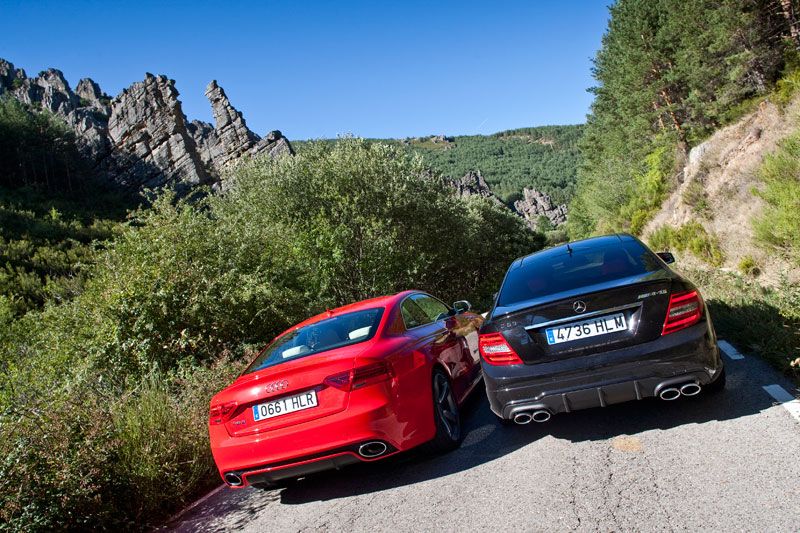
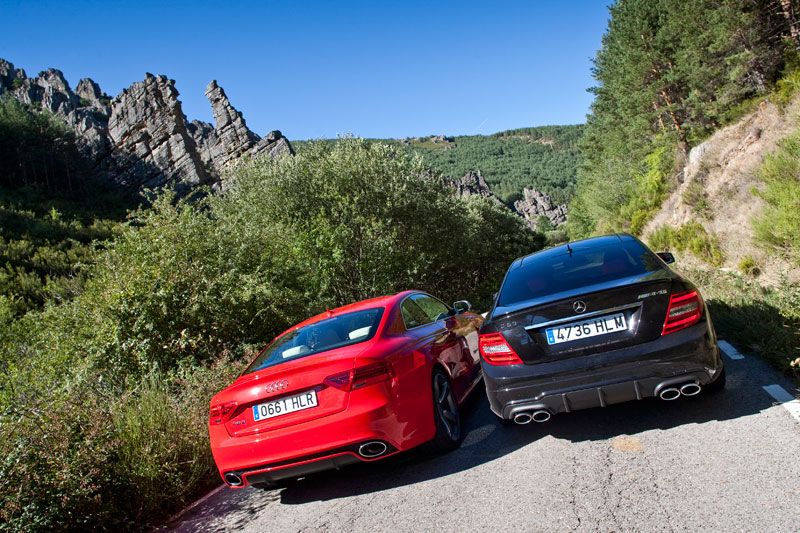
The Mercedes-AMG C63 has always carried the weight of its lineage with unapologetic swagger. Its front grille—once a controversial “grille monster”—has evolved into a statement of intent, a visual proclamation that this car doesn’t merely exist; it demands attention. The aggressive LED headlights, the muscular haunches of its flared fenders, and the quad exhaust outlets at the rear all scream performance, even when the engine is idling. This is brutalism in motion, a design language that prioritizes raw presence over subtlety.
In stark contrast, the Audi RS5 adopts a more understated approach, one that whispers rather than shouts. Its Singleframe grille, though prominent, is tempered by the car’s overall elegance—a sculpted silhouette that flows from the sweeping roofline to the aggressively flared rear haunches. The RS5’s design philosophy is one of controlled aggression, where every line and crease serves a purpose, not just to intimidate, but to enhance aerodynamics and stability. It’s the difference between a gladiator and a duelist—one wields a broadsword, the other a rapier.
The choice between these two visual philosophies often comes down to personal temperament. Do you crave the unfiltered, in-your-face charisma of the C63, or the refined, almost aristocratic intensity of the RS5? The answer might reveal more about your own approach to life than to driving.
Powertrains: The Heart of the Beast
Beneath their hoods, both cars unleash a symphony of mechanical fury, but the compositions couldn’t be more different. The Mercedes-AMG C63, particularly in its latest iteration, wields a 4.0-liter twin-turbo V8 that delivers a spine-tingling 503 horsepower. This engine isn’t just a powerplant; it’s a mechanical masterpiece, its deep, resonant growl a constant reminder of the raw energy it’s capable of unleashing. The way it snarls at low RPMs before erupting into a full-throated wail at high revs is nothing short of intoxicating.
The Audi RS5, on the other hand, takes a more pragmatic route with its 2.9-liter twin-turbo V6, producing 444 horsepower. At first glance, this might seem like a disadvantage, but the RS5’s engine is a marvel of efficiency and responsiveness. Its smaller displacement doesn’t just mean better fuel economy; it translates to a more immediate throttle response and a linear power delivery that rewards precision driving. The RS5’s engine sings a higher-pitched aria, one that’s less about brute force and more about agility and control.
This divergence in powertrain philosophy highlights a deeper divide in the automotive world. The C63’s V8 is a statement—a celebration of excess, of the idea that performance should be uncompromising and unapologetic. The RS5’s V6, meanwhile, embodies the modern ethos of downsizing and efficiency, proving that you don’t need a massive engine to achieve exhilarating performance. Which approach resonates more with you? The answer might just reveal your own priorities when it comes to driving.
Driving Dynamics: Precision vs. Passion
Steering a Mercedes-AMG C63 is like conducting an orchestra of mechanical precision. The AMG-tuned suspension soaks up imperfections with a level of composure that borders on supernatural, while the rear-wheel-drive bias (in the C63 S) ensures that every input from the driver is met with immediate, predictable feedback. The steering is heavy, almost ponderous at low speeds, but as the speed rises, it lightens with a reassuring directness. This is a car that rewards confidence, a machine that feels alive in your hands, demanding respect and offering thrills in equal measure.
The Audi RS5, by contrast, is a study in surgical precision. Its quattro all-wheel-drive system provides an almost telepathic connection to the road, translating every nuance of the driver’s inputs into seamless, predictable motion. The suspension is firmer, the steering more responsive, and the overall demeanor more agile. The RS5 doesn’t just corner; it dances through turns, its body leaning just enough to remind you of its capabilities without ever threatening to lose composure. It’s the kind of car that makes you feel like you could drive it to the limit on a whim, then comfortably cruise home for dinner.
The choice between these two driving experiences often comes down to what you value most in a car. Do you prefer the raw, unfiltered engagement of the C63, where every corner is a challenge and every straight line an opportunity to unleash the V8’s fury? Or do you lean toward the RS5’s more composed, almost clinical approach, where performance is delivered with the precision of a Swiss watch? The answer might just reveal whether you’re a romantic or a pragmatist at heart.
Interiors: Luxury as a Language
Step inside the Mercedes-AMG C63, and you’re enveloped in a cocoon of hand-stitched leather, carbon fiber accents, and the unmistakable scent of new car. The cabin is a temple to opulence, where every surface is designed to indulge the senses. The seats, bolstered and supportive, cradle you like a race driver, while the digital cockpit—complete with a massive infotainment display—puts a world of information at your fingertips. The materials are sumptuous, the fit and finish impeccable, and the overall ambiance one of unabashed luxury.

The Audi RS5’s interior, by contrast, is a masterclass in minimalist elegance. The cabin is dominated by a sweeping dashboard that flows seamlessly into the center console, creating a sense of continuity and space. The materials are high-quality, but they’re used sparingly, with a focus on functionality and ergonomics. The RS5’s interior is less about indulgence and more about creating an environment where the driver can focus entirely on the road ahead. It’s a space that feels alive, where every control is within easy reach, and every detail is designed to enhance the driving experience.
These two interiors speak volumes about the philosophies of their respective brands. The C63’s cabin is a celebration of excess, a place where luxury is worn like a badge of honor. The RS5’s interior, meanwhile, is a testament to the idea that less can indeed be more. It’s a space that’s designed to disappear, allowing the driver to fully immerse themselves in the act of driving. Which approach resonates with you? Do you crave the indulgence of the C63, or the focused intensity of the RS5?
The Unspoken Rivalry: What It All Means
At its core, the rivalry between the Mercedes-AMG C63 and the Audi RS5 is about more than just specs and performance. It’s a reflection of the broader tensions that exist within the automotive world today. On one side, you have the C63, a car that embodies the idea of performance as spectacle—a machine that exists as much to be seen as to be driven. On the other, you have the RS5, a car that represents the modern ideal of performance as precision—a vehicle that’s as much about efficiency and control as it is about raw power.
This rivalry forces us to confront a fundamental question: what does it mean to drive in the 21st century? In an era where electric vehicles are rapidly gaining ground and autonomous driving technology is becoming increasingly prevalent, the C63 and RS5 stand as last bastions of the analog driving experience. They remind us that, for all the advancements in technology, there’s still something uniquely thrilling about sitting behind the wheel of a car that responds to your every command, that rewards your skill and punishes your mistakes.
Ultimately, the choice between these two cars isn’t just about which one is better—it’s about which one speaks to you on a deeper level. Do you want a car that’s a statement, a machine that commands attention wherever it goes? Or do you prefer a car that’s a tool, a precision instrument designed to enhance your driving experience in every way possible? The answer might just reveal something about your own relationship with the road—and with the act of driving itself.
The Mercedes-AMG C63 and the Audi RS5 may occupy the same segment, but they represent two entirely different philosophies of performance. One is a symphony of excess, a celebration of raw power and unfiltered emotion. The other is a study in precision, a testament to the idea that performance can be both thrilling and refined. Together, they form a rivalry that’s as much about the soul of driving as it is about the specs on a page. And in a world where so much is changing, that’s a rivalry worth celebrating.