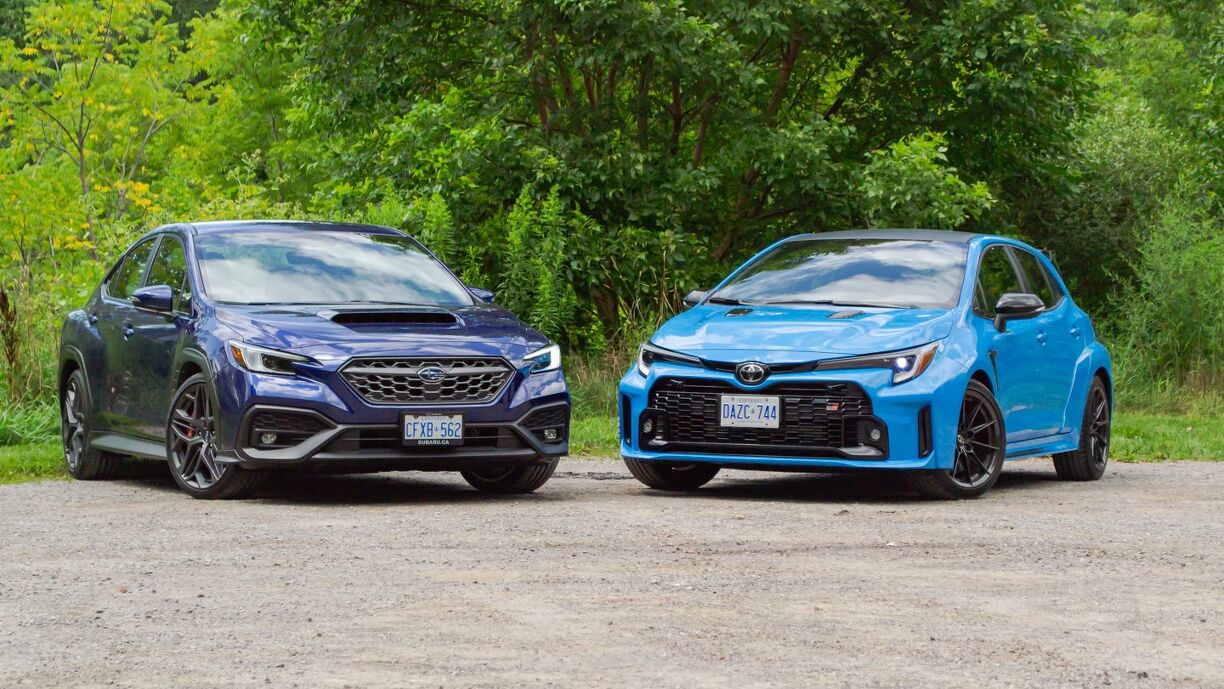
There’s a moment—usually somewhere between the first roll-on and the first corner—when a debate stops being theoretical. The road starts answering. And that’s when the 2026 Toyota GR Corolla and the Subaru WRX (in its sedan form) feel less like products and more like personalities with keys in their ignitions. Hatch vs sedan AWD isn’t just a body-style comparison; it’s a study in how different engineering philosophies translate into the same primal promise: confident traction, immediate response, and the kind of grin-inducing velocity that makes errands feel like events.
One common observation floats around every enthusiast circle: “The GR Corolla feels more hardcore, while the WRX feels more grown-up.” It’s a fair shorthand—but it’s also incomplete. The fascination goes deeper. It’s in the way each car meters power, tames torque, and tells the driver the truth through its steering, gearing, and chassis composure.
Let’s chase that truth across the full landscape: performance character, AWD strategy, dynamics, practicality, cabin vibe, and the practical reality of living with a hot AWD hatch or a rally-bred sedan.
1) The Shape of Desire: Hatch vs Sedan AWD
The hatchback isn’t just a silhouette choice—it’s a packaging philosophy. A hatch tends to emphasize versatility, easier cargo access, and a more compact “athletic” stance around the driver. The GR Corolla’s hatch proportions visually telegraph agility, and that matters psychologically: you naturally expect quick transitions and short, confident movements.
The WRX sedan, meanwhile, leans into the long-hood storytelling. Sedans often feel planted at speed, with a distinct sense of solidity. That extra length can translate into calmer high-speed composure and a different kind of motion—less “flick,” more “flow.”
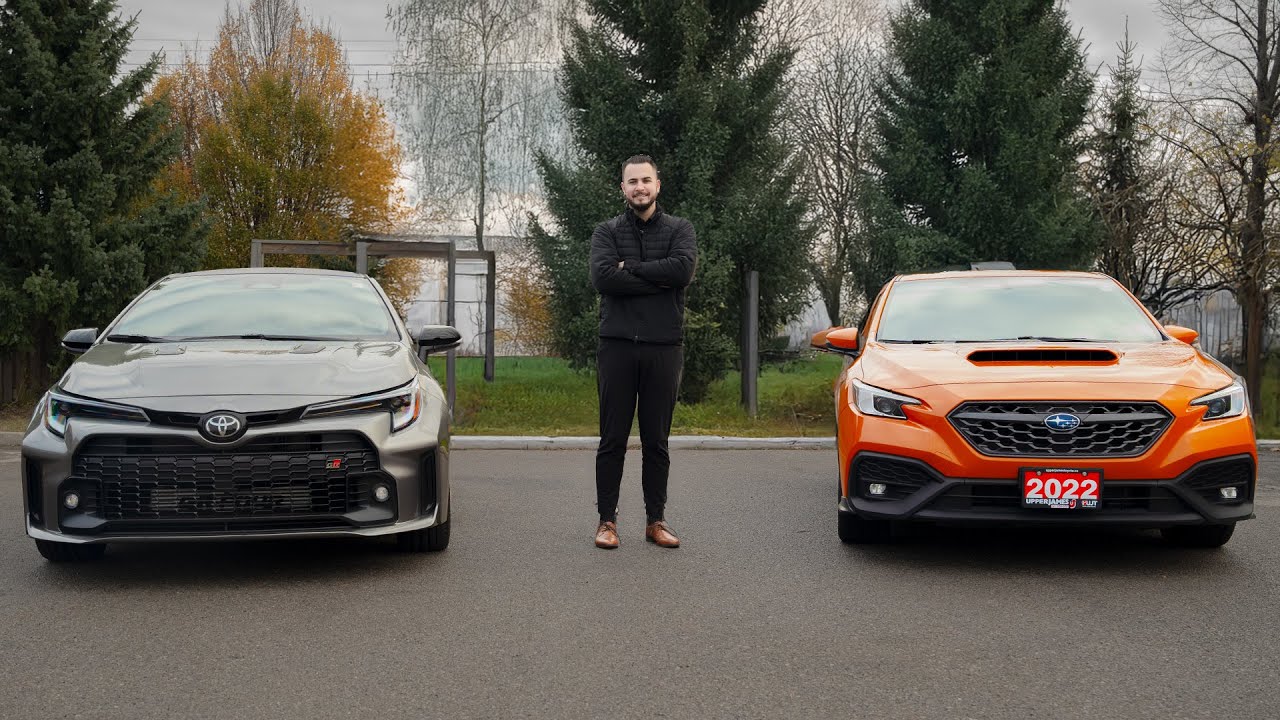
Still, the real fascination isn’t the door shape. It’s that both cars are AWD systems wearing different uniforms—each trying to convince you that traction can be both playful and disciplined.
2) AWD That Actually Feels Alive
AWD systems can be categorized by temperament: some are reactive, some are anticipatory, and some try to blend both. In a spirited drive, you can feel the difference immediately. The question is whether the traction management is “helping” or “holding.”
The GR Corolla is designed around an enthusiast’s expectation: that torque should arrive with conviction, not apology. Its AWD behavior tends to feel like it’s constantly negotiating with the road—balancing grip while preserving a sense of mechanical theater. When you rotate the car into a turn, the drivetrain contributes to the balance rather than masking it.
The WRX, on the other hand, has historically cultivated a different kind of AWD confidence—one rooted in rally lineage. Many drivers interpret this as stability first, drama second. Yet that’s not laziness; it’s a deliberate prioritization of predictable traction across varied surfaces. The deeper reason for fascination is that Subaru’s AWD identity often makes drivers feel like they can “trust the platform,” which invites exploration of the car’s limits over time.
In short: both systems want you smiling, but the GR Corolla often gets there through sharper responsiveness, while the WRX may arrive via consistent predictability.
3) Power Delivery and the Art of Torque Management
Common observation: “Both cars are quick.” True, but speed isn’t the whole story. The real magic is torque choreography. How does power build under throttle? How does it behave when grip changes mid-corner? How does it respond when you ask for more after a small correction?
With the GR Corolla, the sensation often leans toward immediacy. The car feels eager to surge, which can make it addictive on backroads where the pavement alternates between smooth confidence and sudden micro-adherence. The hatch layout also encourages a quick, “forward” feel—like the car wants to pounce.
The WRX often emphasizes usable performance with a broader confidence range. Its pull can feel more linear and less like a sudden event. That can be exactly what makes it fascinating: it invites a different driving style. Instead of relying on dramatic bursts, you can build pace through sustained momentum—smooth inputs, early positioning, and a calm, steady relationship with throttle.
4) Steering Feel: Feedback vs Flow
Steering is where enthusiasts fall in love or walk away. It’s the interface between your intent and the car’s interpretation.
The GR Corolla’s steering character tends to feel communicative—quick to respond, with a texture that helps you read the tires’ grip state. It’s a steering system that rewards precision. Short sentences are appropriate here: Move. Confirm. Adjust. That rhythm turns cornering into a conversation.
The WRX’s steering often feels more about flow than fist-clenching feedback. It can feel composed, with a calmer center and a sense that the car wants to glide through your line. For some drivers, that “flow-first” behavior is more confidence-inspiring than raw feedback.
Either way, both cars aim to make you feel connected. The deeper reason: when the steering communicates clearly, the drivetrain can express itself without turning the car into a gamble.
5) Chassis Composure and Cornering Strategy
Chassis personality isn’t only about stiffness. It’s about how the car transitions between phases: turn-in, mid-corner balance, and exit. The GR Corolla often feels like it’s written for committed cornering. It encourages late braking, decisive steering, and throttle modulation as the car settles into the apex.
The WRX may feel more forgiving in the way it distributes grip. That doesn’t make it slow—it makes it flexible. Flexible chassis behavior is a superpower on real roads. It lets you push without needing rally-stage perfection every time you exit a roundabout.
Here’s where the hatch vs sedan question becomes more than aesthetics: the hatch’s compact feel can amplify the sensation of agility, while the sedan’s longer proportions can promote a more composed long-radius confidence.
6) Braking, Stability, and the Confidence Feedback Loop
Fast cars aren’t only defined by speed; they’re defined by braking confidence. The best performance machines create a feedback loop: you brake, the chassis stays calm, the steering remains readable, and the car sets up for the next maneuver.
The GR Corolla tends to deliver a sport-forward braking feel—sharp enough to support frequent tempo changes. It can make quick drives feel like a continuous series of confident decisions.
The WRX, conversely, often emphasizes composure and stability under varied conditions. That can be the reason many drivers keep returning: the car doesn’t just perform on perfect days—it performs through the messy ones. Rain-slick pavement, cold mornings, and sudden highway ramp merges all become easier to manage when the braking system and chassis work as a coordinated unit.
7) Interior Atmosphere: Practical Fun vs Everyday Presence
Enthusiasm isn’t only mechanical. It lives in the cabin. The hatch tends to create a cockpit-like vibe, especially when the rear visibility and access feel direct. The GR Corolla’s interior can feel like it’s designed for quick transitions from casual commuting to spirited evening runs.
The WRX sedan’s cabin typically emphasizes an everyday presence—comfortable enough for long commutes, yet ready for spirited use. It often feels like the kind of car you can keep clean and calm during ordinary life, then unleash when the road clears.

The fascination deepens when you consider how interior usability affects driving frequency. A car you can live with becomes the car you actually drive—more seat time means more skill, which means more enjoyment. That’s a quiet truth no spec sheet can fully capture.
8) Transmission, Launch Feel, and the Driver’s Thumbprint
Transmission personality shapes the entire driving experience. With AWD cars, the gearbox’s behavior influences traction and how confidently you can modulate power.
Many enthusiasts chase the feeling of tight gear selection, crisp engagement, and the sense that the car is obeying your tempo rather than second-guessing it. The GR Corolla’s character often appeals to drivers who want a more immediate mechanical relationship—less lag, more anticipation.
The WRX’s transmission feel typically leans toward smoothness and consistency. That makes it satisfying for drivers who prefer control without constant involvement. It can feel like the car’s smart enough to handle the “in-between” moments—traffic, variable grip, and frequent stop-and-go.
9) Real-World Practicality: Cargo, Visibility, and Daily Usability
Hatchbacks are often the practical champions. The GR Corolla’s form factor can make grocery runs easier, and it tends to simplify loading gear. When you can stow a bag quickly, you feel less friction between intention and action.
Sedans can be wonderfully practical too, especially for long drives. The WRX’s configuration often provides a traditional trunk experience—predictable, secure, and familiar. Visibility is another subtle factor: hatchbacks can deliver a different sightline around the rear quarter, while sedans often feel steadier and more “straight-ahead” in perception.
In daily life, these differences influence how often you choose the car. That’s the deeper reason people obsess: not because these vehicles are perfect fantasies, but because they’re usable fantasies.
10) The Enthusiast Decision: Which One Fits Your Kind of Fun?
The choice between the 2026 GR Corolla and the WRX isn’t a matter of one being right and the other being wrong. It’s a matter of what you want your AWD to do for you.
If you crave quick reactions, hatch agility, and a sense of drivetrain intimacy, the GR Corolla often feels like the more fervent companion. It can turn short drives into celebrations.
If you prefer stability, rally-bred traction confidence, and a sedan’s calm authority with daily usability, the WRX can feel like the more balanced proposition—less about chasing every moment, more about collecting momentum and confidence.
Outro: Two AWD Paths to the Same Grin
Hatch or sedan, Toyota or Subaru—both the 2026 GR Corolla and the WRX live in the same thrilling neighborhood: AWD performance that doesn’t require you to become a race engineer just to enjoy it. Yet the fascination persists because each car answers the road in a distinct dialect. One speaks in sharper, more immediate punctuation. The other replies with composed phrasing and steadfast assurance.
In the end, the best choice is the one that turns your next drive into a story you want to repeat—one where traction feels alive, steering feels honest, and the car’s character becomes your favorite kind of obsession.