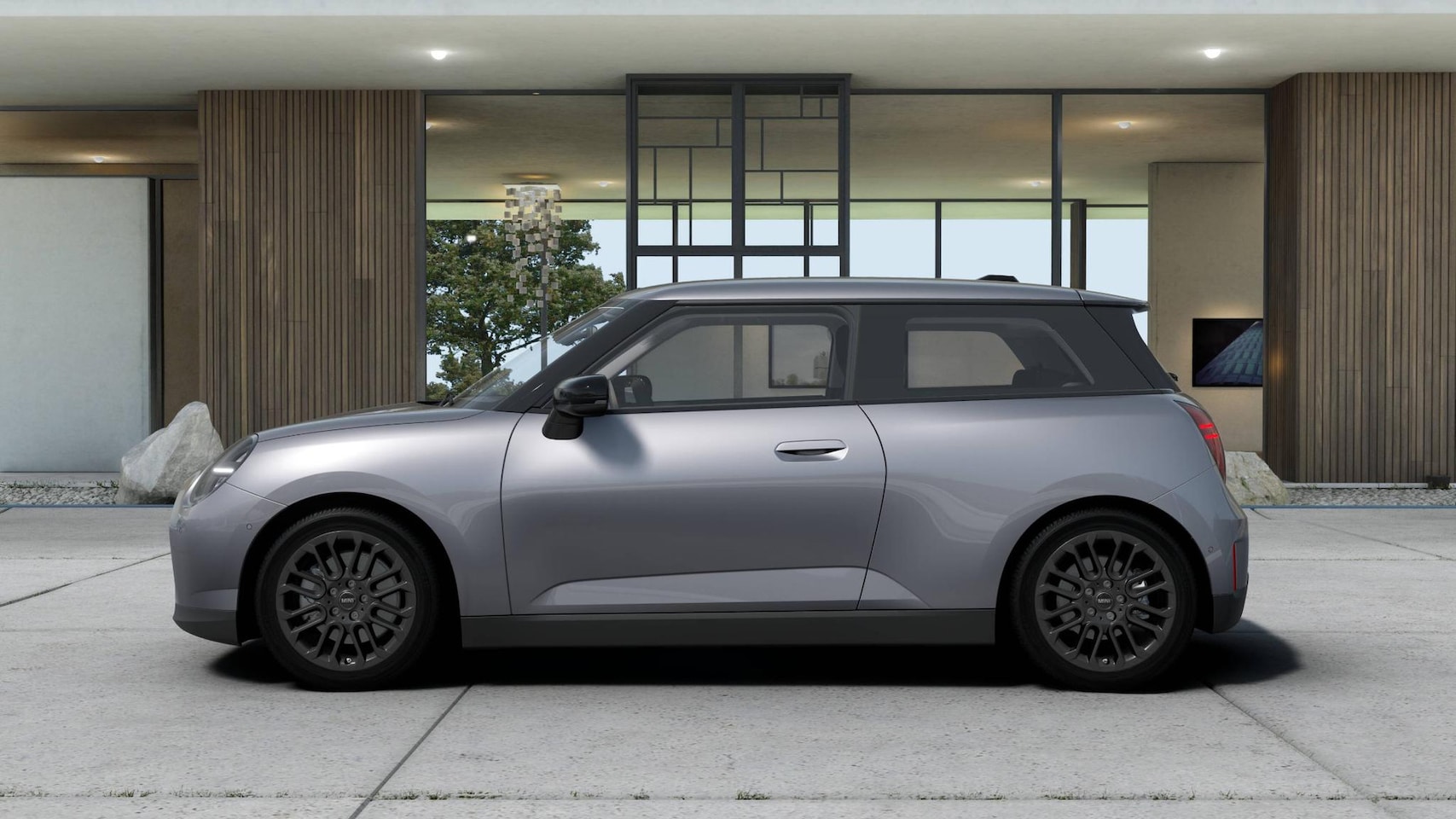
There’s a particular kind of grin that only a hot hatch can summon—one that arrives before the first corner. Now imagine that grin, but delivered by electrons instead of exhaust. That’s the promise trailing behind the 2026 Mini Cooper Electric SE, the sporty, compact EV hot hatch that dares to ask a deceptively simple question: can “fun” survive the electrification era? Most people assume the switch to a battery inevitably dulls the spark. Yet what’s fascinating is how often the opposite happens—because the magic isn’t merely in the noise. It’s in the immediacy, the balance, and the micro-moments where precision feels like a form of joy.
And yes, the “Electric SE” badge suggests a revolution. But the deeper reason for the fascination goes beyond specs. It’s the way a small car can turn everyday streets into a circuit—without requiring heroics, road closures, or a soundtrack with drama. Let’s unpack what makes the 2026 Mini Cooper Electric SE feel like more than a compromise, and why the idea of a fun EV keeps grabbing attention long after the initial headlines fade.
Small Car, Big Attitude: Why the Mini DNA Matters in an EV Era
A common observation is that EVs tend to become… too sensible. Too correct. Too calibrated for efficiency spreadsheets. Mini, however, has always played a different game. The brand’s identity has been built on characterful proportions and driver-facing ergonomics—a cockpit that feels intentionally directed at the person behind the wheel.
That matters because EVs bring instant torque, but they also introduce new packaging realities. Batteries, cooling systems, and power electronics take space and weight. The question becomes: does the car stay “Mini” anyway? In the Electric SE, the answer is in the way the vehicle holds its posture: compact stance, crisp steering response, and a sense that the chassis is still talking to you through the wheel. It’s not just transportation. It’s a performance conversation.
Most drivers don’t need lap times to feel exhilarated. They need alignment between throttle input and movement—something that Mini’s design language can support, even when the drivetrain fundamentals change.
Instant Torque, Instant Feedback: The Hot Hatch Equation Rewritten
Hot hatches are often romanticized around revs, shifts, and the theater of mechanical engagement. EVs remove a lot of that drama. But they replace it with something else: immediate propulsion. When you press the accelerator in an EV, the response arrives with almost mischievous speed. The Electric SE turns that instantaneous delivery into a usable talent for city driving and short bursts between lights.
Here’s the deeper fascination: torque isn’t only about speed. It’s about timing. With EVs, you can modulate output precisely at low speeds, nudging traction rather than negotiating gear ratios. That can feel surprisingly playful, like steering a friendly animal rather than wrestling machinery.
On twisty roads, that instantaneous pull encourages a more fluid, momentum-friendly driving style. Instead of downshifting for engine braking and punch, you steer with throttle finesse—small inputs, quick corrections, and a car that seems to anticipate your intention. It’s a different kind of athleticism, one that makes the term “hot hatch” feel less like an old label and more like a philosophy.
Essential, Not Bare: How Trim Philosophy Shapes the Experience
A lot of EV buyers worry that “electric” will mean “less car.” Less feel. Fewer tactile controls. Less personality. The 2026 Mini Cooper Electric SE counters that fear with a trim approach that aims to keep the essentials—comfort, usability, and style—front and center.
“Essential” sounds modest, but it can be a clever strategy. It strips away unnecessary complexity while preserving the things that make driving delightful: supportive seating geometry, intuitive control placement, and the kind of everyday functionality that turns commute time into something you don’t dread.
In practice, trim philosophy affects how you experience the vehicle every day, not just during a test drive. A car that feels easy to live with encourages you to use it more. And the more you drive it, the more you notice the subtleties: the smoothness of the power delivery, the quiet confidence of the ride, and the way the cabin settles into steady motion.
That’s where fascination grows. Not because everything is flashy, but because the car becomes a reliable little companion for ordinary adventures.
Design With Purpose: Aerodynamics, Proportions, and the Art of Remaining Cute
Mini styling has always been bold—sometimes charming, sometimes downright cheeky. But electric design asks for aerodynamics, efficient cooling, and airflow management. The question is whether that efficiency arrives by erasing the personality.
Instead of turning the Electric SE into a generic commuter egg, Mini’s approach leans into recognizable form. The silhouette stays compact. The stance remains purposeful. Details that once signaled engine identity now carry electric cues—through lighting signatures, grille-less sensibilities, and EV-appropriate styling accents.
There’s a practical upside too. Aerodynamics in a small car translate into real-world benefits: calmer wind noise at speed and smoother highway composure. Even if most drivers are charmed primarily by city maneuverability, it’s the quieter confidence during longer drives that quietly wins loyalty.
In a sense, the best EV designs don’t announce their efficiency—they perform it, then let you focus on driving.
Range Reality: The Fine Line Between “Enough” and “Anxiety”
No EV conversation is complete without range talk. A common observation is that people get stuck debating numbers—kilometers, battery capacity, charging time. But the real fascination comes from how range behaves in daily life.
Range isn’t just a single figure; it’s a mood that changes with weather, speed, and even how aggressively you explore the throttle’s personality. A fun hot hatch, by definition, tempts you. That means the Electric SE needs to offer a sense of predictability, not just optimistic marketing.
When an EV feels practical, it stops being a hobby and becomes a default. The most enthusiastic EV owners aren’t always the ones with the biggest battery. They’re the ones who trust the car enough to forget about it.
That trust is built from consistent energy consumption, sensible energy management, and a charging ecosystem that blends into routine. In the end, range comfort is less about mathematics and more about confidence.
Charging and Ownership: The New Rituals of Convenience
Owning an EV creates new rituals. Where gas stations were once a quick detour, charging becomes part of home life or a planned stop. It’s easy to stereotype this as inconvenient. Yet, once integrated, it can feel strangely liberating.
A well-designed charging experience includes clear in-car guidance, intuitive status messaging, and a system that helps drivers plan without turning every trip into an anxious calculation. Even small features—timers, route energy estimates, and charging alerts—can make a dramatic difference in how “heavy” the ownership feels.
And then there’s the bigger shift: the car replenishes while you do other things. Instead of filling up at the edge of your schedule, it fuels your life during downtime. That’s not just convenience. It’s a change in rhythm.
Mini has always leaned into lifestyle. Electric ownership becomes another chapter in that story, where the car fits your day rather than commandeering it.
Driving Dynamics: Steering Feel, Ride Compliance, and the Pursuit of Play
People fall for hot hatches because they’re playful machines—tight steering response, predictable grip, and a chassis that rewards confident inputs. EVs can still deliver that sensation, but it depends on how the car’s weight and suspension tuning are managed.
The Electric SE’s fascination lies in how it turns mass into momentum without turning the driving experience into sluggishness. The goal is not to feel “heavy,” even if physics insists on it. Instead, the aim is agility: quick directional changes, stable corner entry, and a ride that stays composed over imperfect pavement.
Steering feel matters. Not because it must be artificial, but because a driver needs a language to communicate. When the steering tells you what the tires are doing, you can play. You can probe grip. You can enjoy the road instead of fearing it.
In the Electric SE, the intent appears to be exactly that: keep the car communicative enough that fun doesn’t require bravado.
Why the 2026 Mini Cooper Electric SE Keeps Pulling People In
So why does the idea of a fun EV hot hatch keep captivating people, even those who claim they’re “not impressed by electrification”?
Because it challenges assumptions. It proves that the absence of engine drama doesn’t mean the presence of boredom. It also reframes performance: acceleration becomes a tool for carving space through traffic; efficiency becomes a quiet enabler of repeat fun; and the cabin calm makes it easier to focus on driving nuance.
There’s also a human reason. Many drivers are tired of compromise narratives. They want a car that fits their temperament—one that doesn’t force them to choose between practicality and delight. The Electric SE is compelling because it tries to make those two values coexist, side by side, in a compact form that feels almost audacious.
And the deeper reason? Fascination thrives on moments of contradiction: a small electric car that behaves like a hot hatch, a city-friendly EV with a performance mindset, a modern powertrain that still respects the thrill of control.
Final Thoughts: Not a Replacement—A Remix of the Hot Hatch Spirit
The 2026 Mini Cooper Electric SE doesn’t ask you to love electricity for the sake of progress alone. It invites you to love a driving feeling: quick response, nimble behavior, and a playful sense of agency. It’s a remix of the hot hatch spirit, tuned for an era where the engine’s role is gone, but the driver’s role is still sacred.
If you’ve ever dismissed EVs as quiet appliances, the Electric SE challenges that dismissal. If you’ve ever wanted a fun car that doesn’t demand daily sacrifices, it offers a compelling alternative. Either way, the fascination makes sense: it’s not merely about going electric. It’s about proving that joy can evolve.