There’s a particular kind of question that follows you after the showroom lights dim: What does it really drink? Not what a brochure swears. Not what a distant test track calculates. The honest, everyday arithmetic—the kind you feel in your wallet after a week of errands, highway merges, and the occasional spirited on-ramp—has a way of changing your perspective.
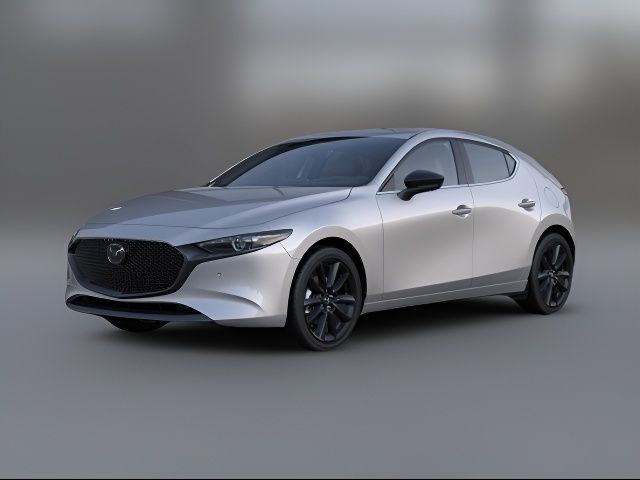
Enter the 2026 Mazda3 Hatchback Turbo. The turbocharged promise isn’t just about speed. It’s about efficiency that doesn’t require you to drive like you’re tiptoeing through a museum. And that’s where a real-world MPG test becomes more than a number. It becomes a narrative—one filled with stoplights, stretch of open road, and the quiet confidence of an engine that’s eager when you ask and composed when you don’t.
Let’s set the scene. Imagine the first morning drive: a short cooldown, a soft throttle at first, then the familiar rhythm of city blocks. Now imagine the same car later, when the roads loosen into something longer and more aerodynamic. This is how MPG stops being an abstract spec and becomes a lived experience.
Why a “real-world” MPG test changes everything
Fuel economy figures are often divorced from reality’s messiness. Real life introduces variables: climate swings, tire temperature, traffic density, road grade, and the psychological effect of a “quick” engine on your right foot.
A real-world MPG test is designed to capture those variables without turning the drive into a spreadsheet marathon. It’s about creating a repeatable path—then letting the car and the driver do what they naturally do. That’s the shift in perspective: instead of asking, “What’s the best-case scenario?” you ask, “What’s the most common scenario I’ll actually live with?”
And with a turbo hatchback, that question matters even more. Turbo power invites responsiveness, but it doesn’t always require constant fuel expenditure. The key is understanding how engine behavior translates to the pump, minute by minute.
Setting up the route: mixing city impatience with highway calm
Before any numbers can form, the test needs a personality. The 2026 Mazda3 Hatchback Turbo deserves both chaos and clarity.
Start with a city loop: multiple stop-and-go intersections, short acceleration bursts, braking regeneration (where applicable), and the frequent “one more block” decisions that slowly stack up fuel consumption. Long idling stretches—those are common too, especially in dense neighborhoods.
Then transition to highway driving: steady speeds, gradual grade changes, and the kind of calm where aerodynamic drag becomes the main character. Here, fuel economy is less about how quickly you can merge and more about how smoothly you can hold a consistent pace.
The magic happens when the test mirrors actual habits. If the driving day is half city and half open road, the MPG result becomes less of a trophy and more of a compass.
Inside the engine’s temperament: turbo power without constant theatrics
Turbo engines can be misunderstood. People assume boost equals gasoline fireworks. But the reality is more nuanced, and that nuance is exactly what a real-world MPG test reveals.
In everyday driving, the turbo often operates in a low-demand manner—supporting efficiency through smart airflow and combustion control. When you accelerate, boost arrives like a tailored suit: it fits the moment, not the entire outfit. You don’t have to keep the pedal buried to feel the torque; the car can deliver punch when you request it and settle down when you don’t.
That means MPG can stay surprisingly resilient even when you’re not driving with sterile caution. The test clarifies whether the turbo makes you more reckless—or simply more capable.
Test-day variables that quietly steer MPG
Fuel economy is sensitive to details that most people overlook. A turbo hatchback doesn’t “know” your spreadsheet, but it absolutely responds to conditions.
Temperature: Cold starts can spike consumption. Warm engines generally reward you with steadier efficiency.
Tire pressure and type: Underinflated tires raise rolling resistance. Overly aggressive tread can also shift outcomes.
Wind: Crosswinds and gusty days inflate highway consumption by increasing aerodynamic drag.
Payload: Passengers and cargo matter. A few extra bags in the hatch can alter results enough to notice over a long enough run.
Traffic flow: Stop-and-go with frequent re-acceleration is more demanding than a smoother cadence with longer coasting periods.
In other words, MPG is not only measured—it’s interpreted through the day’s invisible physics.
What the hatchback configuration changes
A hatchback is a practical geometry lesson. It encourages use. And use affects MPG.
Unlike a sedan that’s often optimized for predictable commuting, a hatch invites errands, quick trips, and the occasional “we can totally fit it” moment. That means real-world MPG tests should account for how people actually live with the vehicle—because the car isn’t just a commuter. It’s a daily appendage.
Still, the hatchback form can also mean less wasted space and, when driven gently, a favorable balance of packaging and efficiency. The test doesn’t just track fuel—it tracks how the car’s shape supports everyday motion.

The city result: where your driving style leaves fingerprints
In city conditions, MPG becomes a diary. Each hard acceleration is a paragraph written in fuel. Each smooth rollout is a sentence that reads effortlessly.
The 2026 Mazda3 Hatchback Turbo has a particular advantage here: torque availability can reduce the need for frantic gear hunting. When the car responds crisply, it’s easier to maintain momentum without sprinting every light.
During the test, watch for two trends. First, whether the engine stays composed at low speeds. Second, whether you naturally adjust your behavior because the power feels usable. A well-calibrated turbo can make you less aggressive because it makes the car feel “right” at normal throttle positions.
The outcome is rarely about absolute restraint. It’s about whether the turbo tempts you into unnecessary boost—or simply helps you glide through traffic with fewer interruptions.
The highway result: steady throttle and the drag equation
On the highway, the MPG conversation shifts. You feel it: the vibration of consistency, the slow change of distance to the next exit, the subtle pressure of maintaining speed.
Turbo performance still matters—because passing power reduces the need to accelerate repeatedly. But the dominant factor becomes aerodynamics and steady-state engine loading.
In the test, highway MPG reveals whether the Mazda3 Hatchback Turbo can cruise efficiently without turning the engine into an overworked metronome. The best sign is calmness: low drama, stable speed, and fuel burn that doesn’t surge every time the road tilts upward.
How to interpret the MPG numbers like a pro
Numbers alone can be misleading. The real skill is interpreting them with context.
Look at average MPG, not single-mile anomalies. A short burst of traffic won’t reflect your typical week.
Compare city versus highway segments. If highway efficiency is strong but city is weak, your lifestyle might need smoother acceleration habits or fewer idling situations.
Notice the relationship between “feel” and consumption. If the car feels eager, that can encourage more throttle. But if eagerness comes from responsive torque rather than constant boost, the MPG can remain steady.
This is the shift in perspective again: instead of treating MPG as a verdict, treat it as feedback.
So, what’s the real takeaway?
The most satisfying part of a real-world MPG test is the moment the story crystallizes. It’s when you realize the turbo doesn’t automatically mean thirst. It can mean control—more usable power at the moments you need it, and restraint when you don’t.
For drivers who want a hatchback that feels alive, the 2026 Mazda3 Hatchback Turbo can deliver more than performance vibes. It can offer a practical kind of confidence: the ability to accelerate without turning every commute into a fuel-event.
That’s the real promise worth chasing. Not only that the engine can move quickly, but that it can do so without breaking the spell of everyday affordability.
Final thoughts: a curiosity satisfied, not just an answer delivered
After the last mile, the results don’t feel like an exam grade. They feel like clarity. The 2026 Mazda3 Hatchback Turbo earns a place in your routine if its fuel economy matches the way you actually drive—city stop-and-go, highway steadiness, and the human tendency to get excited when the car responds.
And once you’ve run the numbers in the real world, you’ll never look at MPG the same way again. You’ll measure with imagination. You’ll drive with awareness. You’ll understand, with a grin you don’t have to explain, whether the turbo’s promise is just marketing—or truly something you can live with.