There’s a certain kind of hush that falls over a driveway when the key turns and the engine clears its throat. Then comes the familiar clink—gate to gate, lever to rail—like punctuation in a sentence only enthusiasts can fully hear. In 2026, that sound isn’t disappearing quietly. It’s transforming. Manual transmission hatchbacks are becoming less about being “the old way” and more about an intentional choice: a shift in perspective, away from autopilot motoring and toward hands-on clarity.
Consider this your invitation to save the stick. Not as nostalgia cosplay, but as a living, breathing philosophy. Because the 2026 hatchback, when paired with a manual, does something remarkable: it turns driving from passive consumption into active authorship. And once you feel that difference, it’s hard to go back.
The 2026 Hatchback Renaissance: Why the Manual Feels New Again
For years, manuals were treated like a relic—an artifact sealed behind glass. But 2026 is rewriting the script. Hatchbacks, in particular, have become a playground for compact joy. Smaller footprint. Agile steering. Attitude in the design language. In a world of numbness, a manual transmission injects specificity. It tells you exactly what the car is doing, right now, not a moment later through layers of electronic interpretation.
Here’s the promise: you stop driving the car as a passenger and start driving it as a participant. Short shifts become micro-decisions. Gear selection becomes a kind of conversation. Even the drivetrain’s feedback—vibration, resistance, the tiny dramas of engagement—creates a feedback loop that feels almost human.
And yes, the car still moves you from A to B. But it also keeps you awake. Mentally. Physically. Emotionally. That’s the perspective shift: you’re not just transported—you’re engaged.
From Autopilot to Artistry: The Control You Actually Feel
Automatic transmissions have improved dramatically. Yet improvement doesn’t automatically mean intimacy. A manual box offers a different form of competence. It doesn’t “decide” for you; it works with you. Your inputs have consequences that arrive instantly, without a software delay that sometimes makes the car feel like it’s thinking in slow motion.
Picture a tight roundabout. The steering is already doing its dance. Now add manual control: you can downshift before the tires run out of confidence, keeping torque where it belongs. The car becomes predictable in the most satisfying way. The drivetrain turns into a tool you can wield—not a system you negotiate with.
Long drives become calmer too. In stop-and-go traffic, a manual can become a rhythm practice. Let the clutch bite. Feather the throttle. Anticipate the next gap. It’s not about endurance; it’s about choreography.
Why Hatchbacks Specifically? Practicality Meets Personality
Manual transmissions aren’t only for sports cars. Hatchbacks are where the romance meets the everyday. They offer usable cargo space, easy access, and city-friendly dimensions—while still letting you drive with intention.
That combination is powerful. You can have errands, groceries, and weekend detours, all wrapped in a compact silhouette. But with a manual, the car doesn’t feel like a dull appliance. It becomes a compact stage where each trip has a texture: the short sprint at the light, the smoother merge, the controlled deceleration when traffic thickens.
And because hatchbacks often serve as entry points into enthusiast driving, the manual transmission becomes an education. It teaches momentum management. It builds mechanical empathy. It nudges you toward anticipating grip and engine response rather than simply reacting to it.
Car Companies Are Making Tough Choices—So You Should, Too
In 2026, the manual option is increasingly selective. That selection can feel frustrating, but it also creates opportunity. When a manufacturer chooses to keep a stick shift alive, it often means they’re targeting a specific kind of driver: someone who values feedback, not just efficiency. Someone who enjoys the steering wheel as an interface rather than decoration.
So the shift in perspective begins with a decision. You’re not just buying a transmission. You’re voting for a driving experience that resists virtualization. You’re saying, “I want my car to respond in real time—not through compromise.”
This is where curiosity becomes momentum. You start noticing how many daily interactions are automated: navigation prompts, lane centering, adaptive cruise, and even the soft obedience of touchscreen controls. A manual hatchback cuts through that fog. It reintroduces friction, but the good kind—the kind that sharpens learning.
The Driving Skill That Changes Everything
Let’s be honest: manuals have a learning curve. That curve is also the point. Skills aren’t merely technical; they’re emotional. Mastering smooth clutch engagement makes you feel capable. Timing your shifts makes you feel fluent.
The most magical part is how quickly your brain adapts. First, you think about it. Then you don’t. You feel the engine’s cadence without looking at a tachometer. You recognize the moment to upshift by sound and vibration. You learn to treat the clutch as a precision instrument rather than a switch.
Over time, the manual becomes second nature. The car feels less like a machine and more like an extension of your intent. That’s not romantic language; it’s sensory engineering. Your senses update. Your perception tightens.
Performance Myths vs. Reality: Manuals Aren’t Slower—They’re Different
Sometimes the conversation turns into a binary: manual equals inefficient, automatic equals quick. Reality is more nuanced. A well-matched manual transmission can deliver sharp response, especially when you select the gear that keeps the engine in its useful power band. Your “gearbox strategy” becomes part of the performance equation.
Manual drivetrains can also encourage smoother acceleration and more intentional braking. Instead of relying on the car to decide when to downshift, you do it. That means fewer surprise behaviors, fewer jerky transitions, and more consistent feel.
Are automatics capable? Absolutely. But capability is not the same as charisma. A manual isn’t only a means to move faster; it’s a method to move more intelligently.
Fuel, Maintenance, and the Practical Side of Saving the Stick
Any enthusiast must balance joy with logistics. Fuel economy depends on driving style, gearing, and engine tuning. Manuals often reward patience and steady throttle application. When you drive with purpose, the consumption numbers can be respectable. When you drive like you’re auditioning for chaos, they’ll suffer—regardless of transmission type.
Maintenance also deserves attention. Clutches wear. Fluid changes matter. Yet the manual world is familiar in a way that can feel reassuring. The system is mechanical enough to understand. That transparency can reduce anxiety. You know what the components do, and when they begin to feel off, you notice it early.
In other words, the manual asks for participation—and participation is a kind of ownership education.
How to Choose a Manual Hatchback in 2026: The Checklist That Prevents Regret
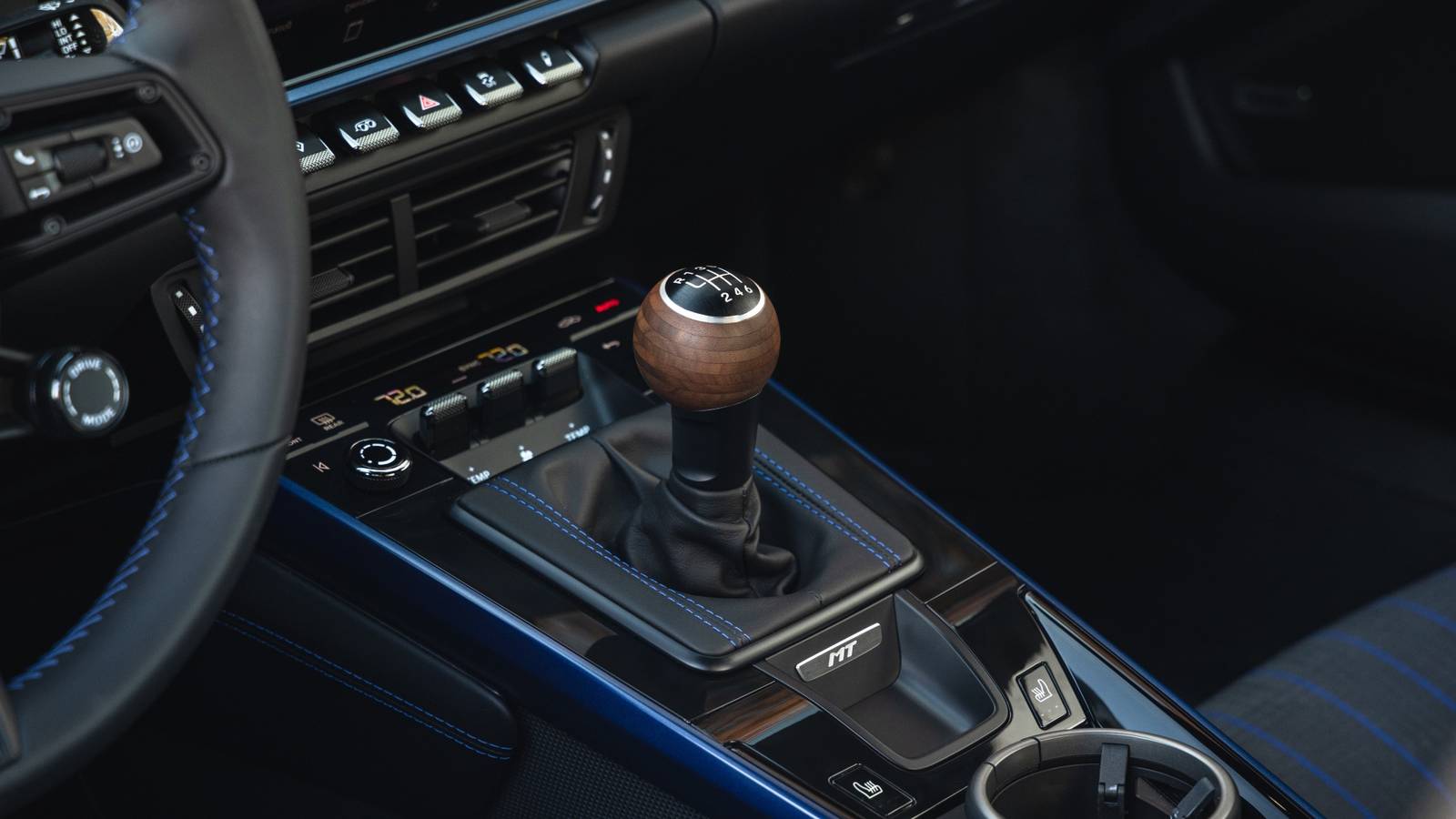
If manuals are getting rarer, the selection strategy becomes critical. Start with the clutch feel. Try to find a car where the engagement is predictable rather than vague. Pay attention to shift linkage smoothness. A quality shifter should feel guided, not rattly.
Next, consider the gearing. The most satisfying manual hatchbacks usually offer ratios that match real driving speeds—city crawling, highway merges, and those short bursts where the engine sings when you drop into the correct gear.
Finally, evaluate comfort. A manual hatchback should still be livable. Noise levels, seat support, steering weight, and visibility matter. The goal isn’t to suffer for authenticity. The goal is to drive something engaging every day.
Why This Matters: The Cultural Value of Staying Engaged
Technology will keep advancing. Screens will multiply. Software will optimize. But there’s a cultural cost to becoming permanently mediated. Manual transmission hatchbacks represent a refusal to let the car become a remote-control device.
They restore a specific kind of competence. You learn to manage momentum. You learn to anticipate. You learn to listen. That’s not just driving skill—it’s a mental habit of presence.
And once presence becomes normal, the rest of life feels sharper too. You notice more. You react less automatically. You choose with intention.
Outro: Save the Stick, Keep the Joy
Manual transmission hatchbacks in 2026 aren’t merely surviving. They’re evolving into symbols of engagement. They promise a shift in perspective—from passive motion to participatory control. From digital smoothness to mechanical honesty. From letting the car decide to deciding with the car.
If you’ve ever wondered what it feels like to drive with your whole attention, this is the moment. The stick isn’t just a lever in a gated slot. It’s a doorway into a more vivid relationship with the road.
So save the stick. Not because the future demands it. Because your instincts deserve a voice.