There’s a particular moment tall drivers recognize immediately: the subtle shift when you find the right driving posture without performing a contortionist routine. It’s not just comfort—it’s a kind of calm certainty. Too often, people assume legroom and headroom are straightforward measurements on a spec sheet, like static facts carved in stone. Yet, in real life, headroom and legroom feel different depending on seat design, cushion geometry, steering-wheel reach, and even the angle at which the roofline “arrives” at your height. That’s why the best 2026 SUVs for tall drivers aren’t merely roomy; they’re thoughtfully proportioned, as if the cabin planners quietly anticipated long strides, tall spines, and the need for relaxed control.
The common observation is simple: “I need more space.” The deeper truth is more interesting. Tall drivers often crave not only room to move, but room to breathe—space that supports posture, reduces fatigue, and lets the body settle into a driving stance instead of bracing against the constraints of the seat and dash. Consider this article an invitation to examine those hidden factors, then land on SUV choices for 2026 that deliver headroom and legroom with rare consistency.
Headroom vs. Legroom: Two Different Kinds of Freedom
Headroom is often described as vertical generosity, but its practical meaning is more nuanced. It’s the difference between feeling the ceiling press down on you and feeling a comfortable “air gap” above your head. A tall driver’s head isn’t the same height as the roof clearance number; hair height, helmet use, and the seat’s actual mounting position all influence perceived clearance. Legroom, meanwhile, is about linear distance and, more importantly, how that space aligns with your preferred seating angle.
When legroom feels insufficient, it rarely means the SUV is truly cramped everywhere. More often, it’s the relationship between the seat base, the center console, the seatback recline, and the pedal layout. In other words: you might have room for your legs, but not room for your preferred hip angle. That’s why the best 2026 SUVs handle legroom as a system, not a single dimension.
Why Tall Drivers Notice Cabin Geometry First
Many drivers discover the truth during quick test drives: it’s not always the biggest numbers that impress. It’s the cabin geometry—how the dashboard tapers, how far the seat can slide without sacrificing steering-wheel position, and how the roof contour changes as you move backward.
Some SUVs are “tall-friendly” in brochures, yet feel awkward in motion. A common culprit is seat travel that doesn’t pair well with steering reach. Another is a roofline that slopes downward quickly near the rear seats. Tall drivers may find the front acceptable but feel cramped in the second row, or vice versa. The fascination is easy to understand: the body senses even minor misalignment instantly. What seems like a small design choice can create a chain reaction—shoulder tension, neck strain, and the quiet urge to sit “just differently,” which becomes exhausting on longer drives.
What to Check Before Buying: The Three-Point Test
Before focusing on model names, use a simple three-point test that mirrors how tall drivers actually evaluate space. First, settle into the driver’s seat and confirm head clearance with your natural posture. Then, place your hands where they would naturally rest on the steering wheel—don’t force an athletic pose. Finally, check pedal reach and ankle comfort. If your knee angle feels restrictive or your heel hovers unnaturally, legroom is only part of the story.
Also, try adjusting the seat in multiple directions—not just up and down, but fore-aft and recline. A long torso often needs seatback support, while a long leg may require additional fore-aft clearance. This is the deeper mechanism behind why certain SUVs feel effortlessly accommodating: their adjustment ranges cooperate with each other instead of competing.
Subaru Outback: Versatility with Surprising Head-and-Seat Harmony
For tall drivers who like a tall seating position without the floating feeling of some crossovers, the 2026 Subaru Outback stands out as a practical compromise. Its cabin layout tends to prioritize everyday usability: visibility, supportive seating, and a sensible relationship between the driver’s seat and the steering controls.
The fascination here is subtle. Many wagons and rugged crossovers look spacious, but the Outback’s interior geometry often reads as “coherent.” The seat typically feels positioned to reduce reaching and minimize the sense that your knees are negotiating with the dash. In tall-driver terms, that’s an invitation to relax—rather than to negotiate.

If you’re someone who frequently transitions between city driving and highway stretches, the Outback’s balance can help keep fatigue low. Look for the trim that includes generous seat adjustment and ensure the steering wheel moves enough to support your posture.
GMC Yukon: Big-SUV Space That Feels Like a Room, Not a Ride
The 2026 GMC Yukon is the kind of SUV that tall drivers often describe as “automatic comfort.” Its reputation isn’t simply about the overall size—it’s about how usable that size becomes once you’re seated. Full-size cabins can deliver broad headroom and dependable fore-aft leg space, but only some manage to keep the dashboard from creeping inward psychologically.
With the Yukon, the cabin tends to feel proportioned for grown body dimensions. The driver’s seat often provides the kind of adjustment range that matters: enough travel to accommodate tall legs without forcing an awkward steering reach. That’s the deeper reason tall drivers are drawn to full-size SUVs: the interior volume isn’t just theoretical; it becomes functional at multiple seating heights.
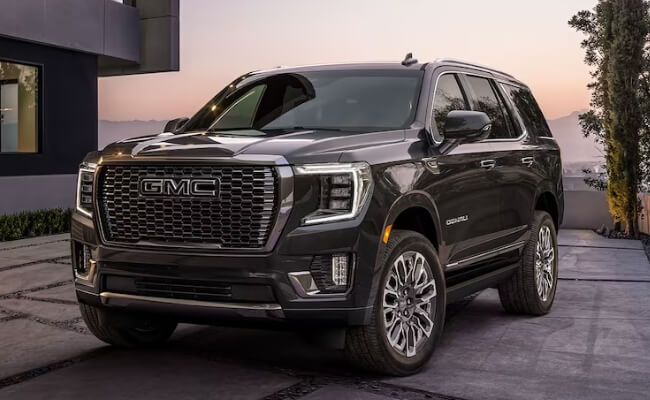
When you test one, focus on the steering-wheel range and the visibility overhead. Tall drivers frequently care about how much the roof feels “above” them, especially when changing lanes or climbing into curbs. The Yukon’s spaciousness can reduce that constant micro-bracing.
How Seat Design Changes Everything (Cushion, Bolsters, and Recline)
Two SUVs can list similar headroom and legroom yet feel wildly different. Seat design is the reason. Cushion thickness affects how your hips settle. Bolsters influence where your thighs rest. Recline range can either help your posture remain neutral or force you into a forward lean that tightens your lower back.
For taller drivers with long femurs, the fore-aft seat adjustment is crucial. For those with longer torsos, supportive recline and adjustable lumbar can be the decisive factor. Even the steering-wheel tilt and telescoping range can transform the “reach sensation.” That’s why the best 2026 SUVs are often the ones that feel adjustable in a holistic way—like the cabin is tuned to the driver rather than demanding compliance.
Second-Row and Rear-Seat Reality: Not Just for Passengers
Some tall drivers think only about the driver’s seat, but a deeper comfort assessment includes the moments you’re not driving. Family trips, ride-sharing, and loading the car all expose cabin ergonomics. A tall driver might still climb into the second row with equipment, bags, or a suitcase, and discover that roof slope and seatback contour change the entire experience.
The best 2026 SUVs provide a more consistent “tall-friendly” environment across rows. Look for second-row headroom that doesn’t collapse rapidly and legroom that allows knees to settle without pressing into hard surfaces. Even if you’re mostly the driver, occasional rear-seat comfort can signal overall cabin proportions.
Ergonomics on the Road: Steering Reach, Pedal Feel, and Fatigue
Comfort isn’t a static measurement; it’s an endurance story. Taller drivers often spend longer periods in one position, which magnifies small inefficiencies. If steering reach is slightly too long, you’ll unconsciously tighten your shoulders. If pedal reach is too extended, your ankle can fatigue. If your head clearance is marginal, you may instinctively hunch or keep your chin forward.
That’s why the “best” tall-driver SUVs tend to feel effortless over time. Their controls align well with natural body mechanics. You should be able to drive with a relaxed jaw, a neutral neck, and an easy shoulder line. When those factors align, the cabin becomes a supportive environment instead of a constraint.
Choosing Wisely: Trims and Options That Matter Most
Even within the same model, trim levels can make a noticeable difference. Options like power-adjustable seats, telescoping steering wheels, and adjustable lumbar can turn an almost-right cabin into a truly right one. Some SUVs include seat features that reduce pressure points—important for taller drivers whose thighs and lower backs may experience more stress during long drives.
Pay attention to wheel and tire packaging too. Taller SUVs with different suspension setups can shift ride height slightly, affecting perceived headroom and seat-to-roof distance. The correct choice isn’t always the most expensive trim; it’s the trim that includes the adjustment tools you need.
Final Thoughts: The Right SUV Should Fit You Like a Habit
The best 2026 SUVs for tall drivers aren’t simply bigger—they’re more considerate. They address the usual complaints about headroom and legroom, but they also solve the deeper issues: posture alignment, adjustment range compatibility, and the quiet mechanics that prevent fatigue. The right SUV doesn’t demand adaptation. It invites ease.
Take the time to do the three-point test, sit in multiple positions, and pay attention to how the cabin “reads” around you. When you find an SUV where headroom feels airy and legroom feels naturally placed, it stops being a checklist and becomes something else entirely: a comfortable driving ritual.