There’s a particular kind of magnetism that surrounds the Audi Q7. It isn’t merely the way it looks—though its stance certainly carries authority. It’s the way the vehicle seems to anticipate your day before you even step inside: the cabin’s calm geometry, the reassuring heft of its controls, and the sense that this three-row luxury SUV was designed for real movement rather than showroom stillness. Many drivers first approach the Q7 with a simple question: Is a large, three-row luxury SUV actually practical? The deeper answer is more intriguing. The Q7 doesn’t just tolerate family life; it choreographs it, quietly smoothing the frictions that usually come with space, schedules, and passengers of varying moods.
To some, that fascination looks like “just luxury.” But luxury, in the Audi sense, is less about excess and more about restraint—an intentional arrangement of materials, acoustics, and interface logic. And in the Q7, that restraint becomes a kind of persuasive elegance, making the obvious choice (a three-row SUV) feel surprisingly composed.
A Familiar Question: Why Do People Want a Three-Row SUV?
Most shoppers begin with a pragmatic premise: more seats mean more flexibility. Yet the common observation is that three-row vehicles often compromise the middle and first rows—sacrificing legroom, comfort, or trunk utility in the name of adding capacity. That’s where the Audi Q7’s narrative diverges. It enters the conversation not as a bulky afterthought, but as an SUV that treats the third row as a genuine, usable destination rather than an occasional emergency platform.
The Q7’s interior layout is where its appeal becomes tangible. The design team clearly understood that a three-row SUV lives in a world of school pickups, road trips, and carpool choreography. The result is a cabin that feels less like a puzzle and more like a well-rehearsed routine.
Exterior Presence: Quiet Confidence, Not Loud Swagger
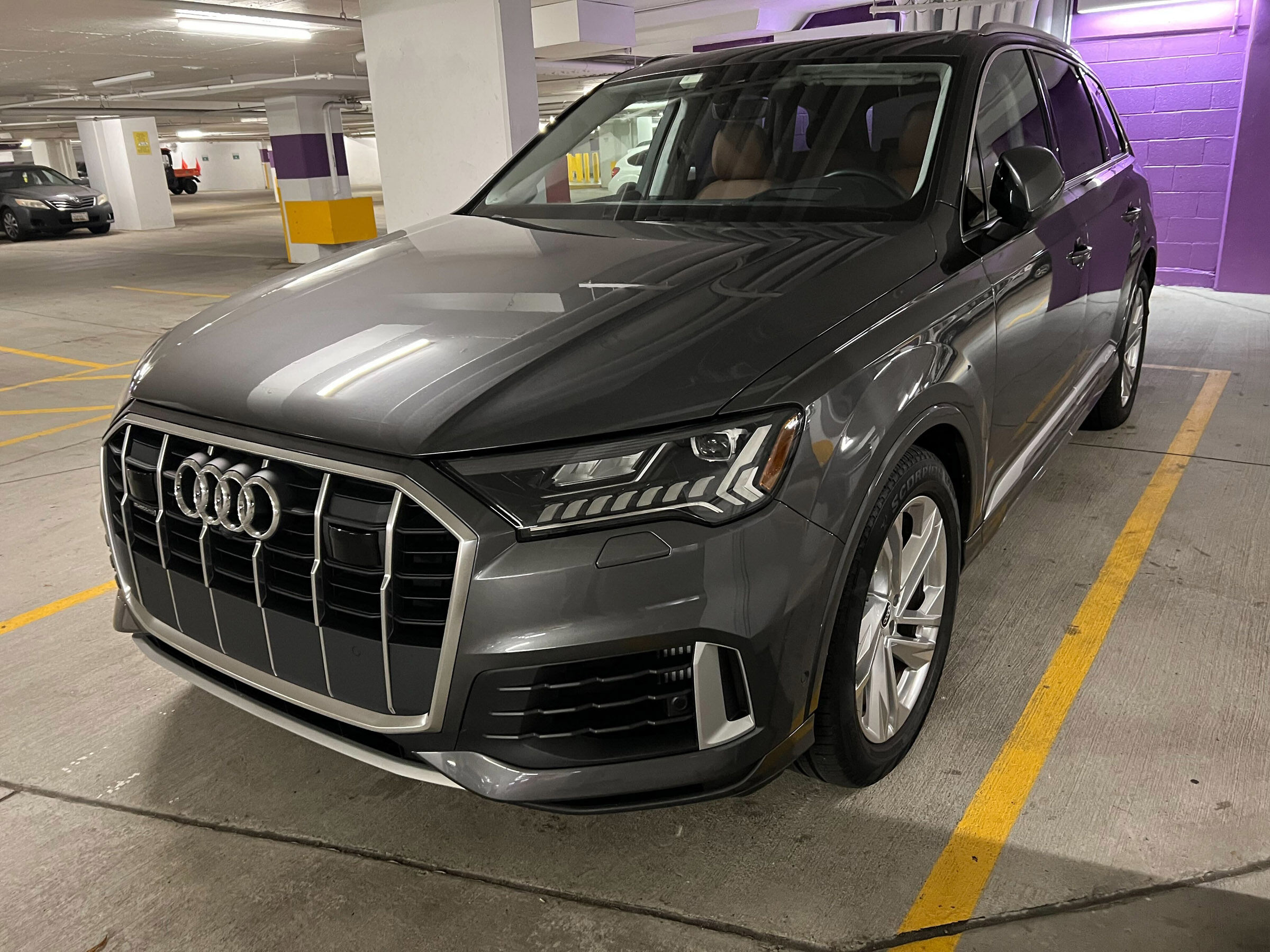
From the outside, the Q7 communicates sophistication through proportion. Its front fascia reads as deliberate rather than aggressive. Even the lighting signature carries a composed tone, like a tailored suit with clean lapels. This matters more than you might expect. When an SUV presents itself with restraint, it encourages a different kind of driving mindset—less theatrical, more focused.

Over time, the appeal becomes almost psychological. A vehicle that looks cohesive at every angle tends to feel trustworthy. It’s not merely curb appeal; it’s an ongoing impression that the whole machine is designed to be lived with.
Cabin Atmosphere: The Art of Making Space Feel Intimate
Step inside and the Q7’s approach to luxury becomes unmistakable. The cabin is not only spacious—it’s organized. Surfaces appear to fall into alignment. Buttons and controls land with clarity. Sound insulation does its work, turning the cabin into a pocket of composure even when the outside world gets hectic.
Here’s the subtle reason many owners grow attached: the Q7 doesn’t make you constantly adjust. It reduces the mental tax of everyday driving. That “effortlessness” is a form of comfort that’s difficult to replicate. It’s the difference between “having luxury” and “feeling guided.”
Three-Row Reality: Comfort Where It Counts
Third rows in many SUVs can feel like an obligation—something you fold down until the next big trip. In the Q7, the third row feels more like a compromise that’s been engineered thoughtfully. The seating arrangement supports practical use, and the vehicle’s dimensions are leveraged to keep the experience from turning into an exercise in discomfort.
Passengers in the third row benefit most on shorter rides, but the deeper fascination is that the Q7 makes transitions easier. The second row can be adjusted and positioned so the path to the rear feels less like a contortion and more like a straightforward motion.

And that’s where the common observation often misses the real point. Even if third-row space is not “best-in-class” in a spreadsheet sense, the Q7 improves experience quality: seat access, usability, and the way the cabin remains coherent when the rear is occupied.
Infotainment and Controls: A User Interface That Respects Attention
Modern SUVs often drown drivers in options. The Q7, however, feels like it’s built for navigation of daily life rather than navigation of menus. The interface is intuitive enough to be second nature, yet deep enough to satisfy those who like to tune their environment.
What makes the system compelling is its calm efficiency. It doesn’t demand attention as often as lesser setups. It supports focus—on traffic, weather, and the subtle timing required for confident driving.
Ride Quality: Suspension Tuning with a Civilized Temperament
Ride comfort is more than softness. It’s the way the suspension filters harshness without flattening the vehicle’s character. The Q7 typically delivers a composed ride that absorbs pavement irregularities with tact. Even when road surfaces degrade or curves tighten, the cabin doesn’t feel chaotic.
This is where the three-row concept becomes meaningful again. Families don’t want a luxury SUV that turns every commute into a test of nerves. They want predictability. The Q7’s tuning tends to provide that predictability—an understated confidence that grows more valuable the longer you own the vehicle.
Powertrain and Driving Feel: Smooth Motion, Confident Momentum
A three-row luxury SUV must be flexible. It should move smoothly through city traffic, then feel composed when roads open up. The Q7’s driving dynamics often reflect a balance: enough responsiveness for overtaking, enough smoothness for long highway stretches.
Under acceleration, the experience aims for progression rather than theatrics. The vehicle responds with a sense of continuity—less “snap” and more purposeful flow. That character matters, because it influences how fatigue accumulates on road trips. Smooth motion is a form of comfort that doesn’t announce itself until you’ve reached your destination.
Storage and Practicality: The Hidden Genius of Everyday Logistics
Storage space is where luxury SUVs earn (or lose) real loyalty. The Q7’s cargo strategy supports family routines: groceries, sports gear, and the endless sprawl of travel items. While the third row is there for passengers, the trunk and cargo configuration are what keep trips sane.
The fascination here isn’t only about maximum volume. It’s about how the storage solutions integrate with the rest of the cabin. A vehicle can be big yet frustrating; the Q7 tends to feel big and usable at the same time.
Safety and Driver Assistance: Confidence Beyond the Checklist
Modern driver assistance systems can be technical, but what you feel is reassurance. The Q7’s safety suite is designed to reduce stress, especially in congested situations—lane changes, highway merges, and nighttime driving. When these features operate smoothly, they stop feeling like gadgets and start feeling like invisible guardians.
That’s the deeper reason owners keep coming back to the Q7. It doesn’t simply carry people; it carries confidence. It helps you arrive with fewer surprises, which is perhaps the most valuable luxury of all.
Who the Audi Q7 Truly Fits
The Q7 makes particular sense for buyers who want a refined SUV with real three-row utility. It’s for families that prioritize comfort without wanting to surrender style. It’s also for people who entertain, travel frequently, or simply dislike compromising on interior atmosphere.
If your household contains a mix of ages and schedules, the Q7’s cabin coherence becomes a daily advantage. It reduces friction. It makes logistics feel less like an ongoing negotiation.
Conclusion: Three Rows, One Philosophy of Calm
The Audi Q7’s greatest strength is that it doesn’t treat the third row as a gimmick. Instead, it treats the whole vehicle as a unified environment—an ecosystem of space, sound, and usability. The common observation is that larger SUVs are often inefficient or awkward. The Q7 responds with something quieter and more satisfying: a sense of harmony.
After living with it—through errands, school runs, and long stretches of road—the fascination becomes clear. The Q7 offers luxury that isn’t loud. It’s structured, considerate, and quietly compelling. Three rows aren’t just a feature here; they’re part of an overall philosophy: make the everyday feel intentional, and make travel feel like it belongs to you.