The Ford Expedition has always carried itself like a solution in search of a problem: long, composed, and unfazed by chaotic family schedules. Yet “space” isn’t one thing—it’s a collection of details that decide whether a road trip feels effortless or slightly combative. So here’s a playful question to begin: What happens when you try to live out of an SUV for a day, like it’s a temporary apartment, and you actually test it?
Imagine a typical scenario. You load it like a weekend expedition—coolers, duffels, backpacks, the occasional rogue sports gear. You settle into the Max trim, where length and interior volume conspire to create breathing room. But then the potential challenge arrives: you don’t just need space. You need space that behaves—usable, accessible, and ready for real-life messes. Can the Expedition MAX make that promise hold up?
Let’s run a “space test” the way your family would: with a little drama, a bit of motion, and enough belongings to reveal the truth.

First Impressions: Length That Changes the Temperature of the Cabin
Stepping into the Expedition MAX feels like moving from a room to a larger room. The extra length isn’t simply a spec-sheet flex; it changes the cadence of movement. Doors open wide. Seats feel positioned for adults rather than negotiated with for compromises.
The cabin’s overall layout encourages orientation—drivers and passengers don’t have to constantly recalibrate their posture. That matters when you’re loading and unloading repeatedly, or when one person wants to climb in while another wants to retrieve something from the back. Long sentences can describe the vibe, but the sensation is immediate: the MAX trim makes everyday tasks feel slightly less strenuous.
Front Row Comfort: Room to Stretch, Not Just to Sit
The first row is where you learn whether a spacious SUV is truly spacious. The Expedition’s front seats offer supportive cushioning and a commanding view. But the real win is the practicality: room for legs, elbow angles that don’t feel like they were designed by a committee, and an instrument panel that doesn’t demand contortions.
Even small gestures—like sliding the seat slightly to reach the console—feel fluid. The driver’s area reads as “long-distance friendly,” as if the designers understood that calm shoulders matter when you’ve got a day ahead. And when someone else hops in, the adjustment process isn’t a chore. It’s quick, predictable, and forgiving.
Second Row: The True Space Test Begins
Now comes the pivotal moment: the second row. This is where a lot of “big SUV” fantasies evaporate. A space test isn’t about aesthetics—it’s about how people move, how they store things, and whether comfort survives when someone has to stay seated for longer than a movie preview.
In the Expedition MAX, second-row space is notably generous. Passengers can shift into a relaxed posture without immediately feeling boxed in. There’s enough legroom to prevent the subtle irritation that builds during long drives. Shoulder room also helps—less time negotiating arm placement, more time settling in.
Foot placement is another underappreciated detail. When shoes and bags can share space without squeezing, the cabin feels civilized. The second row also handles the common “gear shuffle” moments—jackets draped, snacks retrieved, and the occasional water bottle relocation from seat pocket to cup holder.
Third Row Reality Check: Room for Adults, Not Just Kids
Third rows in full-size SUVs often live in a limbo between “technically possible” and “actually comfortable.” The Expedition MAX aims to keep that limbo from turning into a disappointment. For a space test, the question isn’t whether adults can fit. It’s whether adults can sit for a full segment of a trip without turning into statues.
Access plays a major role too. The process of entry and exit—especially when one person needs to move quickly—shouldn’t feel like a gymnastics lesson. The MAX’s longer stance contributes to more usable space behind the second row, and that difference is felt in how the seatbacks and floor layout support posture.
Bonus points arrive when you consider everyday use: kids growing, friends joining, and the “we’re stopping for lunch but everyone needs to sit” moment. A spacious third row doesn’t just serve. It accommodates.
Behind the Seats: Cargo That Doesn’t Feel Like a Puzzle
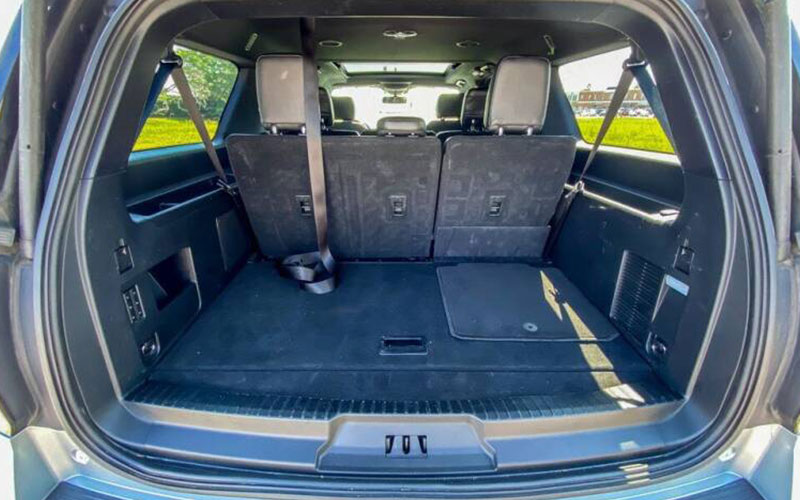
Now the trunk test becomes the center of gravity. Cargo capacity isn’t just “how much.” It’s whether the shapes of your items can coexist without constant rearranging. The Expedition MAX performs best when you treat it like a flexible storage container rather than a single rigid bin.
With the third row in use, luggage and gear placement remains reasonable. You can slide soft bags into corners and still keep access pathways. Fold-flat functionality—when available and properly configured—turns the Expedition into a near-open platform for bulky items.
There’s something reassuring about a cargo area that accepts awkwardly sized things: strollers, coolers, rolled blankets, tool-like boxes from weekend projects. The challenge of modern life is that your belongings don’t come in neat rectangles. This SUV’s space is shaped to deal with that truth.
Loading and Unloading: The Small Ergonomics That Matter
Here’s where the Expedition’s practicality shows up: how you load it without losing time—or patience. A power liftgate (where equipped) can reduce effort and smooth the routine. The opening height and the overall cargo footprint help you avoid the “lift, twist, repeat” pattern that ruins mornings.
Seat-to-cargo transitions are also significant. In a genuine space test, you’re moving items between rows, adjusting configurations, and re-stowing frequently. A convenient layout turns a chore into a rhythm. A frustrating one makes you feel like you’re playing inventory Tetris.
With the Expedition MAX, the rhythm stays steady. Long drives feel easier when the cabin supports quick organization instead of constant renegotiation.
Second-Row Practicalities: Cup Holders, Pockets, and the Art of Not Dropping Things
Space isn’t only distance. It’s also the availability of storage nooks—cup holders that actually hold, door pockets that don’t feel ceremonial, and surfaces that allow snacks and small items to live temporarily without scattering.
The Expedition MAX’s cabin provides a network of practical placements. That matters when kids shift, when teenagers insist they have “one more thing,” and when you’re trying to keep the interior tidy between stops. The best SUVs don’t demand constant cleanup. They facilitate order.
Potential Challenge: The “Everyone Wants Their Seat” Moment
Here’s the playful twist that can still challenge the Expedition MAX. Picture a crowded outing: multiple adults, several bags, and a third-row seating arrangement that needs to be made quickly. Someone may want access to the back. Someone else may need a seatbelt adjusted. Meanwhile, a bag could be on the wrong side.
This is where the MAX trim’s advantages matter most. It provides enough room for the human choreography—standing, turning, stepping—without turning every move into a logistical performance. Still, organization habits help: keep smaller items in pockets, place larger gear in cargo, and don’t wait until the last second to configure seats. The Expedition rewards preparation with calm.
Who the Expedition MAX Fits: Families, Road Warriors, and Weekend Constructors
The Expedition MAX makes the most sense for people who treat space as a lifestyle. Large families benefit immediately. Road warriors—those who commute long hours and then immediately switch into weekend mode—also find it refreshing. Even groups of friends can appreciate the ease of shared comfort and the ability to haul gear without feeling like the vehicle is “almost big enough.”
If your routine includes frequent passengers, sports equipment, or spontaneous trips, the MAX trim isn’t merely an option. It’s a practical extension of your day.
Final Verdict: Does the Space Test Pass?
After the space test—front-row comfort, second-row relaxation, third-row viability, and cargo practicality—the answer feels clear. The Ford Expedition Review – Max Trim Space Test shows that “big” isn’t automatically the same as “useful.” In this case, the usefulness is the headline.
The Expedition MAX earns its confidence through real-world flexibility. It gives you room to breathe, organize, and accommodate shifting plans without making every transition feel like a negotiation. And the playful question from the beginning? When you try to live with it for the day, it doesn’t just hold everything.
It holds your pace.