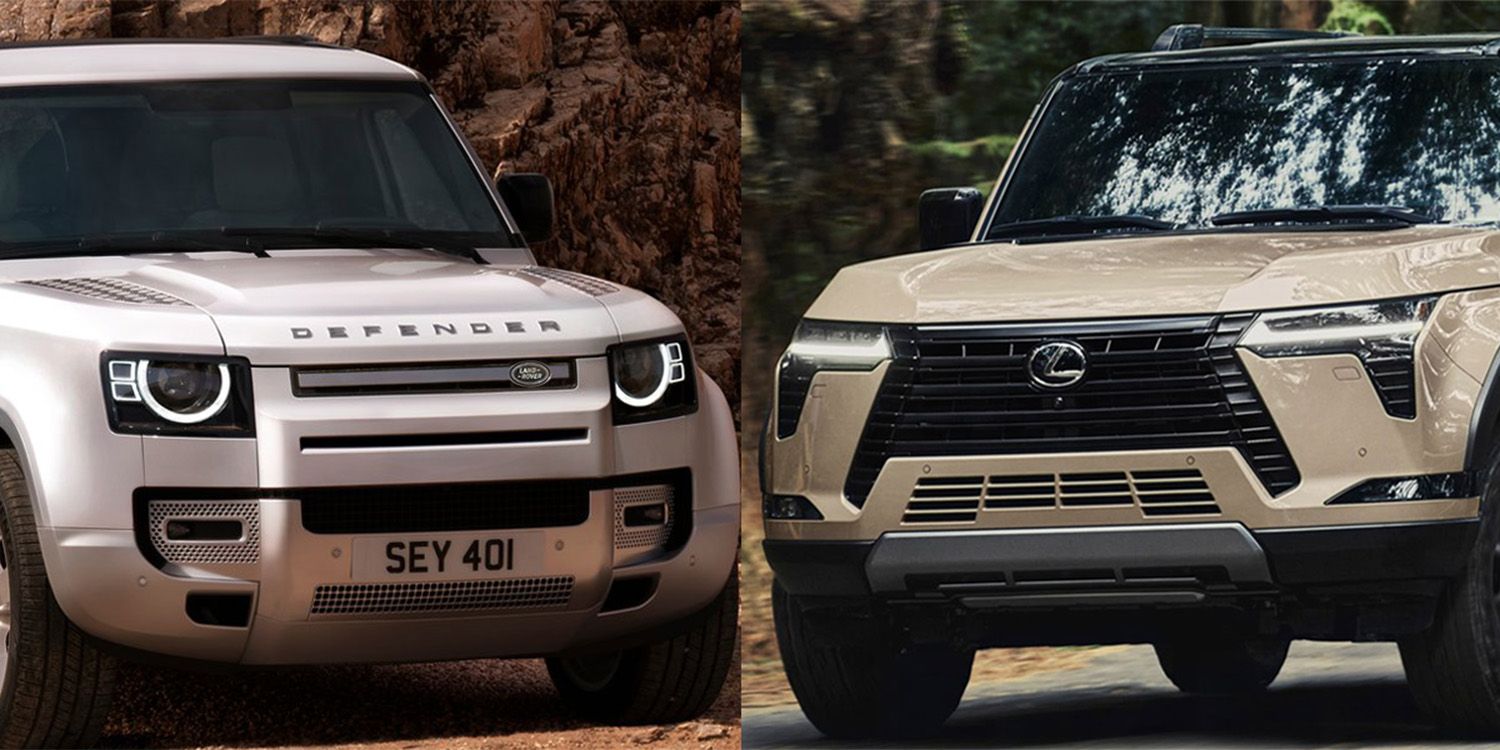
Picture two guardians of the outback, both dressed in luxury—one with a centuries-old backbone of British ruggedness, the other with Japanese precision and a Lexus-lacquered calm. Now imagine they’re parked side-by-side at the edge of a weekend you can’t predict: a ribbon of wet gravel, a campsite that smells faintly of pine, and the possibility of a detour that wasn’t on the map.
Which one is really the better luxury overlander? And here’s the playful challenge: pick your weapon—Defender or GX—and then see who survives a “soft-torture” day composed of potholes, tight turns, a questionable campsite, and a long, late-night return drive with the cabin still feeling serene. The duel is on.
Let the Land Rover Defender and the Lexus GX square up. Their philosophies differ. Their intentions don’t.
Two approaches to the same destination: swagger vs serenity
The Defender speaks in a bold, upright dialect. It has that instantly recognizable stance—boxy, purposeful, almost theatrical. Even when it’s doing nothing more adventurous than waiting at a traffic light, it looks like it’s preparing to climb a wall. That presence isn’t just design bravado; it’s a psychological advantage on the road. People notice it. Storm clouds seem to part for it—at least in your imagination.
The Lexus GX, meanwhile, delivers confidence through composure. It doesn’t need to shout. It leans into a more refined aura: a cabin that feels designed for long conversations, long drives, and the quiet satisfaction of things simply working. It’s luxury without excessive drama, a kind of cultivated ease. If the Defender is a campfire storyteller, the GX is the steady hand holding the compass.
Both are overlanders. But one brings pageantry; the other brings poise. Your road trip personality might matter more than you think.
Cabin ambience and comfort: who wins the long-haul charm contest?
Luxury isn’t just leather and ambient lighting. Luxury is how the cabin behaves when you’ve been driving for hours, when roads start to rattle, and when fatigue tries to creep in like a slow tide. In that respect, the GX often shines with a calm, driver-focused layout. The materials tend to feel deliberately chosen, and the seating posture encourages that “I could keep going” sensation.
The Defender, however, tends to offer a different flavor of comfort—more dynamic, more tactile, and often more visually engaging. It can feel like the cockpit of a modern expedition vehicle, where controls are presented with a certain utilitarian honesty. The result is a cabin that feels adventurous even when you’re merely commuting.
Here’s a question to test your instincts: if your car had to host a weekend cabin meeting—snacks, playlists, stories, and mildly chaotic kids—would you prefer the GX’s serene lounge vibe or the Defender’s bold expedition theater?
.jpg)
Power and drivability: punch, control, and the feel of momentum
Overlanding isn’t only about horsepower; it’s about how power arrives when you need it—when you’re overtaking a slow truck, merging onto a highway ramp, or creeping up a rocky incline at low speed.
The Defender typically impresses with how composed it feels during everyday driving, even when the destination is far from paved. Steering weight and body control can feel confident, particularly when the vehicle is hustled through bends. There’s often an almost “ready anytime” character to its drivetrain response.
The GX often prioritizes smoothness and predictable behavior. Its strength comes through as an engine that feels cooperative rather than frantic, and a transmission strategy designed to keep things effortless. It can be a strong partner for long highway stretches, especially when you want fewer surprises and more consistency.
So for the playful challenge: imagine two test tracks—one is a twisty urban route with surprise traffic, the other is a long, open road where the temptation is to cruise. Which personality suits you better: the Defender’s lively confidence or the GX’s steady glide?
Off-road capability: traction is only the first chapter
Now the terrain starts to get interesting. Overlanding often means mixing surfaces—mud, gravel, ruts, sand patches, and the occasional “oops” that turns a dirt road into a geometry problem.
The Defender’s off-road toolkit tends to feel like it’s designed for proactive adventuring. Its engineering often emphasizes approach angles, ground clearance, and the kind of drivetrain management that helps you feel in control when the world goes lumpy. It’s the sort of vehicle that invites you to keep going, even when the trail looks slightly too ambitious for a casual Saturday.
The GX brings a different kind of competence. It can feel planted in challenging conditions, with traction systems that deliver confidence at the right moments. The big GX question isn’t whether it can handle off-road—it’s how calmly it handles it while keeping passengers comfortable. In a duel of “get there” versus “arrive unbothered,” that matters.
Try a hypothetical maneuver: you’re approaching a rocky descent at dusk. One vehicle feels like it’s managing the situation with assertive precision; the other feels like it’s handling the moment with composed steadiness. Which sensation keeps you calmer?
Technology and navigation: the difference between exploring and getting lost
Luxury overlanding means you’ll likely spend more time looking forward. Still, preparation counts: route planning, terrain awareness, and driver assistance features can make the difference between a charming detour and a long, expensive lesson.
The Defender’s tech approach can feel modern and interface-forward, often leaning into smartphone integration and a responsive digital ecosystem. It can encourage experimentation—like trying a new route because the system looks capable.
The GX tends to emphasize usability and clarity. Menus often feel straightforward, and the cabin layout is typically designed to reduce cognitive load. That matters when you’re driving in rain, when visibility isn’t ideal, or when you’re trying to keep the family calm.
Playful challenge number two: choose which infotainment style you’d rather rely on when your signal disappears and you’re forced into pure navigation discipline. Would you want a more experimental interface, or a more predictably legible one?
Fuel economy and long-distance practicality: efficiency versus endurance
Overlanding doesn’t always care about EPA numbers. It cares about range, refill frequency, and how expensive the adventure feels after the fact. Long distances magnify inefficiencies. Wind, elevation, and tire choice become your invisible variables.
The Defender’s strengths often show up when you want capability and presence without feeling constantly constrained by the road. However, like many capable SUVs, real-world fuel economy can swing based on how enthusiastically you drive.
The GX often aims for a balance—sufficient efficiency for everyday use, paired with a comfort-focused experience that helps you stay relaxed over many hours. Its practicality shines when you want predictable daily drivability that transitions smoothly into weekend exploring.
In your duel, consider the journey after the journey: which SUV would make you less anxious about fuel stops? The one that feels like it can handle anything, or the one that keeps your mind comfortably quiet?
Cargo and gear hauling: where the adventure actually lives
Gear doesn’t care about brand badges. A proper overlanding setup means room for recovery gear, food, water, sleeping essentials, and electronics that multiply like gremlins. Cargo space, rear access, tie-down points, and the ease of loading become the real test.
The Defender often feels optimized for expedition styling—its utility-minded design typically makes it easier to imagine loading a roof box, organizing tools, and fitting bulky items without turning the trunk into a puzzle. The vehicle’s overall shape can be advantageous when you’re using the SUV like a traveling workshop.
The GX tends to provide practical everyday cargo usability while still supporting adventure. It can be a strong choice if you want to carry a reasonable load comfortably, then enjoy the drive without feeling like you need a logistics team.
Try the real-world challenge: open each rear area in your imagination and pretend you’re loading a full day of camping gear. Which one feels like it invites confident stacking, rather than frustrating juggling?
Maintenance temperament and ownership vibes: peace of mind counts
Ownership is where overlanding myths often break. A trail-ready vehicle is only truly “ready” if it’s reliable enough to bring you back, again and again. While driving is the fun part, maintenance is the quiet part of the story.
The GX often carries the reputation of reliability-centered engineering, which many owners appreciate because it reduces the emotional tax of planning. Peace of mind is an underrated luxury feature.
The Defender can be rewarding in a different way—when it’s set up correctly, it feels like an authentic expedition partner. Still, the ownership experience depends on how you treat it, how you maintain it, and how your local service ecosystem performs.
So the final playful question: which would you rather bet your weekend on—the “trust-me” calm of a dependable routine, or the adventurous confidence of a vehicle built for dramatic capability?
Final verdict: choose your duel style
The Land Rover Defender and Lexus GX are both luxury overlanders, but they’re not identical species. The Defender is the theatrical adventurer—bold presence, expedition energy, and an urge to tackle the route that looks slightly too wild. The GX is the serene expedition accomplice—comfort-forward, predictable in behavior, and designed to keep your experience smooth from pavement to dirt.
If your idea of overlanding is chasing novelty, turning every detour into a story, and enjoying the vehicle’s swagger as much as its capability, the Defender is likely your match. If your vision is long-distance calm, consistent drivability, and a luxury cabin that stays civilized even when the road becomes eccentric, the GX may feel more like home.
And the challenge? Take it seriously. Pick the SUV that matches your driving mood, then plan a weekend route that tests both patience and performance. Because the real winner of the Defender vs GX duel isn’t just the one that handles obstacles best—it’s the one that makes you want to go back out again.
Now, which one would you choose for the next “unplanned” road?