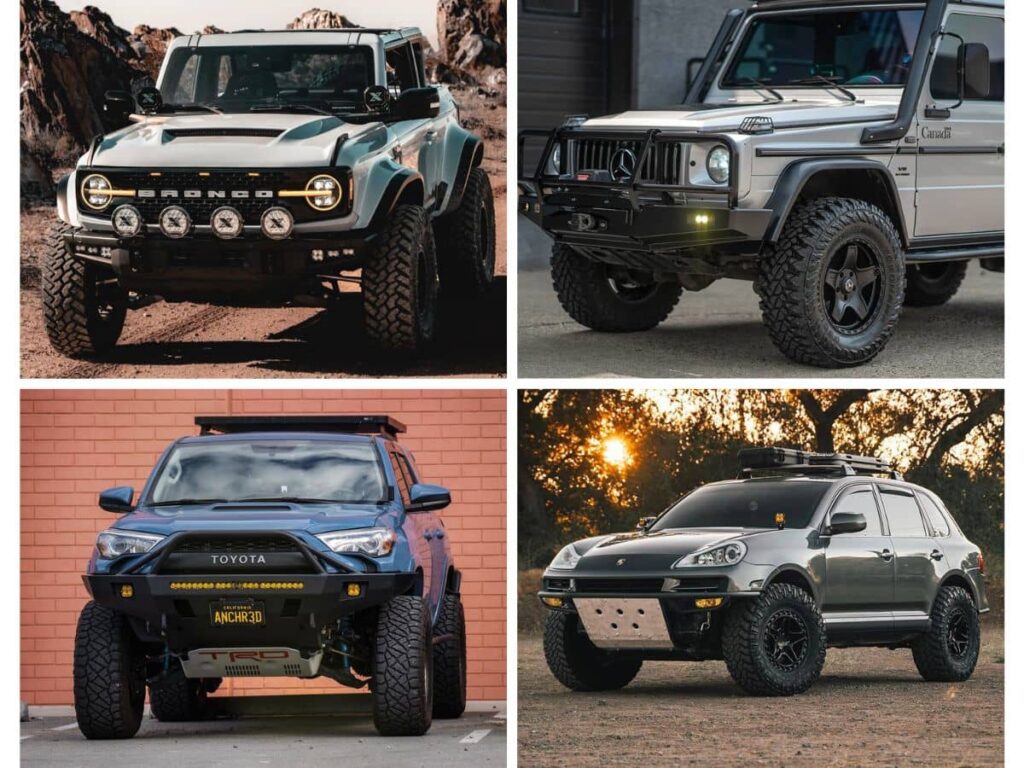
Ever watched a trail rise from the asphalt like it has a personality—then wondered which off-road SUV could meet it without flinching? Ground clearance is the unglamorous hero of the adventure. It’s the thin, crucial buffer between your undercarriage and the universe of obstacles: rocks, ruts, curbs that masquerade as cliffs, and puddles that look innocent until they aren’t.
Here’s the playful question, then the slight provocation: What if your next weekend route had one “impossible” section—one that punishes low clearance—yet your SUV is the only tool that can make it feel routine? Let’s rank off-road SUVs with the best ground clearance, then explore what that number really means in the wild, not just on a spec sheet. Consider it a challenge to your comfort zone.
How to Read Ground Clearance Like a Trail-Cartographer
Ground clearance isn’t merely a measurement; it’s a philosophy of resilience. The published figure—usually in inches—indicates the distance between the lowest part of the vehicle and the ground. But reality adds nuance. The “lowest point” can vary by drivetrain configuration, skid-plate design, tires, and even suspension height changes across trims.
Longer sentences, shorter regrets: a higher clearance value helps you avoid scraping, but it doesn’t guarantee the absence of contact. Approach angles, departure angles, and breakover angle often decide whether you clear a ridge or turn it into a dragging performance.
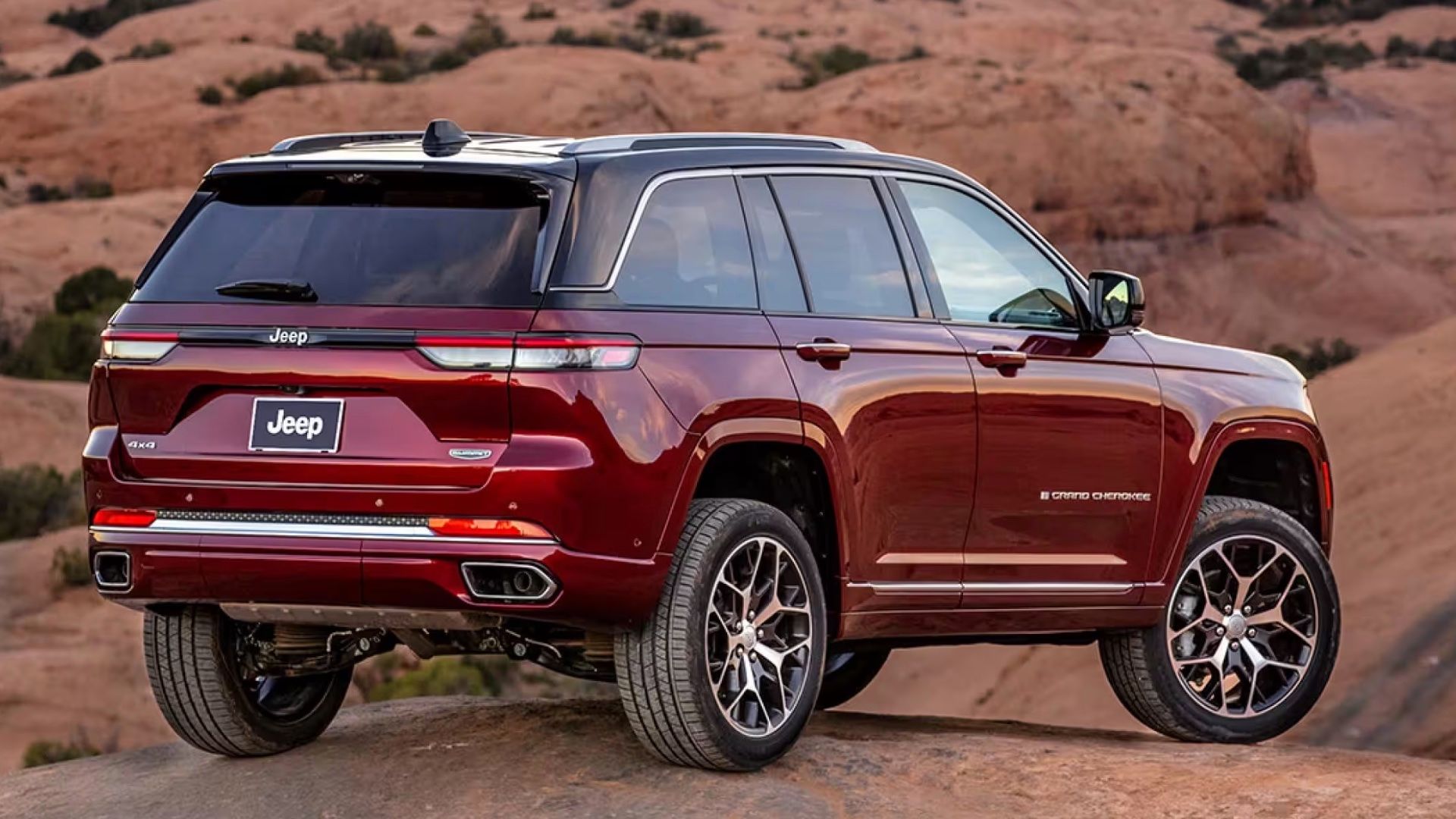
In practice, you’re trying to maximize clearance across three moments: approach, cresting, and exit. A rock garden punishes breakover the most. A ditch punishes departure. A steep driveway punishes approach. If one angle is weak, even high clearance can feel like a costume that doesn’t fit.
Why the Best Off-Road SUVs Pair Clearance with More Than Numbers
The best off-road SUVs treat ground clearance as part of a system. Tires with aggressive tread reduce the risk of sudden slip. Suspension tuning controls wheel travel so the SUV doesn’t ride “too high” while losing stability. Skid plates protect vulnerability zones that often claim the most expensive dents.
There’s also the matter of traction control logic. Some SUVs modulate torque with sensitivity in low-speed crawling. Others are more abrupt. If you’ve ever felt your vehicle hesitate at the edge of a rut, you’ve met the software side of the challenge. High ground clearance is useful; intelligent traction is what keeps you moving when the trail becomes moody.
Finally, consider weight distribution. A heavier vehicle can perform magnificently—but it may demand more careful throttle application. Clearance buys you margin; mass determines how smoothly you use it.
Ranked: Off-Road SUVs with Best Ground Clearance
Now comes the ranking. The categories below emphasize off-road readiness: high ground clearance potential, protective underbody design, and the likelihood you can exploit that height with control. This is not only a list of “tall vehicles.” It’s a shortlist of SUVs that feel purpose-built for uneven geography.
1) Jeep Wrangler (4×4 Variants)
The Wrangler is practically a trail legend in a box. Its off-road identity goes beyond styling. Many trims provide substantial ground clearance, especially when paired with appropriate wheel and tire packages. The open-air ethos of the Wrangler isn’t just aesthetic—it signals a design intent: get over, around, and through.
The advantage here is how the suspension geometry and live axle configuration tend to handle broken surfaces. When wheels droop and articulate, contact becomes less catastrophic. You might still scrape—but you’re less likely to get hung up in the way that ends a drive.

Trail challenge it handles: rock ledges and uneven transitions where the underside could snag on smaller crossovers.
2) Toyota 4Runner (Off-Road-Oriented Trims)
The 4Runner earns respect by consistency. It’s the kind of SUV that doesn’t panic when the pavement ends. Depending on trim and wheel/tire setup, ground clearance can be notably strong. Its body-on-frame character also supports the undercarriage protection culture—skid plates and robust components are common themes.
Long road to a campsite? It thrives there. Short, technical trail? It adapts. The 4Runner’s strength is how it combines height with a disciplined driving feel. You’re not just passing obstacles; you’re managing them.
Trail challenge it handles: washboard roads and rocky grades where sustained clearance protects against repeated minor impacts.
3) Ford Bronco (4×4 Off-Road Packages)
The Bronco turns the ground clearance question into a more theatrical promise. Off-road packages and suspension configurations can deliver impressive clearance along with credible approach and departure performance. It’s built to hit the trail with confidence—and then keep going while the route improvises itself.
What stands out is the cohesive off-road suite: capability doesn’t arrive in fragments. Ground clearance isn’t alone; it’s partnered with traction strategies that help you maintain control when grip becomes negotiable.
Trail challenge it handles: rutted paths and mixed terrain where both height and stability matter.
4) Land Rover Defender (Off-Road Capability Trims)
If you want clearance with a hint of refinement, the Defender can feel like a sophisticated expedition partner. Off-road-focused variants often offer strong ground clearance along with underbody confidence. The design doesn’t treat obstacles as enemies—it treats them as variables in a solveable equation.
Suspension tuning and driver-assist off-road features frequently support careful crawling and controlled descent. This can be a game-changer when a trail demands patience rather than bravado.
Trail challenge it handles: uneven descents where maintaining control matters as much as avoiding contact.
5) Subaru Outback (Off-Road / Wilderness-Oriented Setup)
This is the “play outside without overthinking it” option. The challenge isn’t extreme clearance height; it’s ensuring your expectations align with the terrain. Still, it can handle plenty of real-world off-roading with calm competence.
Trail challenge it handles: everyday adventures—light to moderate obstacles—where clearance plus traction adds up.
6) Nissan Xterra (If Equipped for Off-Road Use)
The Xterra has a cult-like relationship with rugged roads. With off-road-ready configurations, it can deliver strong ground clearance potential and a stance that discourages hesitation. It’s not merely about getting over obstacles; it’s about feeling composed while you do it.
For drivers who prefer straightforward capability without a science project, the Xterra can be compelling. The key is selecting the right tires and maintaining a suspension setup that preserves real wheel travel, not just measured height.
Trail challenge it handles: trail washouts and uneven tracks where confidence reduces mistakes.
What Ground Clearance Can’t Fix (So You Can Drive Smarter)
Higher clearance doesn’t replace careful driving. You can still damage differentials, hang up on sharp rocks, or bottom out if the vehicle crests a sharp ridge at the wrong angle. That’s where breakover angle and suspension travel become your true co-pilots.
Also, clearance is only as effective as your tires’ contact patch. Overconfident throttle on loose rock can spin your wheels, bury traction, and turn “clearance margin” into “stuck situation.” You’re aiming for smooth progress, not dramatic heroics.
Finally, remember: ground clearance often assumes standard ride height. Lift kits, larger tires, and wheel alignment changes can alter real-world clearance—sometimes improving it, sometimes creating new complications like rubbing or altered steering geometry.
Final Check: Building a Clearance-First Off-Road Setup
Before the trail, run a quick “clearance audit.” Check your approach and departure angles. Confirm skid plates or underbody protection are in place. Verify tire condition and pressure for the terrain. Consider adding recovery gear—because clearance is great, but problem-solving is better.
And don’t forget driver technique. Let the suspension do its work. Approach obstacles slowly. Look for the line where the SUV’s underbody stays out of drama. It’s not just how high you can go—it’s how cleanly you pass through.
Outro: Your Next Trail Shouldn’t Be a Guess
When you choose an off-road SUV with the best ground clearance, you’re buying more than inches. You’re buying margin, control, and a calmer relationship with the unpredictable parts of the road. Now the challenge returns—gently, playfully.
Will your next route be the one where your SUV feels slightly unfair to the obstacles? Pick the model that matches your terrain, respect the angles, and drive with intention. The trail will still be the trail—but your undercarriage won’t have to negotiate as hard.