There’s a moment every long-commuter recognizes: the quiet dread before the engine starts, the arithmetic of fuel costs, the questions that linger after another traffic-snarled hour. In 2025, that ritual is changing. Not abruptly—no cinematic switch—but with a slow, persuasive shift in perspective. The landscape is now split between PHEVs (plug-in hybrid electric vehicles) and EVs (battery electric vehicles), and the “better” choice is no longer just a matter of range or charging etiquette. It’s about how your day behaves when your car becomes a partner rather than a tool.
Long commutes magnify everything: energy use, reliability, charging logistics, and even your psychological tolerance for planning. So let’s take the question seriously. What does a PHEV promise when your commute is routine, your schedule is non-negotiable, and your budget still needs reassurance? What does an EV offer when the future feels closer—cleaner, quieter, and potentially cheaper per mile? And more importantly, which one matches the way you actually live?
The commute as a character: why 2025 changes the rules
In earlier years, comparing PHEVs and EVs often sounded like a debate over numbers: miles here, battery capacity there. But commuters don’t experience range as a spreadsheet value. They experience it as a chain of tiny uncertainties—how far the detour might add, whether the heater will steal energy, whether the next charger will be available, and whether traffic will convert your carefully planned arrival time into an improvisation.
2025 complicates that old framing in a constructive way. EV infrastructure continues to expand, and PHEV technology remains adept at bridging imperfect charging scenarios. Yet the real differentiator is how each vehicle handles the variability of long-distance routines. The question becomes less “Can it do it?” and more “Can it do it consistently, with minimal friction?”
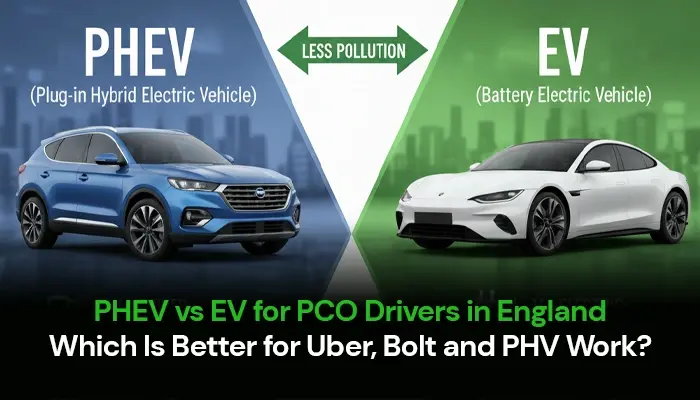
PHEV vs EV—what you’re really choosing
A PHEV is a diplomat. It speaks both languages: electricity and fuel. For a long commute, that duality can feel like a safety net with a sophisticated twist. You can start your morning with electric energy, and if the day stretches beyond expectation, the vehicle can transition to fuel without drama.
An EV is a minimalist with ruthless efficiency. It relies primarily on electricity. When your charging routine aligns with your life, an EV can become eerily predictable: plug in, wake up ready, and glide through traffic with minimal mechanical fuss.
So the choice is not only about which technology is “better.” It’s about which operating style matches your commute’s temperament. Is your journey stable enough to be scheduled around charging? Or does it often mutate, requiring a vehicle that can absorb deviations?
Long-commute reality: distance, elevation, and weather
Long commutes rarely behave like a straight line. Wind resistance, road grade, and weather can all tax energy use. Winter, in particular, can reduce real-world efficiency for both PHEVs and EVs, though the mechanisms differ. EVs may see reduced range as battery performance and cabin heating demand more energy. PHEVs can remain flexible because the combustion engine can step in when the battery runs low.
However, the most important nuance is not the raw range number. It’s whether you can plan around the reduced performance without turning every trip into a contingency plan. If your commute is long enough that you’d be “guessing” the margin of battery health, the PHEV’s fallback may feel like sanity preserved.
Charging logistics: the invisible cost of peace of mind
Here’s where the debate becomes almost philosophical. Charging is not merely an activity—it’s an interface between your schedule and your vehicle. A PHEV can reduce dependency on frequent charging. An EV is more dependent, especially for long commuters who want to maximize savings and minimize fuel use.
If you have reliable home charging, an EV can become a low-friction daily ritual. Plug in at night, wake up, and the commute becomes mostly a non-event. If you don’t have home charging—or if your parking situation is unstable—EV ownership may still work, but it requires more deliberate behavior: dependable public chargers, predictable availability, and realistic time buffers.
PHEVs, by contrast, can often tolerate a less elegant charging setup. Even if charging is occasional, the vehicle can still complete the commute using fuel when needed. That resilience can be valuable for commuters with unpredictable working hours or those who can’t guarantee plug access.
Cost over time: what your budget actually measures
Many people think in terms of one-day costs. Long commuters think in terms of months. Over time, the financial picture depends on electricity prices, fuel prices, charging frequency, and how often you operate on each energy source.
An EV can be dramatically cost-effective when charging is cheap and consistent. Electricity typically costs less per mile than gasoline or diesel, and EVs often deliver strong efficiency in stop-and-go traffic. But if charging is expensive or inconvenient, those savings can shrink.
A PHEV can offer a “middle lane” advantage. You can use electric power when it’s convenient and revert to fuel when it’s not. That hybrid strategy may not always minimize cost to the absolute lowest possible level, but it can stabilize your expenses by reducing the risk of being locked into a specific charging scenario.
Performance and driving feel: the day-to-day difference
Long commutes also shape how you perceive your car. EVs often deliver instant torque, smooth acceleration, and quieter operation. The sensation is subtle but meaningful: less vibration, fewer engine transitions, and a calmer cabin atmosphere.
PHEVs can also feel responsive, particularly during electric driving. Yet once the battery depletes and the combustion engine resumes, the driving character can shift. For some commuters, that transition is seamless enough to ignore. For others, it becomes a reminder that the car is hedging its bets.
Still, there’s an unexpected psychological benefit. EVs can encourage a more deliberate driving style—less harsh acceleration, more anticipation. That can reduce wear and improve efficiency, even if the commute feels identical on the calendar.
Maintenance and wear: fewer moving parts, different responsibilities
EVs generally have fewer mechanical components tied to combustion, which can mean reduced maintenance complexity over time. That said, brakes can experience less wear due to regenerative braking. Tires, suspension, and general vehicle upkeep still matter. The “EV maintenance story” is often about routine prevention rather than repairs prompted by engine wear.
PHEVs share some EV benefits during electric operation, but they also include the complexity of hybrid systems and an internal combustion engine. That doesn’t automatically make PHEVs unreliable. It means the maintenance profile is typically broader—more systems to monitor, more fluids and components to consider, and more variability depending on how often you drive on electric versus fuel.
Environmental intent: not perfection, but direction
In 2025, many commuters aren’t seeking ideological purity. They’re seeking progress that fits reality. PHEVs can reduce emissions substantially if you consistently drive on electricity for a meaningful portion of your commute. EVs tend to be the strongest option for cutting tailpipe emissions—especially when the grid is improving and renewable penetration grows.
Yet the most honest way to approach the environmental question is to link it to your behavior. The vehicle that saves more emissions is usually the one you actually charge. And that brings us to a quietly crucial point: the best “green” choice is often the one you can sustain without resentment.
Range anxiety, translated: how to think beyond the scare
Range anxiety is less about fear and more about uncertainty. It’s the uncomfortable awareness that one missed plan could turn an ordinary commute into an expensive detour.
For EV drivers, anxiety often eases with predictable charging access—home charging, reliable workplace chargers, or dependable routes with frequent fast charging. For PHEV drivers, anxiety often fades because fuel provides a psychological override. You might worry less about hitting a specific battery threshold, because the combustion engine can rescue you when you forget to plug in—or when life interrupts your routine.
So instead of asking “Which has more range?” consider asking “Which scenario would most likely disrupt your day, and how does each vehicle protect you from that disruption?”
Making the decision: a commuter’s checklist
To translate technology into a decision, use a practical lens:
1) Can you charge at home or work consistently? Reliable charging favors an EV.
2) How variable is your commute? Unpredictable schedules often favor a PHEV’s flexibility.
3) Do you want to minimize planning? If yes, PHEVs may feel more forgiving.
4) What do energy prices look like where you live? EVs can win strongly when electricity is favorable.
5) How long is “long”? For commutes that approach the edges of battery comfort in winter, PHEV confidence may be valuable.
6) How important is driving serenity? EVs often deliver a calmer, quieter experience.
When you answer these questions honestly, the decision stops being abstract. It becomes an alignment problem between your life and the vehicle’s strengths.
So, which is better for long commutes in 2025?
If your life supports regular charging—especially at home or workplace—an EV can feel like a long-commute upgrade with compounding benefits: efficiency, smooth drive character, and potentially lower operating costs. It’s the “plug and glide” philosophy made real.
If your commute is long but your charging reality is messy—if your schedule fluctuates, parking isn’t guaranteed, or charging access is occasionally unreliable—a PHEV can be the practical compromise that still moves you toward electrification. It offers a buffer, a kind of operational elasticity, while letting you benefit from electric driving when circumstances allow.
The best choice, in the end, isn’t the one with the boldest headline. It’s the one that matches your routine tightly enough that you’ll use its advantages every day. And when that happens, the commute stops being a burden and starts feeling—quietly—more controllable.
Outro: the future is closer than it looks
Long commutes test patience, budgets, and planning skills. But 2025 offers something rare: two viable paths into electrification, each with a different personality. A PHEV can steady the journey with fuel backup and electric mornings. An EV can simplify it with predictable charging and near-silent performance.
Choose the vehicle that reduces friction, not just the one that wins on paper. Then let your everyday drive become the evidence. In time, you’ll notice the real shift—the perspective change—where the commute is no longer something you endure, but something you navigate with confidence.