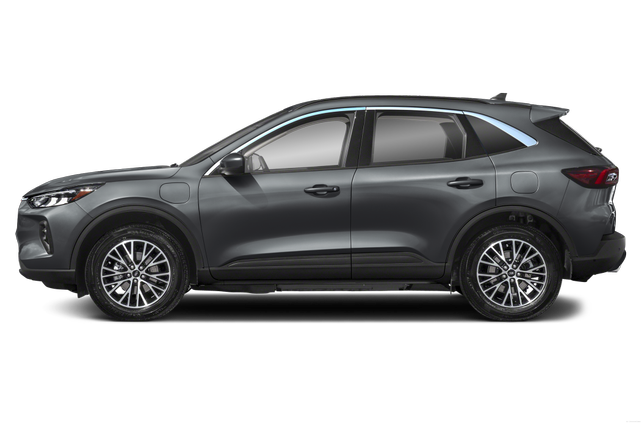
The first thing you notice on a gas-only highway drive is how quickly the conversation shifts. You start thinking about range in miles, not minutes. You judge the day by the cadence of the tachometer, by the way the engine settles into a steady rhythm, and by the quiet confidence of a powertrain that seems to understand the choreography of long straights. That’s where the 2025 Ford Escape PHEV invites its most curious moment: it blends electrification with familiar fuel-burning behavior, yet it doesn’t demand that you treat every mile like a special occasion. In a simple gas-only highway MPG test, the question becomes less “Can it sip fuel?” and more “Why does it feel surprisingly composed when it does?”
Many drivers have a common observation: they expect a plug-in hybrid to be either magically efficient all the time or else merely complicated. But a highway MPG test—performed with the vehicle operating on fuel rather than battery assist—tends to reveal a subtler truth. The fascination isn’t only the headline number. It’s the way the system manages engine load, chooses when to harvest and when to coast, and maintains an efficiency-minded temperament that can make long-distance driving feel almost… inevitable. Like the drivetrain has already rehearsed the routine.
Setting the Stage: What “Gas‑Only” Really Means on the Highway
A gas-only highway MPG test isn’t simply a matter of “not charging.” It’s about constraining the scenario so that the vehicle runs its thermodynamic work primarily through fuel. The PHEV architecture still has energy storage on board, and the vehicle still performs intelligent control. Yet the practical intent is to evaluate how the Escape behaves when its engine is expected to do most of the propulsion at cruising speeds.
On the highway, the demands are consistent: steady aerodynamic load, sustained traction, and a calm thermal environment that typically encourages stable fuel consumption. That stability is helpful. It turns the drive into a kind of instrument panel, where small changes in throttle input and speed can be interpreted more clearly. Short bursts of acceleration matter less than the long plateau of time at speed.
And that’s where the Escape’s character becomes interesting. Rather than chasing peak output, it tends to seek an efficiency window—one that can feel almost discreet.
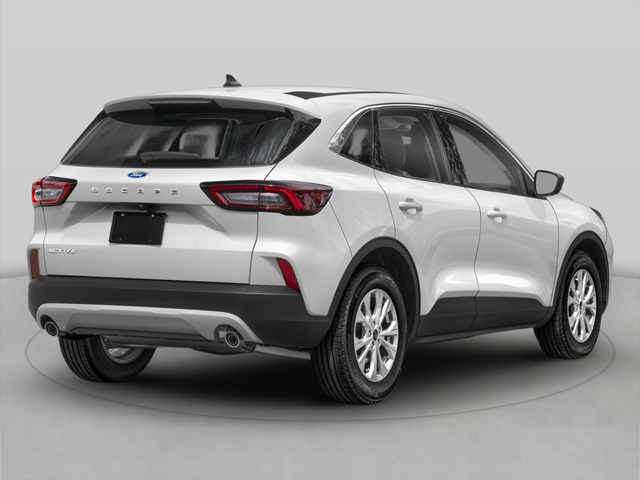
The Highway Test Drives More Than Efficiency—It Reveals Strategy
Highway MPG is often treated as a scoreboard. But a PHEV complicates the scoreboard just enough to make strategy visible. Even without relying on electric propulsion for forward motion, a plug-in hybrid can still demonstrate energy-management behaviors that influence fuel consumption.
When the drivetrain senses cruising, it can favor a stable engine operating point. That might sound ordinary, but it isn’t. Many hybrids struggle to keep the engine in its most efficient zones when conditions change. In contrast, the Escape’s system appears intent on reducing unnecessary transients—those brief surges and dips that can waste fuel.
Long sentences sometimes hide long thoughts. On the highway, the opposite is true: the vehicle’s behavior becomes readable in small cues. The engine’s steadiness. The way acceleration feels planned rather than frantic. The sense that the car is smoothing out turbulence in both air and torque delivery.
How Engine Load and Aerodynamics Shape MPG at Sustained Speeds
At highway pace, aerodynamics becomes a dominant variable. Drag climbs with speed, and every extra mile per hour is like adding a tax to the fuel budget. That means MPG results can hinge on whether the test keeps speed consistent and avoids frequent slow-downs.
But here’s the deeper reason a fascinating pattern often emerges: PHEV systems can manage the relationship between engine load and the vehicle’s internal momentum. Even when the battery is not used as the primary propulsion source, the control logic can still influence how the engine couples to the drivetrain. A smoother coupling can reduce the feeling of “searching” between states.
In plain terms, the engine doesn’t have to keep working harder than it needs to. If the car can maintain an efficient torque demand and limit detours into less favorable operating points, fuel economy improves—not as a lucky accident, but as an engineered outcome.
Transmission Behavior: The Unseen Governor of Fuel Consumption
Drivers usually notice throttle response, not gearing logic. Yet on a highway test, transmission behavior often determines the difference between a good MPG and a great one. If gears (or gear-like ratios) keep the engine revving too high during steady cruising, fuel economy suffers. If the engine drops too low and then must climb repeatedly to meet demand, fuel economy suffers again.
A well-tuned hybrid drivetrain acts like a governor with taste. It chooses ratios that let the engine rest near its efficient range, then compensates with careful torque delivery when conditions demand it. The result can feel like calm confidence: acceleration arrives without drama; cruising remains quietly efficient.
That’s part of the fascination. The car doesn’t just “try” to be efficient—it behaves as though efficiency is the default posture.
Regeneration and Coast Phases During a Fuel‑Only Drive
Regeneration is often associated with city driving. But on a highway, it still matters—particularly in the moments between steady speeds. Even a gentle change in grade or a brief deceleration before a merge can trigger energy recapture strategies.
In a gas-only test, regeneration can still influence overall MPG by reducing how often the engine must compensate for lost momentum. Each time the car slows, it has two choices: waste kinetic energy as heat or reclaim some of it. While regeneration cannot fully replace fuel-based propulsion, it can soften the fuel penalty of real-world driving rhythms.
Long highways have subtle micro-events: construction zones, slight speed variations, and occasional wave-like traffic flow. The Escape’s ability to manage those moments can help explain why gas-only results sometimes exceed what drivers intuitively expect from a plug-in hybrid they assumed would be inefficient without electric assist.
Common Observation: “It Shouldn’t Be That Efficient Without the Plug”
People often expect a PHEV to behave like a normal vehicle when battery usage is restricted. The deeper expectation is emotional: since the car isn’t running on electrons for propulsion, the fuel economy should mirror a conventional SUV.
Yet many highway drives contradict this assumption. Why? Because the PHEV system is not just a battery with an engine attached. It’s an integrated energy-management ecosystem. Even when forward motion comes from fuel, the car may still use the battery as a buffer—smoothing torque delivery, supporting transitions, and reducing inefficiencies that conventional powertrains struggle to eliminate.
Think of it as choreography. The engine performs the primary steps, but the battery and control logic help keep timing tight, reducing wasted motion. That’s why the MPG test can feel like discovering a quiet advantage rather than watching a dramatic transformation.
What to Watch During the Drive: Speed, HVAC, and Tire Load
Even the best test benefits from disciplined conditions. The Escape’s efficiency can be nudged by:
• Speed consistency: small deviations add up over miles.
• Climate control: heavy heating or aggressive cooling can draw energy and alter the engine’s workload.
• Tire and traction conditions: rolling resistance changes with tire pressure and pavement texture.
• Driver input: gentle throttle mapping helps the drivetrain remain in its most efficient zones.
During a gas-only highway MPG test, these variables become the difference between a measurement and a story. A careful test turns the outcome into something trustworthy—something you can interpret, compare, and learn from.
Why the Results Spark Long‑Term Fascination
Here’s where fascination deepens. A single MPG figure is temporary, but a drivetrain that feels efficient in real use changes expectations about ownership. The Escape PHEV encourages a mindset shift: instead of treating hybrid efficiency as something reserved for short commutes, it hints that intelligent energy management can persist at highway pace.
And that matters because highways are where time is scarce. When efficiency and composure arrive together, the driving experience becomes less fatiguing. The engine doesn’t constantly announce itself. The vehicle feels steady, coherent, and ready for the next stretch of roadway.
In other words, the attraction isn’t only the number at the end. It’s the way the car makes long travel feel less wasteful—more deliberate, almost politely restrained.
Takeaway: The Gas‑Only Highway MPG Test as a Lens on Design
A 2025 Ford Escape PHEV gas-only highway MPG test can reveal more than fuel consumption. It can show how the powertrain maintains an efficient temperament, how control logic reduces inefficiency during cruising, and how regeneration and energy buffering can influence outcomes even when the battery isn’t doing the main propulsion work.
When the results land, they often do so with a quiet surprise. Not because the car is performing magic, but because it’s performing management—fine-grained, continuous, and surprisingly effective.
By the time the drive ends, you’re left with a clear impression: the Escape PHEV doesn’t just wait for city traffic or charging schedules. It is designed to think ahead, to smooth the drive, and to make efficiency feel like a natural extension of the journey.