Can you drive a 2025 plug-in hybrid without plugging it in? It sounds like a playful challenge—almost like telling a magician to perform without a deck of cards. Yet real-world driving is less theater and more physics, electronics, and a little stubbornness. The intriguing part is that many 2025 PHEVs are engineered to be usable even when the battery stays dormant. The even more interesting part? Gas-only mode isn’t always the same experience from one trip to the next. Sometimes it feels like a normal hybrid. Sometimes it feels like you’re operating two brains in one body—one electric, one combustion—each jockeying for control.
In this gas-only mode test, the goal is simple: push a 2025 PHEV through daily life without charging it from an outlet. Expect a few surprises. Some are comforting. Others are the kind that make you glance at the dashboard and wonder who, exactly, is steering.
What “Gas-Only Mode” Really Means in a 2025 PHEV
Gas-only mode in a PHEV usually refers to operation where the vehicle either cannot—or chooses not to—use the traction battery for propulsion. But “chooses” matters. Many systems don’t treat the battery as a passive stash of energy. Instead, the car actively manages battery state-of-charge and decides how much electricity is allowed to supplement the engine.
Even without charging, the PHEV may still use some stored electricity for low-speed torque, gentle acceleration, or regenerative braking. That’s why the first moments of your test can feel smoother than you expected. Then, as the battery drains, the system leans harder on the internal combustion engine. The car gradually transitions from electric-assistance behavior to a more traditional hybrid cadence.

The key challenge isn’t whether the PHEV can run. It can. The challenge is how it runs—what efficiency looks like, how it behaves at traffic light sprints, and whether the system limits electric features once the battery reaches a lower threshold.
The Opening Rule: Start With a “Forgot-to-Plugin” Mindset
Before you judge the experience, decide what “without charging” means for the test. There are two common scenarios:
1) You begin the drive with a partially charged battery (perhaps from the previous day’s plug-in). In this case, you’re not truly starting from zero.
2) You start with a near-empty battery because it has sat uncharged for a while. Here, the PHEV behaves more like a hybrid from the outset.
A practical test treats it like a real mistake. The best “oops” scenario is starting with whatever charge exists, then never plugging in again. That mirrors life, where routines break. Still, it pays to note the initial battery indicator, because it strongly influences the first impression.
How the Engine Fights Back: Efficiency, Power Delivery, and the Switching Rhythm
Once the battery dwindles, the engine becomes the primary power source. But “primary” doesn’t mean “constant.” PHEVs typically juggle engine operating points to balance efficiency and drivability. Expect a rhythm: engine on for certain loads, engine off or low-load operation for others, and frequent recalibration as you accelerate, coast, and brake.
Without charging, the PHEV may also feel more eager to protect the battery. It can reduce the number of times it applies electric-only propulsion. That may reduce the sense of silence at low speeds. It might also change how the car responds to throttle inputs—sometimes smoothing them, sometimes making them more linear, depending on calibration.
In terms of fuel consumption, the vehicle is generally still efficient compared to a non-hybrid SUV, because it still uses regenerative braking and may run in hybrid modes. But you should expect a drop in efficiency compared to the same drive with a fresh electric charge available. The battery is not being recharged externally, so you lose access to the “free” electric miles you’d normally buy with an outlet.
Regeneration Without a Plug: Can You Still “Recharge” While Driving?
Regenerative braking is the PHEV’s quiet superpower. Even without plugging in, the car can recover energy during deceleration. However, regeneration has limits. If the battery state-of-charge is low enough, the car may accept more energy. If the state-of-charge is too high, regeneration may be capped, forcing conventional friction brakes to do more work.
In a gas-only test, the battery will often trend downward, especially if your route includes sustained speeds and frequent acceleration. Regeneration will help, but it won’t fully replace the energy you would have gained from charging at home or work.
Still, regeneration can preserve a measure of the PHEV experience. If your route includes hills and stop-and-go stretches, you may find the car feels less like an “ordinary gas vehicle” and more like a continuously optimizing system.
Range Reality: What You Gain, What You Lose
There’s a psychological trap in PHEVs: the temptation to measure your journey using battery mythology. The more honest approach is to view the vehicle as having two ranges running in parallel—gas range and electric range—then ask which one is actually available.
Without charging, the electric portion becomes a shrinking resource. Your eventual range depends on how quickly the battery depletion happens, which depends on driving style, temperature, speed, and the HVAC workload. Cold weather can be particularly punishing, because battery efficiency and electric heating demand more energy.
The gas range becomes the practical anchor. Many PHEVs have a fuel tank that allows real long-distance travel. In a gas-only scenario, the vehicle can still take you far. The trade is that you’ll likely spend more fuel to cover what would have been electric miles.
Dashboard Behavior: What You’ll See When the Battery Runs Low
A 2025 PHEV doesn’t simply “turn off” electricity. Instead, it changes priorities. When the battery is depleted, the car may:
Reduce electric-only drive opportunities during low-speed maneuvers.
Increase engine run time to maintain system voltage and traction demands.
Alter power assist logic so the engine does more of the heavy lifting.
You may notice more audible engine presence during accelerations that would normally feel effortless. The car may also adjust regeneration behavior, sometimes allowing strong decel recovery but often moderating it once the system decides the battery needs preservation.
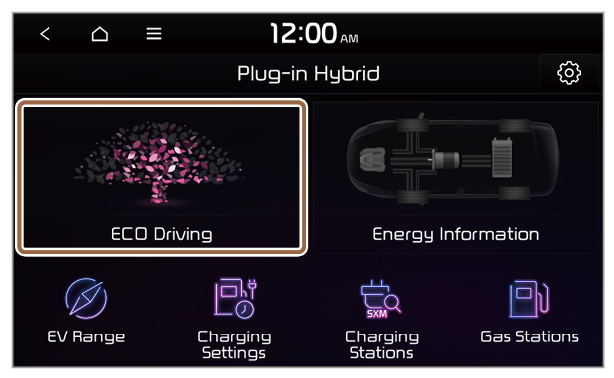
Pay attention to the energy flow display if your model includes one. Watching it is like reading a cockpit instrument panel—suddenly you understand why the car sounds the way it does.
Comfort and Convenience: Does Gas-Only Change the Daily Feel?
Driving without charging can still feel comfortable, especially if the powertrain is well insulated and smoothly calibrated. But the absence of electric torque at low speeds can affect the “silky” character people love about PHEVs.
At highway speeds, the difference might be subtle. Most PHEVs prioritize engine operation at sustained loads, regardless of whether the battery is fully charged. Your experience will matter more in the city: the frequent stops, the gentle rollaways, the quick surges from red lights.
And then there’s the HVAC. Heating and cooling consume energy. When the battery is depleted, the PHEV may rely more on the engine for climate control, which can nudge fuel economy downward. It’s not a failure; it’s just the energy ledger balancing itself in real time.
The Playful Challenge: How to Do a Clean Test Drive
If you want a trustworthy answer—less guesswork, more clarity—run your test like a controlled experiment.
Step 1: Confirm your starting battery state and tire pressure. Small variables matter.
Step 2: Choose a route you actually drive: mixed city and highway is ideal.
Step 3: Avoid extreme techniques. Don’t baby it for efficiency and then stomp the pedal for drama. Consistency tells the truth.
Step 4: Record fuel economy at the end. Also note how often you feel electric assistance in the first half versus the second half.
Step 5: Repeat on a different day if possible. Weather changes everything.
This is where the challenge becomes fun. You’re not just testing the car; you’re testing your own habits.
So, Can You Drive a 2025 PHEV Without Charging?
Yes—absolutely. A 2025 PHEV is built to be drivably competent even when charging is skipped. Gas-only operation typically behaves like a hybrid-first system once the battery energy is used up. It won’t deliver the same electric-miles magic you’d get with regular charging, but it remains practical.
The real question isn’t “Can it move?” It’s “Will it feel like you expected?” If you’re chasing near-silent city driving and maximum fuel savings, skipping charging is going to cost you. If you want a capable vehicle that can still reduce fuel consumption through hybrid technology and regenerative braking, the gas-only mode test can feel more forgiving than you’d think.
Final Verdict: The Car Will Adapt—But Your Habits Will Decide the Outcome
After your gas-only mode test, the lesson is elegantly simple. The PHEV doesn’t panic without a plug. It recalibrates. The engine becomes more involved. Regeneration still helps. And the dashboard tells the story of energy moving where it can.
So go ahead—try the playful challenge. Drive it as if you truly forgot the cable. Watch the behavior, note the fuel economy, and listen to the shifting priorities. The 2025 PHEV may not gift you pure electric range, but it will still deliver a coherent, confident drive—proving that the “plug-in” part is an advantage, not a lifeline.