The 2025 Toyota RAV4 Prime arrives in a curious moment for plug-in hybrids: the category has expanded, the noise level has risen, and “new” is no longer synonymous with “better.” Yet the RAV4 Prime refuses to fade into the background. Its reputation isn’t just a marketing artifact—it’s a lived experience, the kind drivers remember after the novelty of the first charge cycle wears off. The headline question is simple: Still the PHEV King? What’s harder to answer is why the Prime continues to feel oddly magnetic even when trends shift around it. The deeper fascination lies in how the vehicle behaves on real roads, in real weather, and in real routines—where convenience, capability, and restraint blend into something that feels unusually complete.
There’s also a common observation that follows the Prime everywhere it goes: some people say plug-in hybrids are “good enough,” but not compelling enough to crown. And on paper, that argument can sound reasonable. Battery capacity varies, charging access differs, and everyone’s commute is different. Still, the RAV4 Prime’s allure endures because it doesn’t merely offer electrification—it offers a particular kind of confidence. It’s not only what it can do; it’s how effortlessly it fits into everyday life.
Design and Presence: Familiar Shape, Sharper Intent
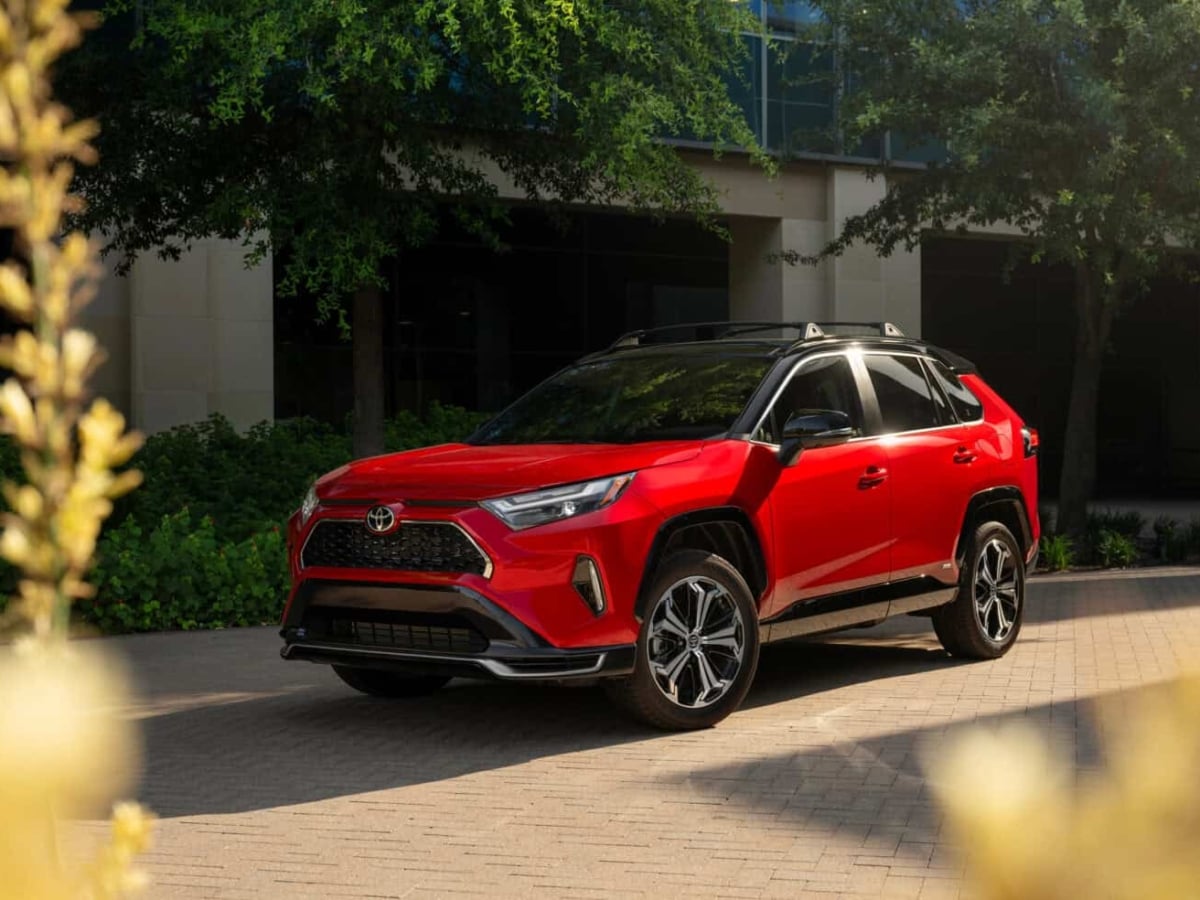
The 2025 RAV4 Prime wears the RAV4 silhouette with the calm assurance of a known entity. But the details suggest purpose rather than performance theater. Proportions remain balanced, yet the stance feels composed—like it’s prepared to move before you even ask. That matters, because driving starts in the mind as much as the seat.
In an age of visual extremity, the Prime’s restraint becomes its own kind of statement. It doesn’t need to shout to be noticed. The styling is still unmistakably modern, and the lighting signature gives it a quietly assertive posture.

That calm visual rhythm is more than aesthetics. It’s a psychological trick: it lowers the cognitive temperature of ownership. You don’t just tolerate the vehicle every day—you trust it. And trust is a powerful element in why the Prime keeps drawing attention.
Powertrain Reality Check: When “Plug-In” Becomes a Daily Habit
At the heart of the 2025 Toyota RAV4 Prime is the plug-in hybrid formula: an electric drive component that can shoulder part of the work, paired with a gasoline engine that fills the gaps. The fascination begins the first time you notice how often the Prime can move on electricity alone.
Many observers evaluate PHEVs using a theoretical yardstick: range per charge in the brochure, or fuel economy in a best-case scenario. Those metrics are useful, but they miss something. The Prime’s true advantage is behavioral. When your daily route is mostly predictable, the car’s electrified character becomes a routine rather than a novelty.
Short commutes, school drop-offs, parking-lot crawl, and low-speed errands turn into chances for quiet momentum. It’s not just about reducing consumption; it’s about changing the cadence of driving. Acceleration feels immediate, and the transition between electric and gas power tends to feel measured rather than abrupt. That smoothness reduces driver fatigue. It also makes the car feel more “alive” without being jerky or restless.
And this is the deeper reason the Prime stays revered: it’s not merely a technology experiment. It’s a conversion of electricity into everyday ease. Drivers don’t just save fuel; they experience a different driving texture.
Performance and Handling: Efficient Doesn’t Mean Sleepy
The Prime carries its extra complexity with surprising poise. Handling remains agile enough for urban navigation, yet it doesn’t unravel on fast on-ramps. Steering feel stays coherent, and the suspension tuning aims for stability over theatrics.
There’s a subtle athleticism in how the Prime responds to throttle input. Electric torque helps, of course. But the more intriguing detail is how the power delivery behaves across modes. It’s tuned to feel purposeful, not merely fast. You get acceleration when you want it, and restraint when you don’t.
In other words: it’s a vehicle designed to avoid the common PHEV complaint of “either I’m driving electric or I’m driving a regular car.” Instead, the Prime makes the drivetrain feel like one continuous story. That continuity is what keeps drivers coming back to it, even when they’ve already sampled other plug-in options.
Interior Comfort and Daily Usability: The Small Things Matter Most
The RAV4 Prime’s interior is built around familiarity, with upgrades that help it feel modern rather than merely competent. Seats are supportive, visibility is strong, and the layout favors quick comprehension. You shouldn’t have to study the cabin to understand it. In fact, the best reviews of this type of vehicle often sound less like technical applause and more like lifestyle relief.
Controls are positioned for effortless use. Storage cubbies and practical touchpoints make the cabin feel less like a showroom and more like a working space. It’s a small detail, but it becomes significant when you’re living with the car daily.
And because this is a plug-in hybrid, comfort also means confidence during charging. A well-designed cabin minimizes friction—less fumbling, clearer prompts, and an overall sense that the car is guiding you rather than confusing you.
Technology and Infotainment: Efficiency Meets Everyday Intelligence
Connectivity and driver assistance shouldn’t be distractions. In the Prime, the tech stack aims to support tasks you already do—navigation, media, hands-free calling, and vehicle status checks—while keeping the learning curve gentle.
What makes the Prime especially satisfying is its ability to help you think about energy without turning every drive into a math problem. When vehicle systems provide usable feedback—battery status, charging reminders, and power distribution—it transforms “range anxiety” into something calmer. You start making plans rather than panicking.
That emotional shift is underrated. Many shoppers believe the decision is purely economic or environmental. But in real life, the deciding factor is often emotional coherence: the car should feel predictable. The 2025 RAV4 Prime does that well.
Charging Experience: Convenience Is the Real Differentiator
Charging is where most PHEV fantasies meet reality. Not everyone has a garage. Not everyone has a home charger. Even so, the Prime’s flexibility can still work—especially if your schedule is reasonably consistent.
The deeper fascination emerges when you realize charging isn’t only about fuel economy. It’s about readiness. Plug in overnight, drive in the morning, and you begin to reclaim time. You’re not watching gas prices every few days. You’re not calculating how far you can go. You’re simply using the car.

This is why the Prime keeps its throne in many households. It isn’t trying to replace charging culture with magic. It’s trying to make the act of plugging in feel like a normal routine—one that quietly improves the cost and mood of ownership.
Safety and Confidence: Built for Trust, Not Just Ratings
RAV4s have long leaned into reliability and safety-minded engineering, and the Prime continues that tradition. Driver assistance features help reduce workload during everyday driving—lane guidance, adaptive awareness, and supportive braking behavior when situations demand it.
Safety isn’t just a checklist. It’s the feeling that you can drive without constantly scanning for trouble. That confidence becomes particularly valuable for plug-in owners, because the Prime often attracts a broader mix of drivers—commuters, families, and road-trip planners—each bringing different driving styles.
When safety systems are well-integrated, they don’t feel like techno-babble. They feel like a helpful co-pilot. That subtle partnership is part of why the Prime earns loyalty beyond the initial purchase excitement.
So, Is It Still the PHEV King?
“King” is a dramatic word, but it captures the Prime’s stance better than most. The 2025 Toyota RAV4 Prime doesn’t dominate the market through raw numbers alone. Instead, it excels at a more elusive goal: blending electrified convenience with conventional practicality.
It addresses a common observation—PHEVs can be complicated, and other options can look better in certain comparisons—by offering a straightforward ownership rhythm. When the commute is typical and charging is manageable, the Prime’s electric capability becomes a daily advantage. When conditions change, the gasoline engine steps in without turning the car into a different vehicle entirely.
That seamless adaptability is what fuels its fascination. People don’t fall in love with the Prime only because it’s a plug-in. They fall for how it fits into the imperfect choreography of real life. And that is why the 2025 RAV4 Prime remains hard to dislodge from the top of the PHEV conversation.
Final Thoughts: The Crown Lives in the Routine
The 2025 Toyota RAV4 Prime is still a contender for PHEV royalty, but not for the reasons that fit neatly into spreadsheets. Its enduring appeal is practical, emotional, and surprisingly elegant in daily use. It turns charging into habit. It turns electric drive into something you notice, not something you calculate. And it turns capability into confidence—without demanding constant attention.
If you’ve been waiting for a plug-in hybrid to feel fully grown, the RAV4 Prime may still be the one. Not because it’s the loudest choice. Because it’s the most livable one.