You can feel it when the decision is approaching—like a horizon line you keep noticing. One week it’s a billboard touting horsepower. The next, a conversation about range. Then comes the quiet math: What will this vehicle actually cost over five years? Not the price on the sticker, not the honeymoon glow of a new purchase, but the unglamorous total cost of ownership—insurance, fuel, financing friction, maintenance, tires, and the little surprises that arrive like uninvited guests.
In 2025, the comparison between Gas, PHEV (plug-in hybrid), and EV is more than a technical showdown. It’s a shift in perspective. You stop asking only, “How fast can it go?” and start asking, “How smoothly can it carry my wallet for the next sixty months?” The answer may not land where you expect.
This is a narrative tour through the five-year financial reality. Along the way, curiosity is encouraged—because the details are where the real confidence forms.
1) The Cost Conversation Begins Before the First Mile
Every total cost calculation starts with an uncomfortable truth: the first invoice matters, but it isn’t the whole story. Financing terms can reshape the outcome dramatically. A lower monthly payment can be a mirage if the interest rate is higher. Meanwhile, a higher upfront price can become manageable if operating expenses shrink fast.
For gas vehicles, the entry cost is often friendlier. For EVs, the sticker price can look imposing—until incentives, charging costs, and reduced maintenance rewrite the narrative. PHEVs sit in the middle, often straddling two worlds: an internal combustion engine with a battery that can still be used where electricity is practical.
Ask yourself a question that feels almost philosophical: Is your purchase optimized for the first year or the fifth? That single perspective changes how the categories should be weighed.
2) Fuel and Energy: Where the Ledger Starts to Swing
Fuel costs are the most intuitive line item, yet they’re also the easiest to misread. Gas expenditure depends on miles driven, efficiency, and local fuel prices. It’s steady, predictable, and—because it’s familiar—often underestimated in cumulative impact.
Electricity is different. EV charging costs can be dramatically lower per mile than gasoline, especially when charging occurs off-peak or at home. Still, it’s not “free.” Time-of-use rates, charging equipment, and occasional public charging can affect the final tally. PHEVs complicate the picture: their gasoline use shrinks when you plug in often, but it rises if plug-in opportunities don’t align with your routine.
The swing factor here is behavior. A commuter who charges daily experiences a different economics story than a driver who relies on retail chargers. PHEVs can thrive for households with predictable driving patterns and access to charging at home. EVs can outperform consistently when home charging is reliable.
3) Maintenance: Fewer Moving Parts, More Predictability
Maintenance costs are often treated as a minor budget line—until the day they aren’t. Gas vehicles typically require frequent servicing: oil changes, engine-related inspections, and periodic transmission attention. Even when repairs are modest, the rhythm of maintenance adds up.
EVs have fewer mechanically complex systems. That usually means less routine maintenance for items like oil and engine components. The wear patterns shift instead: tires and brake systems become the main recurring theme, and brake wear can be reduced due to regenerative braking. However, EVs are not maintenance-free. Batteries, cooling systems, and drivetrain electronics still require monitoring—just often with fewer “traditional service visits.”
PHEVs introduce an interesting twist. You’re maintaining the engine and the electric system at once. Yet the engine may run less frequently depending on your charging habits. If your driving is largely electric, maintenance can tilt toward EV-like behavior. If you frequently drain the battery and rely on the engine, your maintenance story starts to resemble a gas vehicle’s cadence.
In five-year terms, predictability matters. Even when costs are similar, the smoother experience can reduce planning anxiety—a subtle but real value.
4) Depreciation: The Silent Titan of TCO
Depreciation is the heavyweight champion of total cost of ownership, even though it rarely gets the headline. The resale market reacts to incentives, battery perceptions, technology turnover, and consumer confidence.
In the near future, EV battery health will continue to be framed by warranty structures, real-world performance data, and advancements in charging speed and efficiency. That said, residual value can vary widely by brand, model, and regional demand.
PHEVs face a different market lens. Some buyers see them as a practical bridge; others perceive them as transitional hardware—efficient enough in the city, but less compelling when pure EVs feel more accessible. Depreciation risk is therefore more model-specific.
Gas vehicles, meanwhile, are often insulated by familiarity. But long-term demand patterns can shift with emissions regulations and consumer preferences. Depreciation is where the “hidden” macroeconomics becomes personal.
If the purchase is a five-year plan, depreciation can crown the winner—or punish it—before you even think about the final repair bill.
5) Insurance and Registration: Costs That Hide in Plain Sight
Insurance premiums often surprise people because they don’t follow the logic of fuel economy. Factors include repair costs, vehicle safety ratings, theft rates, and damage exposure to sensors and high-voltage components.
EV insurance may be higher in some regions due to repair complexity, but it can also be offset by safety features and favorable pricing trends. PHEVs can land anywhere in between. Gas vehicles usually have the most mature actuarial profiles, but “mature” doesn’t mean “cheapest.”
Registration fees can also vary based on vehicle type and emissions category. Some states offer incentives; others impose additional charges. The result is that TCO is unavoidably local. The same car can have different five-year economics depending on where you live.
6) Charging Infrastructure: The Private Utility Question
One perspective shift is to treat charging as part of your household infrastructure, not just a feature of the car. If you install a home charger, that cost becomes a five-year line item. Yet it can also reduce reliance on public charging and improve convenience—especially during winter or when schedules are tight.
Even without installation, many drivers can leverage standard outlets, though charging speed will be slower. Public chargers introduce variability in cost and availability. If your location has robust charging networks, an EV’s economics becomes simpler to achieve.
PHEVs can reduce infrastructure pressure because their electric range can cover many daily commutes. Still, they benefit from access to charging, and the availability of safe overnight options is crucial.
Curiosity pays here: consider your daily routine, parking arrangements, and the probability of consistent charging. The most financially efficient vehicle is the one you can actually fuel.
7) Taxes, Incentives, and Eligibility: 2025’s Moving Target
In 2025, incentives remain a decisive force in the total cost equation. Credits and rebates can shrink upfront costs for eligible EVs, while some jurisdictions offer additional benefits for PHEVs or have special programs tied to income, battery capacity, or manufacturing criteria.
Eligibility can be unpredictable. It may depend on income thresholds, vehicle MSRP caps, or whether the purchase qualifies under current rules. Yet for many buyers, incentives turn the EV price narrative from “expensive” to “reasonable,” often swinging the five-year TCO more than any other single variable.
Because policies evolve, it’s wise to approach incentives as part of a scenario model, not a fixed guarantee.
8) Total Cost of Ownership Over Five Years: A Practical Way to Think
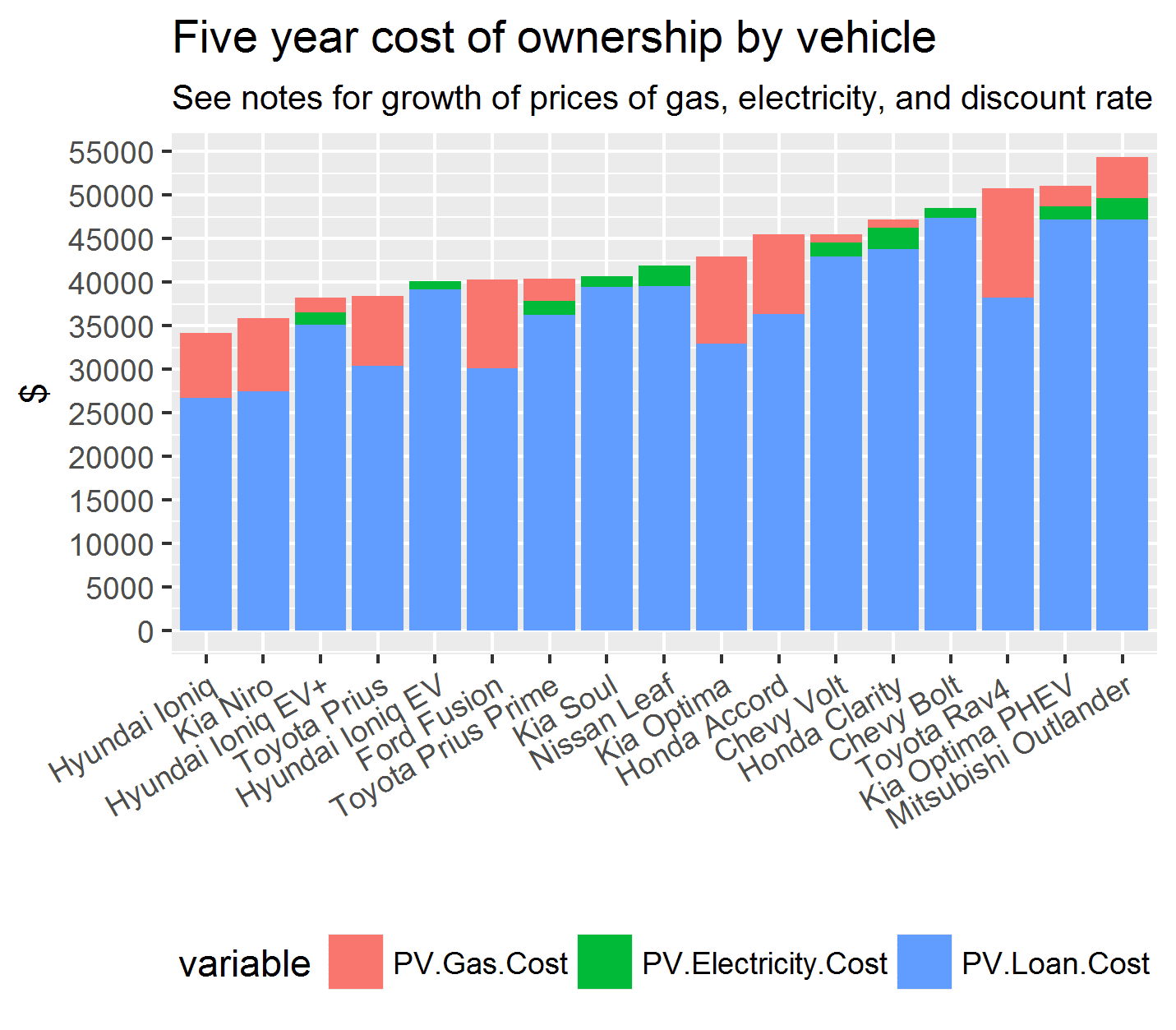
To compare gas vs PHEV vs EV fairly, build a simple five-year worksheet. Include:
1) Purchase price after incentives (if applicable).
2) Financing costs (interest, fees).
3) Energy cost per mile (gas vs electricity).
4) Maintenance and consumables (oil changes, brake wear, tires).
5) Insurance and registration differences.
6) Depreciation estimate at year five.
Then test two scenarios: low charging vs high charging for EV/PHEV. This single adjustment often reveals why people with similar vehicles can report wildly different “real” costs.
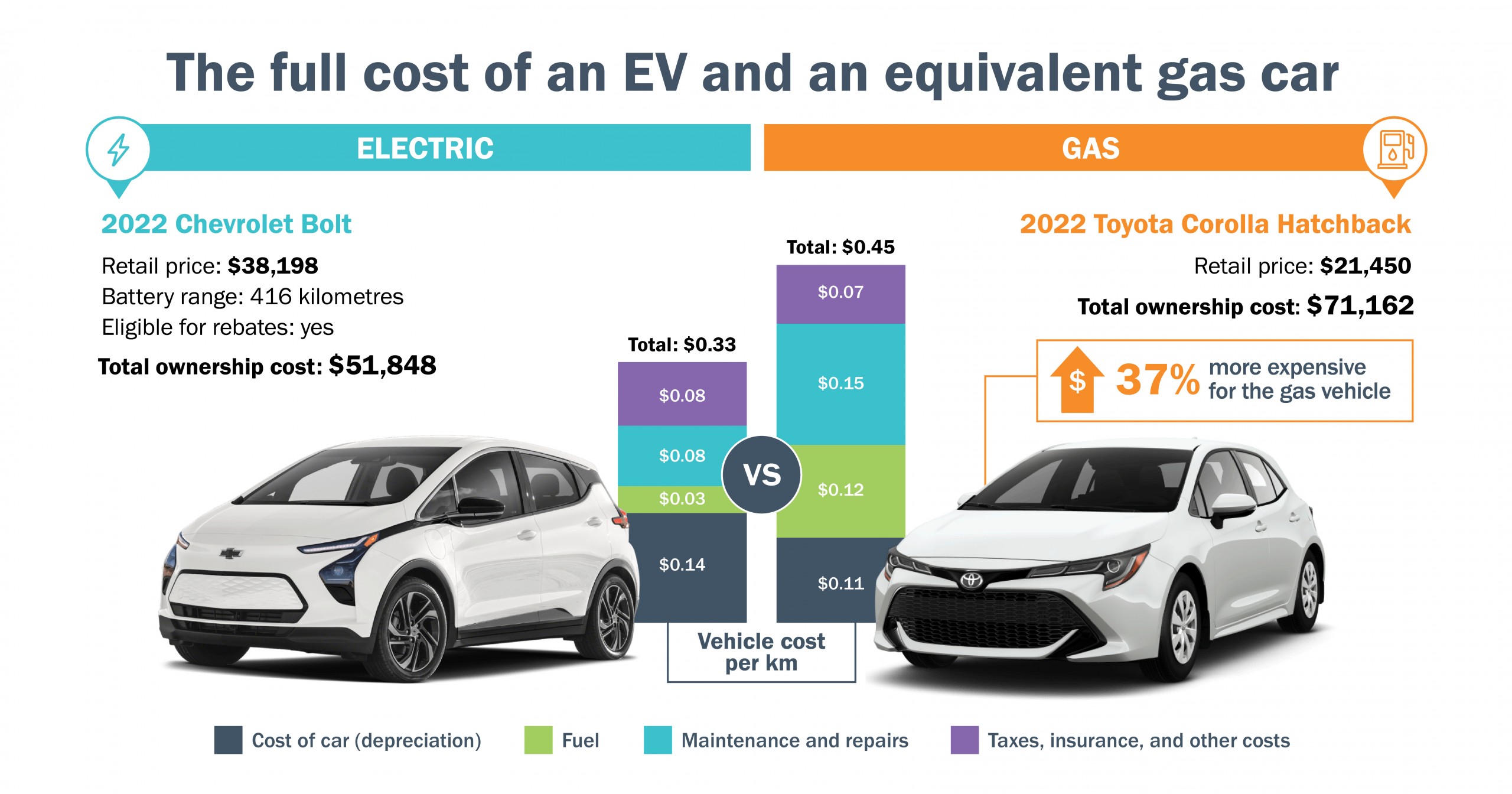
In many practical five-year outcomes, EVs frequently win on operating costs due to energy efficiency and reduced routine maintenance. PHEVs can be competitive when drivers reliably plug in and keep gasoline usage limited. Gas vehicles can remain attractive when incentives for EVs aren’t available, charging access is inconsistent, or predicted resale confidence is higher for a particular gas model.
9) The Intangible Dividend: Confidence, Convenience, and Quiet Economics
Not every cost is measured in dollars. There’s also the intangible value of reliability and routine simplicity. EVs often feel calmer to operate—instant torque, smoother acceleration, and a sense of control over fuel expenses. PHEVs offer a safety net of flexibility, but may require more mental bookkeeping around when to use electric vs gasoline.
Gas vehicles can be frictionless in the sense that refueling is universal. Yet every fill-up is a reminder that gasoline prices behave like weather—changing, sometimes unpredictably.
Over five years, small emotional frictions matter. A schedule that fits your charging routine will make the economics easier to sustain, not just calculate.
10) A Five-Year Decision That Feels Like a Plan, Not a Leap
The real shift in perspective is this: total cost of ownership isn’t merely a comparison of fuel types. It’s a reflection of your life pattern. Where will you park? How often will you charge? How many miles will you drive? What insurance and incentives apply? Which model depreciates best in your market?
When those answers align, gas, PHEV, or EV can each become the sensible choice. The surprise is that “best” is often the vehicle that fits your behavior, not the one with the best headline efficiency.
In 2025, the question is no longer only whether electrification makes sense. The question is whether your electrification will be habitual enough to turn savings into momentum. Choose the path that makes the next five years feel navigable—and financially legible.
By the time the five-year mark arrives, you won’t just know which vehicle was cheaper. You’ll know why the numbers made sense for your world.