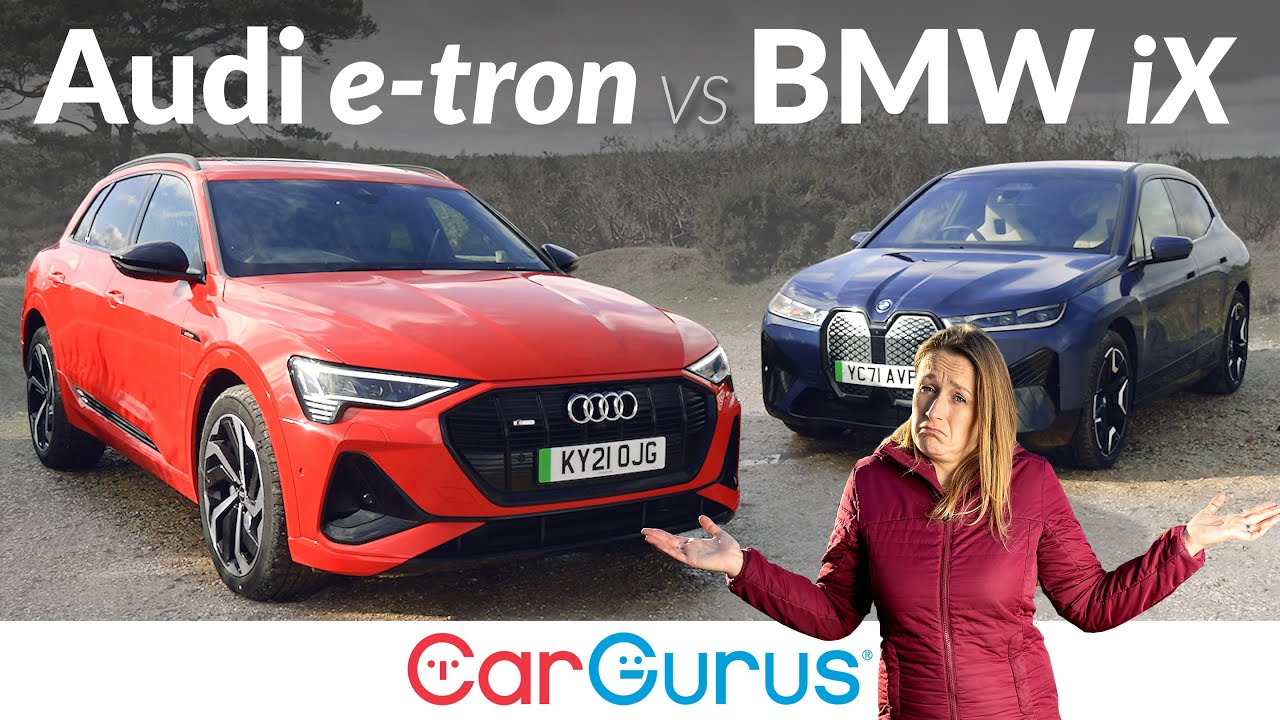
In the world of German luxury electric SUVs, the stage is never just about transportation. It’s about presence—an unmistakable silhouette cutting through city dusk, the hush of propulsion like a practiced magician, and the way materials invite you to stay. Imagine two masters of craft stepping into the same workshop: the Audi Q6 e-tron and the BMW iX. Both are expensive promises, both speak fluent Teutonic engineering, and both aim to turn daily driving into something closer to an automotive ritual than a mere commute.
Yet they do not whisper the same story. The Q6 e-tron carries itself like a sculpted thought—angular restraint softened by technological confidence. The iX, by contrast, feels like a wind-carved monolith—bold, aerodynamic, and determined to look future-forward even while standing still. Choose between them, and you’re not only selecting specs. You’re selecting a mood.
Design Philosophy: Sculpture vs. Skysail Presence
Luxury is often mistaken for decoration. In truth, it’s choreography—how a car moves visually before it even moves physically. The Audi Q6 e-tron treats design like architectural poise. Its surfaces tend to read as clean, intentional planes, with light signatures that arrive like punctuation marks. There’s a calm authority to it, as if each proportion has been tuned by a quiet metronome.
The BMW iX plays a different instrument. Its aesthetic feels like compressed future: a prominent front fascia, a distinctive silhouette, and details that suggest momentum even in a showroom. Where the Q6 e-tron may feel like precision-crafted minimalism, the iX often reads as aerodynamic drama.

Interior Ambience: Calm Minimalism vs. Driver-First Theater
Step inside, and the difference becomes sensory. The Q6 e-tron leans toward a refined serenity. The cabin typically aims for a sense of visual breathing space—surfaces that reduce noise, interfaces that seek clarity, and materials that feel deliberately chosen rather than merely fashionable.
In contrast, the BMW iX often feels like a command center without the coldness. It’s driver-first, yes, but also lounge-like—an environment where you’re meant to sit, adjust, and forget the world outside. The overall impression is a tech-forward cockpit—not louder than necessary, but confident enough to feel like it knows where it’s going.
Short and long trips both benefit from this. Long trips demand calm. Short trips demand immediacy. Both cars try to deliver—but in different tones. The Audi leans soothing. The BMW leans engaging.
Electric Powertrain Character: Smooth Glide vs. Assured Punch
Under the hood, both are electric SUVs designed to make traction feel effortless. The Q6 e-tron’s acceleration often communicates a kind of linear composure. It tends to feel predictable, progressive, and easy to modulate—like throttle response that respects your intentions rather than challenging them.
The iX, meanwhile, can feel more immediately forceful, with responses that may arrive with greater urgency. Think of it as the difference between a river that widens gradually and a river that deepens suddenly. Both can be fast, but their personalities diverge.
In daily driving, this matters. If you prefer acceleration that feels like a measured crescendo, the Audi may feel more intuitive. If you enjoy the sensation of a deliberate shove when you ask for it, the BMW may offer a more visceral thrill.
Charging and Efficiency: Planning as a Lifestyle
Luxury EV ownership has a rhythm, and charging infrastructure defines the score. The Q6 e-tron’s efficiency focus typically supports confident range behavior—especially in mixed conditions where stop-and-go energy management becomes a subtle art. It’s the kind of car that encourages you to plan less intrusively and trust more.
The iX also strives for efficiency, but its larger, more performance-oriented stance can change consumption depending on speed, wheel choice, and terrain. Still, it’s designed with modern charging expectations in mind—built for the real-world cycle of charging stops rather than theoretical comfort.
In both cases, the best experience comes from charging literacy: knowing typical routes, understanding temperature effects, and using charging sessions to reset your day like a soft reset button.
Technology and Infotainment: Interface as an Experience
Modern luxury doesn’t end at the seat. It continues in the screen, the controls, and the way the vehicle anticipates your needs. The Q6 e-tron typically aims for a clean, cohesive digital experience—an interface designed to be legible at a glance and intuitive over time. It feels like the car is trying to reduce friction between you and the road.
BMW’s iX approach often feels more immersive. Menus can be dense, but the underlying intent is to keep everything within reach—navigation, media, vehicle settings, and driver assistance. The sensation is that of a digital lounge, where the vehicle becomes a companion rather than a dashboard device.
Both cars benefit from over-the-air evolution and modern connectivity trends. Yet they differ in how they organize the digital world: Audi tends to emphasize streamlined clarity; BMW tends to emphasize functional depth with a premium presentation.
Ride Comfort and Handling: Velvet Authority vs. Composed Agility
Suspension tuning is where brand personality becomes physical. The Audi Q6 e-tron typically leans into a comfortable, composed ride—helping smooth out harshness on broken surfaces and maintaining composure during cornering transitions. It feels like the car wants to settle into your routine, to make the everyday smoother, not sharper.
The BMW iX is often tuned for confident dynamics, balancing comfort with an eagerness that shows up when the road tightens. It can feel firm without being punishing, and agile without turning into a sports car cosplay. The sensation is precision with cushioning.
Choose based on how you like to feel: If you want a luxury SUV that treats potholes like background noise, Audi may fit. If you want comfort paired with a driver’s sense of engagement, BMW likely resonates more.
Practicality: Space, Visibility, and the Art of Daily Life
Luxury SUV practicality is not just about room—it’s about how the space behaves. The Q6 e-tron generally emphasizes an orderly cabin layout that supports everyday usability: comfortable seating posture, thoughtful storage, and a sense of ease when loading and unloading. The rear seating can feel tailored for real passengers rather than showroom mannequins.
The iX also aims to be usable, with a design that prioritizes seating comfort and visibility. Its stance can make the cabin feel airy, and its interior ergonomics often support long-term comfort. In both, the goal is to make daily life simpler—whether that means a grocery run or a weekend escape with luggage that deserves dignity.
Safety and Driver Assistance: Confidence Without Overreach
Driver assistance systems should behave like a vigilant co-pilot, not a theatrical performer. Both the Audi Q6 e-tron and BMW iX are engineered to support drivers with modern safety features—assistive braking, lane centering tendencies, and adaptive awareness around traffic patterns.
The best systems feel natural. The car nudges, it doesn’t shout. When those systems are tuned correctly, the road feels calmer even when it isn’t.
The Unique Appeal: What Each Car “Believes” About Luxury
Here’s the real metaphor in the comparison. The Audi Q6 e-tron feels like a precision instrument—a promise that luxury is refinement, that technology should serve clarity, and that performance should be smooth enough to trust. It’s elegance with an engineering backbone.
The BMW iX feels like a futuristic atelier—a place where design is bold, electronics are central, and the driving experience is meant to engage you. It believes luxury is energy, confidence, and presence.
Neither is wrong. They’re simply different interpretations of the same German sentence: ich fahre—I drive—made into a personal philosophy.
Choosing Between Audi Q6 e-tron and BMW iX: A Closing Compass
If your ideal luxury SUV is calm, streamlined, and comfort-forward—an EV that feels like a composed lounge with confident motion—the Audi Q6 e-tron is likely the more harmonious match. If your ideal is a driver-first, technology-saturated experience with bold design energy and assured dynamics, the BMW iX may feel more like destiny.
Either way, you’re not just buying electric transportation. You’re choosing a distinctive German interpretation of tomorrow.

In the end, the best way to decide is to imagine your life inside each one: the mornings when you want quiet confidence, the afternoons when you want presence and control, the long drives where comfort matters more than bragging rights. The Audi Q6 e-tron offers velvet authority. The BMW iX offers skysail confidence. Choose the one whose metaphor matches your own.