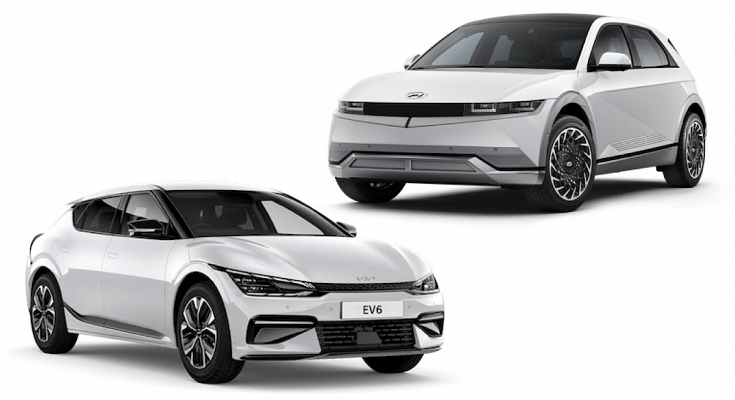
The Hyundai Ioniq 5 and the Kia EV6 look like distant cousins—until you park them side by side. Then the shared lineage becomes undeniable. Both cars are built on Hyundai Motor Group’s E-GMP architecture, and that single platform decision shapes everything from stance and packaging to electronics philosophy and charging behavior. Yet resemblance can be deceptive. Under the skin, the vehicles diverge in character: one leans into effortless comfort and modern minimalism, while the other flirts with sportier timing and a slightly more aggressive exterior cadence.
In this deep comparison, the goal is clarity without dullness. Readers will find not just what these models share, but how platform commonality translates into different driving moods, interior atmospheres, and usability habits—right down to the way each car treats your daily routine.
What “Same Platform” Actually Means
It’s easy to say “same platform” and stop there, but platforms are more than chassis blueprints. E-GMP influences how wheelbase space is allotted, how the battery module is packaged for safety and stiffness, and how the thermal management system is orchestrated. In both the Ioniq 5 and EV6, the battery sits low and the center of gravity stays disciplined, which helps the cars feel composed through transitions.
Commonality also shows up in electronics. The platform supports a fast-charging ecosystem and high-voltage readiness, enabling both models to deliver comparable real-world usability. However, calibration is where personalities emerge. The same underlying design can be tuned toward comfort, responsiveness, or efficiency, and that is exactly what differentiates these two electric siblings.
Exterior Presence: Similar Roots, Different Gestures
The Ioniq 5 reads like a design manifesto. Its retro-futurism leans on clean surfacing and a light signature that feels intentionally iconic. The EV6 is bolder—its proportions look more predatory, with a swoop that suggests motion even when standing still.
Both vehicles share the platform’s ability to preserve interior space without bulky overhangs. Still, their styling communicates different intentions. The Ioniq 5 aims for calm assurance. The EV6 aims for kinetic confidence. That distinction carries into driver perception: one feels like a lounge with wheels; the other feels like a performance sketch translated into metal.
Dimensions and Packaging: Where the Platform Wins
E-GMP’s layout prioritizes a spacious cabin with a relatively flat floor. That matters more than it sounds. A flat, low-slung interior floor improves ease of entry and exit, and it gives rear passengers a more natural seating posture. Both cars benefit from a wheelbase that supports generous legroom, and both manage to keep cargo utility practical despite their aerodynamic sensibilities.
Even the way the seats fold and how the trunk opening behaves can feel consistent—because the underlying packaging rules are similar. Still, trim and optional equipment may nudge the final cargo numbers. In day-to-day life, the bigger story is how both vehicles treat space as a functional asset rather than a marketing bullet.
Battery, Range, and the Reality of Charging
At the heart of the comparison is how E-GMP supports battery configurations that translate into usable range. The Ioniq 5 and EV6 can be ordered with long-range options depending on market and trim. In both cases, battery positioning improves handling stability and supports a dependable ride quality.
Fast charging is where the platform’s engineering becomes visible. When compatible DC fast-chargers are available, both cars are built to accept high power flows early in the session. That makes road trips feel less like logistical gymnastics and more like a rhythm. The details differ by model year, battery capacity, and thermal behavior, but the general expectation—rapid uptake followed by gradual tapering—holds true across both.
For readers who obsess over the charging curve, it’s worth noting that real-world outcomes depend on battery temperature and ambient conditions. Long drives in cold weather can reduce peak power until the battery warms. Conversely, warm conditions help sustain faster charging for longer. The EV6’s more performance-leaning tuning may encourage more energetic driving inputs, which can also influence charge behavior later. The Ioniq 5, with its more comfort-forward approach, often encourages a steadier pace.
Powertrains: Same Architecture, Distinct Driving Character
The E-GMP platform can house single-motor or dual-motor setups across different trims. Where the similarity ends is in how the cars deliver torque and how the traction control strategy responds to driver intent. Electric torque arrives instantly, but the shaping of that torque—how quickly it rises, how smoothly it transitions, and how aggressively it requests traction—creates the “feel” you can’t measure with a spreadsheet.
The EV6 often reads as more urgent. Its steering response and pedal calibration may encourage quick, decisive inputs. The Ioniq 5 typically projects a more relaxed confidence, with a smoother progression that feels especially inviting for long commuting stretches. Both cars can be quick; the difference is the cadence of the acceleration experience.
Handling behavior also diverges subtly. Because tuning choices affect damping and motor management, the EV6 can feel sharper around corners, while the Ioniq 5 tends to smooth out the rough edges of imperfect roads. It’s not that one is “better.” It’s that they interpret the same physics differently.
Ride Comfort and NVH: The Quiet Battle
Noise, vibration, and harshness (NVH) become obvious in the quietest moments—city cruising, highway steady-state, and stop-and-go creep. Here, platform consistency helps: both cars benefit from reduced structural shake thanks to stiff battery packaging and thoughtful mass distribution.
Still, the finishing details and suspension tuning influence what you perceive. The Ioniq 5 often feels more lounge-like, with fewer sharp transmissions of road texture. The EV6 can feel slightly more communicative, the kind of sensation that tells you the tires are awake and the car is paying attention. If you want a calm bubble, the Ioniq 5 usually aligns better. If you want feedback, the EV6 tends to deliver it with a faint, satisfying intensity.
Interior Atmosphere: Tech, Materials, and Human Factors
Both interiors aim for modern minimalism, but they do it with different emotional temperatures. The Ioniq 5 interior often emphasizes warmth and user-friendly ergonomics. Its screen and control layout typically prioritizes clarity, with easy-to-find functions and a clean dashboard composition.
The EV6’s cabin can feel more driver-centric, emphasizing a slightly sportier posture. Seats, steering feel, and interface design work together to keep attention on the act of driving. That doesn’t mean the EV6 lacks comfort—rather, its comfort is arranged around engagement.
Across both cars, it’s the ecosystem of screens, settings, and connectivity that matters. Navigation routing, charging station integration, and driver-assistance menu logic are the kinds of details that separate daily convenience from digital frustration. In practice, both vehicles attempt to reduce friction, but the specific screen behavior and interface flow can feel more intuitive in one model than the other depending on how you interact with menus.
Driver Assistance and Safety: Confidence Through Consistency
Electric vehicles often feel more “computer-like” than their gas counterparts, and driver assistance systems become part of that perception. Both the Ioniq 5 and EV6 can be configured with advanced safety suites, designed to support lane centering, adaptive cruise control, and collision mitigation.
Because the platform provides a consistent electronics foundation, the underlying behavior patterns can be similar. The differentiation lies in calibration: how confidently the car interprets lane boundaries, how smoothly it adjusts following distance, and how late or early it alerts the driver in complex traffic scenarios.
In real life, this means the right car is the one whose assistance behavior matches your habits. If you prefer a gentle, smoothing presence, the Ioniq 5 may feel like a more patient co-pilot. If you enjoy a more assertive throttle-and-brake coordination, the EV6’s personality can feel more aligned.
Technology for Everyday Life: Charging, Connectivity, and Lifestyle
The platform’s charging readiness supports more than road-tripping. Home charging, scheduling, and battery-preconditioning routines can shape ownership satisfaction. Both cars typically offer features that let drivers plan charging windows and prepare the vehicle for departure—especially beneficial when temperatures drop or when you want consistent preconditioning before leaving for errands.
Connectivity and software features also play a role. Navigation that accounts for charging stops, infotainment that reduces distraction, and voice-command responsiveness are the ingredients of a seamless ownership loop. Even how quickly the car wakes and how responsive touch controls feel can influence your perception of overall quality.
Which One Fits You? A Practical Conclusion
Choosing between the Hyundai Ioniq 5 and Kia EV6 ultimately comes down to temperament. They share the same E-GMP DNA, so the fundamentals—packaging, low-center-of-gravity stability, fast-charging capability, and a modern electronics backbone—are closely aligned.
Still, your daily life decides the winner. If you prioritize a smoother ride, a calmer interior vibe, and a less urgent driving demeanor, the Ioniq 5 often feels like the more harmonious choice. If you want sharper steering immediacy, a more animated presence, and a cabin designed to keep the driver engaged, the EV6 can feel more exhilarating.
Final Thoughts
Two cars, one platform, divergent emotions. That is the essence of the Hyundai Ioniq 5 versus Kia EV6 comparison. The platform provides a strong, consistent foundation, but each brand’s tuning choices, design language, and driver-centric priorities shape what you experience every time you press the accelerator.
When you recognize those differences, the decision becomes less about specs and more about fit. The better EV is the one whose personality matches your roads, your routines, and your own sense of what “electric driving” should feel like—quietly confident, or brightly alive.