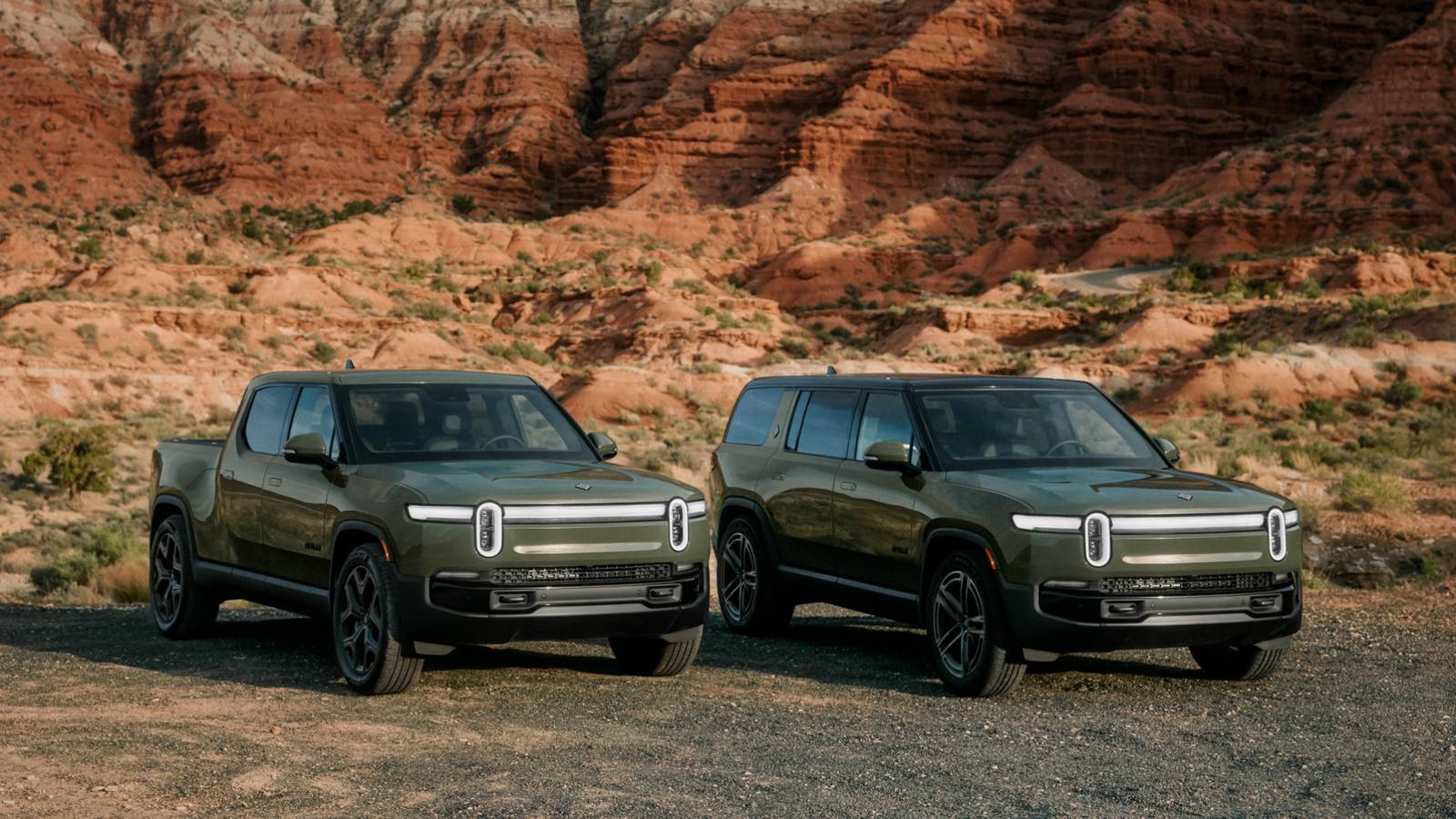
There’s a particular kind of anticipation that only happens when a vehicle’s mechanical architecture starts to change the way you think about traction. The Rivian R1T—already known for its electric torque and adventurer’s stance—has become even more intriguing as the conversation shifts from “more motors” to “better decisions about power delivery.” The dual-motor version feels like a confident handshake. The quad-motor version, by contrast, can feel like a door opening into a new room entirely.
But what does that actually mean when you’re driving? And how does the promise of a different perspective show up in real-world sensations—on wet pavement, loose gravel, steep inclines, and long, wind-swept highways where the landscape refuses to cooperate? The answer isn’t just about numbers. It’s about how each drivetrain interprets the moment the tires meet the world.
Rivian R1T at a glance: the truck that treats electricity like strategy
The R1T’s personality begins with its EV fundamentals: instant torque, predictable control, and a chassis designed to keep the body calm even when the road turns chaotic. Yet the magic of the R1T isn’t merely that it’s fast. It’s that it’s legible. You can feel what the truck is doing and why—especially when the drivetrain becomes more nuanced.
In both dual- and quad-motor configurations, the system is built around precision. Power is not just delivered; it is allocated. That word matters. Allocation implies judgment—deciding where effort should go, when it should arrive, and how it should be modulated as traction fluctuates.
Dual-motor character: the efficient calm that still feels eager
The dual-motor Rivian R1T is often described as “less complicated,” but that’s not quite right. It’s more like a streamlined conversation—fewer voices, clearer rhythm. On the street, this translates into a confident, composed demeanor. The truck feels eager without becoming frantic, as if it knows exactly how much torque your right foot intends to request.
When acceleration begins, the response arrives with that electric immediacy you expect from a modern EV. Yet the dual-motor setup tends to emphasize cohesion: the front-to-rear balance is consistent enough that the truck feels planted, not skittery. Even during moderate cornering, the behavior remains understandable. The drivetrain doesn’t constantly re-invent itself; it simply supports the line you’re driving.
Then comes the long-road test: efficiency, range-minded behavior, and the subtle art of not wasting energy. Dual-motor configurations often deliver a persuasive blend of performance and economy, especially once speeds stabilize. The perspective shift here is emotional as much as mechanical—driving starts to feel like planning ahead rather than merely reacting.
Quad-motor character: propulsion with an almost orchestral precision
The quad-motor R1T introduces a different sensory vocabulary. Instead of thinking in terms of “front and rear,” the mind begins to think in terms of corners. Because power can be directed with more granularity, the truck can adjust its behavior the way an experienced driver modulates steering—except this modulation happens continuously, under the hood, with tire-contact intelligence.
This is where the promised shift in perspective becomes tangible. In the quad-motor R1T, you don’t merely accelerate through traction limits. You negotiate them. The vehicle can redistribute effort as grip changes, helping it remain composed when the road turns into an argument: snow crust, wet ruts, loose stones, or a wet highway painted with invisible streaks.
Expect a kind of “grip theater” effect—less drama for the driver, more discipline from the drivetrain. The truck feels as if it can anticipate slippage rather than fear it. And when the road is forgiving, the power can feel almost unnecessary—like bringing a full orchestra to a quiet café. But when the surface turns unruly, the added capability becomes unmistakably useful.
Power delivery: how motors change the meaning of traction
At first glance, the difference seems simple: more motors means more output. Yet the deeper difference is how traction becomes editable. With more independent control points, the quad-motor system can fine-tune torque distribution more aggressively, smoothing transitions between grip states.
In practice, this can mean:
• Launch feel: less wheelspin, more linear surge, and a stronger sense of momentum staying connected to the road.
• Mid-corner behavior: reduced twitchiness on uneven surfaces, with torque managed to preserve the intended trajectory.
• Recovery from mistakes: the system can correct rapidly when the tires encounter a sudden drop in friction.
Dual-motor models still manage traction effectively. However, they often rely more on a general fore-aft coordination. The quad setup, in contrast, can operate with a more nuanced interpretation of what each tire is “telling” the vehicle in real time.
Off-road dynamics: crawling is one thing, commanding is another
Off-road driving is where driver confidence either amplifies or collapses. The R1T’s off-road experience benefits from its chassis engineering, but the drivetrain configuration shapes how the truck feels when it matters most.
With dual-motor traction, the R1T tends to deliver a stable, predictable performance. It’s the kind of stability that encourages slower, more controlled movement—great for technical trails and for drivers who value steady progression.
Quad-motor capability, however, can create a sensation of command. Climbing becomes less of a wrestling match and more of a continuous calculation: torque arrives where it’s needed, and the vehicle reacts quickly when the surface changes under load. Descents can also feel more reassuring because the system supports control without demanding constant attention.
And then there’s the psychological aspect. Under the sky and between the rocks, a quad-motor R1T can feel like it’s watching your intent and reinforcing it—almost like a co-pilot with unusually fast reflexes.
On-road manners: smooth efficiency vs high-output composure
On pavement, the distinction shifts again. Dual-motor models often emphasize a balanced ride—less noise in the sensation profile, more focus on efficient cruising. You get that “easy miles” feeling, where the truck seems eager to settle into a rhythm.
Quad-motor models can be just as civilized, but their potential tends to reveal itself during sharper maneuvers: quick merges, confident overtakes, and spirited acceleration at the exact moment you want it. The truck doesn’t feel like it’s hunting for traction; it feels like it’s using traction.
In both cases, the R1T’s mass is handled with surprising poise for an electric truck. Yet the quad setup often provides a stronger sense of authority when the road becomes slick or when crosswinds push the vehicle off its favored trajectory.
Handling and control: stability isn’t just about steering
Steering tells only part of the story. Stability emerges from how the drivetrain interacts with the tires and how torque is managed when the vehicle is asked to do more than one thing at a time—turn, accelerate, and remain balanced.
Dual-motor versions typically feel coherent and reassuring during everyday driving. The response is immediate but not intrusive, which can be a relief on long commutes. It’s propulsion that doesn’t insist on attention.
Quad-motor versions, meanwhile, can elevate the feeling of precision. When the truck transitions from straight-line thrust into angled movement, the drivetrain can help maintain traction consistency. That means fewer moments of unwanted micro-correction—those tiny adjustments that, over a day, can become mentally exhausting.
Range, efficiency, and cost-of-excitement
Here’s the trade-off that shifts the decision from desire to math. Quad-motor systems—especially when they’re producing maximum output—tend to invite more consumption. That doesn’t mean the quad is wasteful; it means it’s more capable, and capability tends to be used.
Dual-motor setups often represent the pragmatic choice for drivers who want strong performance with a more restrained energy appetite. They’re an excellent match for households that treat the R1T as both a daily driver and a weekend escape vehicle, without demanding maximum drama at every light.
The quad-motor choice can be viewed as paying a “cost of excitement” in exchange for broader capability across challenging conditions. When you live where weather is fickle or roads are frequently less-than-ideal, that cost can become justified quickly.
Choosing between dual and quad: a decision shaped by lifestyle
The question isn’t “which is better.” The question is: what kind of better do you need?
If your driving includes frequent highway cruising, predictable traction, and a desire for efficient power that feels calm and controlled, the dual-motor R1T is likely to feel like the right kind of commitment. It aligns with a mindset of planning: you step on the accelerator and the truck responds cleanly, without forcing the day to become a performance event.
If your world includes slick mornings, mountain detours, gravel roads that appear and vanish like mirages, and off-road outings where surfaces don’t care about your intentions, the quad-motor R1T changes your experience. The truck can turn risk into manageable variables. It doesn’t eliminate challenge, but it reduces the cost of unpredictability.
Final verdict: two perspectives, both powerful
The Rivian R1T dual-motor and quad-motor versions don’t simply offer different horsepower narratives. They offer different ways of understanding traction, control, and the emotional cadence of driving. Dual-motor models deliver efficient eagerness and steady confidence. Quad-motor models elevate that confidence into command—particularly when the road stops behaving.
So the real shift in perspective isn’t about whether more motors are “worth it.” It’s about recognizing what you want from your vehicle: the satisfying clarity of a streamlined drivetrain, or the near-untouchable adaptability of a system designed to anticipate change.
Either way, the R1T remains the same remarkable premise: an electric truck that doesn’t just move through the world—it interprets it. And once you feel that difference, the decision becomes less about speculation and more about the kind of roads you’re actually willing to meet.