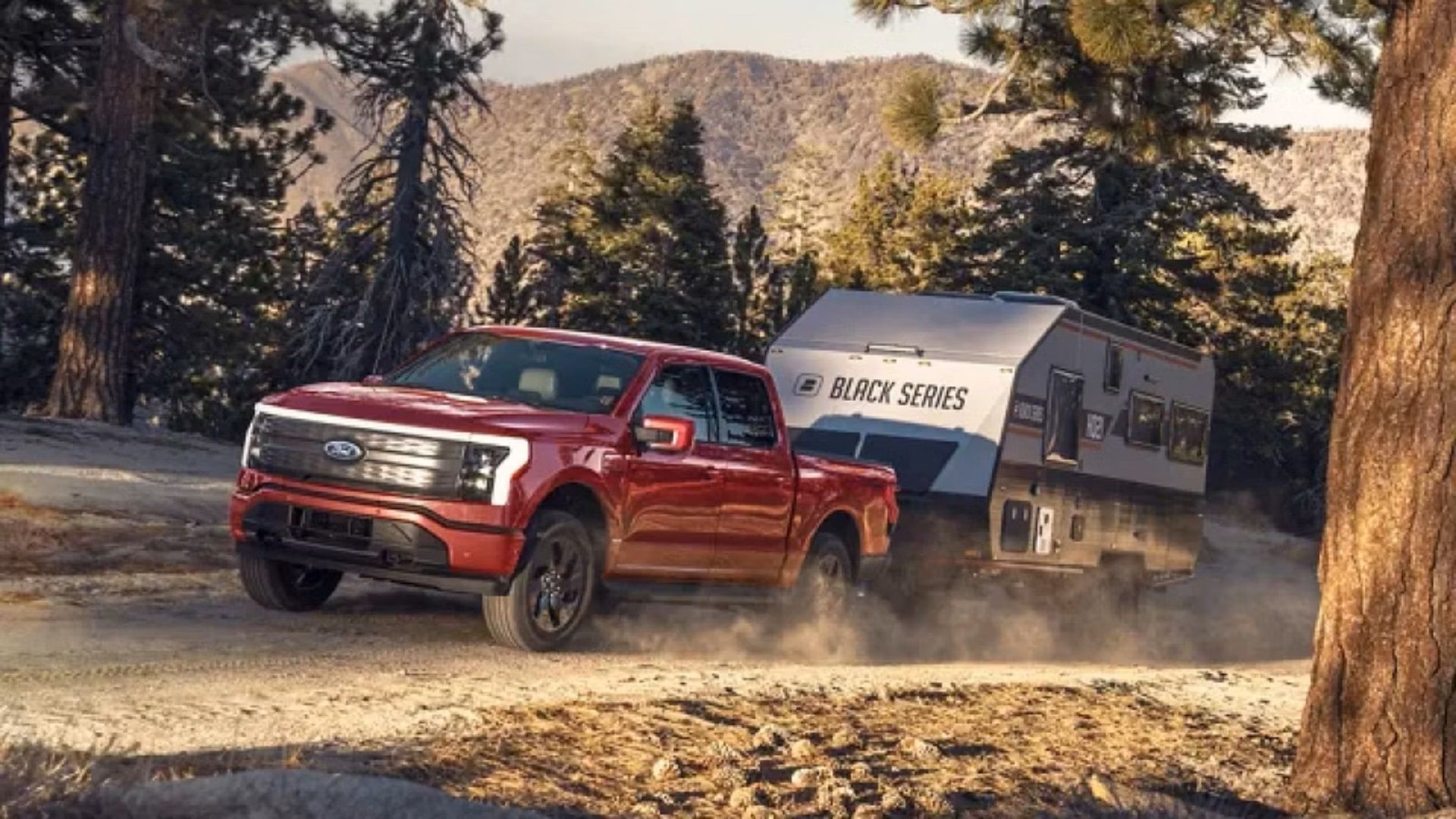
The first time you hitch a trailer to a pickup, you feel it in your shoulders: the quiet weight shifting, the new geometry behind the rear axle. With the Ford F-150 Lightning, that ritual turns into something slightly different—part familiar towing routine, part electrified experiment. This review follows the Lightning through real-world towing and a range test mentality, treating every stoplight, grade, and crosswind gust as evidence. The headline claim is simple—electric trucks can tow. The story is not. It’s about how the truck behaves when the battery is asked to work like a fuel tank, and how predictability becomes the difference between confidence and anxiety.
Across both scenarios—towing with an enclosed car trailer and testing range under load—the Lightning reveals a personality that’s equal parts torque monster and careful engineer. Short bursts of acceleration feel instantaneous, while sustained pulls demand attention to planning. The result is not just performance. It’s a towing rhythm you learn to read.
What the F-150 Lightning Brings to Towing: Instant Torque, Practical Muscle
Most internal combustion towing experiences are defined by how quickly you can find the sweet spot of engine speed. The Lightning changes the cadence. Electric drivetrains don’t wait for revs; they deliver torque immediately, so the truck responds like a well-trained athlete instead of a warm engine.
When you load up and start moving, the Lightning feels composed. The throttle modulation is surprisingly nuanced: light input yields smooth roll-on, while firmer commands translate into assertive thrust. That immediacy is especially noticeable during lane merges, where you’re not “downshifting,” you’re simply asking for more. The truck’s mass remains the mass, of course, but it no longer feels like you’re dragging dead weight behind you. It feels like you’re towing with intent.
That said, towing is never only about acceleration. It’s about stability, steering feedback, braking confidence, and how the vehicle manages heat and power draw. The Lightning handles those factors with a strategic temperament, using system control to keep things within an acceptable performance envelope.
Hitching and Loading: The Setup Matters More Than You Think
Before the first mile, the Lightning makes a strong case for preparation. The towing experience hinges on correct hitching, proper trailer alignment, and a careful look at tongue weight. Electric power doesn’t erase physics; it just changes how you experience it.
In a real towing day, the small steps become memorable: verify the hitch connection, confirm brake controller settings if your setup requires them, and ensure trailer tires are properly inflated. Then there’s the loading philosophy—keeping heavy items low and forward within the recommended limits. Done well, the Lightning tracks straight and feels less like you’re fighting the trailer and more like the truck and trailer are moving as one system.
Done poorly, you’ll feel it quickly: steering corrections become more frequent, and the whole vehicle feels less settled. This is where driver technique matters. A smooth start, minimal oscillation, and steady throttle help the Lightning maintain composure—especially when wind resistance and trailer drag stack up.
Towing Dynamics on the Open Road: Stability, Braking, and Grade Control
On the highway, towing is largely an aerodynamic contest. Electric torque is helpful, but the dominant forces are still the same: drag, rolling resistance, and climbing grade. The F-150 Lightning tends to remain predictable because the power delivery is linear and the braking system is capable of blending regenerative deceleration with friction braking.
During downhill sections, the truck’s ability to manage speed can feel like a relief. Instead of relying solely on brake heat, regenerative strategies can capture part of the energy you’d otherwise waste. That doesn’t mean energy recovery magically fixes range; it means the truck can stay calmer for longer when your route includes elevation changes.
On climbing grades, the experience becomes a conversation between you and the battery management system. The Lightning doesn’t merely “run out of power.” It reallocates available energy to maintain functionality, and your driving style becomes the steering wheel for efficiency. Short bursts of acceleration are less costly than long, high-load surges.
Real-World Range Test Under Load: What Changes When You Tow?
Range tests in theory can be tidy. Range tests in reality are messy—temperature swings, traffic pacing, stop-and-go interruptions, and the trailer’s own aerodynamic signature. With the Lightning, towing amplifies those variables because the battery is no longer only powering the truck; it’s also supplying the energy required to overcome additional resistance for every mile.
In a real-world towing range context, expect the “headline number” to drift downward. The magnitude depends on trailer weight, speed, terrain, and how often you accelerate hard. Higher speeds generally punish efficiency because aerodynamic drag scales aggressively. A moderate cruising pace helps the truck maintain more sustainable power draw.
Interestingly, the Lightning can feel surprisingly consistent within a certain driving style. If you keep acceleration measured and avoid repeated sprint-and-coast cycles, the range estimation becomes less chaotic. The truck’s systems do their part, but the driver’s tempo is the difference between range you can trust and range you have to gamble.
Enclosed Car Trailer Reality: Aerodynamics, Speed, and Energy Discipline
An enclosed car trailer is a kind of aerodynamic sail. Even when it isn’t particularly wide, the frontal surface area and the sheltered airflow dynamics increase drag. Towing an enclosed trailer therefore behaves differently than towing something more streamlined or open.
What stands out during an enclosed car trailer test is how quickly consumption rises when speed increases. The truck can absolutely pull the trailer, but the battery’s energy throughput becomes the limiting factor. That’s where “discipline” becomes a technical skill. Maintaining a steady pace, anticipating merges, and letting momentum do more work are more impactful than repeatedly trying to “catch up” with sudden acceleration.
At the same time, the Lightning’s instant torque still provides safety margins. Merging into traffic with a trailer can be stressful in any vehicle; the Lightning’s responsiveness helps reduce that stress, allowing confident passing and quicker repositioning when needed.
Charging Strategy While Towing: Planning Beats Panic
Charging on a towing trip is less about finding a charger and more about sequencing your route. The Lightning encourages you to think in legs—drive segments that fit within your expected consumption under load. In practice, that means building in time for charging stops before the battery becomes low enough to trigger inconvenient rerouting decisions.
When towing, the best charging strategy often resembles a storyboard: arrive at the charger with enough energy to avoid prolonged topping runs, then add enough charge to complete the next meaningful stretch. Longer stops can be efficient if the charger profile stays favorable, but frequent short stops can become a time penalty.
The best part is mental clarity. With a sensible charging plan, the truck stops feeling like an experiment and starts feeling like a tool.
Ride Quality and Cabin Experience: Comfort Under Load
A towing-capable truck must do more than move forward. It has to keep the occupants comfortable enough to stay alert. The Lightning’s cabin experience during towing tends to feel controlled and calm. Road vibrations are filtered competently, and the overall ride quality remains stable even when the trailer adds its own sway potential.
Noise becomes a more relevant variable with trailers—tire roar, aerodynamic whoosh, and the subtle creaks that accompany weight shifting. The Lightning does not eliminate those sounds, but it keeps the cabin from becoming chaotic. For long-distance towing, that matters as much as horsepower.
Efficiency Best Practices: How to Get the Most Out of Every Mile
If there’s one theme across towing and range, it’s that efficiency is not a single knob. It’s a blend of choices. Start with speed selection. The truck can pull at highway pace, but moderate speeds typically preserve more range than aggressive driving.
Next is acceleration style. Smooth, progressive throttle inputs reduce peak power draw. Finally, use regenerative deceleration where possible—downhill sections and city traffic provide opportunities to recapture energy and reduce wear on friction brakes.
Even tire pressure and wheel alignment can play supporting roles. They’re not glamorous, but they are measurable contributors to rolling resistance and stability.
Who This Truck Is For: The Towing Enthusiast and the Practical Planner
The Ford F-150 Lightning earns a distinctive spot in the market. It suits drivers who want the confidence of a modern pickup that feels quick, controllable, and capable—without abandoning the realities of charging and energy management. It’s for people who tow often enough to care, but who also understand that electric range planning is part of the ownership experience.
If you’re expecting a gasoline-like “refuel whenever it feels convenient” lifestyle, the Lightning will require adjustment. If you’re willing to plan, drive thoughtfully, and treat efficiency as a craft, the payoff is substantial: strong torque, confident towing behavior, and a driving experience that feels more modern than muscle-flexing.
Bottom Line: Towing Capability Meets Range Reality
The Lightning proves it can tow—confidently, smoothly, and with the kind of acceleration that makes merges feel less like a gamble. Yet the range test reality is equally clear. Under load, consumption rises, and the truck asks for a deliberate approach: steady speed, gentle throttle, and a charging plan that respects how energy behaves in the real world.
In the end, the Ford F-150 Lightning isn’t just a towing truck with a battery. It’s a towing system—where torque, aerodynamics, driver technique, and charging strategy combine into a coherent travel experience. For the right driver, that coherence is the true feature: not simply reaching the destination, but arriving with confidence intact.