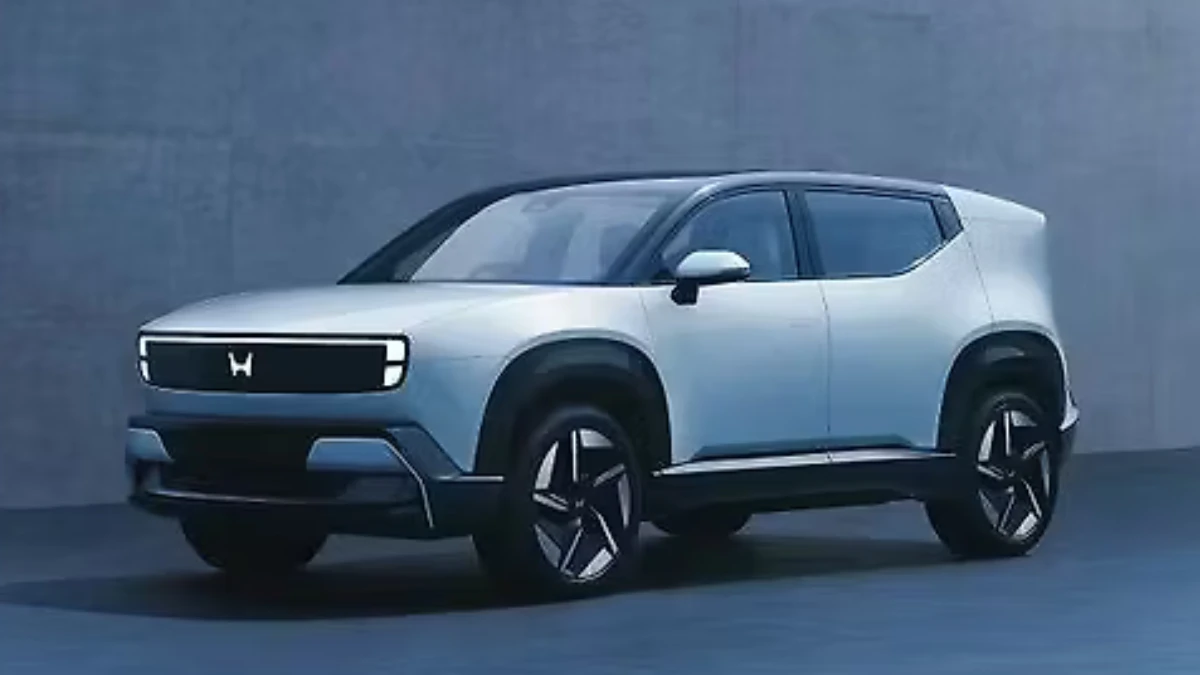
Some innovations arrive like fireworks—bright, immediate, impossible to miss. Others seep in like moonlight, slow and inevitable, changing the room one shadow at a time. The Honda 0 Series EVs belong to the latter category: a platform preview that feels less like a single announcement and more like the opening paragraph of a long, carefully edited novel.
Picture an automobile not as a finished object, but as a living ecosystem—an instrument panel tuned to the driver’s intent, a battery system designed with calm confidence, and software that behaves like an attentive co-pilot rather than a distant dashboard app. Honda’s 0 Series concept suggests exactly that: a re-centering of engineering around a new core. It’s the automotive equivalent of switching from typewriter to word processor—suddenly the possibilities of editing, iteration, and refinement expand dramatically.
A platform built like a quiet engine for big change
The word “platform” can sound clinical, even mechanical. But in the electric era, a platform is closer to a foundation for architecture: it determines how light enters a room, how sound travels down the hallway, and how gracefully a building adapts over years.
Honda’s 0 Series preview hints at a structure intended to be more than a one-off vehicle arrangement. It implies modular thinking—an ability to host different vehicle silhouettes while keeping critical technologies coherent. Think of it as a musical key that stays constant even when the melody changes. The harmony remains, while the styling, range strategies, and driving character can evolve.
At the heart of this approach is the promise of cohesion. Electric drivetrains demand integrated design: thermal management, battery placement, motor control, charging interfaces, and safety logic must feel like a single organism. A new platform can reduce friction between subsystems and create that “one-press” confidence drivers crave—less fuss, more flow.
Design language: prototypes that read like intentions
Prototypes do not merely test hardware; they communicate philosophy. They’re wind-tunnel sketches made real, a window into how a brand imagines the next decade of motion.
Consider the preview of the Honda 0 Series saloon prototype. Its stance feels deliberate—confident without being loud, sculpted without being theatrical. The front quarter view functions like a visual haiku: a handful of lines suggesting aerodynamic intent, structural calm, and a sense of forward momentum even while stationary.

Then there is the world-premiere prototype of the Honda 0 α (alpha), described as a new SUV. Here, the metaphor shifts. The SUV form becomes a canvas for volume and utility, yet the design language suggests it’s not just about adding space. It’s about balancing mass with efficiency, turning “bigness” into agility.
When prototypes are this evocative, the lesson is clear: the platform is not only about speed and torque. It’s also about how the vehicle inhabits the world—how it meets the road, handles glare from the horizon, and maintains an aerodynamic silhouette that looks composed rather than compromised.

Powertrain philosophy: electrification as refinement, not replacement
Electric vehicles are often framed as a complete replacement of prior technology. Yet the 0 Series preview reads more like refinement—taking the best of driving feel and translating it into a new language of propulsion.
In an EV, torque arrives with immediacy. That immediacy can be thrilling, but it can also be chaotic if not orchestrated. A platform preview this ambitious suggests careful calibration: responsive, yes, but also measured. The goal is control that feels intuitive—like steering a well-trained instrument rather than a newly learned tool.
Honda’s approach, as suggested by the 0 Series direction, emphasizes drivability through precision control. Motor response, regen behavior, and traction logic can be tuned to make the car feel calm at low speeds and composed at high ones. Short bursts of acceleration can become confident overtakes. Regen can transition seamlessly into deceleration without that “step-down” sensation drivers dread.
Battery and thermal strategy: the invisible craftsmanship
One of the strangest paradoxes of EV ownership is that the most important systems are also the least visible. The battery might be out of sight, tucked beneath the skin of the car. The thermal management system might never earn a glance. Yet together, they quietly decide whether the vehicle feels consistent across seasons, road trips, and the occasional heatwave.
A new platform is where battery architecture and thermal strategy can be coordinated more elegantly. The result should ideally be a wider comfort envelope: stable performance when temperatures change, predictable energy consumption patterns, and a charging experience that feels less like waiting and more like planning.
Think of thermal management like a conductor. Without it, the orchestra plays the right notes but at the wrong tempo. With it, even aggressive driving—or a winter commute—can sound harmonious.
Software and human interface: an EV that understands rhythm
Electric cars increasingly rely on software to translate intent into motion. But effective software isn’t simply “smart.” It’s subtle. It anticipates. It interprets. It chooses the right response with minimal drama.
The 0 Series preview suggests a direction where the interface could be designed around rhythm—how drivers accelerate, brake, and settle into long drives. Short sentences on a screen can be helpful; thoughtful feedback is better. The difference matters: the driver shouldn’t feel like they’re operating a gadget. They should feel like they’re engaging a partner.
Navigation, energy prediction, and charging planning can become more than informational features. They can form a narrative: “Here is what your route wants from the battery. Here is what your driving style will change. Here is how to keep the experience smooth.” The EV becomes less of a calculator and more of a storyteller.
Safety and structural confidence: protection that feels structural, not decorative
Safety in modern vehicles is not just about crash outcomes. It’s also about preventing mistakes, reducing uncertainty, and maintaining stability in unexpected conditions.
When a new platform is designed from the ground up, there is more room to align structural goals with battery placement and crash architecture. The goal is a car that feels inherently secure—like stepping into a well-built room where the floor doesn’t creak, and the walls don’t invite worry.
Driver-assistance features, too, should be treated as part of the human-machine contract. They must be reliable, legible, and consistent. A platform that supports this philosophy can reduce the “panic factor,” the uncomfortable hesitation drivers sometimes feel when systems behave unpredictably.
The unique appeal: a new beginning with familiar warmth
What makes the Honda 0 Series EVs intriguing isn’t only the engineering ambition. It’s the way the preview suggests a balance: advanced technology with a sense of restraint, innovation without losing the warmth of everyday usability.
Metaphorically, the 0 Series feels like a fresh sketchbook that still remembers how to write in the author’s natural voice. It promises modernity, but it doesn’t discard comfort. It moves toward electrification with purpose, not spectacle.
For drivers, that means the most exciting aspect may be the simplest one: confidence. Confidence that range planning will feel clearer. Confidence that the car will respond smoothly. Confidence that the platform’s coherence will translate into a driving experience that doesn’t require constant reinterpretation.
What to watch next: the preview becomes the road
In a platform preview, the future is hidden behind prototypes and headlines. Yet clues are everywhere—design cues, vehicle categories, and the direction of technological integration.
As Honda’s 0 Series expands, the questions worth asking are straightforward. How will energy efficiency look in real-world driving? How will charging behaviors be supported across different ecosystems? Will software feel increasingly personal, or merely functional? Most importantly, will the EV’s character remain consistent across saloon and SUV forms?
The answers will shape not just specs, but emotion. And emotion is where electrification finally becomes more than engineering—it becomes belonging.
Honda’s 0 Series EVs arrive like a change in atmosphere. The platform preview suggests a future where electric performance is not simply measured, but choreographed—where design reads as intention, where thermal discipline stays invisible yet vital, and where software turns commuting into a smoother narrative.
Some journeys begin with a destination. This one begins with a foundation. And if the prototypes are any indication, the road ahead is ready to feel both new and unmistakably grounded.