The road trip begins with a quiet promise: plug in, power up, and keep moving. That promise feels almost ceremonial when you’re driving an EV like the Kia EV9—sleek, capable, and eager to stretch the distance between cities. Yet the moment you seek DC fast charging, the story can take an unexpected turn. Not dramatically, not always. But often enough to be memorable.
On paper, the DC fast-charging network is a map of certainty. In practice, it can resemble a shifting mirage—sometimes crisp and dependable, sometimes frustratingly evasive. If you’ve ever pulled into a charging bay only to find the charger negotiating with the universe (a declined session, an error code, a stalled handshake, a mysteriously occupied connector), you already know that the real journey isn’t only measured in miles. It’s measured in patience, adaptability, and perspective.
This is a road-trip narrative about those moments—the ones that test expectations and, in return, reframe what “charging success” truly means. The Kia EV9 doesn’t change its character when a charger misbehaves. It simply reveals the kind of driver you become when the network is imperfect.
DC Fast Charging: The Promise That Meets Reality
DC fast charging is designed for momentum. It’s meant to compress time—turning a stop into an interlude. The first assumption many travelers make is that every station is equally reliable, every session equally quick, and every interaction with the charging screen equally straightforward.
Reality is more nuanced. A station can be operational but still unreliable. A port can be functional but capacity-limited due to demand. A charger may be “available” while still throttling output, or it may require a specific app workflow that doesn’t align with your travel plans.
In other words, the network often behaves like a living system. When you understand that, your trip changes shape. Your stops evolve from “charges” into “checkpoints.” Your planning becomes more strategic, and your expectations become calmer.
Why Charging Network Issues Feel Personal in the Moment
When something goes wrong at a charger, it rarely feels abstract. It feels immediate—like a clock that won’t stop ticking. You arrive with a target: arrive at the next station, plug in, and let the EV9 do what it does best. Then you’re confronted with a scenario that can’t be argued with: the charger doesn’t initiate, the session fails, or the output is oddly low.
What makes these issues emotionally potent is the mismatch between intention and outcome. You planned your drive around a predictable rhythm—accelerate, coast, stop, replenish. Instead, you face delays that can’t be solved by another route alone.
This is where a shift in perspective becomes useful. Instead of thinking, “The network failed me,” consider, “The network is teaching me what to watch.” That tiny reframe reduces friction. It also makes you more effective, because you begin to treat charging like a workflow rather than a single button press.
Common DC Fast Charging Friction Points on the Road
Road-trip charging problems don’t always share the same cause, but they often share the same texture. Here are the friction points travelers encounter most frequently.
1) Availability that isn’t availability. A station may show ports as free, yet the specific connector you select can be in use, paused, or mid-restart. Some locations update slowly, while others reflect real-time occupancy only after a session begins.
2) Authentication delays. Many chargers require app-based authorization. Logging in, verifying payment, or waiting for a connection can turn a quick stop into a prolonged “almost there” moment. The EV9 can be ready, but the station may not be.
3) Session initiation errors. The handshake between vehicle, charger, and payment network is a choreography of signals. If one partner stumbles, the session may refuse to begin. Sometimes the fix is simple—retrying or switching connectors—but sometimes it’s not instant.
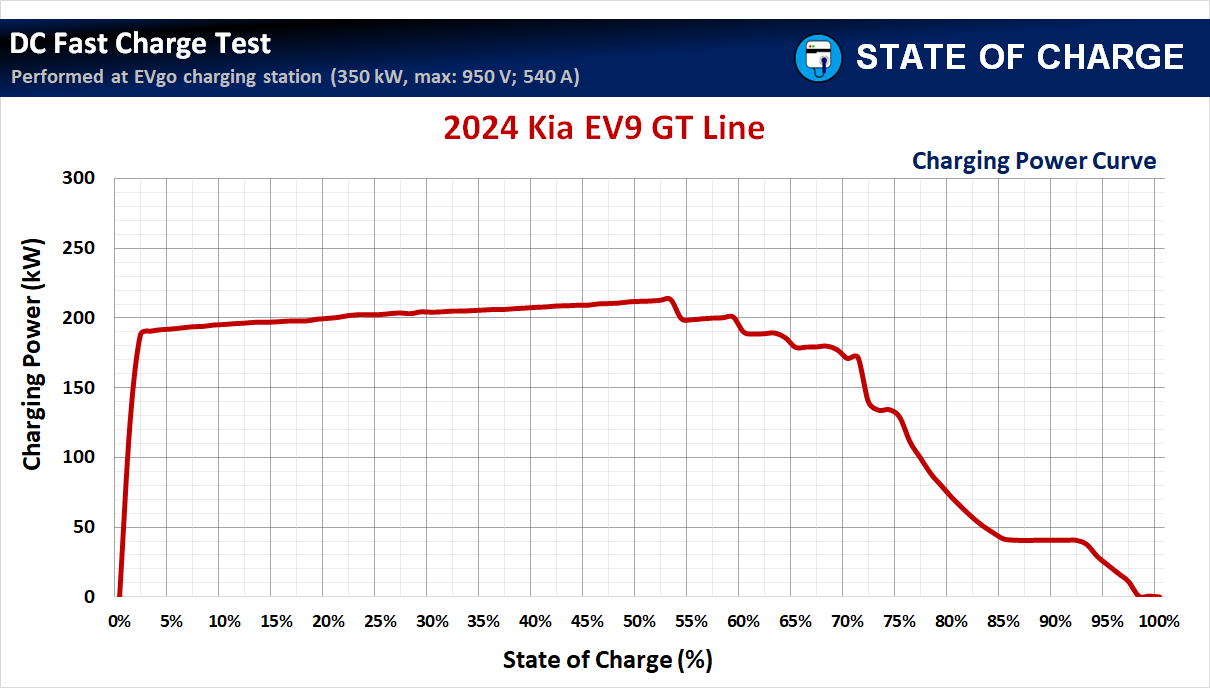
4) Output throttling and inconsistent power. Even when a session starts, the delivered power can be lower than expected. Thermal management, site limitations, or grid constraints can influence charging speed. The EV9 remains capable, but the environment changes the equation.
5) Connector compatibility and cable readiness. Not all stations provide the cable configuration you expect. In cold weather especially, cables may be less responsive, or access can be awkward due to ice or snow.
How the Kia EV9 Changes the Charging Conversation
The Kia EV9 doesn’t merely accept energy; it shapes how you plan your energy. Its road-trip temperament encourages a driver to think in segments rather than single stops. When DC charging becomes unpredictable, that mindset helps—because you can adjust while still maintaining flow.
Instead of treating each station as a single lifeline, you begin treating your route as a chain of options. The EV9 becomes a flexible anchor in a dynamic landscape. That flexibility matters when you face a slow charger, a busy site, or a station that needs a few extra minutes to stabilize.
Consider the subtle difference between “I need exactly X percent at the next stop” and “I need enough margin to make the next charging decision.” The first approach is fragile. The second is resilient. EV9 ownership tends to reward resilience.
Building a Road-Trip Strategy Around Network Variability
Here’s where road-trip competence begins: not with speed, but with redundancy. Smart EV travel is less about finding the perfect charger and more about preparing for the imperfect one.
Plan primary and secondary stops. Choose a main charger, then identify at least one backup nearby. Ideally, the backup should share a similar travel time window. If the primary stalls, your second choice becomes a sprint, not a scramble.
Arrive with intentional buffer. A charging plan that arrives at the edge of comfort invites stress. Add margin. It gives you room to maneuver if a charger underperforms.
Match your charging expectations to site behavior. Some stations perform exceptionally during off-peak hours, then soften when demand spikes. If your schedule lands you in a high-traffic window, treat the power display as a variable, not a promise.
Learn the “reset instincts.” If initiation fails, don’t panic—switch connectors, retry within reason, or move to another station. A calm, methodical approach prevents wasted time spiraling into frustration.
Turning Frustration into Curiosity: The Best Kind of Detour
There’s a particular moment on every EV road trip when the driver’s mind begins to sharpen. It happens when you stop blaming and start observing. You notice which stations update quickly. You learn which routes attract the most charging traffic. You develop a sense for how long sessions typically take at certain locations.
This is where curiosity replaces complaint. You begin to ask better questions: “Is the station newly upgraded or frequently rebooting?” “Do multiple chargers share a limited power supply?” “Is this area experiencing seasonal demand spikes?”
Even in the face of a stalled session, you gain knowledge. That knowledge isn’t wasted. It becomes a personal charging map, one that lives in your habits and timing.
Weather, Battery Temperatures, and the Quiet Mechanics of Speed
Charging performance is not purely a function of the charger. It’s also influenced by the vehicle’s battery conditions. Colder temperatures can alter charging behavior. The battery needs time and management to accept energy efficiently.
When the weather changes, charging expectations should too. A stop that seems “slow” might be the result of battery thermal dynamics, not network failure. Understanding that difference can prevent unnecessary panic.
On long trips, you learn to treat preconditioning and steady driving as allies. You stop thinking of charging as an isolated event and start recognizing it as the continuation of the drive itself.
The Road Ahead: A More Confident Charging Mindset
DC fast-charging network issues rarely erase the joy of EV travel. They complicate it. And that complication is sometimes the doorway to mastery.
When you approach charging with awareness—buffer, backups, realistic power expectations—the road becomes less fragile. The EV9 continues its role as a dependable companion, while the driver becomes a strategist.
By the time the trip reaches its next horizon, the earlier glitches start to feel like chapters rather than interruptions. Each hiccup teaches something: how to plan, how to respond, how to keep momentum without sacrificing calm.
Final Mile Reflection: Momentum Is a Skill
The best road trips don’t eliminate uncertainty; they learn how to carry it. Kia EV9 charging adventures—especially the ones involving DC fast network quirks—offer a surprising lesson: momentum isn’t only engineered by hardware. It’s also cultivated by mindset.
So when a charger hesitates, you won’t just wait. You’ll adapt. You’ll switch perspectives. And you’ll keep moving—not because every station is perfect, but because your plan is.