The Cadillac CT4-V Blackwing arrived like a small storm cloud with a point of intent: take a compact performance sedan, remove the excuses, and give the driver something unmistakably tactile. In its manual form, the CT4-V Blackwing doesn’t merely ask for attention—it courts it. This is not the kind of car that performs only when the electronics feel generous. It performs when you do.
Think of it as a hero built for the long way home: a fastback of decisions, a cockpit of consequence, and a chassis that seems to anticipate your next move. The result is a manual sedan that feels theatrically direct, yet technically composed. It’s the sort of machine that turns everyday errands into a low-key rally stage, then ushers you back to reality with a satisfying click of the shifter.
What “Blackwing” Really Means in the CT4-V
Blackwing isn’t just a badge; it’s a philosophy stamped in aluminum and executed with a kind of disciplined flamboyance. Cadillac’s performance division aims for crisp dynamics rather than sheer bravado, and the CT4-V Blackwing follows through with a platform designed to feel cohesive at any speed.
At a glance, the stance suggests purpose. Under the surface, the engineering focus is more telling than the styling cues. The chassis calibration prioritizes balance, traction management, and driver confidence. The car feels planted rather than twitchy—composed enough for precision, expressive enough to communicate what the tires are thinking.
In the manual configuration, that communication becomes even richer. The car’s personality amplifies through your hands: throttle modulation becomes a collaboration, downshifts become punctuation, and acceleration turns into a conversation instead of a command.
Design and Presence: A Sedan That Refuses to Blend In
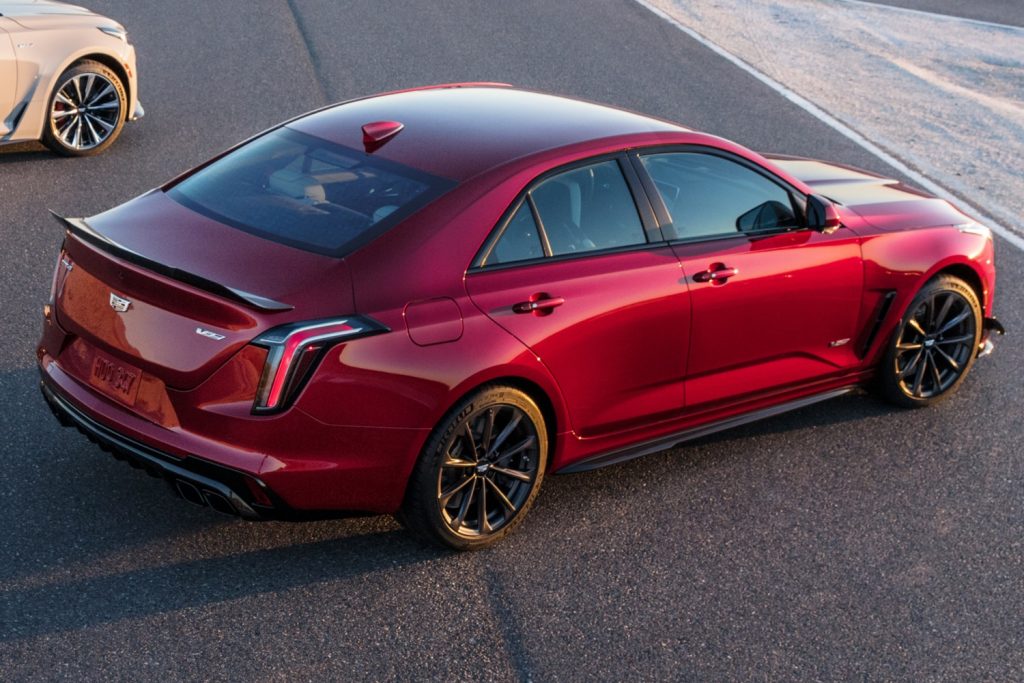
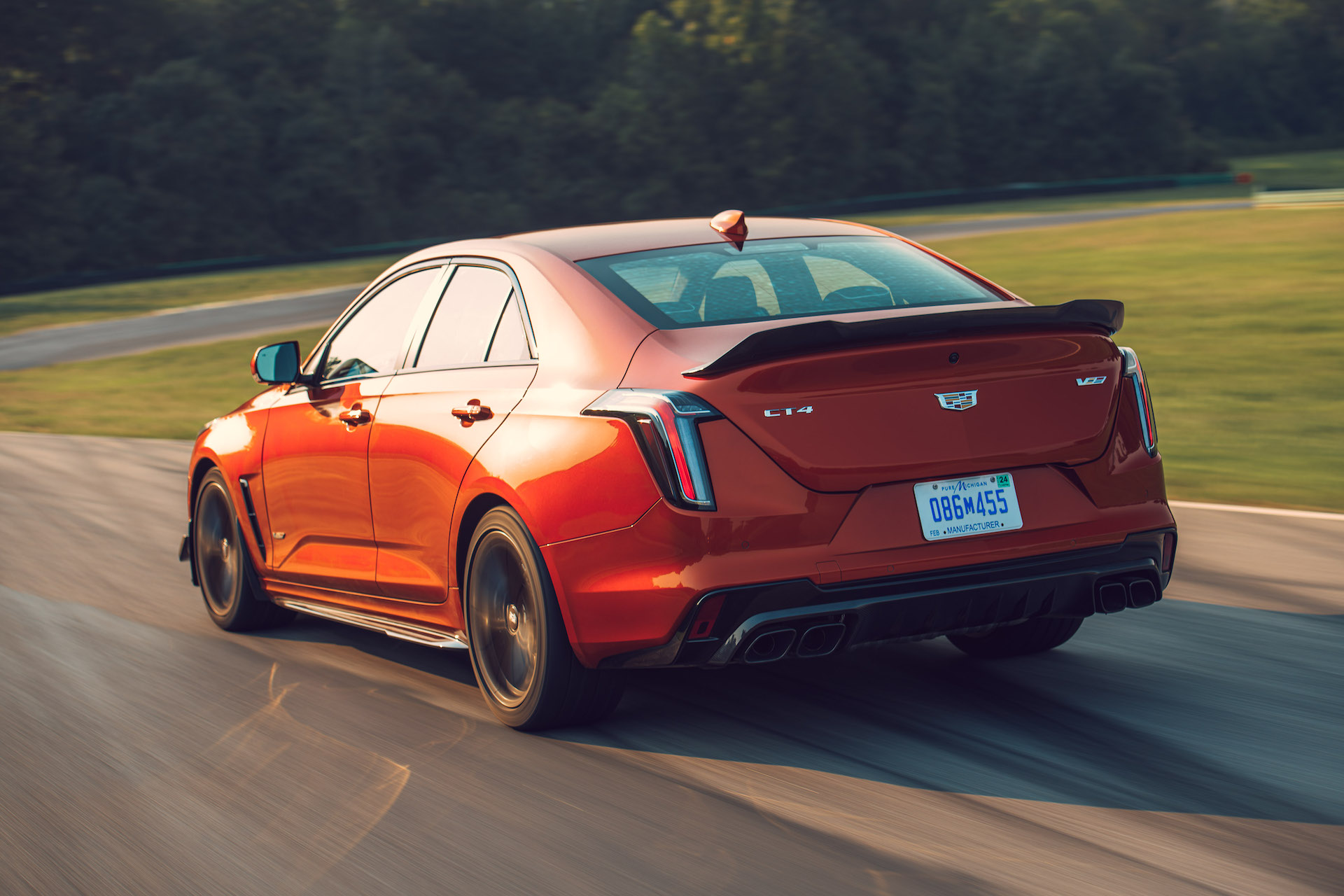
The CT4-V Blackwing’s design is a study in restraint with sharp edges. It doesn’t need neon to be visible; it has the kind of visual structure that reads clearly—front end authority, purposeful surfaces, and details that imply aerodynamic intent.
The silhouette is compact and efficient, with proportions that hint at quick rotation and responsive weight transfer. The result is a sedan that feels less like a compromise and more like a clean solution. You notice it in mirrors. You notice it when you walk away from it too, because the stance lingers.
Engine Character: Power Delivered With a Driver’s Pace
Performance engines can be generous in two ways: they can push hard immediately, or they can build excitement with a sense of timing. The CT4-V Blackwing manual leans toward the second. It offers a power band that rewards commitment—when you line up the revs and meet the moment.
What makes the experience feel special is not only the output, but the texture. The throttle responds with an immediacy that invites measured inputs. The transmission doesn’t simply transfer torque; it shapes the rhythm. Clutch engagement feels deliberate, and the gear selection provides a tangible sense of control.
Even at cruising speeds, the car maintains a quiet confidence. At lower RPMs, it’s poised, waiting for the next downshift. When you request more, it answers without theatrics—just accurate, muscular movement.
The Manual Transmission: Where the Heroism Lives
Manual cars have a certain kind of honesty. They don’t hide behind programmed convenience; they demand involvement. In the CT4-V Blackwing, that involvement feels satisfying rather than punitive.
Clutch and shifter feel calibrated for real driving, not just showroom demonstrations. The shifts have weight. The engagement is crisp enough to build trust and consistent enough that you can focus on the road instead of the mechanics.
Drivers who enjoy heel-toe precision will appreciate the way the car supports downshifts with predictable behavior. The manual also changes how you think about acceleration. Instead of a single surge, the power becomes staged: rev, select, launch. Each step is part of the performance.
That’s why the manual sedan feels like a hero. It doesn’t chase you. It invites you.
Chassis and Suspension: Precision Without Anxiety
There’s a difference between a car that’s fast and a car that feels fast. The CT4-V Blackwing’s chassis work contributes to the latter. The suspension and steering geometry produce an eagerness that’s controlled, not chaotic.
On sweeping roads, the car tracks with confidence, resisting the urge to wander. Over broken pavement, it maintains composure, absorbing irregularities without turning them into harsh interruptions. The steering provides information you can translate into action—enough feedback to refine your line, not so much that every imperfection becomes a distraction.
When cornering, the car communicates through both body motion and tire behavior. You can feel traction come and go, but it returns with discipline. The Blackwing character here is subtle: it gives you cues that help you drive better, not just faster.
Brakes and Stopping Power: Confidence at the Edge
Strong braking is often misunderstood as a single metric—how quickly you can stop. In a performance sedan, braking is also about repeatability. The CT4-V Blackwing is designed to deliver controlled deceleration consistently, helping you lean on the car without fear of fade or inconsistency.
When you brake hard, the pedal response feels firm and legible. There’s no ambiguity about when the car is slowing. This is especially valuable in manual form, where your timing depends on you being able to trust the deceleration phase to set up the next shift and corner entry.
On spirited drives, that confidence becomes a psychological advantage. The more reliable the car feels at the threshold, the more naturally you approach the next apex with intent.
Interior and Driver Experience: A Cockpit Built for Sensation
Open the door and the CT4-V Blackwing reads like a cockpit, not a lounge. Materials and surfaces communicate durability and focus, while the driver position encourages active engagement. Controls fall into a familiar layout, but the performance touches feel intentional—like the designers wanted the interior to mirror the mechanical honesty outside.
The steering wheel sits ready. The shifter waits for commitment. The pedals invite precise inputs rather than lazy ones. A manual car succeeds or fails on the basis of these small relationships between you and the machinery, and the CT4-V Blackwing gets them right.
Even the way the car sounds contributes to the atmosphere. Under load, it offers audible evidence of effort. Off throttle, it has restraint, then returns to life when the next action begins.
Fuel Economy and Daily Drivability: The Myth of Compromise
Performance sedans are often treated as disposable daydreams: thrilling on weekends, forgettable on weekdays. The CT4-V Blackwing, particularly in manual form, complicates that narrative.
It can be driven politely. In traffic, it doesn’t require heroics from your right foot or constant corrections from the steering. The ride is controlled enough for ordinary commutes, and the cabin remains composed at cruising speeds.
Fuel economy won’t be the headline at a spec sheet level, and that’s okay. The real question is how the car behaves between the moments of excitement. If the CT4-V Blackwing makes those in-between sections tolerable—then it becomes usable, not merely impressive.
Technology and Safety: Modern Tools, Traditional Feel
Manual doesn’t mean rudimentary. The CT4-V Blackwing exists firmly in the modern era, with driver-assistance and infotainment features meant to reduce fatigue and improve situational awareness.
These systems should never steal the spotlight from the driving experience, but they serve as a stabilizing net during long drives or unpredictable conditions. You can focus on line choice and throttle timing while still benefiting from technology that helps prevent the kind of mistakes that happen when your attention frays.
The beauty of this arrangement is contrast: analog involvement through the manual, digital support in the background.
Who This Car Is For: The Enthusiast With a Pulse
The CT4-V Blackwing manual sedan is aimed at drivers who want more than speed metrics. It’s for people who enjoy the choreography of performance—those who believe the best cars are the ones that respond to intention.
If you’re the sort of driver who thinks about gear selection the way a pianist thinks about scales, this car will feel right. If you prefer your thrills delivered by automatic convenience, the manual might feel like friction. But for the right audience, that friction becomes frictionless satisfaction.
It’s also for anyone who appreciates the scarcity of truly involving sedans. The market is full of fast shells. This one feels like a complete instrument.
Real-World Ownership Considerations: Keeping the Hero Running
Any performance vehicle comes with practical obligations: maintenance intervals, tire management, brake wear monitoring, and careful attention to driving style. The CT4-V Blackwing’s manual configuration can be surprisingly satisfying to own because the driver is directly connected to the machine’s needs. Your habits influence the wear patterns, and that makes ownership feel less like guessing and more like learning.
Using the correct fluids, respecting warm-up routines, and choosing appropriate tires for your climate will preserve the car’s intended behavior. If you drive with awareness, the CT4-V Blackwing tends to reward you with consistency rather than surprises.
Final Thoughts: A Manual Sedan as a Modern Legend
Cadillac’s CT4-V Blackwing in manual form is not a nostalgia project dressed in new clothes. It’s a contemporary performance sedan with an old-school soul. It delivers power with a sense of timing, steering with legibility, and a chassis that makes driving feel deliberate rather than random.
It’s a hero for the road—one that turns shifts into rituals and corners into conversations. The manual adds depth, transforming acceleration from a feature into a craft. When the drive ends, you don’t just remember speed. You remember the sensation of control.
In a world leaning toward convenience, the CT4-V Blackwing reminds you that involvement is a kind of luxury. And for the driver who wants their machine to answer with more than speed alone, it delivers exactly that.