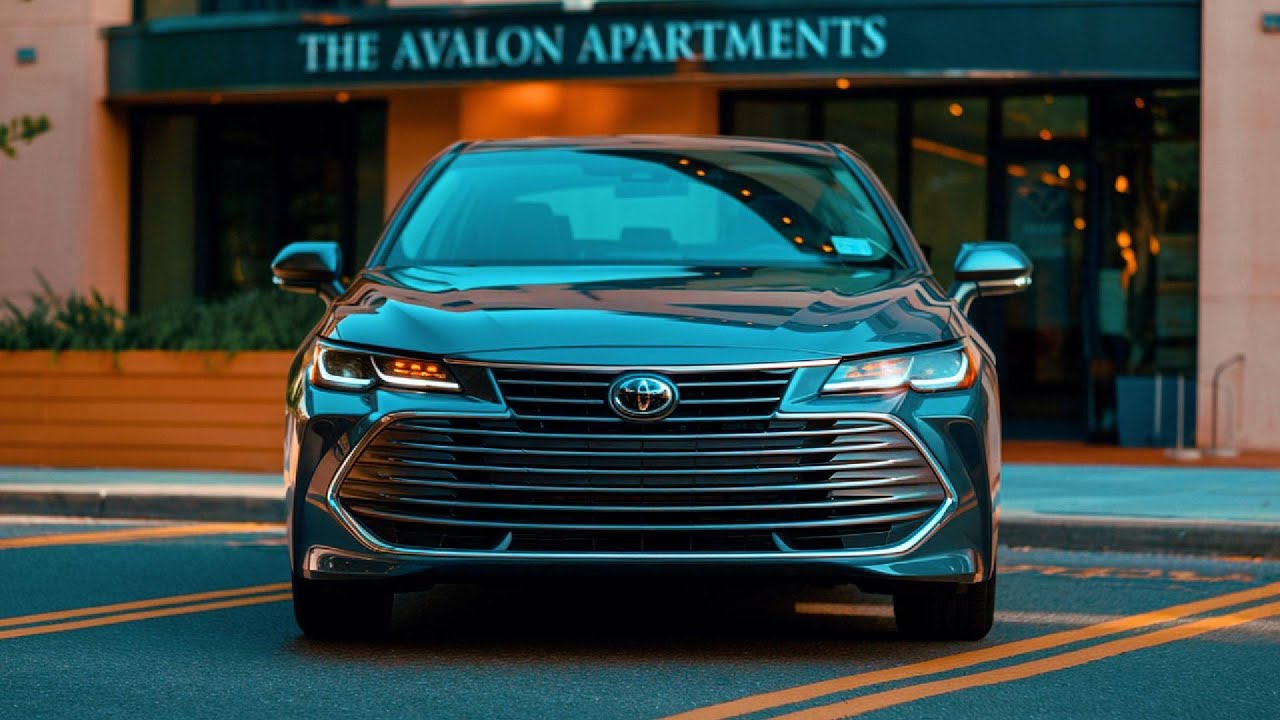
The question “Toyota Avalon (If Returned) – Flagship Comfort?” feels almost quaint at first. After all, the Avalon name carries a certain gravity—one that suggests a sedan built not merely to transport, but to assure. Yet the common observation is simpler: people notice what’s missing from the modern lineup and wonder whether the Avalon will ever return in a meaningful way. The deeper fascination, however, is less about a single model. It’s about an idea—about what it means when comfort is treated as a philosophy rather than a marketing bullet.
In the imagination of many enthusiasts, the Avalon would return like a familiar cadence: calm at idle, confident in motion, and quietly confident in its own restraint. A flagship, yes—but one that would likely aim to feel effortlessly livable. Not loud, not performative. Just composed. And that composition, in a world addicted to notifications and immediacy, becomes its own form of luxury.
Flagship Comfort: Why the Avalon Name Still Resonates
Comfort is often misunderstood as softness alone. Real comfort is a system: suspension calibration, seating geometry, NVH discipline (noise, vibration, harshness), and even the way a car manages micro-events—road texture entering the cabin, wind flutter, tire harmonics. The Avalon brand, at least in memory, is associated with the careful smoothing of those details.
Consider the typical hesitation around a “return” scenario: some assume a modern flagship would be too expensive, too complicated, or too out of step with today’s crossover-centric tastes. But that skepticism misses why the Avalon lingers in conversation. People don’t only remember the car; they remember the sensation—when a long drive stops being a chore and starts feeling like a private, moving room.
There’s also a psychological element. A comfortable flagship tends to signal stability. When you sit behind the wheel and the cabin feels predictably insulated from chaos, your body relaxes. Your decisions become less reactive. It’s an automotive version of good lighting in a room: you don’t notice it consciously, but you feel it.

Addressing the Common Observation: “Why Would Toyota Bring It Back?”
The most common observation is economic and practical: why revive a model when consumer attention has shifted? The modern market rewards visibility—SUVs, bold grilles, and height-driven confidence. A full-size sedan can look like a museum piece in a showroom full of high-riding silhouettes.
Yet the deeper reasons for fascination reveal themselves in quieter places. There are drivers who have never been seduced by tall-body convenience. They want direct steering feel, stable dynamics, and interior access that doesn’t require a cautious climb. For some, a sedan is less about style and more about habit. The Avalon, in this sense, is a habit car—one that fits long commutes, steady routines, and the kind of ownership where you keep a vehicle long enough for it to become part of your day.
Additionally, flags aren’t only financial; they’re cultural. Bringing back an Avalon could be a statement about where Toyota’s heart still beats. In a world of relentless updates, the return of a flagship suggests patience. It implies “we believe in refinement enough to invest in it,” not just “we can build it.”
What “Redefined” Comfort Could Mean in a Returned Avalon
If the Avalon returned, the most compelling question wouldn’t be whether it’s comfortable. It would be how comfort could be re-engineered for today’s expectations. Comfort is no longer purely mechanical. It’s digital-adjacent, too—how the cabin responds to driver intent, how ambient lighting contributes to fatigue reduction, how connectivity supports attention without demanding it.
Imagine a cabin tuned for attention economy: screens placed to avoid glare and reflections, sound design adjusted to reduce the mental tax of constant auditory stimuli. Many drivers don’t want louder music. They want silence that feels intentional, with bass that doesn’t thud and wind that doesn’t announce itself at highway speeds.
Comfort also includes the “invisible” engineering. A well-damped chassis makes potholes feel like a rumor rather than an event. Wind noise is managed through careful sealing and aerodynamic shaping. Seat cushions and lumbar structures distribute pressure so your body doesn’t constantly renegotiate posture. The Avalon’s legacy, in this imagined return, could be interpreted as “less distraction, more steadiness.”
The Seductive Quiet: NVH as the Real Luxury
Luxury is often defined by features—heated seats, panoramic roofs, premium audio. Those matter. But the most addictive element is NVH mastery. A flagship sedan should not simply be smooth; it should be quiet in a way you notice only when you’re not in it.
Here’s the deeper fascination: once you experience a cabin that filters out harshness without killing liveliness, you start to reinterpret everything else. Roads become less stressful. Fatigue appears later. Even conversations become easier because the background noise doesn’t steal your attention.
In a returned Avalon, NVH could be taken further with improved insulation materials, refined engine mounts, tire selection optimized for low-frequency noise, and—critically—software calibration that predicts vibration patterns and mitigates them. Such steps don’t sound glamorous, but they create the kind of comfort that becomes habit.

Powertrains and the Philosophy of Ease
Flagship comfort doesn’t automatically mean slow. It means the car doesn’t demand your attention. A good powertrain offers effortless torque, smooth shifts, and minimal throttle drama. When acceleration happens in the background, your mind remains calm.
That’s why some drivers gravitate toward V6-era Avalon memories—where the engine’s character feels rounded, almost conversational. Not because it’s inherently “better,” but because it matches the temperament of a flagship: refined response, steady delivery, and a sense that the car is eager but not impatient.
If a returned Avalon pursued modernization, it would likely keep the essence of that behavior even as the architecture evolves. Whether hybrids or advanced combustion systems shaped the future, the goal would remain: accelerate with confidence, cruise without strain, and maintain composure in traffic where impatience is common.
Design That Whispers Instead of Shouts
There is a specific type of exterior design that signals maturity. It doesn’t rely on aggressive angularity. It relies on proportion, stance, and the way light travels across surfaces. A returned Avalon, faithful to its flagship identity, would likely aim for a silhouette that looks stable at rest and disciplined at speed.
Inside, design should create a “room-like” experience. Buttons should be intuitive. Materials should feel tactile even when you don’t consciously assess them. This is where uncommon terminology fits naturally: the cabin should deliver haptic reassurance. Your hands should trust the controls, your eyes should relax into the layout, and your ears should feel the quiet rhythm of motion.
Technology Without the Overreach
Modern vehicles risk turning tech into performance art—features that demand interaction. A true flagship should be conversant with technology but not governed by it. Comfort thrives when the car anticipates needs without making the driver feel like an operator in a cockpit.
A returned Avalon could lean into driver-assistance systems that reduce workload rather than increase novelty. Adaptive cruise that feels natural. Lane guidance that supports confidence but doesn’t intrude. A navigation experience that provides clarity without insisting on constant attention.
The deeper fascination is that technology can either elevate calm or fracture it. The Avalon legacy, as many interpret it, suggests the former—systems that act like a discreet co-pilot.
Who the Avalon Would Serve: The Drivers Behind the Dream
The fascination with a potential Avalon return often belongs to a specific kind of driver: someone who measures ownership by years, not months. Someone who values predictable comfort over trend-chasing. Someone who has learned that a car can be an instrument of wellbeing—especially on long drives, family trips, and daily routines that accumulate fatigue.
These drivers tend to dislike harshness not because they’re fragile, but because they’re perceptive. They notice. They can feel when a seat doesn’t support properly or when road texture becomes too communicative. They also notice when a cabin is designed with care. That care is the Avalon’s most enduring promise.
The Case for a Flagship Return: Beyond Nostalgia
It’s easy to romanticize the Avalon as nostalgia. But nostalgia is only one layer. There’s also practicality and an almost moral preference for durability of experience—cars that prioritize long-term comfort and engineering maturity.
If Toyota brought the Avalon back, it would likely need to address real modern expectations: efficient performance, updated safety systems, and interior refinement that feels relevant rather than outdated. Yet it could still keep the central identity that made people pause when they saw it parked—this is a vehicle that looks like it intends to be comfortable for years.
Flagship sedans rarely sell themselves on novelty. They sell on the quiet confidence of daily usability. That’s why the idea of a returned Avalon is compelling: it offers a kind of continuity, a calm alternative to the perpetual churn of the automotive landscape.
Conclusion: A Comfort Standard Worth Returning To
The question “Toyota Avalon (If Returned) – Flagship Comfort?” isn’t only about whether a sedan returns to the lineup. It’s about whether Toyota would return to a specific standard—one where comfort is engineered as a complete experience rather than a collection of conveniences.
The common observation is market-driven skepticism. The deeper fascination, though, is personal. It’s the desire for a cabin that absorbs the day, a drive that steadies the senses, and a flagship presence that doesn’t demand attention. If the Avalon returned with that spirit intact, it wouldn’t just be a car—it would be a way of lowering the volume on life while the road carries on.