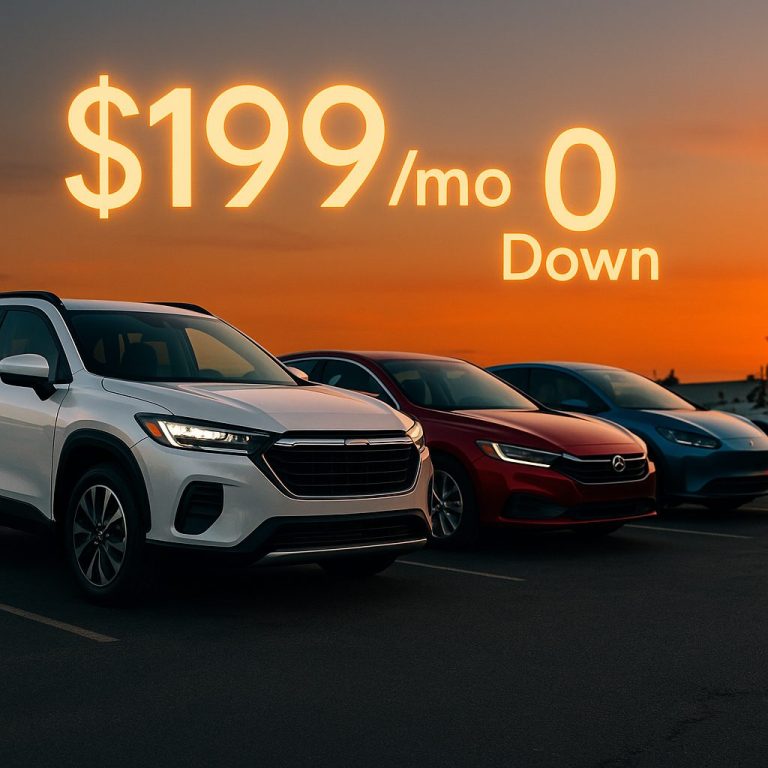
There’s a peculiar kind of suspense that comes with shopping for a midsize sedan lease. One day you’re just browsing; the next, you’re calculating residual values in your head and wondering why a seemingly ordinary monthly payment can feel like a small victory. It’s not only the numbers. It’s the promise of predictability—of exchanging uncertainty for a tidy, clockwork schedule. Best monthly payments are often the hook, but the deeper fascination lies in what those deals quietly reveal about the market, the timing of manufacturer incentives, and the way modern leasing reshapes ownership into something more modular.
Many shoppers begin with a common observation: “Lease offers look great on paper, but do they always make sense?” The short answer is that they can—especially when you understand the mechanics beneath the glossy figures. The monthly payment is never purely about the car’s sticker price. It’s the choreography of depreciation, incentives, money factor, fees, and your own negotiating leverage. When all of that syncs, a midsize sedan lease can feel like a tailored suit rather than an off-the-rack compromise.
Why Monthly Payments Feel Like a “Deal Magnet”
Monthly payments have a psychological gravity. They translate complex financial variables into a single, approachable number. A good lease deal doesn’t just lower cost—it improves decision velocity. You can compare two sedans in seconds and still feel like you’re being smart rather than reckless.
Yet, the fascination runs deeper than convenience. Leasing converts the car from a long-term commitment into a finite term. That change in time horizon reduces the emotional friction of “sticking with” a purchase. Instead of asking, “Should I keep this for five years?”, you’re asking, “What can I enjoy for the next few?” Shorter commitment can make shoppers feel bolder. It can also make the market’s promotional strategy easier to exploit, because incentives often peak in certain months.
And then there’s the math. Lower payments can reflect an aggressive incentive, a favorable residual, or a supportive lease structure. Those are distinct storylines. Two offers with similar monthly figures may be built on very different foundations—one could be subsidized heavily while another simply benefits from strong expected resale.
Residual Value: The Hidden Engine Behind “Best Monthly Payments”
Residual value is the forecast of what the car will be worth at lease end. It’s one of the most influential components in the lease payment formula. When residuals are high, depreciation costs shrink. That’s why some models can suddenly look like bargain galaxies—while others remain stubbornly expensive.
Midsize sedans often perform well in the residual conversation because they’re broadly desirable and have a stable buyer ecosystem. That stability makes them easier to predict at lease end. When a manufacturer (or its captive finance arm) anticipates strong resale, it can set residuals that make monthly payments more palatable—even before you negotiate.
But residuals are not static. They can shift based on incentives, model-year end timing, and inventory levels. A model that’s nearing a refresh might be priced to clear space. If residual assumptions remain supportive while incentives rise, the resulting monthly number can look unusually sharp.
In practice, that means you should always ask for the residual percentage and the selling price assumptions. If the deal is truly attractive, those values will show it.
Money Factor: The Quiet Influence That Can Make or Break a Deal
Most shoppers focus on the monthly payment and the down payment, then move on. But the money factor—the lease equivalent of an interest rate—can be the difference between a “reasonable” deal and a genuinely exceptional one.
A lower money factor reduces the financing portion of the payment. Even a small improvement can have a noticeable effect over the lease term. This is where timing matters. In certain periods, manufacturers offer subsidized financing or relax credit-tier requirements. It’s not always publicized in bold type, but it shows up in the fine print.
Consider this: two shoppers can receive different money factors based on credit tier and negotiation. That’s why the same model can produce dramatically different monthly outcomes in the real world. The best monthly payments tend to belong to shoppers who (a) qualify for the most favorable lease terms and (b) negotiate the vehicle price before discussing the monthly number.
Negotiation: The “Selling Price” Is Still the Battleground
A common observation is that with leases, negotiation doesn’t matter as much as it does for purchases. That belief is convenient, but incomplete. The selling price—the cap cost in lease language—still drives depreciation. A lower cap cost lowers the amount you pay to cover the car’s expected loss in value.
When shoppers skip negotiation, they may receive a payment that looks good but is built on an inflated selling price. The manufacturer can discount the payment on its end, but dealers may still protect margin through the cap cost. That’s why the best approach is layered: negotiate selling price, then verify money factor, then evaluate incentives, then confirm fees.
In other words, start with the transaction basics. The monthly payment is the final report card, not the lesson plan.
Fees, Due at Signing, and the Illusion of Low Payments
There’s another detail that can distort expectations: fees and amounts due at signing. A lease might advertise an attractive monthly payment, but if it requires a large drive-off charge, the deal may still be expensive—just spread into a different location on the worksheet.
Look closely for acquisition fees, disposition fees, doc fees, and any add-ons that feel like afterthoughts. Some deals also include waived fees; others quietly preserve them. The “best monthly payment” becomes meaningful when it’s paired with a sane due-at-signing figure.
Try to compare offers on a total cost basis: monthly payments plus due at signing, then add realistic estimates for mileage and wear. The most fascinating deals aren’t the flashiest—they’re the ones that remain attractive after you simulate how you’ll actually use the car.

Model Examples: Why Some Midsize Sedans Can Outperform the Competition
When shoppers compare midsize sedans, they often expect the deals to be interchangeable. They rarely are. Certain models receive stronger incentive packages because they’re being pushed to meet sales goals, move inventory, or reinforce brand momentum in a contested segment.
For instance, lease promotions for popular names in the midsize space—such as the Fusion, Camry, Accord, or Malibu Limited—often reflect a combination of reputation, demand stability, and manufacturer strategy. High demand can produce stronger residual expectations. Meanwhile, competitive pressure can trigger aggressive incentive buy-downs.
Kia’s K5 is another example of how leasing can be positioned as a persuasive alternative. When a brand wants to elevate awareness or shift shopper preference, it may use monthly payments as a narrative device—an entry point that feels emotionally accessible. The result can be pressure on sedan rivals, not because rivals suddenly become worse, but because affordability is offered more loudly elsewhere.
Still, “best monthly payment” should be validated against your situation. A great offer on a well-equipped trim can become less compelling if it includes unattractive terms or forces you into an unfavorable configuration.
Mileage and Wear: The Cost You Don’t See Until Lease-End
Leases come with a mileage allowance and wear expectations. The allure of a low monthly payment can fade if you drive more than the assumed range. When you exceed mileage, costs can escalate quickly.
Wear and tear policies also matter. Tires, windshield condition, and interior scuffs aren’t theoretical concerns; they’re practical realities. If your commute is longer, your payment should be “priced” for your behavior, not your optimistic calendar.
This is where fascination turns into strategy. A deal can be amazing on paper yet expensive in practice. The best monthly payments are the ones that align with daily life: the route, the seasons, the parking situation, the number of road trips, and whether the car will be a daily commuter or a weekend companion.
Timing and Incentives: The Market’s Rhythm
Lease deals aren’t only about the car. They’re about the calendar. End-of-month quotas, model-year rollovers, and promotional cycles create windows where monthly payments can dip meaningfully.
That’s why the phrase “best monthly payments” is always a moving target. A sedan deal that looks legendary in one month may soften later when inventory normalizes or incentives change. Meanwhile, a competitor might suddenly become irresistible when it receives updated incentives or when leasing terms are recalibrated.
Patience can pay, but so can momentum. Watch trends, compare worksheets, and don’t rely solely on an ad headline. Instead, treat each quote as a document that contains its own internal logic.
How to Evaluate a Lease Offer Like a Pro
When evaluating offers, avoid being hypnotized by a single number. Ask for the full breakdown: MSRP, selling price (cap cost), residual value, money factor, lease term, acquisition fee, doc fee, and any incentive structure. Then compute an apples-to-apples comparison against your expected mileage.
Also consider trim choice. Features that support resale value or reduce wear risk can improve long-term value. A sedan isn’t just a transportation device; it’s a lifestyle layer. The best deals often come from choosing a trim that matches how you’ll actually live with the car.
Finally, keep negotiation disciplined. A fair cap cost creates the foundation. After that, incentives and financing terms can amplify the advantage.
Choosing the Right Deal: Comfort, Reliability, and the Freedom of Lease Terms
Midsize sedans deliver an appealing blend of comfort and familiarity. The lease format makes that appeal more accessible by turning future risk into a defined term. You’re not betting on resale in the same way you would with a purchase. You’re planning around time.
That’s why the best monthly payments matter so much: they reduce friction. They make it easier to try a model you like now, without locking your budget into a long commitment. If you’re fascinated by the negotiation process, that fascination is also a signal—you care about structure. You want transparency. You want control over the variables.
When the deal is well constructed, leasing becomes almost elegant. The monthly number is no longer a mystery—it’s the output of a careful balancing act.
Conclusion: The Best Monthly Payment Is a Story, Not a Sticker Price
“Best monthly payments” can sound like a simple prize, but they’re actually the visible surface of a larger system. Residual value, money factor, selling price negotiation, due-at-signing fees, mileage assumptions, and timing incentives all contribute to the final outcome. That’s the deeper reason the deals are so compelling: they offer not only affordability, but also clarity—an actionable explanation of how the market is moving.
Pick a lease with numbers that hold up under scrutiny, not just a headline that looks tempting. When the worksheet tells a coherent story, the monthly payment stops being a gamble and becomes a reliable companion to your daily drive.