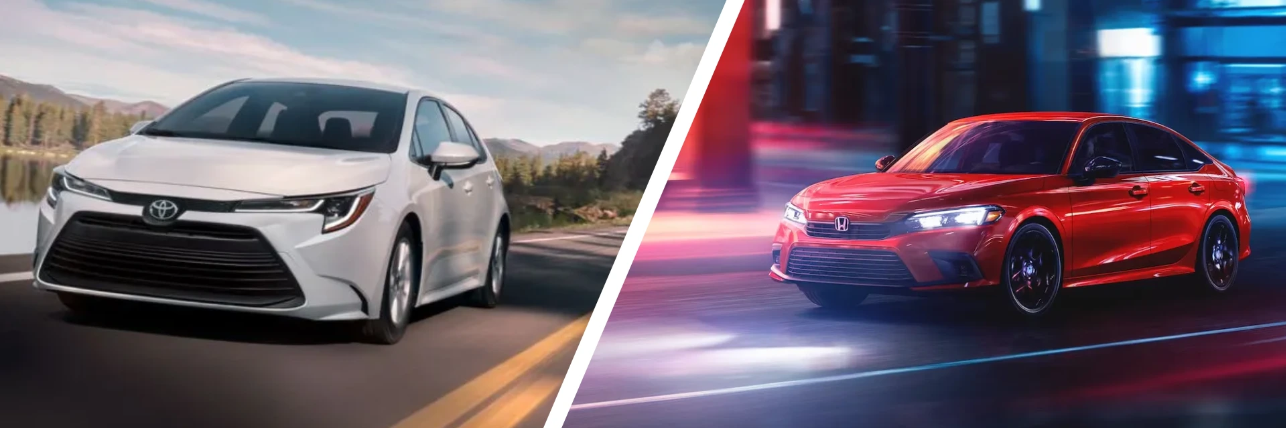
The compact sedan segment has always been a quiet battlefield. Everyone thinks they already know the outcome—until a fresh lineup arrives and forces you to look again. The Honda Civic and Toyota Corolla sit at the center of that tension, two nameplates with pedigrees that feel carved into the everyday road. Yet the more you dig, the more the story stops being about badges and starts becoming about intent: how each car promises to fit into your life, how it reshapes your daily expectations, and how it quietly nudges your perspective.
On paper, they’re both familiar. In motion, they can feel like they come from different philosophies of efficiency. One leans into a driver-forward rhythm. The other emphasizes steadfastness and a near-religious commitment to practicality. Neither is trying to be exotic. Instead, both attempt something more subtle: to make you question what you thought “good” meant.
To understand the showdown, it helps to start with a question rather than an answer. What are you really buying when you purchase a compact sedan—space, confidence, cost of ownership, or the feeling that your next commute will be tolerable, even enjoyable?

First Impressions: The Look That Changes How You Sit
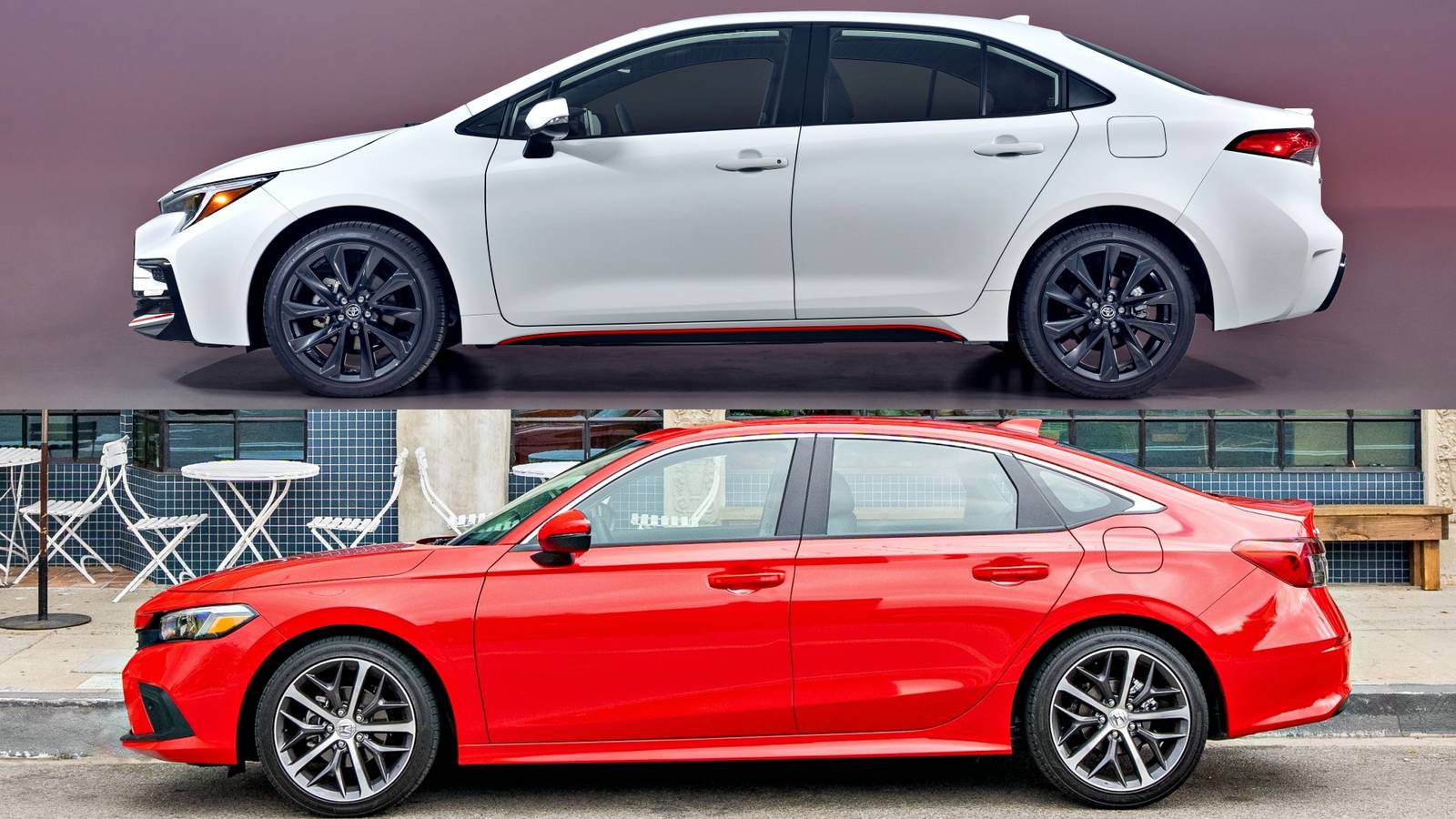
Beauty is subjective, but posture is not. When you approach the Civic and Corolla, the design cues pull you into different stances—almost like the vehicles are asking you to adopt a particular mindset. The Civic tends to read as more sculpted and purposeful, with lines that feel like they’re moving even when the car is parked. The Corolla, meanwhile, often comes across as composed and calculated, prioritizing visual clarity over theatrics.
That difference matters because compact sedans aren’t just transportation. They’re furniture on wheels—small enough to belong in a garage, yet visible enough to shape your emotional temperature each time you return home.
Step closer and you’ll notice how surface tension and proportion influence perception. A car that looks “tight” can make you believe it drives “tight.” A car that looks “steady” can make you expect calmness at highway speeds. This is not magic. It’s cognitive engineering—one of the reasons the choice between Civic and Corolla feels less like shopping and more like choosing a personality.
Powertrains and Feel: Where the Driving Story Diverges
Both cars aim for efficiency, but the way they deliver power can feel like a philosophy clash. The Civic typically offers a more lively, responsive temperament—an eagerness that shows up when you merge, pass, or simply try to outrun traffic that’s pretending to be a problem.
The Corolla often prioritizes smoothness and predictability. It may not always feel as theatrically “ready,” but it tends to deliver confidence through consistency. That consistency can be a form of comfort. You learn it quickly. You trust it sooner than you expect.
Here’s the shift in perspective: the Civic can make you feel like you’re steering toward something. The Corolla can make you feel like the car is steering with you. Neither approach is inherently superior. They simply cater to different mental habits.
And once you begin to notice that difference, you start paying attention to the small stuff: throttle calibration, shift behavior, the way the engine note rises without sounding stressed, and how smoothly the car transitions between calm cruising and urgent acceleration.
Handling and Steering: Precision Versus Tranquility
In a compact sedan, suspension tuning becomes more than engineering—it becomes psychology. The Civic often feels more communicative, offering feedback through steering weight and chassis behavior. It’s the kind of setup that makes potholes feel like information rather than insults.
The Corolla tends to deliver tranquility. It’s not dull, but it’s more likely to smooth out your day, turning sharp edges of the road into a manageable texture. The driving experience becomes less about “reacting” and more about “settling in.”
If you live in a region with uneven pavement, you may find yourself appreciating one car’s ability to dampen the chaos. If you commute through curving stretches or enjoy the occasional spirited on-ramp, the other’s steadier composure under lateral load may feel more satisfying.
Either way, the real question is this: do you want your car to feel like a conversation, or like a guided tour?
Interior Quality and Practicality: The Space You Actually Use
Both the Civic and Corolla fight for the same buyer: someone who wants everyday usability without feeling like they settled. Yet the interiors can suggest different priorities. The Civic’s cabin often feels more driver-centric, with controls and sightlines arranged to keep you engaged. It can feel slightly more “commanding,” as though the dash is designed to keep you awake.
The Corolla’s cabin typically communicates durability and simplicity. Materials may lean toward sensible longevity rather than flash. That’s not a downgrade—it’s a promise. It says, “You won’t have to fight your car to keep living with it.”
Look beyond the headline numbers and focus on how you’ll actually occupy the space: rear-seat comfort during a long errand run, trunk accessibility for weekend gear, and whether cupholders and door pockets feel like conveniences or afterthoughts.
Even the way a car opens—door effort, latch feel, the ergonomics of entering and exiting—contributes to the sense of daily ease. These small details accumulate. Over time, they shape whether a vehicle feels like work or relief.
Technology and Driver Assistance: Convenience With a Conscience
Modern sedans are becoming mobile command centers. The Civic and Corolla both bring in infotainment systems, smartphone integration, and a suite of driver assistance features. But the experience isn’t just whether a feature exists—it’s how gracefully it behaves when your attention is divided.
The Civic often feels more performance-tinged in how its controls and menus engage you. It’s likely to suit drivers who prefer tactile feedback and quick responsiveness. The Corolla tends to emphasize clarity and straightforward operation, which can feel almost meditative during busy commutes.
Driver assistance features can also shift your relationship with stress. Adaptive cruise, lane centering, and collision warning systems may not eliminate fatigue, but they can reduce the cognitive load. In that sense, your car becomes a second brain—one that doesn’t panic when traffic slows unexpectedly.
Fuel Economy and Ownership Costs: The Long Game
Compact sedans are often purchased with one eye on today and another on tomorrow. Fuel economy is the obvious metric, but ownership is more than mileage. It includes service intervals, reliability reputation, tire wear patterns, and how frequently you’ll be pulled into the orbit of maintenance.
Toyota’s brand has long carried an aura of long-term dependability, and the Corolla is a central chapter in that narrative. Honda’s Civic also benefits from a strong history of practical longevity, especially for drivers who follow recommended maintenance and treat the car with reasonable care.
When you compare these cars, consider how your life actually unfolds. Do you drive mostly city miles, where efficiency and stop-and-go smoothness matter most? Or do you spend more time on highways, where stability and refinement become the primary currency?
Ownership costs aren’t glamorous, but they’re where the real victory often hides. The sedan that saves you a little trouble each month may ultimately feel more valuable than the car that impresses you for a week.
Which One Fits Your Life? A Curiosity-Driven Conclusion
Choosing between the Civic and Corolla isn’t simply picking the “better” car. It’s choosing what kind of satisfaction you want to return to every day. If you crave sharper engagement, a more expressive drive feel, and an interior that puts you closer to the action, the Civic is likely to feel like a lever that pulls your confidence upward.
If you prefer calm assurance, an approach that rewards consistency, and a daily experience that feels sturdier than it looks, the Corolla may be the quieter revelation you didn’t realize you were seeking.
Try to imagine your future routines, not your dealership fantasy. Picture loading groceries, sitting in rear seats, commuting through unpredictable weather, and parking in tight spaces. Then notice what kind of relief you want from a compact sedan.
In the end, both cars promise something worth taking seriously: a path through ordinary life with fewer compromises than you expect. The showdown becomes less about winning and more about discovering which personality your roads will appreciate most.
Final thought: drive them like you actually live—short trips, longer merges, impatient traffic, quiet highways—and pay attention to the subtle cues. The Civic may change how you feel behind the wheel. The Corolla may change how easy you find living with the car. And once that shift happens, curiosity stops being a phase and becomes a decision.