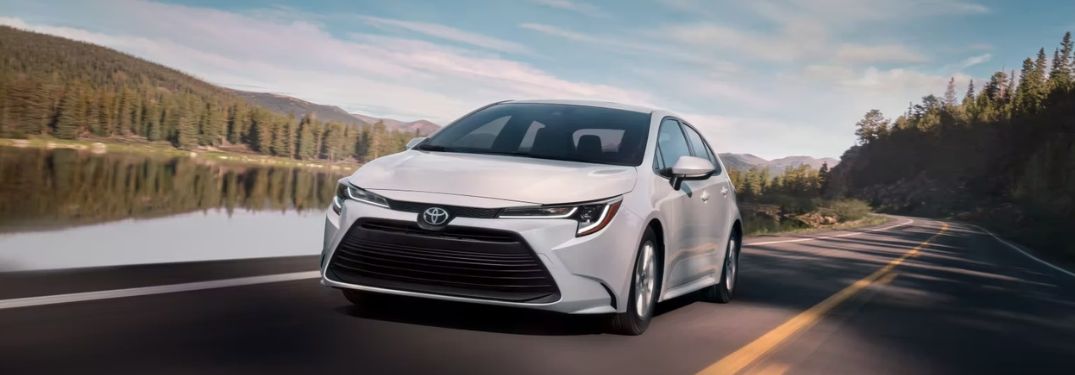
There’s a particular kind of confidence that arrives when the road feels unpredictable but the vehicle doesn’t. In the compact-car universe, the Toyota Corolla has earned a reputation for steady competence—and its safety suite helps sharpen that reputation into something closer to reassurance. At the center of that experience sits Toyota Safety Sense 3.0, a modern constellation of driver-assistance technologies designed to anticipate risk rather than simply react to it. This review explores what Safety Sense 3.0 means in everyday driving, how its features behave across common scenarios, and what kind of content readers can realistically expect to find in a thorough evaluation.
What Safety Sense 3.0 Brings to the Corolla’s Safety Philosophy
Safety Sense 3.0 isn’t just a checklist of sensors and alerts. It represents a layered approach to risk management, blending camera-based perception with radar-informed decisioning where applicable. The Corolla’s role here is important: a compact sedan may not seem like the place for advanced safety orchestration, yet Safety Sense 3.0 aims to make high-tech assistance feel almost invisible—until the moment it becomes undeniably valuable.
Think of it as a vigilant co-pilot that watches the situation evolve: lane geometry, vehicle spacing, pedestrians crossing, and the subtle drift that can turn a routine commute into a near-miss. The system’s goal is not to eliminate responsibility, but to reduce the frequency and severity of accidents that begin with late detection or momentary inattention.

Pre-Collision Braking: When the Corolla Intervenes Before You Do
One of the most consequential parts of Safety Sense 3.0 is pre-collision braking capability. In real-world driving, the critical question is often timing: how quickly does the system recognize a threat and how decisively does it act? The Corolla’s approach is designed to detect potential collisions—especially when closing speed and lane position suggest a collision trajectory.
In light traffic, the system’s value can be subtle. You’ll feel it most when conditions tighten: a car ahead suddenly slows, a vehicle cuts in at the last second, or a pedestrian steps into the roadway from behind a parked car. A well-tuned collision-avoidance system doesn’t merely warn; it aims to bridge the gap between awareness and reaction.
Not every alert leads to braking. Sometimes the system provides a nudge—an auditory or visual cue—then expects the driver to complete the response. Other times, when the risk becomes more acute, braking assistance escalates. The result is a spectrum of intervention that attempts to be both timely and proportional.
Lane Tracing Assist: Correcting the Quiet Drift
Highway travel has its own choreography. Even with attentive drivers, steering inputs can become small and involuntary—tiny corrections that accumulate into drift. Lane tracing assist is engineered to address that exact dynamic. Using camera interpretation of lane markings, the system helps keep the Corolla aligned, offering steering support when the vehicle senses it’s veering away from its lane.
Short rides can feel different from long ones. After an hour of monotonous roadway texture, the mind tends to go slightly off-beat, even when hands remain steady. Lane tracing assist functions like a metronome for lane position, correcting minute deviations before they become a lane departure. It’s a calming technology, not a theatrical one.
Of course, lane visibility matters. Faded markings, unusual construction patterns, and severe weather can affect lane detection. Still, in conditions where lane lines are reasonably legible, the experience can feel remarkably composed—especially during gentle curves and steady-speed cruising.
Lane Departure Alert: The Warning That Arrives in Time
Lane departure alert works as the early signal in the sequence. If lane tracing assist is the ongoing correction strategy, the alert is the first verbal or visual tap on the shoulder. It’s there to prevent the moment when a driver realizes too late that the vehicle has drifted.
What makes this component notable is the intention behind it. The system is designed to encourage corrective steering rather than to overwhelm the driver with constant interventions. Alerts should feel informative, not frantic. In that regard, Safety Sense 3.0 strives for a balance between guidance and autonomy.
Dynamic Radar Cruise Control: Spacing That Adjusts Itself
Driving comfort often depends on one detail: following distance. Dynamic radar cruise control helps maintain appropriate spacing from the vehicle ahead, modulating speed as traffic patterns change. This is especially valuable in stop-and-go traffic where constant pedal work can become tiresome and error-prone.
The Corolla’s system doesn’t simply hold a set speed. It interprets the roadway’s flow, responding when the vehicle ahead slows down or accelerates. That adaptive behavior tends to smooth the driving experience, turning what could be an exhausting commute into a calmer procession.
When evaluating this feature, readers should expect content that addresses practical behavior: how quickly it responds, how smoothly it transitions between speeds, and how it handles cut-ins and varying traffic densities. These are the sorts of realities that determine whether cruise control becomes a tool or a nuisance.
Adaptive Driving Assistance and Its Real-World Priorities
Safety Sense 3.0 functions best when it’s treated like an evolving system rather than a static set of guarantees. Driver-assistance technologies operate within constraints—sensor angles, weather conditions, and roadway complexity all influence performance. Yet within those constraints, the Corolla’s suite is designed to handle a broad spectrum of everyday hazards.
Pedestrian detection and vehicle recognition strategies help the system decide what constitutes a legitimate threat. That matters because false positives can erode trust. A robust setup aims to minimize unnecessary warnings while still reacting quickly when something genuinely changes in the environment.
A strong review should therefore not only list features, but explain their priorities: what the system chooses to “notice,” what it ignores, and how that selection translates into driver confidence. The most impressive systems feel decisive without feeling intrusive.

Blind Spot Monitoring and Rear Cross-Traffic Alert: Managing the Invisible Edges
Some hazards don’t live in front of the windshield. They occupy blind zones—areas mirrors can’t fully cover, particularly during lane changes, parking maneuvers, and turns at intersections. Blind spot monitoring helps address that invisibility by tracking vehicles in adjacent lanes. When a vehicle appears in the driver’s blind area, the system alerts you, offering a timely reminder before you commit to the lane move.
Rear cross-traffic alert is equally practical, particularly in parking lots where the geometry is chaotic. Backing out can invite unexpected traffic flow from either side. The Corolla’s system tries to reduce surprise by detecting approaching vehicles and warning the driver in time to stop or adjust.
Readers should expect content that clarifies use cases: how these alerts sound or display, how quickly they trigger, and what typical driver behaviors pair best with the technology. The best safety systems don’t replace caution—they refine it.
How Safety Sense 3.0 Feels Behind the Wheel
Beyond functionality, the “feel” of Safety Sense 3.0 matters. A capable system should provide assistance that blends into motion. Short sentences often capture the moment: steady, controlled, anticipatory. The best test is whether the driver feels more relaxed instead of more managed.
In normal conditions, the Corolla’s assistance can feel like a protective envelope. In complex situations—rain-slick roads, construction zones, or low contrast lanes—it may become more conservative, limiting certain actions while still offering warnings. That restraint is often a sign of maturity. Safety features should be honest about uncertainty.
For readers, this section should include practical expectations: what to notice when lane markings are clear versus unclear, how spacing behaves when traffic bunches, and how the system communicates urgency.
Potential Limitations and What Drivers Should Know
No safety system is omnipotent. Safety Sense 3.0 relies on sensors and perception logic. Heavy rain, snow accumulation, glare, and degraded lane lines can reduce performance. Temporary road markings, unusual angles, and overhead obstructions can also influence detection reliability.
The most valuable reviews emphasize this point without diminishing the technology’s strengths. Safety features are not substitutes for vigilance. They are friction-reducers for human reaction time. In other words, they should be treated as an enhancement to situational awareness, not a replacement for it.
A reader-focused review should also cover how to respond to alerts. When warning comes, the driver’s next action remains the decisive factor. Understanding the system’s signaling style helps drivers interpret it correctly—turning warnings into informed decisions rather than confusion.
What Content Readers Can Expect in a Full Safety Sense 3.0 Review
A comprehensive review should include several types of information, each serving a different purpose. Some readers want a feature map. Others want performance narratives. The ideal content set typically includes:
Feature breakdowns: clear descriptions of collision avoidance, lane assistance, adaptive cruise, and monitoring systems.
Scenario-based testing: how the Corolla behaves in cut-ins, highway drift, slow traffic, and backing out of parking spaces.
Communication analysis: what alerts look like, how quickly the system responds, and how intrusive it feels.
Environmental considerations: weather, lighting, and road marking variability that influence sensor interpretation.
Driver guidance: how to use these technologies effectively, including what “responsible trust” looks like.
When those components are present, readers leave with more than awareness. They gain an operational understanding of how the safety suite fits into their daily routine.
Final Thoughts: Safety Sense 3.0 and the Corolla’s Quiet Confidence
The Toyota Corolla has long been about practicality, but Safety Sense 3.0 adds a new layer of purpose. It feels designed for modern driving: unpredictable spacing, constant micro-decisions, and traffic patterns that change faster than memory can keep up. The system’s greatest strength is its ability to anticipate—offering warnings, supporting lane control, and helping manage speed and distance when conditions tighten.
In the end, the Corolla isn’t merely equipped with technology. It’s equipped with a philosophy: reduce risk, minimize friction, and support the driver with a steady hand. For many drivers, that translates into one simple outcome—fewer tense moments—and a calmer relationship with the road ahead.