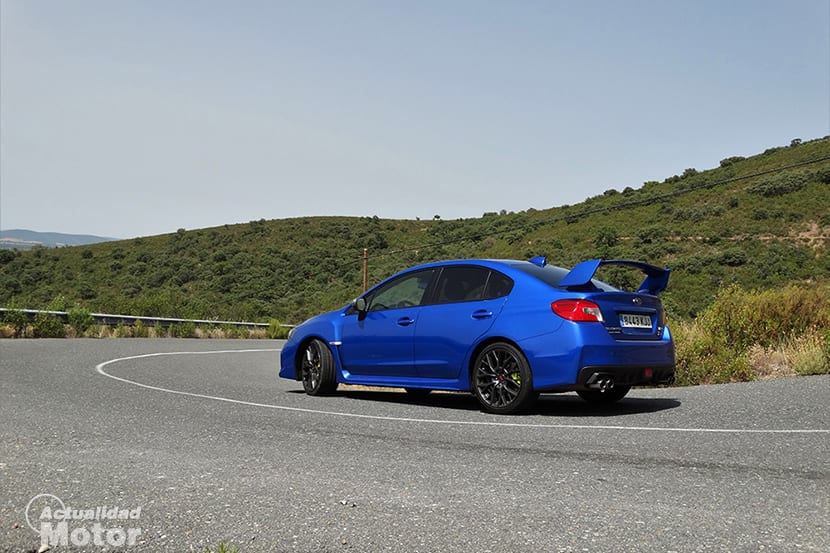
The Subaru WRX has never been content with being merely fast. It arrives with a different kind of confidence—the kind that feels engineered for loose gravel, late braking, and the sudden choreography of corners that don’t care how neatly you planned your line. Yet the WRX’s real trick isn’t speed alone. It’s the way it nudges your perception, recalibrating what you expect from a compact all-wheel-drive rally sedan. One moment you’re driving like a commuter. The next, the road starts behaving like a rally stage—alive with texture, tension, and intent.
This is the promise at the heart of the WRX: that everyday driving can become something sharper. Not by turning it into a museum piece, not by asking for constant heroics, but by offering a chassis and powertrain with a bias toward responsiveness. It’s a sedan that doesn’t just move you. It reorients you.
A compact sedan with an all-terrain philosophy
There’s a particular elegance to the WRX’s size. Compact enough to feel quick to place, stable enough to feel planted when the asphalt darkens with moisture. The sedan form factor does something subtle: it keeps everything familiar—doors, visibility, seating position—while the engineering quietly changes the rules beneath your feet.
All-wheel drive isn’t simply a drivetrain checkbox here. It’s a philosophy of contact—of distributing torque in a way that reads the road as if it were speaking. You don’t have to search for grip. You just have to trust the car to find it. That trust becomes a habit, and then—without warning—the commute starts to feel like navigation through a dynamic landscape.
The WRX invites a shift in perspective. Instead of wondering whether you have enough traction, you begin to wonder how decisively the car can respond to your inputs. The sedan turns from a vehicle into an instrument.
Rally cars are often described with romantic exaggeration: fearless, ferocious, unhinged. The WRX, however, delivers something more intriguing. It channels that heritage into a daily format—keeping the core attitude while tempering the harsh edges.
What makes the difference is the balance between immediacy and control. The car’s behavior communicates early. You feel when the surface changes. You sense when the tires are beginning to negotiate with physics. Then, if you lean into the moment, the WRX responds with a kind of calm urgency.
It’s not about asking you to drive at the limit all the time. It’s about providing a wider performance envelope so you can drive with fewer mental brakes. That’s why it feels so confidence-inspiring, even on ordinary roads.
AWD systems vary dramatically. Some feel like redundancy—extra capability that arrives late or in a muted way. The WRX’s AWD approach is more intimate. It behaves like a conversation: throttle input becomes meaning, grip becomes feedback, and the chassis responds as if it’s reading your intent before you finish forming it.
In practical terms, this means traction is not something you merely acquire. It’s something you modulate. On wet streets, you can feel the car’s ability to keep the rear aligned with your steering choices. On uneven patches, it manages to stay coherent rather than flailing. The result is a sense of connectedness that few compact performance sedans can match.
And here’s the perspective shift: you stop driving “around” the car. Instead, you drive with it—using the drivetrain and chassis as a single strategy.
Power is the headline, but delivery is the story. The WRX is designed so acceleration doesn’t just happen—it builds with urgency. It has a way of making you feel the car is actively participating in your speed, not simply being dragged forward by it.
That sensation matters in a rally-inspired vehicle because rally driving is about rhythm. It’s not pure straight-line might; it’s about transitions—approach, turn-in, drive-out. When power arrives with the right timing, the entire sequence feels smoother. You can carry confidence through the corner because the car doesn’t behave like an on/off switch.
Even when the pace is moderate, the WRX’s powertrain keeps an undercurrent of potential. You become aware of the throttle pedal as a tool, not a suggestion.
Good steering isn’t only about quickness. It’s about weight, feedback, and how consistently the car matches your corrections. The WRX’s chassis character leans toward immediate response—less delay, more interpretability. When you turn in, the car feels like it’s already there.
Cornering becomes less of a gamble and more of a dialogue. The sedan communicates with the front end first—through subtle shifts in direction, vibration, and the feel of the tires working. Then the AWD system and suspension coordinate to keep the car composed when the road tries to disrupt your line.
That composure is what gives the WRX its strange magic: it makes you want to take the scenic route, even when you don’t plan to. The car encourages exploration.
Performance sedans can sometimes feel like cockpits built for racing. The WRX avoids that trap by centering control in a way that feels natural. The driving position supports quick scanning and confident decision-making. Your view remains clear, your controls remain reachable, and the cabin doesn’t distract from the act of driving.
There’s also a psychological element. When a car is easy to understand, you drive differently. You anticipate. You commit earlier. You stop second-guessing. The WRX rewards decisiveness without demanding recklessness.
That’s how the perspective shift becomes complete: control stops being a source of effort and starts being a source of pleasure.
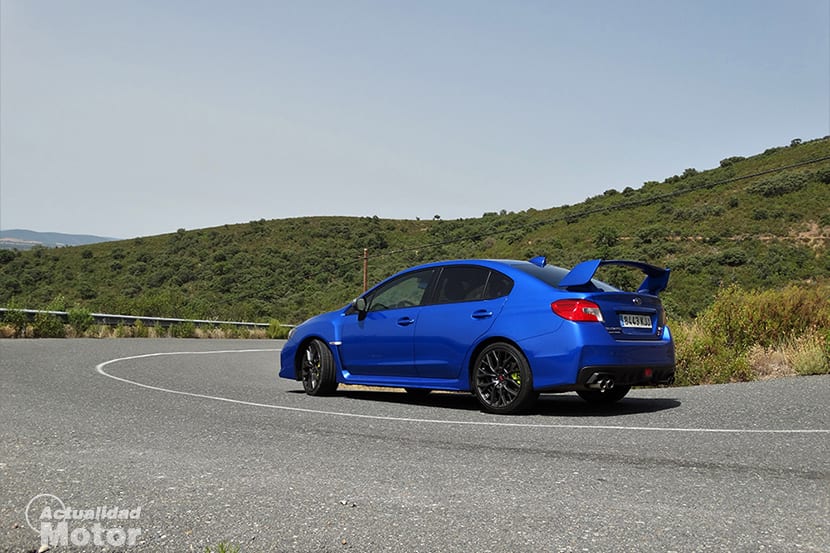
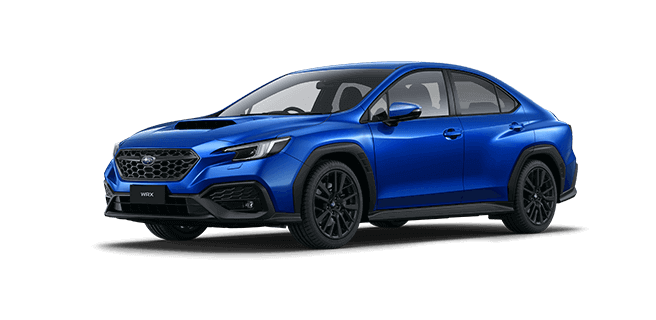
Sometimes design is just style. In the WRX, it reads like an announcement. The stance, the aerodynamic intent, and the overall muscular compactness suggest readiness. It looks prepared to hustle through bends and behave under pressure.
Even color can feel like character. A deep, vivid tone doesn’t merely brighten a driveway; it echoes the car’s energetic identity. It’s a reminder that this sedan isn’t built for anonymity.
The WRX’s appeal isn’t only in specs; it’s in the way details add up. The way the car responds to throttle transitions. The way it stays settled over uneven surfaces. The way the drivetrain contributes to stability rather than undermining it. These nuances create that elusive rally feeling—controlled chaos, domesticated.
Curiosity grows when you notice consistency. You repeat a maneuver, expecting variance, and instead you get predictability. That reliability under spirited inputs is what turns admiration into affection.
And then you realize the real promise: the WRX doesn’t ask you to become a different driver. It offers a new interpretation of the road you already drive.
A rally-inspired sedan can sometimes feel like a compromise: too stiff, too loud, too intense. The WRX instead aims for a workable duality. It’s capable when you want it, calm enough when you don’t. That duality is the key to making performance sustainable.
You can chase the thrill on a twisty backroad and still arrive with your composure intact. You can enjoy the car’s responsiveness without turning every trip into an event. In that sense, the WRX isn’t just a vehicle—it’s a rhythm you can carry into daily life.
When the drive ends, the memory doesn’t fade into “it was fast.” It lingers as a sensation: a connected chassis, an AWD system that felt like teamwork, and a powertrain that delivered momentum with intent. You remember how the car made corners feel legible, how the throttle felt meaningful, how the steering seemed to translate your thoughts into motion.
The WRX’s most enduring effect is this: it teaches you to look at driving differently. Roads aren’t just distances anymore. They’re textures, opportunities, and small challenges waiting to be understood. And once you’ve experienced that shift, it’s difficult to go back to seeing everything as ordinary.
The Subaru WRX—compact, AWD, rally-inspired—doesn’t simply promise performance. It promises a new way of paying attention. Then it quietly proves it, one turn at a time.