There’s a particular kind of quiet confidence that comes with modern luxury driving. It isn’t only about leather textures, brushed-metal trim, or the way a cabin feels hushed at speed. It’s also the subtle choreography of sensors, decision-making software, and protective engineering working behind the scenes. Many drivers notice the headlines—lane centering, automatic braking, adaptive cruise control—then move on. Yet the fascination runs deeper. Safety technology has become less like a single feature and more like an evolving guardian system, almost a second nervous system for the vehicle. And in 2026, the best luxury cars are turning that promise into something more continuous, more anticipatory, and undeniably impressive.
Below is a guided look at 2026 luxury cars with the most advanced safety features. The focus is not merely on what these vehicles can do, but why the experience can feel quietly spellbinding once you realize how much is happening in the background.
Safety Has Become Predictive, Not Reactive
One common observation about advanced driver assistance systems is that they “help you avoid trouble.” That’s true, but incomplete. Modern systems are increasingly predictive—reading patterns rather than waiting for panic. Where earlier generations reacted to a lane drift or a collision threat, 2026 platforms tend to estimate intent: the likelihood of a pedestrian stepping off the curb, the probability of a vehicle cutting in, the odds of a driver’s attention thinning during a long commute.
This shift is fascinating because prediction demands finesse. Sensors must interpret the world under changing light, weather, and road conditions. Algorithms must translate noisy inputs into a coherent risk score. When it works well, the driver experiences it as something almost intuitive—like the car is “keeping its balance” with remarkable patience.
Advanced Driver Assistance: The Luxury Standard Now Includes “Cognitive” Guidance
In the luxury segment, safety features have become layered. Think of it as a multi-voice conversation between radar, cameras, and sometimes lidar—each contributing different strengths. Radar is steady for distance and speed. Cameras excel at visual context such as lane markings and traffic signals. Some setups add additional dimensions for 3D understanding, helping the car model the environment more precisely.
Most 2026 luxury vehicles that lead in safety offer a combination of:
Lane centering with smooth steering correction.
Adaptive cruise control that adjusts for changing traffic flow.
Automatic emergency braking tuned for multiple scenarios, including pedestrians and vehicles.
Blind-spot monitoring with more assertive alerts—often timed to reduce distraction.
What’s compelling is not just capability, but the calibration of behavior. Great systems don’t jerk the wheel or emit a blizzard of warnings. They often blend interventions with restraint, timing corrections so the driver feels supported rather than overridden.
Automatic Braking That Understands More Than “Stop Now”
Automatic emergency braking is frequently mentioned, but the more interesting story is how the system decides when braking should begin and how aggressively it should respond. In 2026 models, braking logic can be finely differentiated based on target classification. A pedestrian is treated differently than a vehicle. A cyclist at an intersection can trigger a distinct response profile compared with a car detected in a lane.
Even the aftermath—if impact is unavoidable—has advanced. Many safety suites aim to mitigate severity through staged braking and pre-crash preparation. That can mean seatbelt tightening, hazard light activation, and post-collision modes designed to support stabilization and reduce secondary risk.
Luxury buyers often seek confidence, not drama. Systems that manage imminent threats while minimizing disruptive interventions align with that desire perfectly.
Night Vision, Low-Light Clarity, and the War Against Visibility Gaps
Another observation people make is that safety tech “works great in perfect conditions.” The deeper reason it can feel transformative is that 2026 vehicles are designed to cope with the messy reality of roads: headlights with glare, rain-slick reflections, and dim lane markings where human perception hesitates.
High-performing camera systems can enhance detection in low-light conditions, sometimes by using improved sensor sensitivity, better image processing, and smarter exposure strategies. Radar fills in gaps where visual cues fail, while advanced fusion techniques combine outputs so the vehicle can maintain situational awareness when one sensor’s reliability drops.
This is the essence of the fascination: reliability under uncertainty. The best systems don’t merely see; they interpret.
Intersection Safety and the Art of Timing
Intersections are where the stakes rise and the margin shrinks. A vehicle crossing paths with another car, a pedestrian stepping near a corner, a cyclist emerging between lanes—these are moments where timing matters as much as detection. In 2026 luxury vehicles, intersection safety often benefits from improved trajectory prediction: the system estimates how objects will move in the near future rather than simply identifying them in the moment.
That predictive timing can enable earlier warnings and more confident braking strategies. It also supports driver-assistance behaviors that prevent “almost collisions”—the incidents you never hear about because the technology quietly corrected the trajectory before it became an emergency.
Driver Monitoring: Attention Is a Safety System, Too
Comfort features in luxury cars are often celebrated—massaging seats, ambient lighting, refined sound insulation. Yet the most consequential luxury safety feature can be the one that monitors the driver’s state. In 2026, advanced driver monitoring systems can use steering patterns, cabin sensing, and camera-based attention metrics to identify drowsiness or distraction.
Instead of waiting for obvious negligence, the system can intervene earlier—issuing prompts, adjusting assist levels, or escalating guidance when needed. This approach is intriguing because it acknowledges a truth many drivers overlook: safety isn’t solely about road hazards. It’s also about human cognition under fatigue, stress, and routine.
Protection Beyond Detection: Occupant Safety Integration
Advanced safety features do not end with braking and alerting. The most sophisticated luxury cars integrate pre-crash preparation with occupant protection strategies. That can include proactive seatbelt pre-tensioners, optimized airbag deployment logic, and systems designed to reduce the chance of secondary impacts.
Luxury manufacturers also increasingly tune these systems for real-world severity reduction—considering occupant position, seat occupancy, and crash geometry. The goal is not simply to trigger protection, but to deploy it with calculated precision.
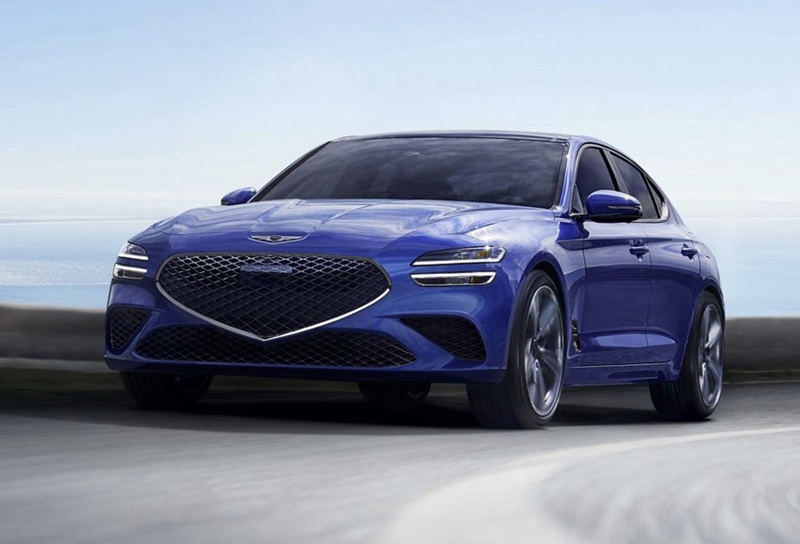
Case Study: What the 2026 Genesis G70 Suggests About Modern Safety Design
When exploring 2026 luxury offerings, the 2026 Genesis G70 illustrates how a safety philosophy can be woven into the character of a vehicle rather than appended like a checkbox. Its exterior styling may draw attention first, but the reason it belongs in a conversation about advanced safety is tied to how modern driving assistance is integrated into daily motion.
In today’s luxury segment, vehicles aim to make advanced safety feel like natural motion—steadier lane behavior, more composed cruise control, and detection systems that catch threats early. That cohesion matters. If safety tech feels “glitchy,” drivers disable it or stop trusting it. If it feels seamless, the technology becomes a quiet partner—one that makes journeys less tense.
How to Choose: Matching Safety Features to Your Driving Life
Buying a luxury car with advanced safety isn’t only about scanning for the biggest list of features. The deeper approach is to match your commute and habits to the technology that matters. Consider how often you drive at night. Think about your urban routes with complex intersections. Reflect on how frequently you use highways during variable weather.
Look for:
Comprehensive forward collision support across pedestrian and vehicle scenarios.
Lane assistance that maintains composure instead of overcorrecting.
Blind-spot monitoring with clear, non-annoying alerts.
Driver monitoring if fatigue is a recurring concern.
In other words, safety should be personal. The most advanced system on paper may not be the most useful for your specific roads.
The Deeper Reason We’re Drawn to “Advanced Safety” in Luxury Cars
It’s tempting to reduce fascination to gadgetry. But there’s something more emotional underneath. Safety technology creates a feeling of control in an environment that never fully obeys human expectations—weather changes, distracted drivers exist, road lines vanish, and traffic flows unpredictably. When a luxury car’s systems appear to handle these uncertainties with grace, it awakens a sense of relief that’s hard to quantify.
There’s also a kind of intellectual thrill in the engineering. The fusion of sensors and the sophistication of prediction invite admiration. You don’t have to be an engineer to sense that the car is doing more than “driving.” It’s perceiving, estimating, and protecting—continuously.
Outro: A New Definition of Luxury Safety in 2026
In 2026, the best luxury cars with advanced safety features are shifting from assistance to guardianship. They are learning to anticipate rather than merely react, to interpret rather than simply detect, and to protect without constantly interrupting the driver’s sense of calm. And once you understand what’s happening behind the scenes—how many decisions occur in fractions of a second—the experience becomes more than transportation.
It becomes a quiet assurance, built into the architecture of motion. That is the real upgrade: not just fewer risks, but a driving life that feels steadier, smarter, and—most of all—more profoundly cared for.