There’s a peculiar kind of magnetism to the big American luxury SUV. It isn’t just the chrome or the commanding ride height—it’s the feeling that these vehicles were engineered for more than commuting. They’re designed for arrivals. Whether you’re pulling into a driveway after a long day, merging onto a highway at dusk, or cruising past storefront lights with the cabin softly lit, the vehicle becomes a statement in motion.
That’s why the 2026 Cadillac Escalade and the 2026 Lincoln Navigator often find themselves in the same conversation. Both are apex-tier flagships, built for buyers who want presence without compromise. And yet, the experience you get from each—especially how it feels at low speeds, how it handles at higher tempos, and how it dresses its interior life—tends to reveal deeper differences than shoppers expect. On the surface, they’re both American luxury behemoths. Underneath, they’re almost like different philosophies wearing similar silhouettes.
What follows is a battle of American luxury SUVs: not a shallow comparison of spec sheets, but a thoughtful look at why these two names remain so endlessly fascinating—and what you may be really choosing when you choose between them.
First Impressions: The Pageantry of Proportions
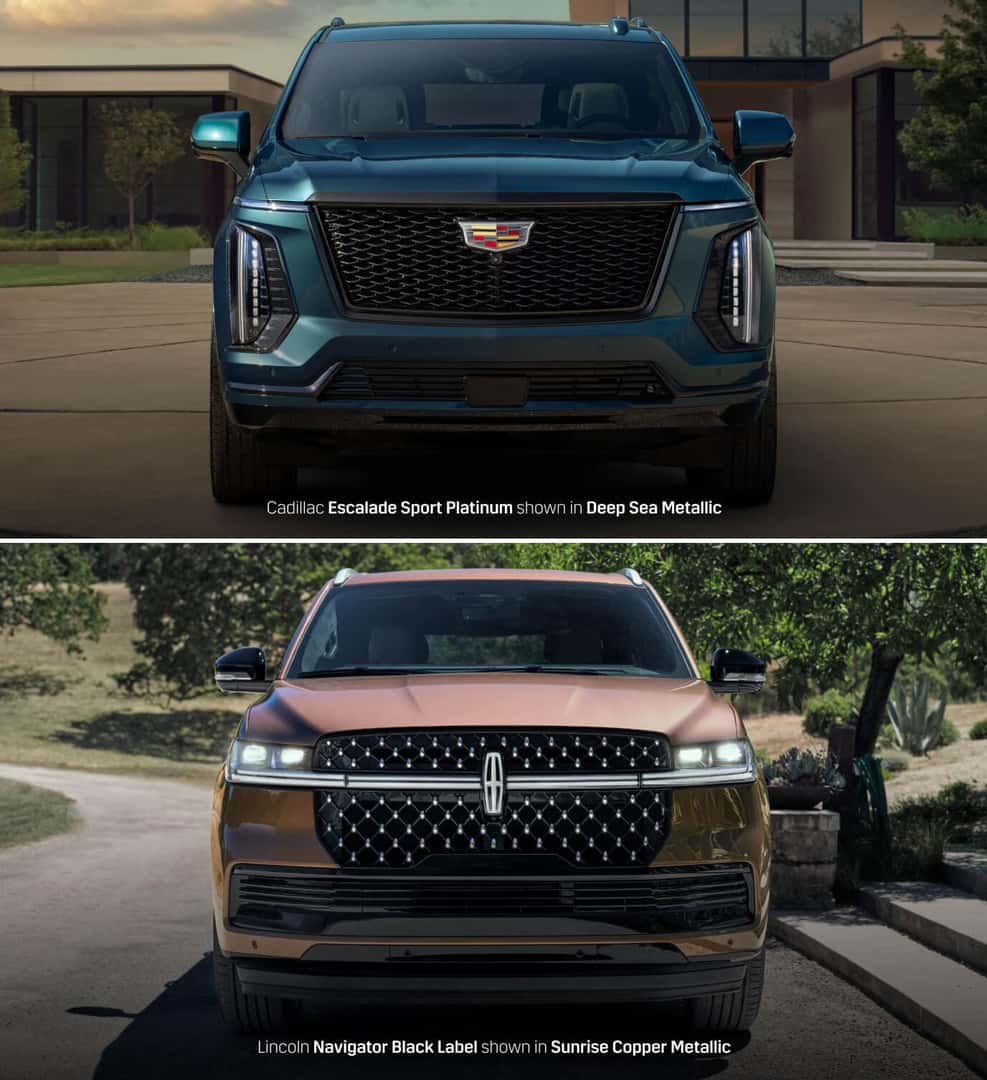
Both the Escalade and Navigator arrive like they own the street. But the manner of that ownership differs. The Escalade’s visual language tends to feel bolder—less apologetic about its scale, more intent on commanding attention. The grille, the lighting signature, the broad stance: it all reads as a kind of theatrical confidence.
The Navigator, on the other hand, often comes across as ceremonious. It feels designed to soothe the senses as much as to impress. Where the Escalade may project momentum, the Navigator projects poise. Neither is subtle, but their charisma has different textures.

Common observation: both look expensive. Deeper reality: they communicate different emotional promises. One says, “Look at what I can do.” The other says, “Look at how I can make you feel safe, cared for, and composed.”
Cabin Atmosphere: Where Luxury Becomes a Sensation
Luxury isn’t only what you touch. It’s how the cabin behaves around you—how light settles across materials, how sound reverberates, and how the seating geometry invites you into a restful posture even before the engine note fades.
The Escalade generally leans into a modern, high-contrast vibe. The interior often feels crisp, with technology and trim lines that make the space feel current and intentional. The overall effect can be close to cinematic. You sit down and immediately sense that the vehicle is prepared to entertain your senses.
The Navigator tends to emphasize comfort-first refinement. Its cabin frequently feels like a well-appointed lounge. The materials and layouts are chosen to create calm—an environment that encourages conversation, quiet, and effortless transitions between driver and passenger roles.
Common observation: both offer premium interiors. Deeper reason: they target different kinds of luxury. One is more about energy—the electrifying nature of a flagship experience. The other is more about sanctuary—luxury as a controlled atmosphere that cushions your day.
Rear-Seat Life: The Difference Between Sitting and Being Hosted
Large luxury SUVs are judged most harshly where most people spend the most time: the second row. The Escalade is often praised for its spaciousness and its ability to make rear passengers feel like they’re stepping into an executive suite. Whether it’s for road trips, family occasions, or chauffeured commutes, the rear compartment usually feels both welcoming and commanding.
The Navigator is also a masterclass in rear comfort, frequently earning admiration for its thoughtful seating arrangements and the way it facilitates long-distance ease. Its cabin design often encourages a more relaxed rhythm, especially for those who want to arrive less tired than they started.
Short sentences matter here. Because in real life, comfort is immediate. When the seats feel supportive, when legroom feels generous, and when controls and visibility don’t ask passengers to “figure it out,” luxury becomes tangible.
Common observation: they’re both great for families. Deeper reasons: each SUV is tuned for a different emotional role. The Escalade makes the rear feel like a VIP theater. The Navigator makes it feel like a calm business-class salon.
Technology and Interfaces: The Modern Helm
Flagship SUVs are now rolling command centers. The question isn’t whether you get screens—it’s how the systems behave under pressure: on bright days, in rain, during night drives, and in moments when the driver needs information instantly.
The Escalade typically feels like it was designed with a modern interface philosophy—clear pathways to controls, a display setup that supports navigation and media without unnecessary friction. It can feel intuitive, even for drivers who haven’t memorized every button.
The Navigator often prioritizes a more guided, premium user experience. Interfaces are generally presented in a way that supports comfort and legibility, aiming to reduce cognitive load while maintaining a refined look. It’s a subtle kind of intelligence: the system doesn’t just show you options; it helps you stay oriented.
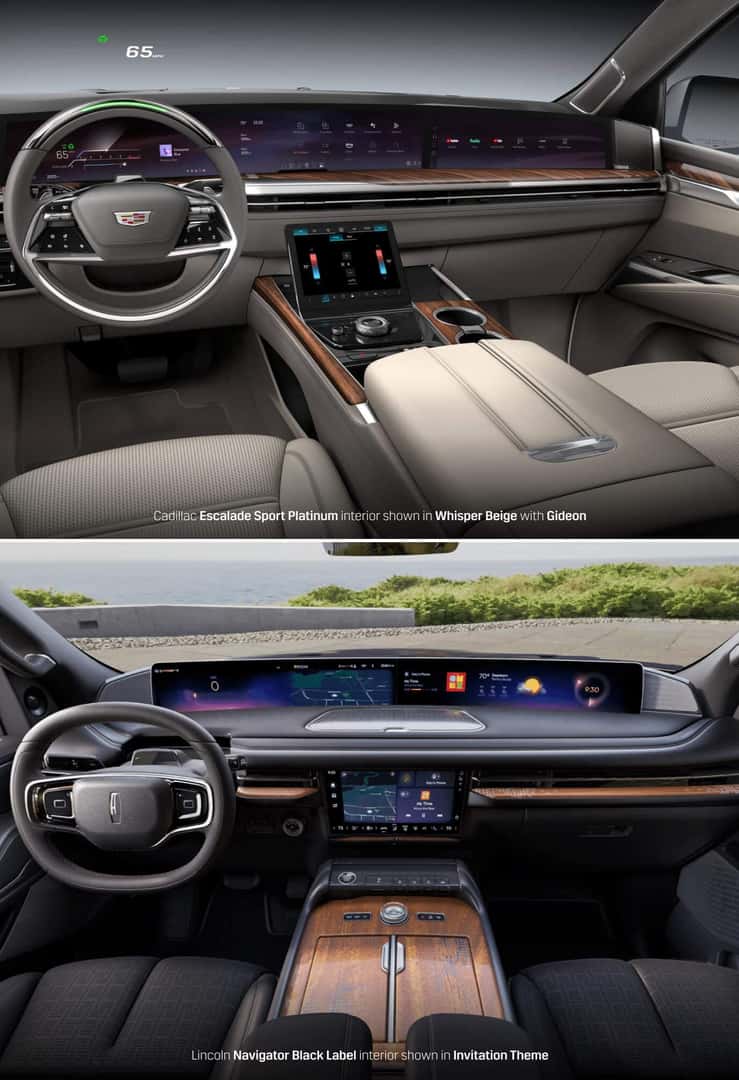
Common observation: “Both are loaded.” Deeper reason: the fascination comes from how each cabin performs its digital choreography. One emphasizes immediacy. The other emphasizes reassurance.
Power and Driving Character: How They Move When You Push Past Easy
It’s tempting to compare power outputs alone. But a luxury SUV is judged by its character: throttle response, the smoothness of acceleration, and how the vehicle translates intent into forward motion.
The Escalade often feels intent-driven. Its power delivery can feel eager while still remaining composed—especially when merging or passing. The ride may feel more assertive, with the SUV appearing to prefer confident momentum over cautious pacing.
The Navigator commonly feels more measured and composed. Its driving demeanor can feel engineered to reduce drama—like it’s focused on delivering smooth progress rather than theatrical surges. It’s the difference between a performer and a host.
Short sentence: You can feel the tuning. Longer thought: when steering feedback, suspension behavior, and power delivery align, luxury stops being a checklist and starts being a lived impression.
Ride Quality and Handling: Comfort Is a Science, Not a Saying
These SUVs are big, but greatness often lies in how they manage the in-between moments: highway expansion joints, uneven surfaces, and the slight swells of city roads.
The Escalade tends to strike a balance between confident composure and a more dynamic sense of control. Even when the vehicle is loaded with passengers and cargo, it often maintains a sense of readiness.
The Navigator often emphasizes isolation—an atmosphere where road imperfections feel distant rather than intrusive. It’s luxury as filtration, where the ride feels curated and stable.
Common observation: both ride smoothly. Deeper reasons: one smooths the experience through a more energetic calibration, while the other smooths it through a more insulating approach. The fascination is that both can feel “excellent,” yet each persuades you to want a different kind of calm.
Safety and Driver Confidence: The Quiet Assurance
Modern luxury SUVs are increasingly defined by how they reduce uncertainty. Collision avoidance, adaptive cruise capabilities, lane guidance systems, and blind-spot monitoring are the silent guardians working when you’re not thinking about them.
The Escalade and Navigator both typically offer advanced safety suites designed to help drivers navigate with confidence. What matters most is not only which features exist, but how they communicate. Do warnings feel clear and timely? Does assistance feel natural rather than intrusive? In a flagship, the best technology disappears into confidence.
Common observation: safety tech is “similar.” Deeper reality: how the system behaves—its timing, tone, and consistency—often determines whether a driver feels supported or annoyed.
Ownership Experience: Beyond the Drive
Luxury ownership includes the mundane details: comfort with service schedules, convenience of ownership tools, and the overall sense that the vehicle will continue to feel special after the first month.
The Escalade’s appeal frequently comes from its identity and modernity, with an ownership experience that feels aligned to a lifestyle of frequent travel and visible success. The Navigator’s appeal often leans into long-term comfort and a “settled” elegance, where the SUV feels like it will remain an inviting sanctuary season after season.
Common observation: it’s about the features. Deeper reasons: fascination comes from the narrative you’re buying into—your daily routine becomes part of the brand story, not just the vehicle’s spec sheet.
Which Should You Choose? The Real Answer Lies in Your Motivation
If your ideal luxury SUV feels like a bold entrance—an extension of personal presence—the 2026 Cadillac Escalade may be the more fitting choice. Its confidence, digital immediacy, and assertive character can make every drive feel like a highlight reel.
If your ideal luxury SUV feels like a composed retreat—an environment designed to cradle you and your passengers—the 2026 Lincoln Navigator may be the more harmonious choice. Its calm atmosphere, reassuring demeanor, and lounge-like sensibility can make long days feel shorter.
Either way, you’re choosing more than a vehicle. You’re choosing a particular kind of American luxury: one that performs with intensity, or one that hosts with grace. The fascination persists because both SUVs translate wealth into feelings—comfort, control, pride, and the quiet assurance that you made a deliberate decision.
Conclusion: Two Giants, One Shared Gravity
The Escalade and Navigator are often placed on the same pedestal, and for good reason. They share a commitment to flagship expectations: space, refinement, and a sense that the journey matters. Yet their differences are where the magic lives.
The Escalade tends to thrill with contemporary boldness and driving intent. The Navigator tends to soothe with polished composure and a sanctuary-like cabin rhythm. In the end, the best “battle” isn’t about picking a winner—it’s about choosing the SUV that aligns with the emotional outcome you want from every mile.
When you understand that, the decision stops being purely rational. It becomes personal. And that’s why these two names keep returning to the spotlight—because American luxury SUVs aren’t just built to move you. They’re built to match your story.