Electric luxury cars have a peculiar talent for seducing the senses. They arrive with a hush where engines usually announce themselves, and they leave you with a sensation that feels less like transportation and more like a private epiphany. The 2026 Porsche Taycan steps into that rare atmosphere with the confidence of a car that already knows how to be admired. Yet the question lingering in many minds is sharper than the questions usually asked about speed: is it truly the best electric luxury car, or does it merely wear excellence like a tailored suit?
There’s a common observation—one repeated in garages and comment sections alike—that the Taycan is “impressive, but fussy.” It’s quick to stir excitement, but some drivers describe it as demanding, as if you have to meet it halfway. The deeper fascination, however, lies in what that “fussiness” actually means. It’s not caprice. It’s character. It’s a philosophy of response: the car treats electricity not as a commodity, but as a finely tuned instrument.
First Impressions: A Luxury Sedan That Feels Like Precision Engineering
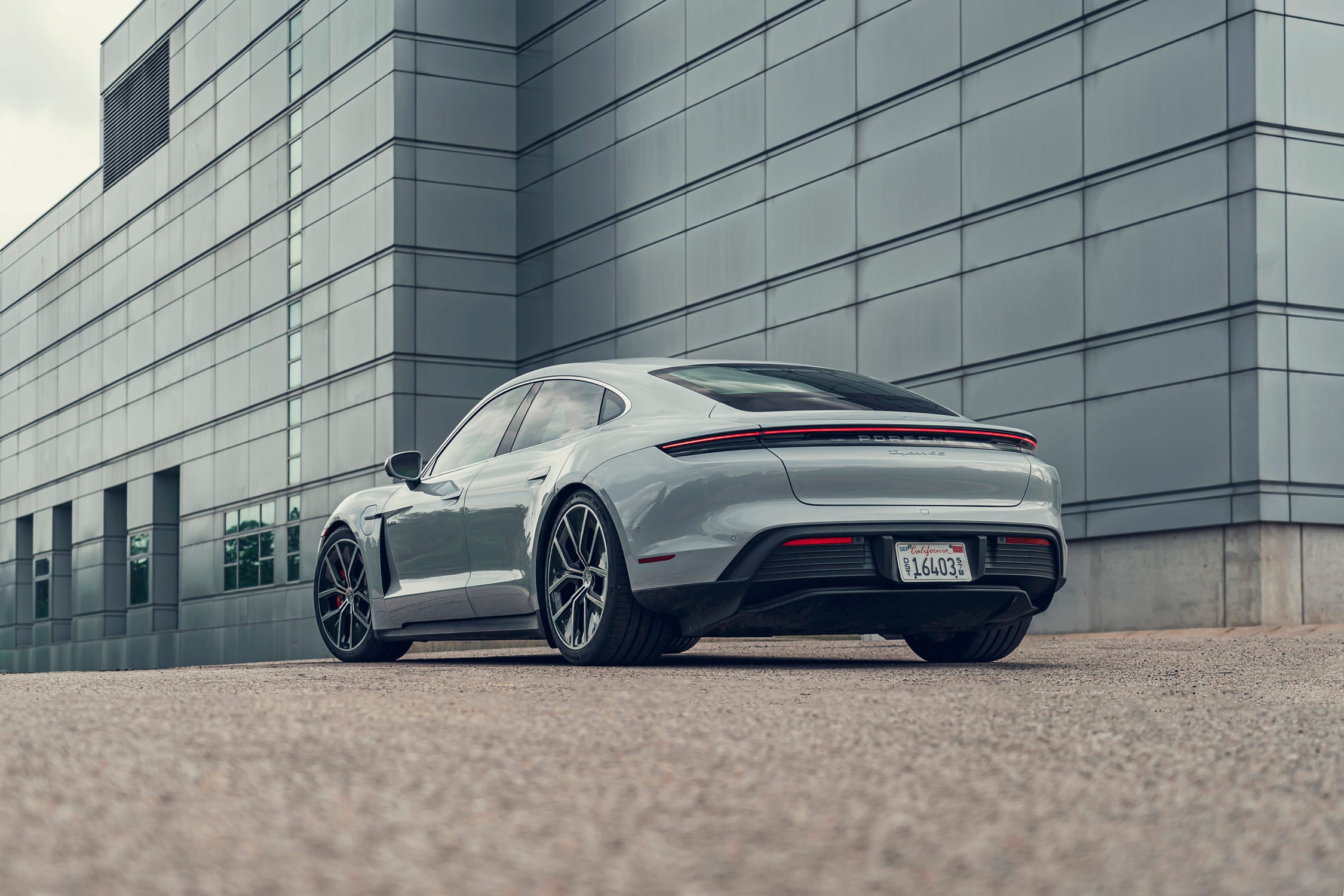
From the outside, the Taycan doesn’t just look sculpted. It looks calculated. Lines converge with an aerodynamic seriousness that discourages casual gawking. The front fascia carries a purposeful intensity, and the bodywork seems to hold tension even while parked—like a drumhead waiting to be struck.
In the driver’s seat, that sense of engineering becomes tactile. Materials feel selected rather than assembled. Surfaces are chosen to reduce visual noise and increase perceived depth, giving the cabin an almost architectural calm. Short bursts of detail—contrast stitching, clean switchgear, and a cockpit layout that prioritizes reach—create a feeling of intimacy.

Performance Without Drama: Instant Torque, Managed Like a Craft
Electric cars are famous for immediacy, but the Taycan’s acceleration feels curated. The sensation is not merely fast—it’s coherent. That matters. A vehicle can sprint off the line and still feel uncertain afterward. The Taycan tends to keep its composure, delivering thrust in a way that feels deliberate, like a conductor guiding tempo rather than a drummer hammering rhythm.
In everyday driving, that translates into confidence: merging becomes a brief negotiation with physics, not a leap of faith. In spirited conditions, it becomes something else entirely. The car’s ability to translate power into grip without losing finesse is where many drivers rediscover their curiosity. The deeper reason for fascination is this: the Taycan makes electricity feel like engineering, not gimmickry.
Handling and Ride Quality: The Balance Between Athletic Poise and Everyday Comfort
Luxury often promises comfort, while sportiness promises excitement. The Taycan aims to honor both—though it rarely does so in the “soft-focus” way some drivers expect.
The chassis tuning encourages active participation. The steering has weight and clarity, and the car communicates grip through subtle feedback. Short sentences describe the experience best: it feels planted. It feels readable. It feels intentional.
At the same time, ride quality remains composed rather than austere. Expect confidence over float. Over imperfect pavement, the suspension tries to filter harshness without erasing character. That’s why the car can feel “fussy” to some: it responds to the road with honesty, and that honesty is not always forgiving. Yet that same honesty becomes addictive once you realize the Taycan is trying to preserve balance, not just comfort statistics.
Charging and Usability: Electricity as a Lifestyle, Not a Math Problem
Owning an electric luxury car is less about romance and more about logistics. Many people fear the planning. They imagine detours to charging stations and the dread of “range anxiety.” The Taycan addresses that anxiety with a usability mindset: charging behavior, route planning, and energy management are designed to feel less like homework and more like routine.
When charging infrastructure is available, the process becomes surprisingly streamlined. Even then, the fascination deepens: the Taycan encourages efficiency through feedback—nudging drivers toward smoother acceleration and smarter climate habits. It’s not scolding. It’s coaching. The result is that everyday decisions begin to feel like they’re shaping performance in real time.

Interior Design and Technology: A Cockpit Built for Attention
Luxury interiors can become museum-like—beautiful but disengaging. The Taycan goes in the opposite direction. It invites attention. The layout promotes purposeful movement: controls feel positioned for quick comprehension, not prolonged searching. Even the ambience seems engineered to reduce fatigue during long drives.
Technology here is more than decoration. The interface aims for immediacy. You don’t have to wrestle with menus to adjust driving character, navigation, or climate settings. In a world where many infotainment systems feel like labyrinths, the Taycan’s approach is more linear, more human.
There’s also the matter of acoustics. Electric silence can amplify unwanted noise, but the Taycan attempts to curate what you hear. Wind and road noise don’t disappear completely, but they’re managed to avoid turning a relaxed drive into a constant negotiation with sound.
Range, Efficiency, and Real-World Expectations
Range is where marketing claims collide with reality. The best way to understand the Taycan is not to chase a single number, but to consider the variables: speed, temperature, and driving style. Electric cars are sensitive to these factors, and luxury drivers often want reassurance that their comfort won’t be punished.
The Taycan’s efficiency approach is pragmatic. It emphasizes energy management strategies that preserve livability. When you drive smoothly, the car rewards you. When you push hard, it still responds—but you’ll feel the trade-off. That transparency can be refreshing, even if it means you can’t pretend the laws of energy are negotiable.
Trims and Pricing Philosophy: Why “Best” Is a Moving Target
“Best” depends on what you value most. Some drivers prioritize maximum acceleration. Others prefer long-distance comfort. Still others want the sharpest steering and the most engaging chassis calibration.
The Taycan lineup exists to cover those preferences, and that’s part of its allure. It doesn’t force everyone into one personality. It allows variations in temperament. If you’re seeking the most balanced blend of luxury and performance, you’ll likely find a sweet spot in the trims that emphasize everyday usability without abandoning athletic rigor.
However, pricing isn’t only about numbers. It’s about the engineering choices you’re buying—materials, powertrain sophistication, and the level of refinement in handling dynamics. In other words, you’re not just paying for speed. You’re paying for integration.
Who It’s For: The Drivers Who Will Fall Hard
The 2026 Taycan is best suited to drivers who notice details. People who care about steering feel, who appreciate the difference between quiet and numbness, and who enjoy the idea that an electric car can be both elegant and incisive.
It also fits those who want a car that encourages better habits. If you tend to drive with smooth anticipation, the Taycan will feel unusually rewarding. If you prefer brute force and abrupt inputs, you may find the car’s discipline curtails your impulses.
That’s not a flaw. It’s the deeper reason behind the fascination. The Taycan doesn’t merely transport. It educates.
Potential Drawbacks: The “Fussiness” That Some Drivers Interpret as Friction
For all its brilliance, the Taycan can feel demanding in specific circumstances. Some drivers report that configuration choices and driving settings matter more than expected. It can also be sensitive to the context of your use—city stop-and-go versus highway cruising, or daily short trips versus longer drives.
There can also be the psychological hurdle. Electric driving requires a shift in mindset, and luxury buyers sometimes want reassurance without adaptation. The Taycan offers less hand-holding than some competitors, but it compensates with a sense of control that grows over time.
Verdict: Is the 2026 Porsche Taycan the Best Electric Luxury Car?
The Taycan earns its reputation not through superficial spectacle but through cohesive talent. It blends electric immediacy with a chassis that doesn’t forget it’s also a luxury vehicle. It treats technology as a tool rather than a distraction. It makes range and charging feel less like obstacles and more like routines with feedback loops.
Is it the best electric luxury car? If “best” means the most thrilling performance with the most refined coherence, it makes a compelling case. Yet it’s also a car that demands a certain attentiveness—rewarding drivers who engage with it. That’s why it feels so fascinating. The Taycan doesn’t ask to be loved blindly. It asks to be understood.
And once understood, the silence becomes not emptiness, but intention. The power becomes not noise, but narration. In the end, the question changes—from whether it’s the best electric luxury car—to why it feels like one of the few cars that actually listens back.