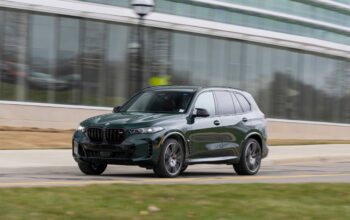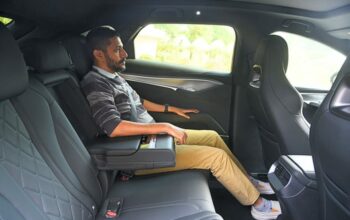
The debate between the Audi RS5 and the Audi RS7 feels a bit like choosing between two different kinds of thunder. One arrives with razor-edged clarity—quick to snap into action, eager to underline every corner. The other arrives like a rolling storm front, heavier in presence yet effortlessly forceful, turning long stretches of highway into something closer to a private racetrack. Both are performance statements from Audi’s high-output atelier, but their temperaments diverge the moment you press the accelerator. If you’re hunting for Sportback performance, you’re really hunting for how power is delivered, how weight is managed, and how the car behaves when speed stops being theoretical.
Let’s set the stage: the RS5 typically reads like a precision instrument—more compact, sharper in feel, and often more communicative. The RS7 Sportback, by contrast, is the grand tourer that refuses to dilute its athleticism. It’s long, planted, and remarkably composed. It can hustle. It can also simply glide, still fast enough to make “cruising” feel like a misnomer.
1) Sportback Performance Philosophy: Agility vs. Momentum
In the RS5, performance tends to be harvested from momentum you build and then skillfully redirect. The car invites you to drive with intent—trail braking, late turn-in, and using traction like a conversation rather than a command. Short bursts feel especially satisfying. The steering response often makes you feel as if the chassis is “listening,” then replying in kind.
In the RS7 Sportback, the philosophy shifts toward momentum. It’s not simply that the car is powerful; it also carries its speed with a calm, deliberate authority. The longer wheelbase and the Sportback body shape create a kind of aerodynamic poise, encouraging stability at velocity. Short, frantic moves are fun, but long, flowing lines are where the RS7’s personality really comes alive.
2) Engine Character and Power Delivery
Power in both models is substantial, but the “feel” is not identical. The RS5 tends to emphasize driver involvement. Even when the output is overwhelming, it often arrives with a sense of linear build—pulling with confidence while remaining legible. You can sense when boost or torque is most active, and the throttle mapping encourages modulation rather than mere on/off behavior.
The RS7 is more theatrical in its delivery. It can surge strongly from low to mid speeds, then keep pressing without the sensation of running out of breath. The car’s torque availability can make it feel like the performance is always ready at the press of a pedal. That immediacy changes how you drive: rather than planning around peak power, you can exploit the torque band like a constant source of momentum.
On the road, that translates to different pleasures. RS5 acceleration often feels like a sprint you manage. RS7 acceleration feels like a push that continues—less “launch moment,” more “relentless progression.”
3) Transmission Behavior: The Art of Shift Timing
Both models typically pair their high-performance outputs with rapid, intelligent gear selection. Still, the character of the gearbox can be experienced differently. In the RS5, shift behavior often feels more tailored to a driver who’s willing to work for speed. The car may reward a more dynamic rhythm—downshifts timed to set up rotation, upshifts timed to keep the engine in its most forceful range.
In the RS7 Sportback, the shifts often feel like they’re designed to keep momentum smooth. Even when you ask for drama, the car tends to manage transitions with a degree of orchestration. The result is a performance that feels both urgent and composed. It’s a subtle difference, yet it affects how natural the car feels during sustained acceleration—especially during overtakes at higher speeds.
4) Chassis Tuning: Corner Entry, Mid-Corner Balance, and Exit
Cornering is where the RS5 and RS7 truly show their personalities. The RS5 often feels nimble at corner entry, with quicker weight transfer and a greater sense of immediacy. Turn-in can feel crisp. The car may ask for a deliberate line, but it rarely feels vague. Mid-corner grip tends to feel plentiful, and the steering weight can contribute to confidence when you’re trying to thread the gap between speed and traction.
The RS7 Sportback approaches corners like a heavyweight athlete—still athletic, but with a different cadence. The chassis is engineered to remain stable and composed as speed rises. Body control is a priority, and the car can feel planted even when you’re asking for more than the tires would choose to provide under gentle driving. If the RS5 is the scalpel, the RS7 is the pressurized clamp: it holds the line, then pushes forward with minimal drama.
Exit traction is another telling point. The RS5 may feel more eager to rotate and then accelerate cleanly out of the turn. The RS7 often feels like it’s dragging momentum forward—less about “throwing” the car and more about converting stability into thrust.
5) Braking Performance: Confidence at the Edge
Braking is where confidence either becomes a habit or a gamble. Both vehicles are built to handle high-energy stops, but the experience differs. The RS5 can feel particularly direct under braking, with a pedal feel that supports precision modulation. It’s often easier to fine-tune deceleration for late apexes, where small adjustments matter.
The RS7 Sportback, with its greater mass, tends to feel more like an assured anchor. The car can deliver strong deceleration without surrendering composure. Thermal management matters too—high-performance driving can overwhelm brakes quickly. Both models are engineered for spirited use, but the RS7’s weight demands serious attention to brake cooling and sustained performance. The reward is repeatability: the ability to brake hard, then do it again, with less sense of fading.
6) Ride and NVH: Sportiness Without Chaos
Performance is not only measured in lap times. It’s also measured in how the car behaves when the road gets rude. The RS5 often feels slightly more “sport-bent” in its ride characterization. The suspension can feel taut, but the overall impression is of a vehicle that’s ready for enthusiastic driving without needing the road to be perfect.
The RS7 Sportback is more about refinement—even while remaining athletic. Its Sportback design and interior packaging contribute to a quieter, more insulated cabin experience. Noise, vibration, and harshness (NVH) can be better controlled, which changes the ownership experience. Long trips become easier to survive with your enthusiasm intact.
Short sentence, long implication: if you drive daily, comfort becomes performance. The RS7 often scores there, while the RS5 more frequently appeals to those who want the chassis to feel like an extension of their hands.
7) Technology and Driver Interface: How Fast Feels Instantly
High-output cars are partly hardware, partly software. Drive modes can reshape throttle response, steering mapping, and shift behavior. In the RS5, mode changes often sharpen the sense of immediacy. When Sport or similar settings engage, the car may feel more reactive—like the personality has been turned up.
In the RS7 Sportback, technology tends to emphasize balance between performance and usability. Driver interfaces can help you manage torque delivery and traction behavior without turning the car into a temperamental machine. The result is a kind of accessible ferocity. You can go fast without needing to constantly interpret the car’s intentions.
Think of it this way: the RS5 may feel more like a performance tool you master. The RS7 may feel more like a performance companion that adapts to you.
8) Practicality and Ownership: The Lifestyle Angle
Even the most enthusiast-minded buyer wants to know what happens after the first drive. The RS5 typically offers a tighter, more focused daily usability profile—smaller dimensions, more straightforward parking, and a sense of agility that carries into urban environments.
The RS7 Sportback, meanwhile, leans into practicality without losing its identity. It’s a “bring everything, go anywhere” machine. Rear space, cargo flexibility, and long-haul comfort can make it the more convenient choice. If your definition of Sportback performance includes weekend trips, family duties, or luggage-heavy escapes, the RS7’s character becomes a compelling argument.
Still, the question stays the same: do you want speed that feels playful and direct, or speed that feels grand and effortless?
9) Which One Wins for Sportback Performance?
If “Sportback performance” means maximum athletic immediacy, the RS5 often stands out. Its compact feel, responsive steering, and precision-oriented dynamics can make driving more engaging—even when you’re not chasing perfection on track.
If Sportback performance means combining serious speed with stability, comfort, and effortless momentum, the RS7 is hard to dismiss. It’s a grand tourer that refuses to be merely grand. It can overwhelm with smooth acceleration, then hold itself together with remarkable composure.
Ultimately, the decision is emotional as much as mechanical. The RS5 appeals to the part of you that wants feedback and finesse. The RS7 Sportback appeals to the part of you that wants power to arrive like a promise—already kept.
Conclusion: Two Ways to Make Speed Feel Alive
The Audi RS5 and RS7 Sportback offer performance that feels legitimate—engineered, not exaggerated. Yet they deliver speed through different signatures. The RS5 is sharper, more communicative, and often more eager to reward a driver who wants to sculpt the drive. The RS7 Sportback is stable, forceful, and surprisingly composed, turning long drives into effortless momentum and making high-speed overtakes feel almost casual.
Choose the RS5 if you want performance that feels like a conversation you control. Choose the RS7 Sportback if you want performance that feels like inevitability—smooth, powerful, and ready for the next horizon. Either way, you’re not just buying a fast car. You’re buying a particular kind of exhilaration.