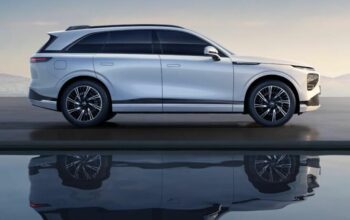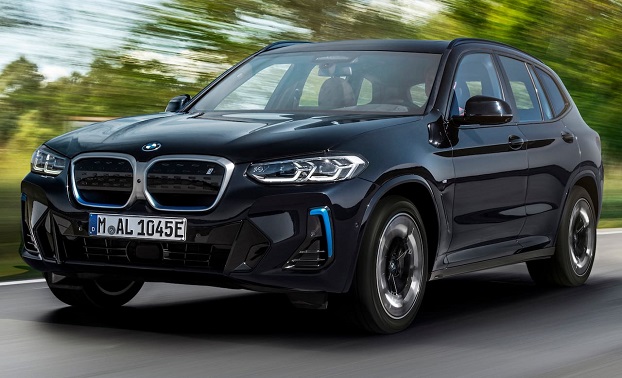
The road between luxury and value is rarely straight. It twists like a ribbon through fog, revealing its shape only when the headlights catch it just right. In one lane waits the BMW i4—an eloquent grand-tourer disguised as everyday practicality. In the other, the Tesla Model 3 stands like a minimalist sculpture, efficient and quietly insistent. Both promise electric freedom, yet they arrive with entirely different personalities. One feels engineered to delight the senses; the other feels composed to optimize life.
So the question isn’t merely “which is better.” It’s more intriguing than that: which philosophy fits your rhythm? Because when you drive an electric sedan, you don’t just move forward—you adopt a mood. The BMW i4 leans toward refinement and theatre. The Tesla Model 3 leans toward clarity and efficiency. Their battle is less about horsepower on a spec sheet, and more about how each car narrates the act of travel.
Two Temperaments: The i4’s Polished Persona vs the Model 3’s Practical Aura
The BMW i4 enters the scene with the confidence of a well-tailored coat. It has the kind of presence that doesn’t shout. Instead, it whispers: “crafted.” Even at rest, the i4 feels intentional—lines that suggest momentum, surfaces that look composed rather than merely convenient.
The Tesla Model 3, by contrast, carries a different energy—clean, direct, and almost architectural. Its design language is pared down, like a poet who chooses fewer words but sharpens each one. Some drivers feel instantly at home; others find the simplicity refreshing, like stepping into a room with the lights turned on.
In day-to-day life, those personality traits become noticeable. The i4 tends to make journeys feel ceremonial, especially on city streets and highway stretches where the cabin is meant to feel like a quiet lounge. The Model 3 tends to make decisions feel fast and frictionless—less ceremony, more flow.
Interior Experience: Comfort as Art vs Technology as Atmosphere
Open the doors, and the contrast deepens. The BMW i4’s cabin is styled with the instinct of a luxury brand—materials and ergonomics arranged to reduce fatigue. The driver’s seat feels like a command post. Controls are familiar in a reassuring way, and the overall layout reads as a study in usability without abandoning elegance.
In the Model 3, the interior operates like a digital cockpit. The centerpiece screen is not just a display; it’s the psychological anchor. Menus and information arrive with minimal effort, and the experience can feel futuristic rather than traditional. It’s a space where everything seems to orbit around software—sometimes inspiring, sometimes addictive, always different from the analog comfort many luxuryminded drivers expect.
Metaphorically, the i4 is a symphony hall—warm acoustics, carefully tuned seating, and an emphasis on atmosphere. The Model 3 is a gallery of interactive installations—each glance becomes a new interface.
Driving Feel: Engaged Luxury vs Instant Response
When acceleration begins, both cars deliver the electric shove that erases hesitation. Yet their aftertaste diverges. The BMW i4 tends to feel more “connected,” with a driving character that tries to involve you rather than just transport you. Steering and dynamics are calibrated to reward confidence. Corners feel less like chores and more like opportunities.
The Model 3 delivers torque with brisk immediacy. It’s often described as responsive in a way that feels like gravity being gently negotiated. But the sensation can be more about the immediacy of electric propulsion than about traditional steering feedback. It’s a drive that can feel effortless and quick, yet intentionally streamlined rather than emotionally flavored.
If the i4 aims to make you savor the journey, the Model 3 aims to make the journey feel frictionless. One is the gentle craft of a skilled artisan. The other is the precision of a tool.
Ride Quality and Cabin Quietness: Calm Sophistication vs Silicon Smoothness
Luxury is often defined by what you don’t notice. In the i4, the goal is serenity: smoothness over imperfections, controlled composure across bumps, and a cabin that tries to keep the outside world at polite distance. At speed, it feels composed, like a luxury suite where background noise is treated as an engineering problem.
The Model 3, meanwhile, delivers a different kind of smoothness—one that can feel remarkably refined for its class, with drivability that suggests careful suspension tuning. The experience may come across as “silicon smooth,” where the car seems to minimize friction not only mechanically but also digitally, through intuitive systems.
Both can feel calm, but the calm is different. The i4 feels human-scaled. The Model 3 feels system-scaled.
Technology and Infotainment: BMW’s Thoughtful Integration vs Tesla’s Software-First Design
BMW’s approach tends to be a balance: technology integrated with driver logic, controls that support confident navigation, and an infotainment experience designed to remain usable without forcing constant learning. It’s the difference between a well-edited book and a streaming app—both can entertain, but one respects pacing.
Tesla’s Model 3 leans fully into a software-first worldview. Updates can introduce new capabilities, refining the ownership experience over time. The interface often feels modern, and features can feel like they’re evolving in real-time, not merely being packaged at purchase.
For some drivers, that’s the heart of value. For others, the peace comes from predictability. The i4 offers steadiness. The Model 3 offers momentum.
Charging, Range, and Everyday Practicality
Electric ownership is a calendar as much as it is a technical decision. Planning matters. Charging convenience can turn anxiety into a routine, and routine can transform an electric car from “novel” into “normal.”
Both the BMW i4 and Tesla Model 3 are built for real-world use, but their ownership rituals often feel different. Tesla’s ecosystem is frequently associated with straightforward trip planning and a charging network reputation that many drivers rely on. The Model 3 can feel like a car that already understands your schedule.
The i4, on the other hand, often appeals to drivers who want electric performance with a more traditional premium feel. Charging is still part of the equation, yet the overall ownership identity leans toward comfortable luxury—so trips feel more like a cultivated experience, even when you stop to charge.
Range claims can be read like weather forecasts. Reality depends on driving style, climate, elevation, and speed. Still, both cars are contenders, and the best choice often comes down to your daily routes rather than your brochure fantasies.
Safety and Driver Assistance: Confidence Through Different Philosophies
Safety isn’t a single feature—it’s a collection of signals, decisions, and safeguards that work together. The i4 typically emphasizes a luxury sense of protection, with driver assistance systems designed to complement attentive driving. The focus often feels like steady reassurance rather than overt spectacle.
The Model 3 usually represents a more tech-forward interpretation of driver assistance, with a strong emphasis on automated awareness and ongoing improvement. Some drivers find this empowering; others prefer a more conventional relationship with control.
In practice, both can inspire confidence, but the emotional tone differs. The i4 feels like a guardian in formal attire. The Model 3 feels like a vigilant co-pilot made of algorithms.
Value Proposition: Luxury Costs vs Efficiency Rewards
Value is not just price. It’s how often you feel satisfied after the purchase—how little you regret, how frequently you use the features that matter, and how well the car matches your life.
The Model 3 tends to spotlight value through efficiency, a strong ecosystem, and a wide-reaching appeal that makes it easy to live with. For many drivers, it becomes an “always works” companion, a car that fits errands, commutes, and long drives with minimal fuss.
The BMW i4 often justifies its premium in a different currency: refinement, driving character, and the kind of luxury that doesn’t fade after the first week. It’s for drivers who want electric capability wrapped in a more expressive, heritage-driven sensibility.
Think of it like choosing between a smart investment and a cherished heirloom. One grows your convenience. The other preserves your taste.
Who Should Choose Which?
Choose the BMW i4 if you crave a luxury identity—if you want the electric drivetrain, but also want the sensation of being in something finely composed. It suits those who consider driving an emotional ritual and comfort a form of artistry.
Choose the Tesla Model 3 if you want value that feels immediate—if technology, connectivity, and streamlined ownership are your priorities. It’s ideal for drivers who enjoy software-driven experiences and want an electric vehicle that feels efficient in every sense.
Ultimately, the decision is a mirror. The i4 reflects your preference for refinement. The Model 3 reflects your preference for optimization. Both reflect the future; they just speak different dialects of it.
Conclusion: Luxury vs Value, and the Choice That Feels Personal
In the end, the BMW i4 and Tesla Model 3 are not rivals so much as two interpretations of the same promise. They both offer electric propulsion, modern convenience, and the quiet thrill of instant torque. Yet one wraps that promise in luxury poise—like velvet over steel. The other wraps it in practical elegance—like glass over circuitry.
Luxury and value don’t have to be enemies. They can simply be different lenses. The i4 asks you to slow down and savor. The Model 3 asks you to move forward and streamline. Pick the one that matches your instincts, and the road ahead will feel less like a comparison and more like a destination.