The Polestar 2 arrives with a familiar promise—electric propulsion, sleek minimalism, and the quiet assurance of modern engineering. Yet after the first glance, something subtler begins to surface. The car doesn’t merely look updated; it feels re-perceived. Its presence is calibrated for the street, for the driveway, and—more importantly—for the moment you stop pretending you’re simply “testing a vehicle” and start noticing how the whole experience is composed. One common observation often follows drivers around the same turning point: “It’s stylish, but is it really special?” The answer is yes, though the reasons aren’t always obvious at first glance. The updated design and its real-world range behavior create a kind of fascination that’s less about spectacle and more about quiet inevitability.
Polestar 2 doesn’t ask for attention with theatrical gestures. It earns it with restraint, then holds it with engineering decisions that reveal themselves in fragments—visibility, proportion, thermal management, efficiency discipline. That is where the deeper fascination begins.
Updated Design: Minimalism with Purpose
The updated design language on Polestar 2 feels like a refinement rather than a reinvention. The exterior lines are still recognizably Polestar—clean, composed, and slightly Scandinavian in their composure. But the car now reads more confidently at speed. Surfaces look more intentional, and the overall stance feels less like a concept rendered in metal and more like a finalized object engineered for everyday rhythm.
Start with the front fascia. It’s not just the lighting signature; it’s the way the elements are proportioned to reduce visual clutter. That matters, because people don’t experience cars only with their eyes—they experience them through expectation. A tidy front end lowers mental noise. It makes the car feel predictable in the best sense: you sense control before you sense speed.
Move along the body and you notice the subtle choreography of panels. The shoulders don’t shout; they guide. Even the door contours feel tuned to catch light without turning the car into a moving advertisement. The result is a modern silhouette that photographs well, but more importantly, looks coherent in motion. You begin to suspect that the updated design is designed not just to impress, but to reduce aerodynamic and perceptual friction.
Interior Atmosphere: Quiet Tech, Not Loud Technology
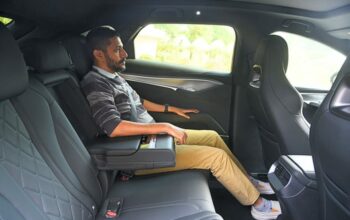
Inside, the Polestar 2’s character becomes more intimate. The cabin leans toward calm rather than congestion. Controls are laid out with a kind of functional minimalism—less “look at this feature,” more “here’s the next logical action.” Short and long commands feel equally manageable because the interface philosophy seems to prioritize clarity over novelty.
Materials and textures contribute to a low-glare environment. The goal isn’t to overwhelm with premium theater. Instead, it creates a cockpit that feels habitable during long drives. Your brain relaxes. That relaxation is not trivial. It’s a form of ergonomics, and it has consequences for how drivers experience range.
Because when fatigue is lower, your driving inputs tend to be smoother. Smoother inputs often mean better efficiency. You don’t always track this consciously, but over time you realize you’ve been driving with less aggression than you normally would. That behavioral shift is where fascination can deepen—especially for those who expected an EV to feel “different” in a way they’d either love or dismiss.
Range Reality Check: Why the Numbers Matter, and Why They Don’t Tell the Whole Story
A common observation about EVs is that range claims feel both precise and slippery. The Polestar 2 doesn’t escape that reality. Still, its updated design and efficiency engineering make range behavior feel more stable than many drivers anticipate.
On paper, range is a headline. In practice, range is a negotiation between your speed, temperature, and driving style. But the deeper detail is how the car responds to those variables. Thermal management plays an outsized role—especially in transitional seasons. When temperatures drop, energy demand rises. When temperatures rise, cabin comfort still requires attention. The car’s ability to keep efficiency within a reasonable envelope makes everyday trips feel less like calculations and more like continuity.
Then there’s aerodynamic discipline. A streamlined body doesn’t guarantee miraculous outcomes, but it reduces the penalty of momentum. At highway speeds, that penalty can become expensive. Polestar 2’s updated design supports the notion that efficiency is not only about batteries; it’s about the whole machine behaving like a single system. That’s why some drivers report “range confidence” even when conditions aren’t perfect.
Charging habits also influence how range feels. If you rely on predictable routines—overnight home charging, opportunistic top-ups—range becomes a background feature. Yet even in less predictable scenarios, the car’s efficiency tendencies can soften the anxiety curve that many EV owners know too well.
Driving Dynamics: The Chassis Doesn’t Impress—It Coheres
Polestar 2 driving dynamics can be summarized in one phrase: coherent. Steering feedback feels deliberate, and the car tracks with an assured steadiness that discourages sudden corrections. It doesn’t feel like a sports car pretending to be a commuter. Instead, it behaves like a commuter that has learned sportiness as a side effect.
Acceleration is satisfying without turning every junction into a performance event. That balance matters for everyday range. When power delivery feels smooth, drivers often use throttle more gradually. Smooth inputs mean less energy wasted in traction slip and less unnecessary aerodynamic disturbance.
In corners, the car maintains composure. Not every driver prioritizes handling, but the ones who do often sense something rare: the chassis isn’t fighting the driver. It’s inviting predictable control. That invitation encourages calmer behavior—again, the kind that improves efficiency and reduces mental fatigue.
Efficiency and Energy Management: Where the Fascination Actually Lives
The deeper reason for fascination isn’t a single component. It’s the integration. Polestar 2 feels like it was engineered to keep energy “from escaping.” That doesn’t mean the car never sacrifices range. It means the sacrifice is managed.
When you drive gently, the car seems to reward you with a sense of earned momentum. When you drive briskly, it doesn’t punish you with a dramatic cliff; it degrades efficiency more gradually. That difference changes driver psychology. It turns a range estimate from a warning label into a tool.
Energy management also affects cabin comfort. Climate control, heating, and airflow distribution can influence how much energy is diverted from propulsion. Polestar’s approach tends to feel less wasteful, partly because the overall experience encourages users to select comfort levels that match reality. You don’t feel trapped between “freezing” and “burning electrons.”
Technology and Connectivity: Useful by Design
EV tech can become a maze. Some cars overwhelm you with settings that feel more like app features than driving essentials. Polestar 2, by contrast, aims for a more navigable experience. Interface responsiveness and usability matter during real-life operations—entering destinations, checking charging availability, adjusting climate, and interpreting range projections.
And while the interface is modern, it rarely feels performative. It supports driving rather than competing with it. That reduces distraction, which can be indirectly beneficial to efficiency and safety. Calm driving is often efficient driving.
Practicality and Daily Life: The Car You Can Live With
Design isn’t only about aesthetics. It’s also about sightlines, door ergonomics, and the way luggage space fits the patterns of ordinary life. Polestar 2’s usability helps explain why some drivers become quietly loyal after a short ownership stretch. It doesn’t demand adaptation; it fits.
Visibility is particularly important with EVs because people often approach charging and parking with heightened attention. If the car makes routine maneuvers less stressful, you approach the day with better focus. Better focus often means smoother driving. Smoother driving means the range story stays optimistic.
In that way, the “updated design & range” theme becomes more than a product pitch. It becomes a lifestyle pattern: a vehicle that reduces friction while increasing confidence.
Who the Polestar 2 Suits Best
Polestar 2 is compelling for drivers who want a refined electric car without the performative attitude. It suits those who prefer understated styling and coherent usability. If you’re the kind of driver who notices how a dashboard layout reduces stress, you’ll likely feel at home.
It also fits people who care about range but don’t want to obsess over it. The vehicle’s efficiency behaviors and stable real-world tendencies help convert “range management” into “range trust.” That’s an underrated kind of luxury.
Final Thoughts: Updated Design That Grows a Following
Polestar 2’s updated design and range performance create a fascination that compounds over time. At first, it looks polished and modern. Then you start feeling how the car’s restraint translates into practical comfort. Next comes the range story—less a set of numbers, more a pattern of managed energy.
The deeper reason it captures attention is simple: it behaves like a well-composed system. It doesn’t chase your approval. It earns your attention through coherence—design that feels purposeful, efficiency that feels steady, and a driving experience that quietly encourages better habits. In the end, the Polestar 2 isn’t just updated. It’s refined into something you want to keep noticing.