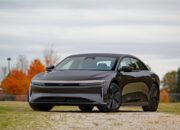
The short version is tempting: Lucid Air is still a range heavyweight, still a technological daredevil. The longer version is more interesting. It’s not just about numbers on a spec sheet. It’s about the way the car frames distance, the confidence it borrows from physics, and the subtle reframing of what “driving far” actually means. In an era when every manufacturer promises to be the next breakthrough, Lucid has kept a different rhythm—measured, deliberate, and quietly persuasive.
Yet the question persists: Is Lucid Air truly still the range king—or is the crown slipping? The answer isn’t a single verdict. It’s a mosaic of aerodynamics, battery architecture, efficiency philosophy, and real-world behavior. Think of it like comparing musical performances. Two cars may hit similar notes on paper, but one carries the melody farther with less strain.
First Impressions: A Different Relationship with Speed
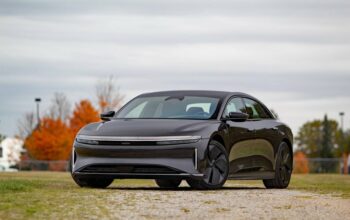
At a glance, the Lucid Air reads like a luxury sedan designed by someone who studied the concept of airflow like it was a sacred text. The stance is composed. The surface feels engineered rather than merely styled. And then there’s the driving experience—less “surge,” more “glide.”
That gliding sensation matters for range. Efficiency isn’t only about hardware; it’s about how seamlessly the car translates your intent into motion. The Lucid Air tends to encourage a calmer throttle discipline without forcing it. Short inputs become smooth outcomes. Long inputs feel less wasteful. In other words, it turns driving into a conversation with efficiency instead of a negotiation against it.
It’s a subtle shift in perspective. You stop thinking “How much range did I burn?” and start thinking “How much distance can I elegantly draw out of each kWh?” That mental change alone can alter driving behavior—and range outcomes.
Range as a Design Outcome, Not a Marketing Spell
Many EVs chase the illusion of efficiency: a number, a chart, a claim. Lucid’s approach feels closer to a craft philosophy. The Air’s efficiency strategy appears to begin with aerodynamics, then continues through powertrain tuning, then matures in the way energy is managed across temperatures and speeds.
When a vehicle is optimized for minimizing aerodynamic drag, it doesn’t just improve highway cruising. It changes how the car behaves at every velocity band. Wind resistance grows more punishing with speed, and the Air seems to anticipate that penalty rather than pay it later.
Here’s the curiosity trigger: even when you’re not trying to “hyper-mile,” Lucid’s engineering tends to keep the efficiency curve flatter than many rivals. That means you can drive in a normal, slightly spirited manner and still experience a range that feels stubbornly high.
Battery Technology: The Quiet Engine of Longevity
A range king doesn’t only need peak output—it needs resilience across time, charge cycles, and conditions. The Lucid Air’s battery system is designed to balance energy density with thermal management and operational stability. Thermal consistency is not glamorous. It’s invisible. But it’s foundational.
When battery temperature is managed intelligently, performance remains predictable. Regen braking remains effective. Charging behaves less like a roulette wheel. The car’s control systems don’t merely protect the battery—they stabilize the driver’s expectations.
That stability changes how people experience “real range.” Because the road is not a laboratory. It’s a variable landscape: traffic surges, stop-and-go, hills, weather. A well-managed battery reduces the drama.
Real-World Driving: The Test That Never Ends
On paper, range is a snapshot. On roads, range is a narrative. The Lucid Air tends to feel persuasive in everyday scenarios—commutes with inconsistent speed, lanes that accelerate unpredictably, and occasional spirited merging. The car’s efficiency doesn’t evaporate at the first hint of inconvenience.
But rivals are improving. Some competitors have narrowed the gap through better thermal optimization, smarter tire choices, and more aggressive efficiency tuning. That raises the real question: What does “range king” mean today?
If it means absolute top-end highway range, Lucid has strong claims. If it means consistent range under varied conditions, then the competition is tighter—and the deciding factor becomes how efficiently the car adapts to your habits and the environment.
So the shift in perspective is this: don’t chase a single number. Chase the shape of the efficiency curve—how gradually the car converts electricity into distance when reality refuses to cooperate.
Charging Experience: From Anxiety to Cadence
Range doesn’t exist alone. It’s paired with charging behavior like partners in a long story. The Lucid Air’s charging strategy aims for predictability. A good charging curve is not just speed—it’s timing reliability. Drivers want to know that minutes spent at the charger will translate into meaningful mobility.
Charging speed varies with battery temperature, state of charge, charger capability, and even drivetrain demands. A vehicle that can preserve effective charging performance under typical conditions helps reduce the cognitive load of planning.
When charging feels like cadence rather than interruption, the car’s range advantage becomes more usable. You arrive less depleted. You plan fewer “might-be-tight” segments. The trip becomes less about restraint and more about momentum.
Efficiency Meets Luxury: The Cost of Comfort
Luxury features can be efficiency saboteurs—mass, HVAC draw, screens, audio systems, and comfort modes. Yet the Lucid Air manages to keep the consumption story surprisingly coherent. It offers comfort without turning energy use into a runaway train.
The cabin experience remains composed. Climate control feels integrated rather than frantic. Seat heating and cooling can be effective without excessive waste. The car’s software seems to anticipate how comfort demands fluctuate across a journey.
This is where the “range king” narrative becomes emotionally relevant. When the car’s energy use feels controlled, you stop second-guessing every comfort impulse. That’s not trivial. It’s the difference between owning a range-focused EV and living with one.
Technology and Drive Feel: Making Efficiency Fun
The Lucid Air has a reputation for being more than a spreadsheet. Its interfaces and driving modes encourage mindful operation—without turning the drive into homework. Regenerative braking is tuned to feel natural, and the car’s responsiveness can invite you to stay in smoother driving rhythms.
One of the more interesting subtleties is how the Air rewards forward planning. When you lift early, when you anticipate traffic flow, when you let the car’s momentum do some of the work, range doesn’t just improve—it feels earned.
That is a form of gamification, though not in the childish sense. It’s closer to craftsmanship. The car nudges you toward a driving style that is both elegant and efficient.
So, Is Lucid Air Still on Top?
The crown is not slipping quickly, but the landscape has become more crowded. Competitors are catching up through incremental improvements: better aero packages, refined power electronics, and efficiency-first drivetrains. In some conditions, you may find other EVs challenging Lucid’s lead with impressive stamina.
However, the Lucid Air still retains a distinct advantage: the sense that its efficiency is systemic, not borrowed from a single trick. It’s designed as an integrated package—power, battery, aerodynamics, thermal management, and driving calibration forming a consistent logic.
In short, the Lucid Air doesn’t merely aim to be the best at range. It aims to make range feel inevitable. That psychological inevitability matters to real ownership.
Who Should Choose It?
If you’re the kind of driver who takes longer routes, plans fewer stops, and values calm confidence over frantic charging schedules, the Lucid Air is a compelling choice. It suits those who want luxury that doesn’t come with an efficiency tax. It’s also ideal for drivers who enjoy the act of optimizing—subtly—without micromanaging.
If your priority is only the absolute maximum highway number under ideal conditions, you might compare spec sheets carefully. But if you care about how range behaves as the day unfolds—traffic, weather changes, detours—Lucid’s approach is particularly persuasive.
Final Word: The Range King That Reframes Distance
The question “Lucid Air Review – Range King Still on Top?” doesn’t have a simple yes or no. The real answer is more intriguing: Lucid is still a range leader, and the deeper reason is how the vehicle reshapes your relationship with distance. It turns range into a feeling—steady, composed, and often surprisingly resilient.
Other EVs may chase the throne with sharper numbers. But Lucid seems committed to something harder: making efficiency coherent, usable, and quietly impressive. In the long arc of EV evolution, that kind of consistency doesn’t just win tests. It wins trust.