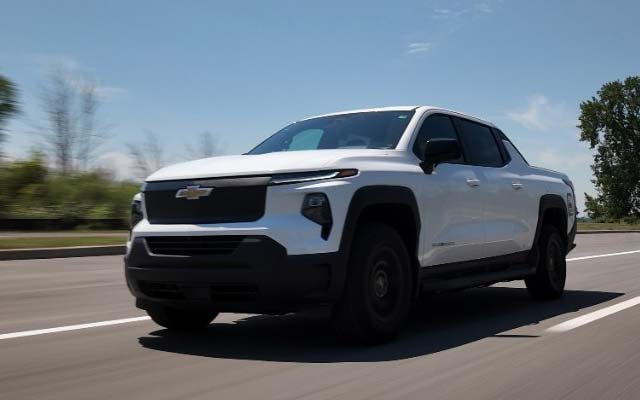
The number “7000” has a way of sharpening attention. It turns weekend fantasies into spreadsheet realities, and it replaces vague confidence with hard-earned expectations. In the case of the 2026 Chevrolet Silverado EV, towing isn’t merely an optional behavior—it’s the stress test that reveals whether an electric pickup can keep its composure when the load gets serious.
This towing range test is designed to shift perspective. It invites you to stop thinking of range as a static bragging point and start treating it as a living variable—one that breathes with terrain, wind, throttle habits, charging strategy, and the mass behind you. And when a truck is asked to move 7000 lbs with intent, the story becomes less about numbers on paper and more about how smoothly the entire system adapts.
Why 7000 lbs Changes the Conversation
Light towing is easy to romanticize. Heavy towing demands a different kind of honesty. At 7000 lbs, the Silverado EV must push harder through rolling resistance, climb grades with less forgiveness, and battle aerodynamic drag that doesn’t care how advanced the drivetrain is.
Electric powertrains are often associated with instant torque, and yes—there is strength in that immediacy. But torque alone isn’t the whole equation. The truck also has to manage energy consumption with surgical precision. That means the battery’s output, the cooling system’s efficiency, and the vehicle’s predictive control all become active participants in your real-world outcome.
Think of the test as a lens. It compresses many “maybe” factors into a single, measurable question: how far can the Silverado EV travel while doing the thing you actually bought a pickup for?
Setting Up the Test: From Ideal to Intentional
A towing range test doesn’t begin when the truck moves. It begins before the hitch is even connected. The groundwork determines credibility. Tire pressures matter. Vehicle load distribution matters. Whether you start fully charged matters. Even the time of day—sunlight warming or cooling the cabin, altering thermal load—can nudge results.
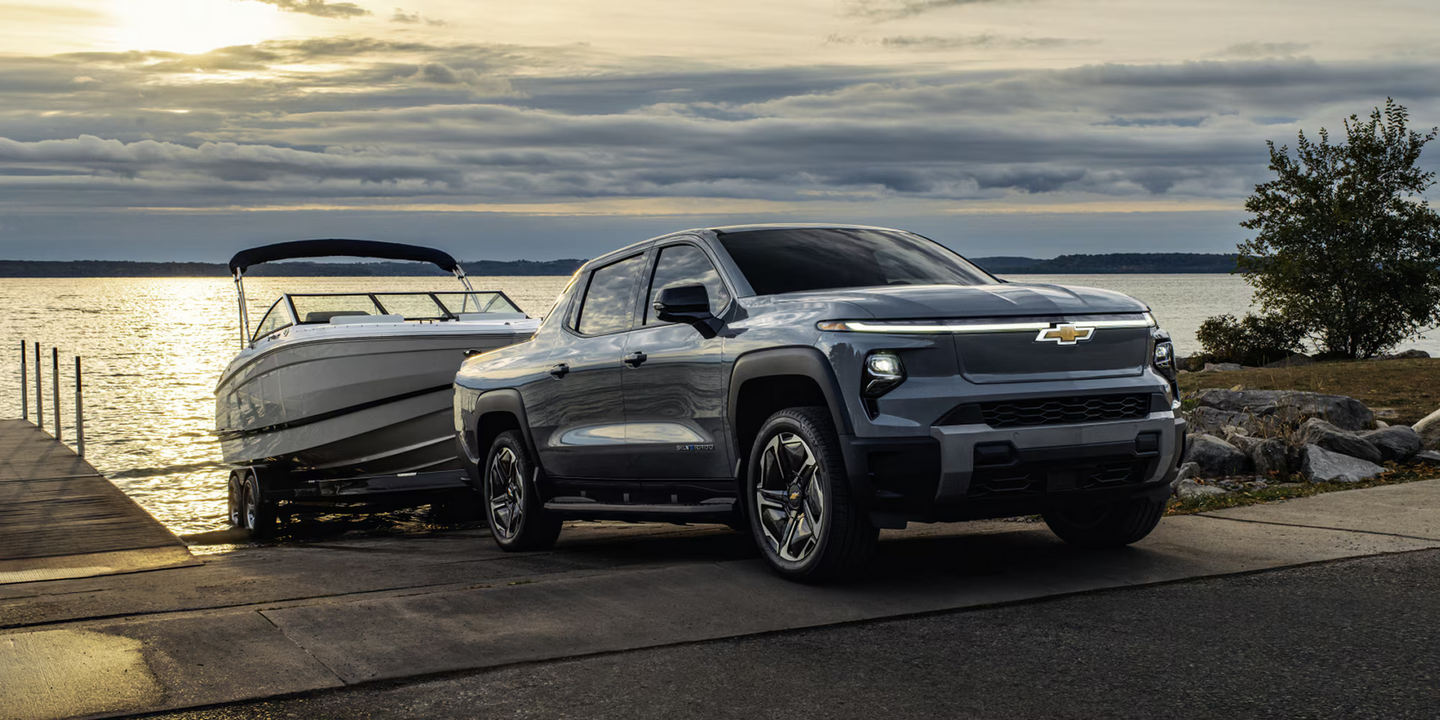
In this scenario, the goal is straightforward: tow a combined trailer load equivalent to 7000 lbs. The route is selected to represent real conditions rather than a staged parade ground. It includes a mix of steady cruise and variable speed demand, because towing range rarely burns in a single straight line.
The result is a test that feels like an invitation to imagine your own commute with a trailer in tow. The kind of imagination that doesn’t end with wishful thinking.
Initial Feel: The Moment Torque Meets Mass
At the start, the Silverado EV tends to demonstrate its personality. Torque arrives without hesitation. The pickup responds like a tool that’s confident in its leverage. Acceleration feels composed, even when the trailer adds a noticeable “pulling” sensation that changes the vehicle’s balance.
But the emotional first impression has a shadow: efficiency. Early traction and quick changes in speed can siphon energy faster than expected. Even with a disciplined driver, a 7000-lb trailer makes every intervention more expensive.
Here’s where perspective flips. You realize that towing range is partly a driver’s rhythm. Smooth inputs aren’t about gentleness for its own sake; they’re about respecting the arithmetic of energy.
Aerodynamics: The Invisible Weight
Trucks already face a wind-related tax, and trailers amplify the bill. Aerodynamic drag scales with speed in a way that feels almost unfair—like gravity, only louder. A 7000-lb load can be moved efficiently at moderate speeds, but once you ask the truck to travel faster, the trailer begins to act like a sail.
That sail effect is often the real protagonist of towing range stories. Even if the drivetrain is capable, the air is relentless. The Silverado EV’s efficiency under towing becomes a dance between momentum and the cost of pushing through the slipstream.
In practical terms, the test shows that “range” isn’t only about how hard the motor works. It’s about how hard the vehicle fights the atmosphere to keep your timeline intact.
Regenerative Braking Under Load: Comfort With Consequence
Regenerative braking can be a towing advantage, and it’s also a subtle variable. When you tow, the trailer’s momentum turns every deceleration into an opportunity—and sometimes into a limitation. Regeneration depends on traction, system state, and how aggressively the truck can capture energy without compromising stability.
The 7000-lb load influences the smoothness of slowdowns. You notice it when approaching traffic, when descending, or when you need repeated stop-and-go pacing. The truck’s ability to coordinate braking feel and energy recovery becomes part of the range equation, not just a comfort feature.
Done well, regeneration helps stretch the remaining distance. Done poorly—or when conditions prevent capture—it becomes less of a safety net and more of a missed chance. The test clarifies that regenerative performance is less about maximum potential and more about consistency across real driving.
Thermal Management: The Quiet Governor
In electric towing, temperature is not background noise. It’s a steering wheel. Sustained power output during towing requires cooling and thermal regulation to protect battery health and maintain performance.
When thermal management works efficiently, the system can deliver torque without unnecessary energy loss. When it doesn’t, energy may be diverted into maintaining optimal operating conditions, affecting range even if the drivetrain still feels powerful.
This is where the Silverado EV’s design reveals its priorities. The test highlights how long pulls—whether from grades or prolonged speed—shape energy consumption. It’s not only “how fast” or “how heavy.” It’s also “how long” the truck must stay in high-demand behavior.
Real-World Range vs. Expectations: The Shift in Perspective
Most people interpret range as a promise. Towing range reframes it as a forecast with caveats. The shift isn’t disappointing; it’s liberating. It means the driver gains control through strategy.
Instead of asking, “How far will it go?” the smarter question becomes, “How should it be driven to go that far?” That includes speed discipline, anticipatory driving, and a readiness to adjust charging plans if the route introduces unexpected headwinds.
In the context of 7000 lbs, the Silverado EV’s real-world performance becomes a guide for behavior. It encourages measured confidence rather than blind certainty. And that’s the kind of confidence towing demands.
Charging Strategy: Range Is a Plan, Not a Number
Towing transforms charging from a convenience into choreography. You’re not just deciding when to top up; you’re deciding how long you’ll wait, what energy you’ll need next, and whether thermal conditions will influence charging acceptance.
The test supports a key mindset: plan around the load. If the first leg consumes energy faster than expected, the solution isn’t panic. The solution is a charging cadence aligned with your actual consumption curve, not the theoretical one.
When the truck is towing, charging becomes the hinge between “almost there” and “arrived with margin.” The Silverado EV’s towing range performance under a heavy load provides the data needed to make that hinge swing confidently.
What the Result Really Means for Owners
After completing the 7000-lb test, the most valuable takeaway isn’t merely a final distance. It’s the understanding of why the distance turned out the way it did. You learn how speed choices, aerodynamic drag, regenerative behavior, and thermal demands combine into a single outcome.
Owners considering the Silverado EV for towing will benefit from that clarity. It helps them match their expectations to their habits, and it encourages planning that feels practical rather than paranoid.
There’s also a subtle psychological change. The truck stops being a futuristic compromise and starts being a serious instrument—capable, predictable, and easier to trust once you’ve seen it work under pressure.

Outro: Confidence, Earned by the Hitch
Towing 7000 lbs isn’t a casual outing. It’s a negotiation with physics—one where every gust, grade, and throttle decision matters. The 2026 Chevrolet Silverado EV doesn’t just carry a load; it carries the responsibility of showing its work.
This towing range test offers a promise of a different kind: not the illusion of unlimited distance, but the clarity to manage distance with intention. When you tow with awareness, you stop hoping the numbers will behave—and you start expecting the truck to perform.
And once that perspective clicks, the road ahead feels less like a gamble and more like a plan with momentum.