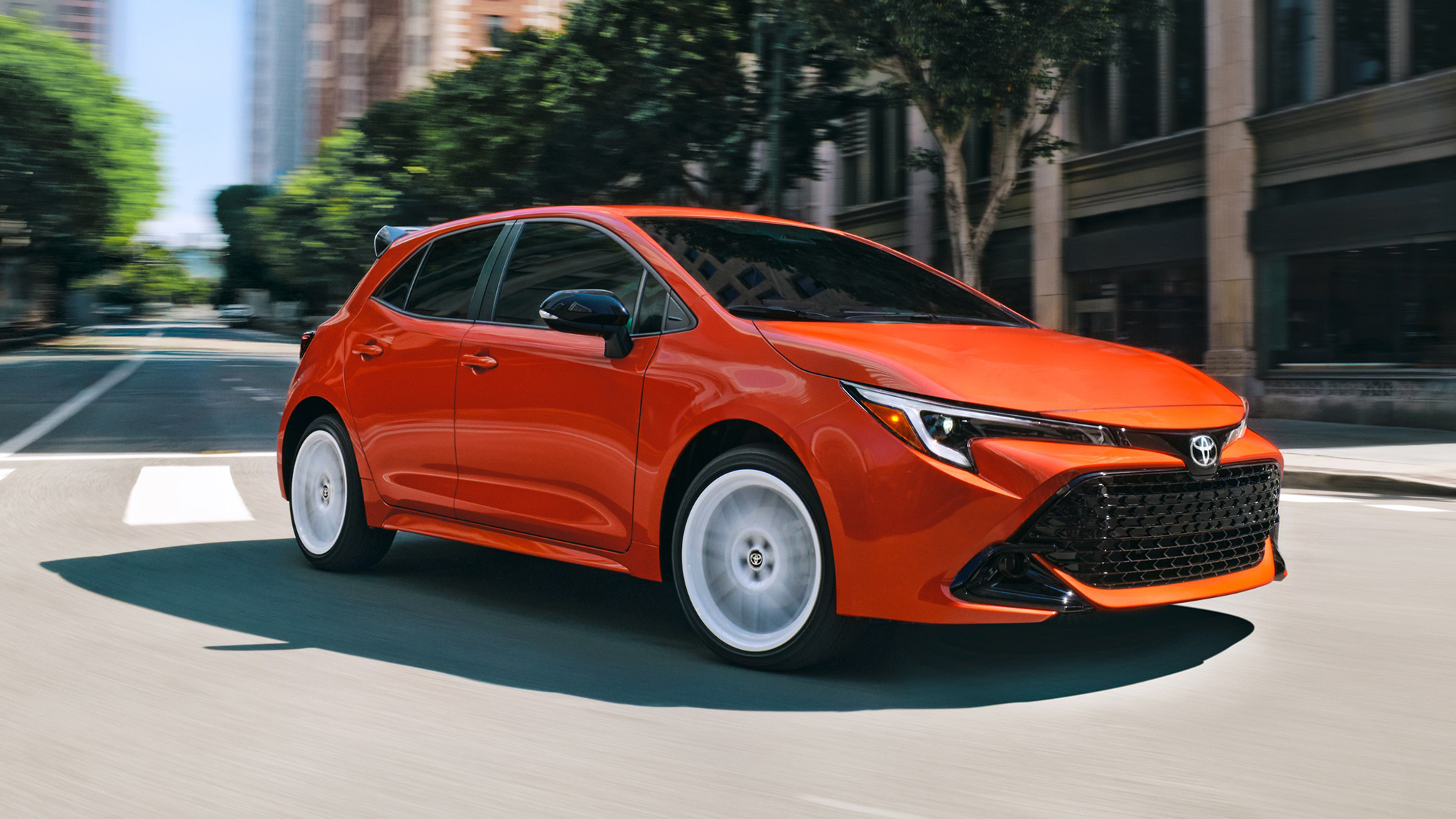
The Toyota Corolla Hatch has a knack for slipping under the radar while still doing the one thing most drivers quietly crave: stretching every mile out of a tank of fuel. Yet there’s an old tension that refuses to die—EPA ratings versus real-world MPG. On paper, numbers look crisp and obedient. In daily life, traffic lights, detours, thermostat swings, and even tire choice write their own story.
So what happens when you take a Corolla Hatch from the controlled atmosphere of the EPA test cycle and drop it into the messy theater of commuting? The answer isn’t a single villain or hero. It’s a spectrum of experiences, shaped by driving patterns, weather, load, and how the hatchback is actually used—beyond the dashboard’s optimistic glow.
Below is an extensive guide to what readers can expect when exploring real-world MPG vs EPA for the Toyota Corolla Hatch—complete with the kinds of details that help you forecast your own fuel economy rather than merely guess.

1) The EPA MPG number: why it feels like a benchmark but behaves like a baseline
The EPA fuel economy figure is built from standardized test procedures designed to allow fair comparisons across vehicles. That’s the good news: the numbers are consistent. The catch: consistency does not guarantee realism. The EPA cycle includes a specific mix of driving behaviors—acceleration, cruising, idling, and deceleration—meant to approximate typical use. In practice, real roads can be harsher (stop-and-go is often longer than expected), more variable (speed changes are more abrupt), and more chaotic (construction zones and detours can turn “average commuting” into prolonged idling).
Think of the EPA result like a metronome. It’s steady. Your commute, meanwhile, might be jazz—improvised, syncopated, and occasionally off-tempo.
Because of that, it’s common for drivers to see a difference between the EPA estimate and the MPG they log. The goal isn’t to treat EPA as wrong. It’s to treat it as a calibrated starting point—the floor on which real-world habits build.
2) Real-world MPG: what actually moves the needle
Real-world MPG is less about the brochure and more about the driver’s rhythm and the environment’s mood. Several factors can nudge consumption upward or downward:
Driving style: Smooth, anticipatory driving often brings better MPG than late braking and aggressive throttle inputs. The Corolla Hatch’s drivetrain can tolerate spirited behavior, but fuel economy pays the bill.
Speed profile: Higher sustained speeds increase aerodynamic drag. Hatchbacks—while efficient—still have to fight air resistance at highway pace. Even a small change in average speed can matter over time.
Stoplight density: Frequent idling and short trips are fuel economy assassins. An engine that never fully warms up tends to consume more.
Weather and temperature: Cold starts are expensive. Winter tires can add rolling resistance. Hot weather affects HVAC load and can influence how long the system runs.
Cargo and passengers: Weight is not just weight; it changes acceleration demands and can affect efficiency during repeated climbs.
Accessory usage: Strong headwinds plus max defrost or heavy fan settings create a noticeable drain. Even roof racks, depending on design and fit, can add drag.
To readers seeking practical clarity, the key takeaway is this: EPA MPG is a single number; real-world MPG is a moving target.

3) Powertrain nuance: hatch dynamics, efficiency, and engine temperament
Corolla Hatch variants can come with different drivetrains. Even when two trims share the same badge, their efficiency personality can differ—especially if one setup emphasizes hybrid assist and another leans more heavily on conventional combustion. The key is that fuel economy isn’t purely an engineering badge; it’s a choreography between engine load, gear selection, and energy management.
In stop-and-go conditions, certain systems can recapture energy or reduce engine work at low speeds. Elsewhere—like long highway runs—the efficiency advantage may shift depending on how the vehicle maintains momentum and manages engine operating points.
In other words, real-world MPG isn’t just “EPA minus X.” It’s “efficiency under conditions,” where those conditions include the cadence of your route.
4) Short trips vs long drives: the mileage myth that surprises people
Many drivers expect a fuel economy “average” to stabilize quickly. Yet short trips introduce thermal and operational overheads that don’t average out as cleanly. On a cold morning, the engine needs time to reach its efficient operating range. The drivetrain may spend early minutes compensating rather than optimizing.
Then there’s the matter of idling. A few minutes at red lights might seem minor, but in the math of MPG, time is fuel. If your commute includes multiple errands—each with brief segments—the Corolla Hatch might burn more per mile than an EPA-like cycle would imply.
Long drives, by contrast, allow steady-state efficiency. Once you’re cruising and the vehicle’s systems are in their comfort zone, fuel economy can look closer to the label—especially on routes that avoid prolonged acceleration and deceleration.
5) City vs highway: where the gap often widens (or narrows)
One of the most revealing ways to compare real-world MPG and EPA is to split your driving into city and highway buckets.
City driving: Expect the gap to be more variable. If your city route is slow and stop-heavy, you may fall below the EPA figure. But if your route includes smoother traffic flow and you avoid frequent hard accelerations, the difference may shrink.
Highway driving: Wind, grade, and speed matter. A mild highway commute can let the Corolla Hatch behave more like the test cycle. A route with frequent climbs, heavy headwinds, or consistently high speed will often erode MPG.
Readers who want confidence should track their own results by segment, not just by the final monthly average. Monthly averages hide the real causes of the gap.
6) Tires, pressure, and rolling resistance: the underrated MPG dial
There’s a quiet lever affecting efficiency: rolling resistance. Tire compound, tread pattern, and even inflation pressure can influence how much energy is lost before the wheels move the car forward. Underinflated tires can increase drag and reduce MPG. Aggressive tread or mismatched tire types can also reduce efficiency.
If you’re trying to reconcile real-world MPG with EPA numbers, check tire pressure regularly and ensure it matches the manufacturer’s specification. It’s mundane advice, but it’s also one of the simplest levers to improve consumption without changing your driving.
Consider this the Corolla Hatch’s whisper network: small adjustments can add up.
7) A practical method to estimate your own “real” number
Instead of chasing internet comparisons, build a personal baseline. Start with a simple plan:
Step 1: Choose a repeatable route. Use the same commute days if possible.
Step 2: Track fuel used and miles driven. Relying only on the dash display can skew perceptions. Manual math is stubbornly honest.
Step 3: Record conditions. Note temperature, windier days, heavy cargo, and any long highway segments.
Step 4: Compare averages to EPA, then look at the pattern. If you’re consistently below EPA in the same conditions, you’ve found a reliable delta. If the difference changes dramatically, your environment is the culprit—or your driving cadence is shifting.
Fuel economy becomes less mysterious when it’s treated like a data story rather than a headline.
8) What to expect from your Corolla Hatch: common scenarios and outcomes
While no two drives are identical, certain trends recur:
Drivers with smoother acceleration and fewer short trips often report results that approach EPA figures more closely—especially in mild temperatures.
Drivers with frequent cold starts, errands, and stop-heavy commutes typically see a wider gap. The vehicle may still be efficient, but the overhead costs accumulate.
High-speed highway routines can compress MPG by increasing aerodynamic losses. Even a vehicle that shines in city driving can struggle at higher speeds for long stretches.
These outcomes aren’t failures. They’re the natural physics of moving a mass through variable air, variable roads, and variable time.
9) How to interpret the “gap” without overreacting
Some drivers obsess over the exact difference between real-world MPG and EPA ratings. That focus can lead to frustration, especially when weather and traffic are beyond control. A more productive lens is to interpret the gap as a range and ask: Is my consumption predictable? Am I improving it?
If your MPG consistently drops during a particular season, that’s not randomness—it’s causality. If fuel economy improves after you adjust tire pressure or modify driving patterns, then you’ve learned something tangible.
The Corolla Hatch is often efficient enough that small refinements become meaningful. The gap doesn’t just measure discrepancy; it can reveal where your biggest efficiency opportunity sits.
10) Choosing expectations: how different reader types can benefit
Different readers come to this topic with different priorities:
Commuters: You need consistency. Track route patterns, not just totals.
Road trippers: You need speed and terrain awareness. Grade and headwinds can swing results more than people expect.
Budget-minded drivers: You need predictable habits. Short trips and aggressive throttle are the usual culprits.
Gear enthusiasts: You may enjoy exploring how the powertrain behaves under different loads, and how efficiency strategies evolve with driving conditions.
Whether you’re chasing savings, peace of mind, or simply better ownership decisions, real-world MPG vs EPA is less about judgment and more about calibration.
Outro: efficiency is a conversation, not a verdict
EPA MPG ratings give the Corolla Hatch a clean introduction. Real-world driving delivers the sequel—sometimes sharper, sometimes kinder, always more personal. The most useful approach is to treat EPA as guidance, then measure your own results with a calm, methodical mindset.
When you do, the Corolla Hatch stops being a mystery machine and becomes what it was meant to be: a practical hatchback that can earn your trust through efficiency you can actually feel—mile after mile, stoplight after stoplight, season after season.