The first time a snowfall catches a driver off-guard, it feels almost personal—like the road has quietly changed its rules. One moment everything is familiar: the familiar lane markings, the predictable glide of tires. The next, the world becomes a matte white blur, traction reduced to a negotiation between rubber and physics. In many snow states, the most reassuring sentence you can hear is simple: the SUV has AWD. Not as a gimmick. Not as a checkbox. As an everyday talisman for winter survival.
There’s also a deeper reason people become fascinated by snow-ready vehicles. It isn’t only about getting from point A to point B. It’s the allure of competence—knowing your machine can meet the season’s temperament. AWD doesn’t just distribute torque; it offers a kind of mechanical empathy, adapting as conditions evolve: dry snow to slush, slush to ice, ice to fresh powder. For 2026, several SUVs lean into that idea with sharper drivetrains, more intelligent traction control, and a more confident winter stance.
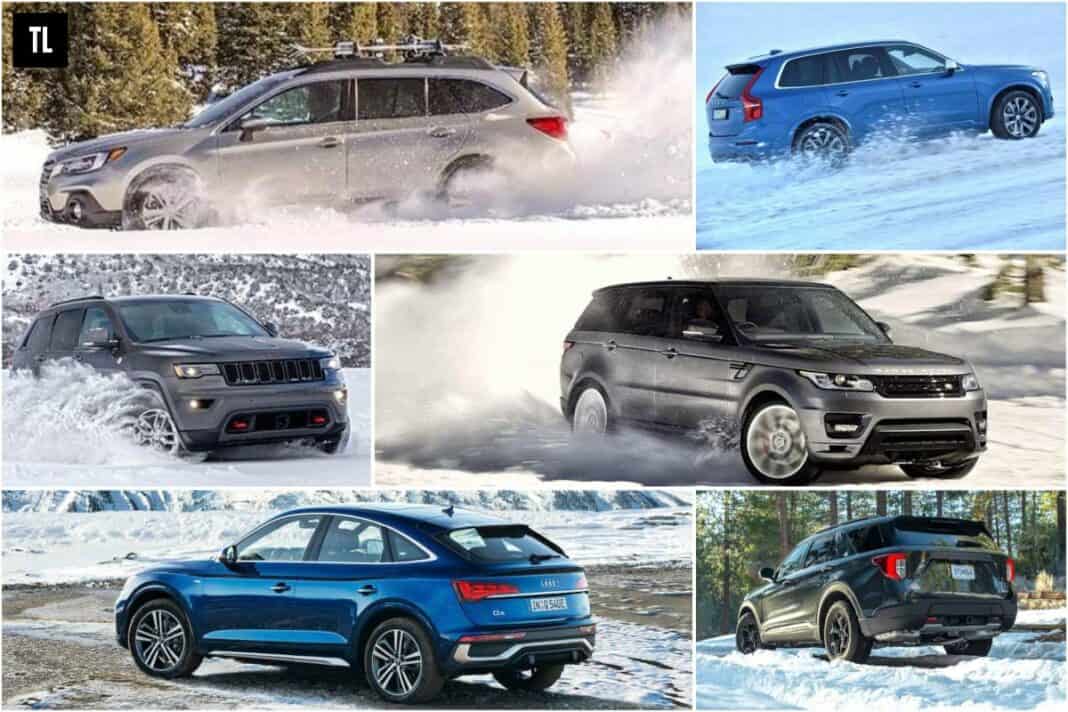
Below is a detailed look at some of the best 2026 SUVs with AWD that tend to shine when winter turns demanding. The common goal is consistent: help you stay in control when the storm insists on being dramatic.
Why “AWD” Matters More Than Most Drivers Realize
A common observation is that many drivers treat AWD like a blanket solution: engage it, and the car becomes unstoppable. Reality is subtler, and that’s where winter performance becomes fascinating. AWD assists, but traction still depends on tire compound, tire temperature, ground contact patch, and how effectively the vehicle can manage wheel slip.
In snowy conditions, the most important aspect is how quickly the system reacts. Modern AWD systems use sensors—speed, steering angle, yaw rate, throttle position—to detect when the vehicle is veering toward instability. Torque can be redistributed to regain grip before the driver even feels the “loss” becoming a “slide.” Short response time matters. So does the presence of traction modes calibrated for snow and ice.
Another deeper factor is predictability. A well-tuned AWD system doesn’t feel like it’s constantly meddling. It feels like it’s quietly stabilizing. That characteristic becomes particularly valuable when you’re cruising through slush or accelerating out of a snowbanked turn.
Tire Choice: The Quiet Co-Driver
Even the best AWD can be defeated by tires that aren’t suited for winter. All-season tires may handle light snow, but they often underperform when temperatures drop and traction compounds stiffen. Winter tires, designed for cold pavement and packed snow, create more confident grip—especially during braking and during the first second of acceleration.
Think of tire tread as a tiny engineering orchestra. Each block and siping pattern is meant to channel snow away and maintain a stronger friction interface. In deeper storms, the ability to self-clean—keeping contact patches from clogging with slush—becomes a deciding advantage.
When selecting a 2026 AWD SUV, it’s wise to check whether the vehicle supports appropriate tire sizing, includes tire-pressure monitoring, and offers features that complement winter tire behavior. The goal is synergy, not compensation.
Ground Clearance and Winter Geometry
Snow states aren’t only about snow depth; they’re also about the road’s geometry changing after storms. Slushy ruts form quickly. Ice ridges appear where plows press material. A higher stance can prevent scraping and reduce the chance of underbody contact that unsettles the suspension.
AWD systems distribute torque, but suspension design governs how that torque translates into grip. A 2026 SUV with good ground clearance and winter-friendly suspension tuning can keep wheels planted over uneven surfaces. That matters when crossing half-melted patches or descending a road where one side is exposed and the other is buried.
In winter, the best vehicles don’t just move forward—they maintain composure when the road surface becomes discontinuous.
Driving Modes Built for Real Storms
Many manufacturers now offer multi-mode drive systems that tailor throttle mapping, transmission behavior, steering assist, and traction control aggressiveness. The important question isn’t whether the SUV has modes—it’s whether the modes feel calibrated to winter rather than simply “generic.”
Look for snow or ice modes that reduce torque spikes and manage wheel slip more gently. Some systems also adjust shift points so the drivetrain doesn’t hunt for grip. A smooth, deliberate power delivery can help prevent the “surge” that causes wheels to spin.
When conditions worsen, smoother power is a form of respect for the road. It reduces the likelihood that traction will be lost during the transitional moments—like when you move from packed snow to a thin sheet of ice.
2026 AWD SUV Highlights for Snow States
Snow-state drivers usually value several overlapping traits: confidence at low speed, stability at highway pace, predictable braking behavior, and a cabin that remains calm during winter stress. Below are qualities that stand out in 2026 AWD contenders, along with what makes them appealing for winter use.
1) 2026 Toyota RAV4 AWD: The Practical Snow Companion
The 2026 RAV4 carries a reputation for sensible capability, and that matters in winter. People often gravitate toward vehicles that feel composed rather than theatrical. In snow states, that “steady” character becomes a form of trust.
AWD effectiveness is amplified when paired with smart traction control and a drivetrain that avoids abrupt surges. The RAV4’s everyday usability also encourages better habits: drivers are more likely to keep tire pressures correct, use proper winter tire sizes, and feel comfortable navigating short errands in harsh weather.

2) Snow-Forward Crossovers with Intelligent AWD Behavior
Beyond brand names, many 2026 AWD SUVs share a trend: they increasingly treat traction control like a living system. Instead of waiting for wheel slip to become visible, they anticipate it through sensor fusion. That’s why some SUVs feel “locked-in” during slippery turns while others feel delayed.
When you’re steering in snow, the tires follow the path defined by friction. If friction changes suddenly, the vehicle must countersteer or modulate torque to keep the chassis aligned. Vehicles with more advanced stability control logic often feel reassuring when you’re forced to adjust mid-corner.
3) Larger AWD SUVs: When Winter Requires Space
Winter travel can involve more than commuting. It includes gear: shovels, winter clothing, sports equipment, tools, and sometimes towing. Larger 2026 AWD SUVs tend to offer more cargo capacity and more robust cabin insulation. Comfort sounds like a “nice to have,” yet it reduces fatigue—fatigue reduces reaction quality, and reaction quality is critical on ice.
Additionally, larger vehicles frequently provide better visibility due to seating height and wider windshield areas. Visibility is underrated. When you can read the road surface early—watching for glare ice, packed ruts, or drifting snow—you can drive ahead of the problem.
Braking Confidence: The Last Line of Winter Control
AWD helps you move. Braking helps you survive. In snow states, regenerative braking feel is one piece, but conventional brake bite and anti-lock behavior are the headline. Look for SUVs that maintain consistent pedal feel in cold conditions. Some vehicles modulate brake pressure so smoothly that drivers feel as though the car is “sticking,” even when the tires are working hard.
A common observation is that ABS prevents skids. Another deeper truth is that ABS prevents chaos—by preventing rapid lockup that can cause a loss of directional control. When braking in winter, the goal is to keep at least some steering authority. The best 2026 AWD SUVs tend to preserve that balance.
Fuel Economy, Maintenance, and Winter Readiness
Snow states often drive differently: slower accelerations, shorter trips, more idling, and more frequent cold starts. That can impact fuel consumption and battery health. A 2026 AWD SUV may consume more fuel than its two-wheel-drive counterpart, but the real question is how effectively it supports winter ownership.
Check for features like heated seats, heated steering wheel, and efficient cabin heating strategies. These are comfort features, yes—but they also help drivers keep alert and hands steady. Pay attention to maintenance access too. In winter, quick access to wiper components, battery checks, and brake inspections becomes a practical advantage.
How to Choose the Right AWD SUV for Your Winter
The best SUV for one snow state driver may not be ideal for another. A coastal snow state with wet slush differs from an inland state with powder and ice. Ask these questions: How often do you drive on untreated roads? Do you park outdoors? Do you tow? Do you frequently drive at night in low-visibility storms?
Then prioritize the system-level experience. The most “capable” vehicle on paper may feel awkward when traction is uneven. Choose the SUV that feels predictable in the speeds you actually drive—whether that’s crawling through a plowed neighborhood or merging on a highway where the temperature has turned slick.
Conclusion: AWD as Assurance, Not Illusion
Snow-ready SUVs inspire a particular kind of confidence—the kind that makes bad weather feel manageable instead of ominous. AWD isn’t magic. It’s a technology that, when paired with winter-appropriate tires, smart drive modes, stable braking logic, and a well-tuned suspension, can transform a storm’s unpredictability into something you can handle.
In the end, the fascination comes from something simple: the desire to keep control while the world changes texture around you. With the right 2026 AWD SUV, winter doesn’t erase your plans. It refines them.