The Kia Sportage has always worn its versatility like a tailored jacket—comfortable in the suburbs, confident on the highway, and just curious enough to invite a second glance in the parking lot. Now, as the calendar turns toward 2026, the conversation is shifting. It’s no longer just about “what’s new,” but about what the next iteration might reframe. The 2026 Kia Sportage PHEV—arriving after a mid-cycle refresh—doesn’t simply promise efficiency. It promises a different way to think about utility: fewer compromises, sharper character, and an electrified attitude that feels less like a checkbox and more like a philosophy.
Predictions are, by nature, a blend of engineering logic and consumer expectation. Yet the Sportage’s trajectory suggests something specific. Kia appears to be steering toward a model line that feels more coherent in motion and more convincing at rest—where every upgrade supports the driver’s rhythm. In other words: not louder, but clearer.
1) The Mid‑Cycle Refresh as a Design Recalibration
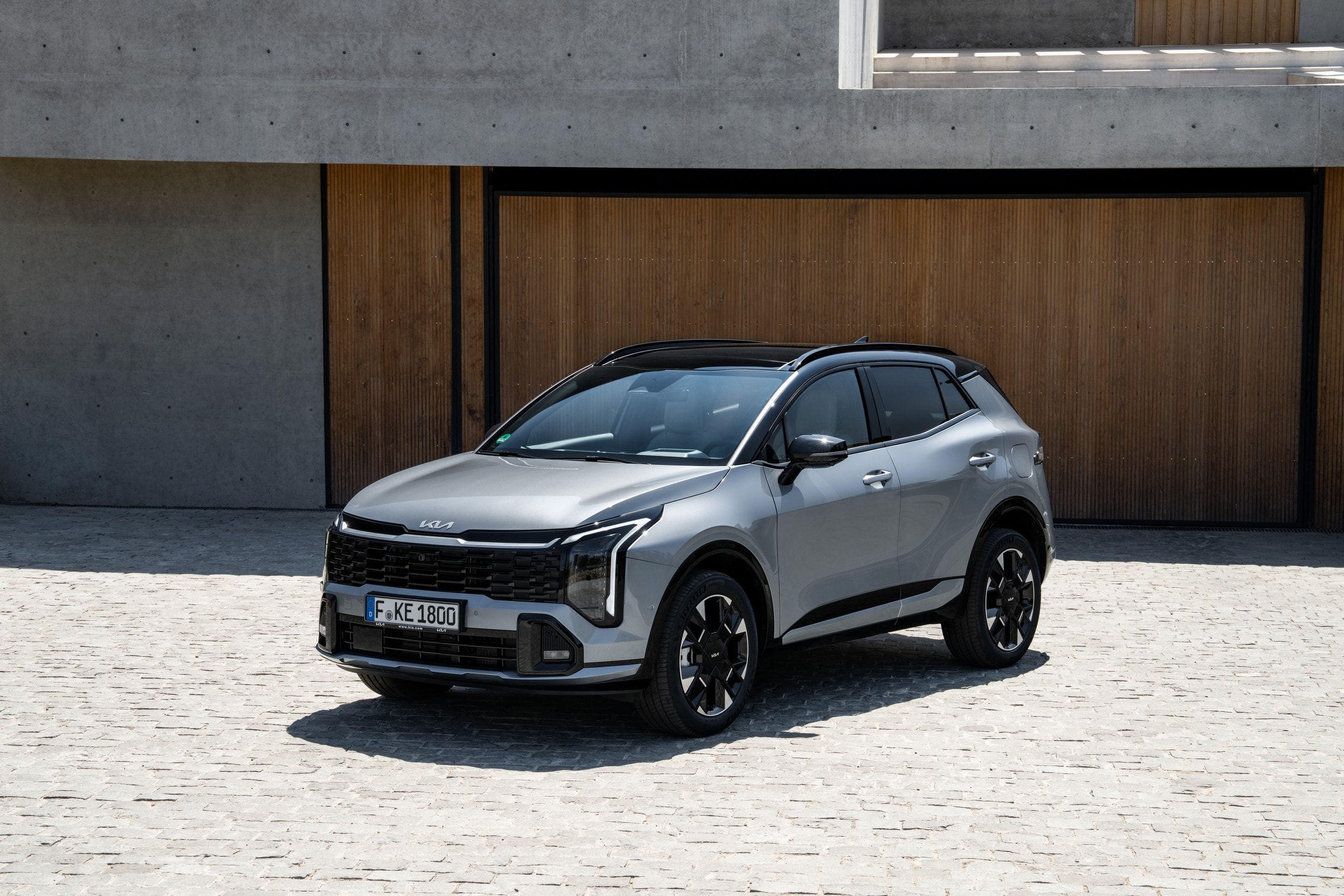
A refresh is rarely about reinventing the wheel. It’s about sharpening the edges—literally and figuratively. For the 2026 Sportage PHEV, expectations lean toward subtle aerodynamic refinements, heightened surface tension in the styling, and a front-end presence that reads as more intentional from every angle.
Look closely at the direction the Sportage family has been moving: bolder lighting signatures, more disciplined grille geometry, and proportions that remain compact without feeling cramped. The PHEV variant, in particular, may receive visual cues that signal its electrified nature without sacrificing the everyday friendliness that makes the Sportage so popular.
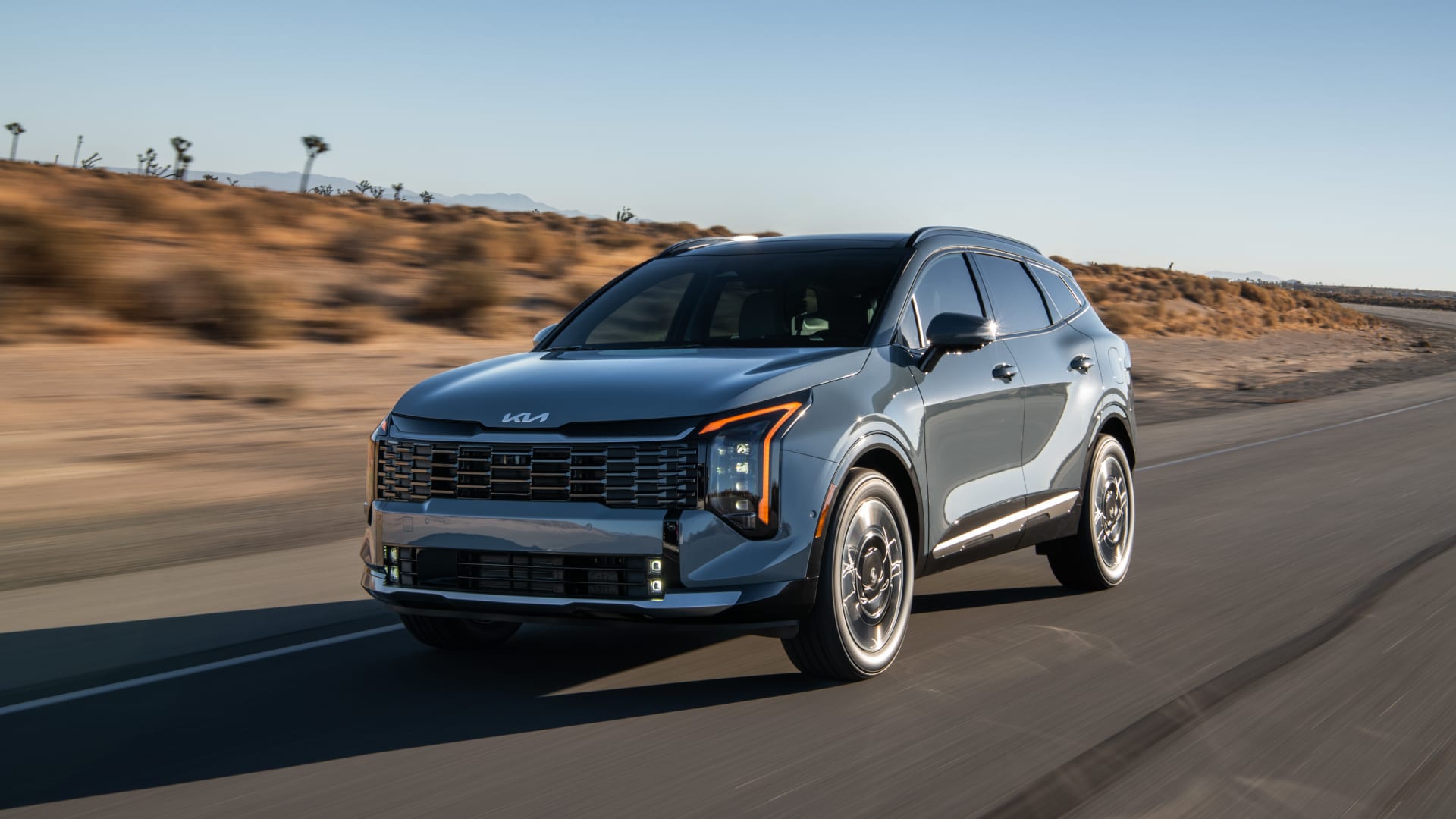
Predicted design changes could include revised headlight/DRL detailing, refreshed wheel options with a more performance-oriented stance, and updated body-color availability. Even if the changes are restrained, the overall effect can be surprisingly noticeable—like hearing a song remastered. Same tune, better clarity.
2) Powertrain Expectations: The PHEV That Feels Brighter, Not Just Bigger
Electrification is most compelling when it changes how the car acts, not merely how it’s fueled. For the 2026 Kia Sportage PHEV, the most intriguing prediction is a recalibration of torque delivery—smoother launches in everyday situations, stronger mid-range pull during overtakes, and a more natural transition between electric assistance and combustion support.
“More power” is a phrase that often shows up in headlines, but the subtler win is how the system meters that power. A well-integrated PHEV doesn’t feel like two machines stitched together. It feels like one. Expect Kia to chase that seamlessness through software refinement, improved calibration of regenerative braking, and enhanced thermal management that helps the electric components respond consistently—especially during repeated stop-and-go driving.
There’s also room for refinement in the vehicle’s electric-only range strategy. Even small adjustments to energy management—how aggressively the system harvests deceleration energy, or how it prioritizes battery usage before an anticipated speed change—can reshape the daily experience. A PHEV isn’t only about maximum range on paper. It’s about habit formation: the moment you realize you’re charging on instinct, not obligation.
3) Battery and Charging: Faster Readiness, Less Waiting
The Sportage’s practicality lives and dies by charging behavior. A mid-cycle update often brings improvements that are invisible to casual observers but decisive to real owners. For 2026, predictions center on a more supportive charging experience—possibly improved onboard charging performance, smarter scheduling, and reduced bottlenecks in power delivery.
Owners don’t merely want to plug in. They want to finish faster, even when life gets busy. Therefore, the PHEV may benefit from updated charging logic that takes into account battery temperature, grid conditions, and typical departure times.
Regenerative braking tuning is another likely area of attention. Fine-tuning can turn everyday driving into a quiet choreography: lift off the accelerator and the car slows with purposeful smoothness rather than abruptness. That matters. It’s how a hybrid becomes intuitive—like learning the cadence of a favorite musician.
4) Chassis and Ride Quality: A Softer Landing, a Sharper Response
Electrified drivetrains tend to change weight distribution and load characteristics. That means a PHEV refresh must consider suspension compliance and steering feel. The 2026 Sportage PHEV is predicted to aim for the sweet spot: a ride that remains composed over broken pavement while still offering a more immediate steering response during quick lane changes.
Expect potential recalibration of damping curves, revised bushings, and updated alignment targets. These adjustments rarely make headlines, yet they can be felt within minutes—less busyness at the wheel, less vibration transmitted into the cabin, and more confidence when the road stops cooperating.
Long sentences can be exhausting; the Sportage should be anything but. On the road, the goal is simplicity: predictable braking, smooth throttle mapping, and a composed chassis that doesn’t demand constant correction.
5) Interior Evolution: Technology That Doesn’t Feel Like a Gadget
Modern SUVs increasingly resemble rolling dashboards of digital ambition. The best ones, however, hide complexity behind a logical interface. For the 2026 Sportage PHEV, the prediction is an interior that becomes more navigational than distracting—more “driver assistant” than “driver entertainment.”
Upgrades likely focus on infotainment responsiveness, improved smartphone integration, and a more intelligible arrangement of controls. The PHEV version may also display energy-flow visuals with greater clarity: where the power is coming from, where it’s going, and how the driver’s choices influence the battery’s behavior.
Expect more refined driver information—perhaps with a better-designed instrument cluster that pairs with charging and trip-planning details. In a PHEV, information is not just convenience. It’s empowerment. It helps the driver make tiny decisions that compound into big savings.
6) Safety and Driver Assistance: Confidence as a System, Not a Feature
Mid-cycle refreshes commonly sharpen safety tech. For the 2026 Kia Sportage PHEV, predictions point to upgraded driver assistance capabilities, potentially enhanced sensor performance and improved software logic for adaptive cruise control, lane keeping, and collision mitigation.
The difference between “good” and “excellent” assistance systems is often timing—how quickly the system recognizes intent, how gradually it reacts, and whether it anticipates the driver’s next move without overstepping it. A well-calibrated suite feels like an extra layer of situational awareness rather than a nagging guardian.
In daily life, that’s what owners tend to value: less fatigue on long drives, fewer awkward interventions in traffic, and a more relaxed sense of control when conditions get messy.
7) Trims, Pricing, and the Perception Shift
Perhaps the most important prediction is the shift in perspective surrounding the PHEV itself. Historically, buyers approached plug-in hybrids with a question: “Is it worth the hassle?” The 2026 Sportage PHEV seems positioned to change the framing. Instead of asking whether charging is worth it, the conversation could become: “How soon can I start using the electric advantage?”
If the Sportage PHEV adds power and refines its experience, price increases—if they occur—may feel less like a sting and more like a bargain for coherence. The key will be how the upgrade justifies itself in real ownership metrics: lower fuel costs, smoother driving, and an overall sense that the electrified system is integrated with care.
Trims may also evolve to encourage alignment between capability and consumer intent. Buyers who want practical family transportation could see better value through configurations that maximize comfort, safety, and charging convenience rather than simply piling on performance graphics.
8) The Ownership Reality: Where the PHEV Wins in Everyday Life
The most persuasive argument for a PHEV is not a laboratory test. It’s the routine. Morning commutes. Weekend errands. School drop-offs. That is where electrification becomes tangible.
For many drivers, the Sportage’s promise will land in predictable patterns: short trips that can be handled on battery, longer road days that use the combustion engine as a confidence blanket, and charging sessions that fit into evening life. The goal is not to micromanage. It’s to let the car handle the complexity while the driver retains the pleasure of motion.
If Kia’s predicted improvements are right, the 2026 Sportage PHEV won’t just be “efficient.” It will feel thoughtful. The kind of thoughtful that reduces friction and makes the electrified transition feel almost invisible.
Conclusion: A New Kind of Sportage Confidence
The 2026 Kia Sportage PHEV—shaped by a mid-cycle refresh—doesn’t need to shout to earn attention. Its likely strengths point toward something more compelling: a repositioning of what an electrified SUV can be. Not merely a stepping stone. Not merely a compromise. A more polished perspective on how daily driving should feel—quieter when it can be, stronger when it needs to be, and smarter about the energy choices that quietly determine the experience.
Curiosity is justified. In the end, the Sportage’s greatest trick has always been making the future seem reasonable. With the 2026 PHEV, that future might finally feel effortless.