The 2025 Jeep Grand Cherokee 4xe doesn’t merely promise adventure—it tries to engineer confidence into every moment you spend away from the neatly striped confines of pavement. Off-roading has a particular tempo: sudden grade changes, erratic traction, glare bouncing off wet rock, and the long, tense stretch between “I think this is fine” and “Wow, that was close.” That’s where off-road safety features matter. They’re not just a collection of tech specs. They’re a choreography of sensing, braking, steering assistance, and power management designed to keep you moving forward—steadily, predictably, and with fewer surprises.
In the sections that follow, readers will find a full-spectrum tour of the safety systems that shape the 4xe’s off-road behavior. Expect a blend of practical explanations and scenario-driven insights: how the SUV perceives the trail, how it responds when grip evaporates, and how it helps you maintain situational awareness when visibility and traction are both compromised.
Trail Readiness Through Sensory Intelligence
Off-road safety begins with perception. The 2025 Grand Cherokee 4xe leans on a network of sensors that monitor the vehicle’s motion and its surroundings. This sensing layer is the quiet protagonist—always running in the background, continuously evaluating traction conditions and vehicle dynamics.
Modern driver-assist systems use cameras and radar to support braking and collision mitigation, but off-road environments are less cooperative than suburban streets. Loose gravel, dust clouds, and uneven surfaces can challenge typical algorithms. The result is that the 4xe’s safety logic prioritizes stability cues such as wheel speed differentials, steering angle, and yaw behavior—data points that help it infer whether the vehicle is drifting from its intended path.
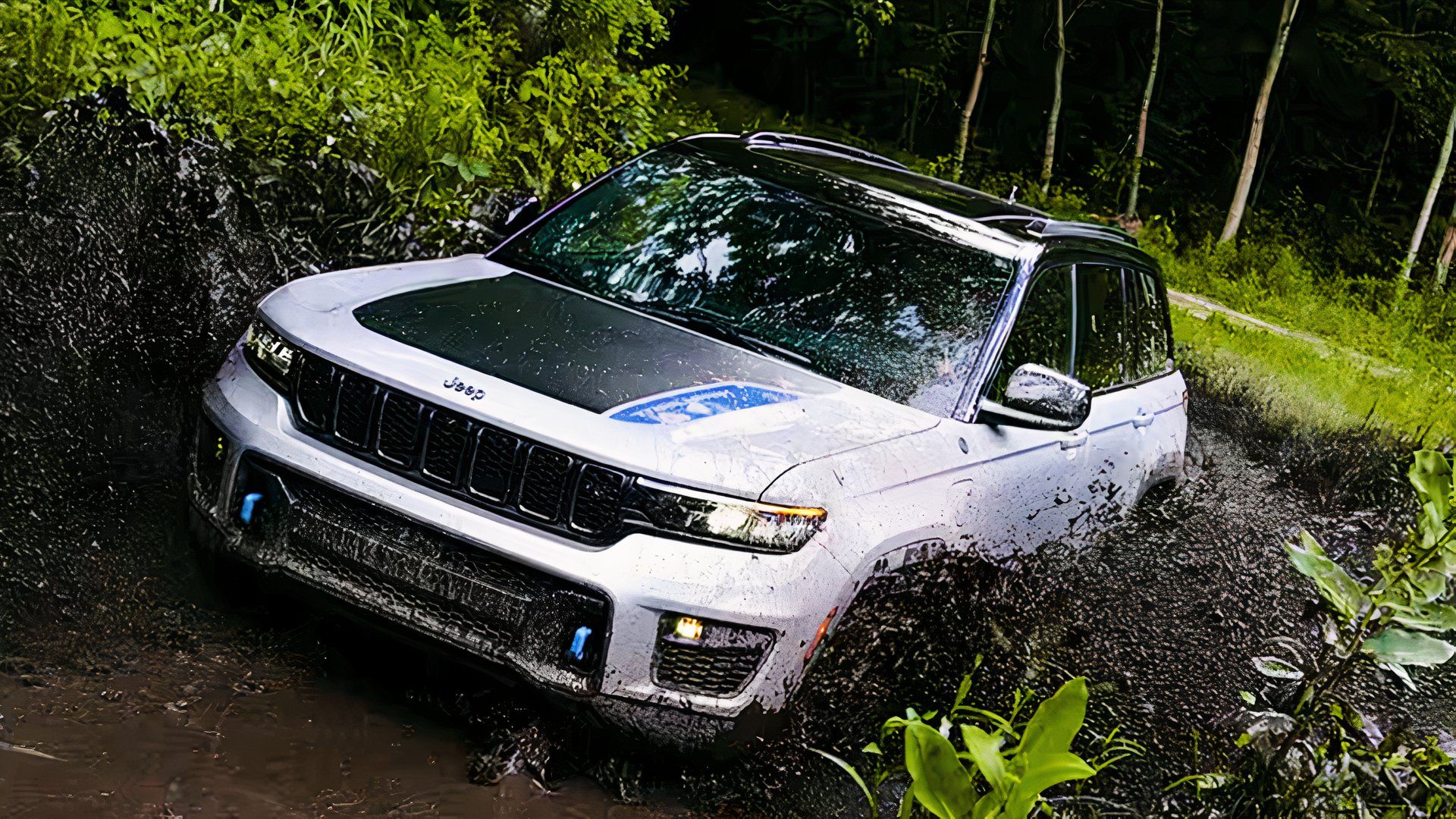
When conditions degrade, these systems work like an emergency backstop. They’re not there to replace driver judgment; they’re there to reduce the likelihood that one miscalculation becomes a cascade event.
Electronic Stability Control Designed for Uneven Reality
Stability control isn’t glamorous, but it’s foundational. On uneven terrain, the vehicle can experience abrupt changes in lateral load transfer—one wheel bites, the other slips, and the chassis responds in milliseconds. The 2025 Grand Cherokee 4xe’s electronic stability control monitors those transitions and can intervene with targeted braking and torque modulation.
What makes this especially relevant off-road is the difference between “slip you can feel” and “slip that throws you sideways.” By selectively managing wheel spin and assisting with corrective yaw moments, the system can help the vehicle regain its composure. The driver retains control, but the car gains a safety net that catches certain kinds of instability before they escalate.
Short sentence, long consequence: when traction changes too quickly, stability control bridges the gap.
Braking Systems That Think Ahead
In off-road settings, braking is rarely straightforward. Loose stones can undermine friction, wet ruts can create unpredictable deceleration, and downhill grades can turn a simple stop into a lengthy negotiation with physics. The 4xe is engineered to manage these stresses through advanced brake control strategies that coordinate with traction and stability modules.
On descents, maintaining speed is not merely about stopping distance—it’s about controlling momentum. A system that can smoothly regulate brake application helps keep the vehicle from surging or locking wheels in low-grip scenarios. That stability translates to a safer line choice, because you’re less likely to lose steering authority mid-correction.
Longer grades bring another consideration: brake heat. Off-road braking patterns can be punishing, and the vehicle’s control logic helps distribute demands so the brakes stay effective when the terrain stays hostile.
Hill Descent Assistance for Controlled Momentum
One of the most consequential off-road safety features is the vehicle’s approach to steep downhill driving. Hill Descent Assistance is designed to reduce the workload on the driver by helping maintain a steady crawl speed. Instead of requiring constant modulation of the brake pedal, the system can manage braking at individual wheels to keep the descent controlled.
Why does that matter? Because fatigue and distraction increase on long descents. The driver’s attention should remain on line selection—where the tires will land, where the rocks are, and which rut provides the cleanest path. When the vehicle can manage wheel-speed behavior automatically, the driver can devote more cognitive bandwidth to steering and obstacle avoidance.
Even a small improvement in predictability can be the difference between confidence and scrambling.
Traction Management and the Art of Not Spinning
Off-road traction isn’t binary; it’s a spectrum, shifting minute by minute. The 2025 Jeep Grand Cherokee 4xe’s traction management systems help distribute power and brake force to the wheels most capable of gripping. This reduces the tendency for wheelspin to become a runaway loop—spinning that digs holes, sheds traction further, and erodes forward momentum.
In practical terms, traction management supports safer climbing and traversing. When the vehicle can maintain usable traction, the driver can keep a steadier throttle input, which often leads to smoother suspension articulation over uneven ground.
Unexpected terrain changes are common. The safety strategy is to treat them as manageable data, not sudden surprises.
Ground Clearance and Protection as Safety Engineering
Safety isn’t only about sensors and braking. Physical design matters, too. Ground clearance and underbody protection influence whether obstacles puncture components or force you into emergency steering corrections.
While the driver may not explicitly think about it, clearance margins can prevent minor scrapes from turning into major mechanical failures mid-route. That’s a form of off-road safety that works quietly: protecting critical systems so they remain functional when you need them most.
Long-term reliability is part of safety. A trail isn’t kind to vulnerable hardware, and the 4xe is built with that reality in mind.
Visibility Aids That Reduce Off-Road “Blind Zones”
Off-roading commonly involves angles that cameras and sensors can help interpret. Tight trails, low-speed maneuvers, and backing around obstacles all amplify the risk of misjudging clearance. The Grand Cherokee 4xe includes visibility technologies—such as parking and maneuvering assistance—that help you perceive surroundings that are otherwise hidden by the vehicle’s height and body shape.
In addition to rear and side awareness, these features can assist during low-speed obstacle navigation where a single missed line can mean contact with a rock, stump, or hidden rut. The goal is simple: more awareness, fewer assumptions.
Collision Mitigation and Off-Road Adaptation
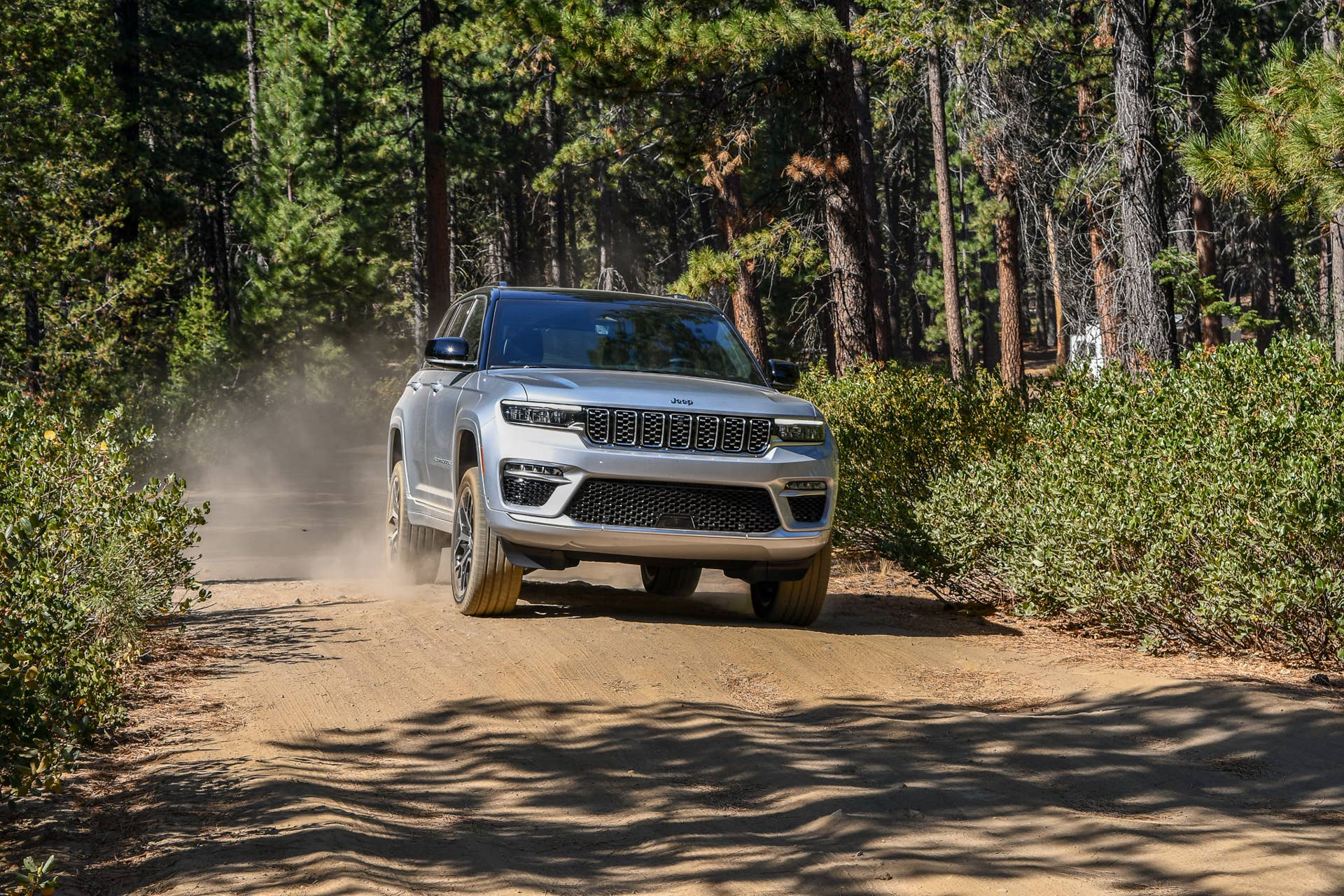
Even off-road, not every threat is a rock. Debris on blind corners, unpredictable pedestrians near trails, and sudden wildlife encounters can appear without warning. Collision mitigation technologies can support hazard avoidance by monitoring the path ahead and assisting with warnings or braking under certain conditions.
In rough terrain, the challenge is that the vehicle’s motion and surrounding environment may not resemble typical driving patterns. Still, having forward-looking awareness helps reduce reaction time. Short reaction delays matter when a situation transitions from “notice” to “impact.”
This safety layer adds another safety margin—especially valuable when trails compress visibility and time-to-decision.
Driver Support Through Intuitive Controls and Feedback
Safety is also the interface between human and machine. The 2025 Grand Cherokee 4xe emphasizes clear driver feedback for mode selection and traction behavior, so the vehicle’s off-road strategies are understandable rather than opaque.
When the driver knows what the vehicle is doing—how it’s managing torque, braking, and descent behavior—confidence rises. That confidence changes driving habits: steadier steering inputs, calmer throttle control, and fewer abrupt corrections.
In other words, safety features work best when the driver can interpret them quickly.
What Readers Should Look For During a Real Off-Road Test
If you’re evaluating the Grand Cherokee 4xe’s off-road safety package, the most meaningful “content” is the lived experience. Pay attention to how systems respond in three situations:
1) Loose downhill starts: does speed remain composed, or does the vehicle surge and demand constant braking?
2) Crossing uneven ruts: does stability control feel like a correction rather than a surprise?
3) Low-speed obstacle navigation: do visibility aids and driver feedback reduce guesswork when clearance is tight?
These scenarios reveal whether the safety features feel like a safety net—or like technology noise. The best systems maintain calm, predictable behavior even when traction behaves badly.
Conclusion: Confidence Built for the Long Way Home
The 2025 Jeep Grand Cherokee 4xe’s off-road safety features don’t just aim to prevent accidents. They aim to cultivate a calmer relationship with uncertainty—because trails are inherently unpredictable. Through stability control, coordinated braking logic, hill descent assistance, traction management, and visibility support, the SUV reduces the risk of small mistakes becoming large consequences.
Off-road safety is a tapestry. It’s sensors and algorithms, yes—but it’s also physical design, driver feedback, and the way all those elements harmonize at low speeds, on grades, and under shifting grip. The result is a vehicle that helps you press onward with fewer doubts, and that’s what makes every rough mile feel less like a gamble and more like a plan.