The Porsche Taycan Turbo GT doesn’t arrive on the track like a guest. It shows up like a verdict—clean, deliberate, and engineered to be argued with only in lap times. This is a car that wears performance the way some cars wear brand-new paint: confidently, without apology. From the first application of throttle, the narrative is clear. Traction comes in instantly. The drivetrain’s response feels less like acceleration and more like a controlled eruption—brisk, linear, and eerily composed.
And yet, the Turbo GT’s real trick isn’t speed alone. It’s the way it stays fast after the first thrill has burned off. On circuit, that means thermal discipline, brake stamina, steering clarity, and the kind of confidence you can lean on when the track narrows and the cones seem to multiply in your peripheral vision. The Taycan Turbo GT is not merely quick. It’s methodical—an electric sports sedan that behaves like a thoroughbred with a well-rehearsed routine.
What the “Track” Package Feels Like in Motion
Expect a driving experience that’s less chaotic than you might assume from a halo electric machine. The steering communicates with crisp intent; it doesn’t talk over the road, it translates it. Initial turn-in arrives with a subtle inevitability. You place the car where you want it, and the Taycan follows, tracking toward apex with minimal drama.
The throttle mapping is the first surprise. There’s still that electric immediacy—torque arriving like a lighting strike—but it’s also gated by a sense of calibration. The car doesn’t lunge; it builds. That nuance matters in corners where you’re braking, turning, and then transitioning into power. The Turbo GT blends these phases with a kind of measured audacity, so your feet can work in harmony rather than in argument.

Power Delivery: Brutal Straight-Line Energy, Surgical Cornering
On the straight, the Taycan Turbo GT feels like it’s stretching time. The surging acceleration is immediate, but it’s not just a spike—it’s an extended pull that stays coherent at high speeds. The sensation is almost mechanical, like the drivetrain has a metronome built into it, keeping your momentum steady while the scenery accelerates past with theatrical impatience.
However, the track is rarely about long, empty stretches. It’s about exits. The Turbo GT shines when you start the power sequence at the right moment. Give it too much too early and physics reminds you it’s still a car. Yet the stability control doesn’t feel intrusive; it feels anticipatory. It nudges without smothering, helping you maintain a trajectory that looks obvious only after it’s already happened.
In practice sessions—when you’re chasing consistency rather than maximum numbers—this matters. You can re-run the same line, brake the same distance, and trust that the car will interpret your inputs the way it did on the lap before. That repeatability is the difference between a fast lap and a fast weekend.
Braking Performance and Fade Resistance Under Repeated Laps
Few things test a performance machine like repeated hard braking. The Taycan Turbo GT approaches this challenge with an air of readiness. Pedal feel is substantial and reassuring, with enough firmness to let you modulate pressure precisely. The brake system doesn’t just slow the car; it helps you place it. That’s crucial for trail-braking scenarios where fractions of a second can be gained through better balance rather than harder pedal inputs.
Thermal management becomes part of the driving rhythm. After several laps, you begin to notice that the pedal doesn’t transform into something spongy or uncertain. Instead, braking remains predictable. The car continues to respond as if it’s operating from the same baseline memory—steady, calibrated, and not easily rattled by heat soak.
Even in late-session conditions, the Taycan’s composure encourages commitment. You can brake later when appropriate, but you can also brake earlier and still feel confident that your deceleration will be consistent. It’s the sort of reliability that makes every attempt less about survival and more about refinement.
Handling Dynamics: Steering Feel, Weight Transfer, and Apex Discipline
On turn-in, the Turbo GT’s steering provides a clear sense of where the front end is headed. There’s a tangible connection between your hands and the road’s texture. The car resists vagueness. It doesn’t ask you to guess. It tells you.
Weight transfer is managed with discipline. The suspension supports the tires without flattening the ride into dullness. During corner entry, the car compresses in a controlled fashion, and during exit it extends with purpose, helping maintain traction when the drivetrain demands output.
The result is apex discipline. The Taycan encourages you to aim precisely, then hold the line longer than you might in a less stable vehicle. This is where electric performance can feel either twitchy or elegant—and the Turbo GT leans decisively toward elegant. The body control is tight enough to keep your confidence intact, even when your lap pace ramps up and your braking points begin to shift.
Tire Behavior: Grip That Feels Earned, Not Forced
Track grip is never free. It’s purchased with temperature, pressure, and alignment. The Taycan Turbo GT delivers traction with an earned quality. Once the tires come online, the car moves with a satisfying sense of adherence, as if the surface and the rubber have reached an agreement.
In slower corners and transitions, you can feel the tires communicate—through subtle vibrations in the wheel and through changes in how quickly the car rotates. There’s feedback, but it isn’t noisy. It’s readable. You start to anticipate how much steering input is needed, and how long the car will stay settled before asking for a correction.
That feedback loop becomes addictive. The more laps you run, the more you calibrate your style to the car’s behavior, and the more the Taycan rewards consistency over aggression.
Regenerative Braking: Confidence Through Deceleration Strategy
Regenerative braking is more than a feature on an EV. On a track, it’s a technique. The Taycan Turbo GT allows you to harness deceleration in a way that can be integrated into corner entry. When the system is used skillfully, it sharpens your control and helps smooth the transition from braking to turn-in.
But regeneration also introduces a different kind of sensitivity: it depends on traction, battery conditions, and driver input. The best laps come from timing—knowing when to let the car slow through regen and when to rely on friction brakes for consistent, repeatable deceleration.
This is where the Turbo GT feels mature. Instead of feeling like an experiment, regeneration feels like a tool. It supports the rhythm rather than hijacking it.
Cooling, Battery Conditioning, and Sustained Performance
Electric track performance is often limited not by peak power, but by endurance. The Taycan Turbo GT addresses this with a sense of system-level seriousness. Cooling strategy isn’t merely technical; it becomes a driving sensation. You stay fast lap after lap because the car refuses to collapse into diminished output.
Battery conditioning and thermal management work quietly in the background, keeping the drivetrain ready to fire when you ask. The car feels prepared even as the session becomes physically demanding. Your confidence remains intact because the performance does not evaporate halfway through the stint.
That’s the difference between a car that looks impressive in one run and a car that performs under repetition—the kind that earns its reputation in the unglamorous middle of a track day.
Sound, Vibration, and Cabin Atmosphere
An EV can be strangely theatrical on a circuit. There’s less engine roar, but more texture—gearless acceleration, tire whisper, and wind noise shaping the soundtrack. In the Taycan Turbo GT, the cabin atmosphere feels purposeful. It’s not trying to imitate combustion. It’s trying to communicate.
You feel the performance through steering load, through brake pedal firmness, through suspension behavior at kerbs and changes in surface. The cockpit becomes a cockpit in the old sense of the word: an environment designed to keep you focused, not comforted into distraction.
As the track tightens into its late braking zones, the cabin’s steadiness helps your concentration. Short sentences come to mind during fast laps: Turn. Brake. Commit. The car’s response supports that mental cadence.
In Photographs: Color, Stance, and Track Presence
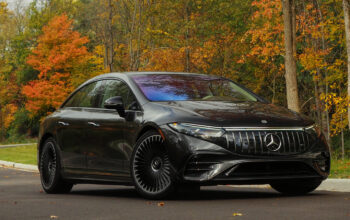
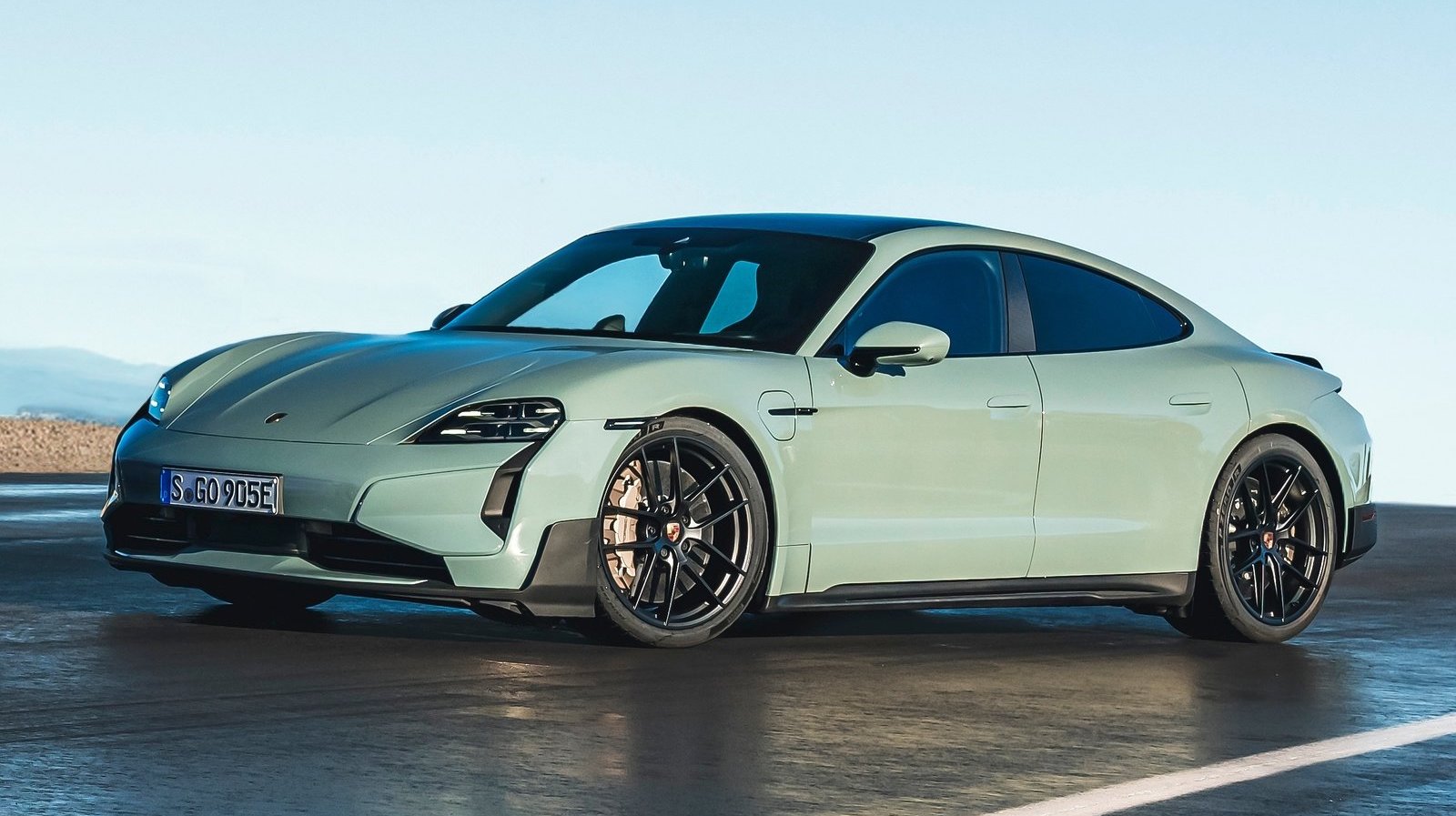
Even when stationary, the Turbo GT carries an athletic tension. Its stance suggests motion. The aerodynamic surfaces look purposeful, not ornamental, and the visual density of the design hints at the engineering behind it.
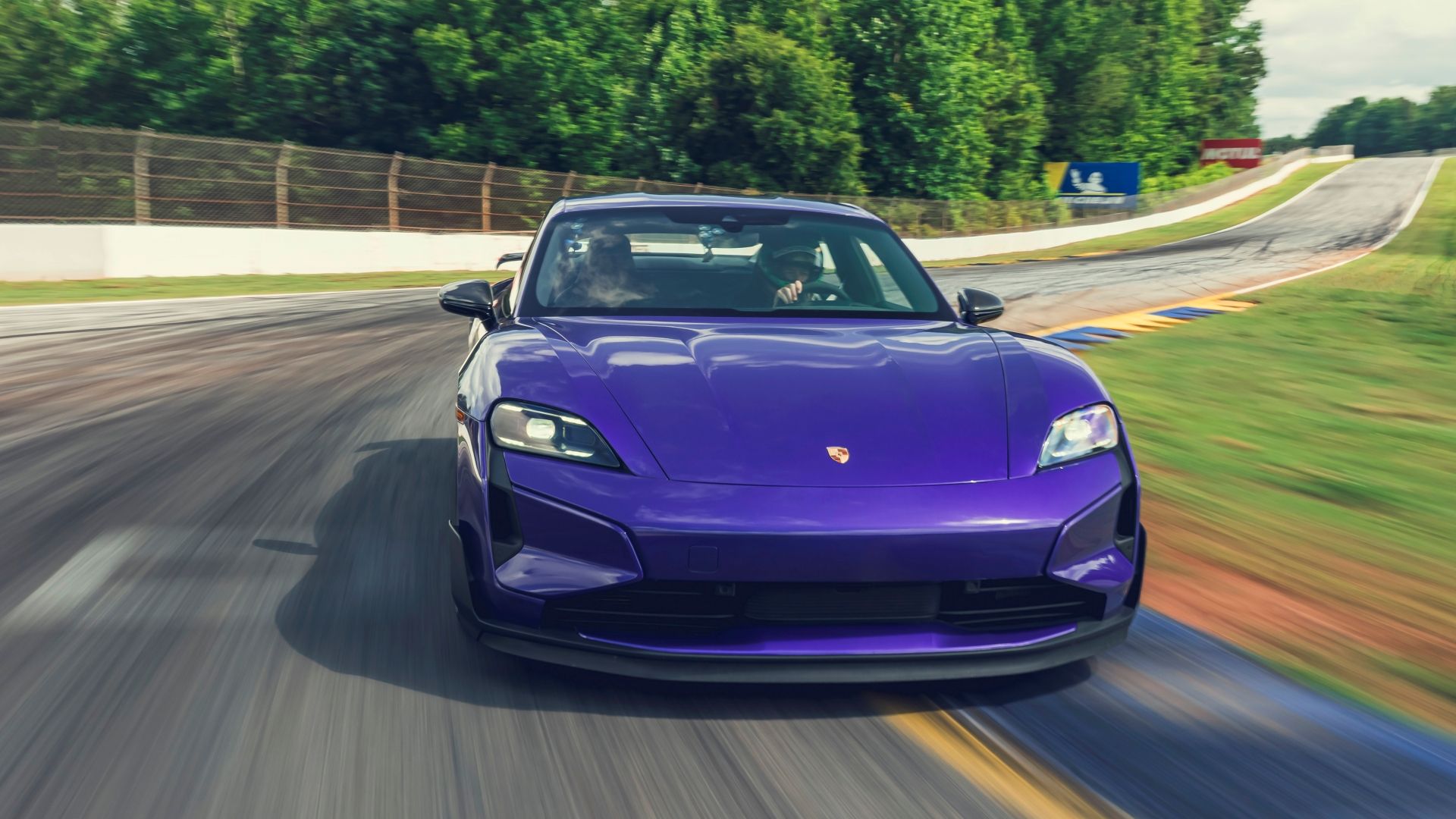
On track, the car’s presence becomes cinematic. It’s not just the speed; it’s the way it holds composure while crossing the boundaries between straight and corner. In motion, every line seems tightened—less like styling and more like momentum made visible.
Who This Track Review Is Really For
The Porsche Taycan Turbo GT is for drivers who want speed, yes, but also for those who value repeatability. It rewards careful inputs and punishes sloppy technique, but not in a vindictive way. It’s more like a good coach: firm, consistent, and willing to help you improve because it won’t change its personality lap to lap.
It’s also for enthusiasts curious about what “performance” means when combustion isn’t involved. The car proves that electric acceleration can translate into balance, braking confidence, and stable handling—without turning the driving experience into a one-trick demonstration.
Verdict: A Turbo GT That Feels Built for the Next Lap
After the heat settles and the session ends, the Taycan Turbo GT leaves a particular impression. It’s fast in a way that doesn’t demand constant recalibration. It’s confident under pressure, articulate in steering, and composed when braking is repeated. It doesn’t merely chase the spotlight. It stays disciplined.
On track, that discipline becomes the headline. The Taycan Turbo GT is a performance machine designed for rhythm, not just rupture. And when you think about it—really think about it—that may be the most impressive part of all: it doesn’t only win the moment. It prepares for what comes immediately after.