The year 2025 has a particular kind of electricity in the air—not the chaotic kind, but the quiet, intentional kind. It shows up in driveways where cars sit like promises, waiting for the next errand, the next road trip, the next season. And behind that waiting is a choice that feels deceptively simple: how to charge at home. Yet the moment you start comparing Level 2 charging and V2H, the conversation shifts. It stops being only about power delivery and becomes something broader—about energy autonomy, timing, resilience, and a new relationship with your vehicle.
If Level 1 is the cautious whisper of charging, Level 2 is the steady, confident sentence. V2H, meanwhile, is the plot twist: a framework where your EV doesn’t merely consume electricity. It can also become a negotiator with your home’s energy system—sometimes even a safeguard during outages. This guide is designed to change your perspective, then reward your curiosity with practical clarity.
Why Home Charging Feels Different in 2025
In 2025, home charging is no longer a niche concern reserved for early adopters. It’s an infrastructure decision, as real as choosing roofing materials or upgrading electrical panels. The cultural shift is subtle but profound: more people treat their EV as part of the household ecosystem. That ecosystem includes smart tariffs, solar rooftops, battery backups, and real-time energy management apps.
The result? The best “charging strategy” is not always the most wattage. It’s the most coherent. The one that matches your routine, your electricity costs, your home wiring, and your tolerance for complexity. A car that charges efficiently but unpredictably can feel like a loose thread. A plan that aligns with everyday life feels like a well-tuned instrument.
Level 2 Charging: The Reliable Backbone
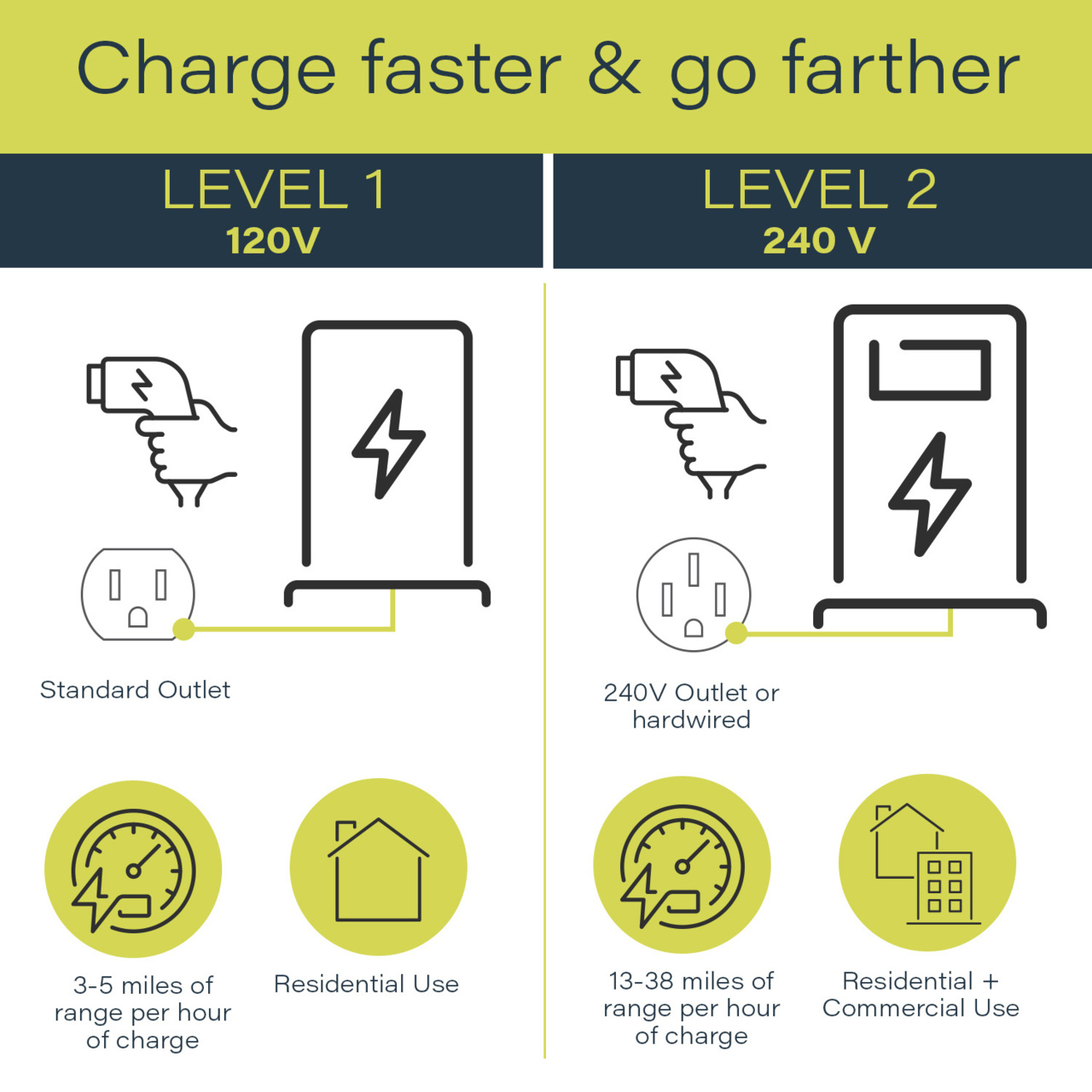
Level 2 charging is the foundation of most home charging setups for 2025 EVs. It typically uses a 240V supply, delivering far more power than standard outlets. The experience is familiar and reassuring: you plug in, the car negotiates the right draw, and charging happens with minimal drama.
Think of Level 2 as the “daily driver” of EV power. It’s well-suited for overnight charging, quick top-ups, and consistent readiness. If your schedule is mostly predictable—commutes, school runs, errands—Level 2 tends to be the most straightforward answer.
Key benefits of Level 2:
- Speed without complexity: Faster than Level 1, usually fast enough for typical daily needs.
- Convenience: Most drivers can charge every night and wake up full.
- Scalability: Works whether you have a single EV or plan to add another later.
Still, “Level 2” is not one monolithic product. Charging speed depends on the EV’s onboard charger and the wallbox’s output. Install quality also matters: wire gauge, circuit design, and proper protection devices can quietly determine how effectively your system performs.

V2H: When Your EV Becomes Home Infrastructure
V2H (Vehicle-to-Home) reframes charging in a way that sounds almost cinematic: the EV is no longer just a tank receiving fuel. It becomes a power source capable of feeding your home under certain conditions.
In practice, V2H is built around compatibility between your vehicle, an approved bidirectional charger, and the home energy system—often involving energy management software, and sometimes solar generation. The appeal lies in optionality. Instead of viewing outages and peak-hour costs as inevitabilities, V2H offers a lever you can pull.
What V2H can change:
- Outage resilience: Some setups can provide power during grid interruptions (subject to system design and local requirements).
- Energy shifting: Power can be directed based on timing, demand, and battery state of charge.
- Solar harmony: Pairing V2H with rooftop solar can help maximize self-consumption and reduce export reliance.
But it’s not a free-for-all. V2H requires thoughtful configuration and a clear understanding of constraints—battery depletion targets, allowable output ranges, and the behavior of your home’s electrical panel and critical loads.
Level 2 vs V2H: The Decision Framework That Actually Works
The most useful way to compare Level 2 and V2H is to ask two questions: What do you want to optimize? and How much complexity are you willing to host?
Choose Level 2 if you want:
- Predictable daily charging with minimal operational overhead.
- A proven, widely supported home charging path.
- Lower upfront complexity than bidirectional systems.
Choose V2H if you want:
- Your EV to contribute to backup power strategy or peak-demand management.
- Integration with solar or a home energy management workflow.
- A system designed for longer-term energy autonomy, not just daily convenience.
The tipping point often isn’t horsepower. It’s lifestyle. If your days are scheduled and you just want reliability, Level 2 is the cleanest promise. If you’re motivated by resilience, self-reliance, or smart energy orchestration, V2H becomes compelling.
Home Electrical Considerations: The Unseen Gatekeepers
Before enthusiasm turns into installation, your electrical environment needs to be examined. A Level 2 charger—and especially any bidirectional or V2H configuration—depends on safe circuit design. Panel capacity, existing loads, grounding, and protection devices all matter.
Some homes are ready with only minor upgrades. Others require panel updates, additional circuits, or load management solutions. Even the routing of cables can become a quiet constraint. A thoughtful installer will treat these as design inputs, not afterthoughts.
Common factors to evaluate:
- Electrical panel capacity: Can it support additional sustained load safely?
- Wiring and circuit sizing: Adequate wire gauge and breaker selection.
- Load management: Prevents unwanted demand spikes.
- Permit and code compliance: Local rules determine acceptable configurations.
Speed, Cost, and Timing: How to Think Beyond the Plug
Charging performance isn’t only about kilowatts. It’s also about timing and electricity pricing. In 2025, many regions use time-of-use (TOU) rates. That means “when you charge” can matter as much as “how much you charge.”
Level 2 charging shines when you charge during lower-cost windows. A properly configured charger can make these decisions easier. V2H adds another layer: energy can sometimes be routed strategically, drawing from the EV when it’s favorable and recharging when it’s economical.
Yet curiosity should come with realism. V2H may reduce reliance on the grid during certain periods, but it doesn’t erase electricity costs. It changes the pattern—sometimes dramatically, sometimes modestly—depending on your rate structure and system design.
Battery Care and Real-World Habits
There’s a misconception that home charging is simply “set it and forget it.” In reality, EVs respond to user patterns. The safest, most longevity-friendly approach usually involves charging to appropriate levels for daily needs rather than always topping to maximum.
For Level 2, many drivers choose a daily target that avoids unnecessary cycling. For V2H, the philosophy becomes more nuanced. Powering the home requires energy budgeting: you balance comfort now against readiness later.
The best strategy tends to be routine-driven. Establish a predictable charge window, maintain a reasonable daily charge goal, and only shift deeper reserves when you truly need the extra power.
Compatibility and Future-Proofing: The Curiosity Tax
Every EV ecosystem has its own handshake language. V2H especially depends on compatibility between the vehicle, charger, inverter interface (where applicable), and home energy system. Before you commit, validate what your exact model supports and what your region requires.
Future-proofing means thinking about upgrades. If you plan to add solar, battery storage, or smart energy management, your home wiring and panel design should support that trajectory. A well-designed Level 2 installation can become an excellent staging area for more advanced capabilities later.
A Practical Path: How to Decide This Year
Imagine standing at the edge of your garage. The car is parked. The future is not hypothetical—it’s wiring, configuration, and thoughtful choices.
If your primary goal is to reliably meet daily driving needs with minimal fuss, start with a high-quality Level 2 charger installation. Prioritize safety, correct circuit sizing, and smart scheduling features.
If your home has solar potential, if outages worry you, or if you want an energy system that can flex with demand, explore V2H as a broader upgrade. Ensure compatibility and plan for integration with your home’s electrical design. The most impressive V2H experiences feel less like “backup power” and more like a coordinated energy duet.
Closing Thoughts: A Shift in Perspective
Charging at home in 2025 is no longer just about replenishing a battery. It’s about shaping a relationship—between your vehicle, your household, and the grid’s rhythm. Level 2 offers dependable momentum, a steady cadence that turns plug-in time into morning certainty. V2H invites a different mindset: the idea that your EV can be more than a consumer, more than a passenger on the power grid.
Choose the path that matches your life. Then build it carefully. The best home charging setup doesn’t just make the next drive easy—it makes the next year feel more controllable, more resilient, and quietly future-ready.