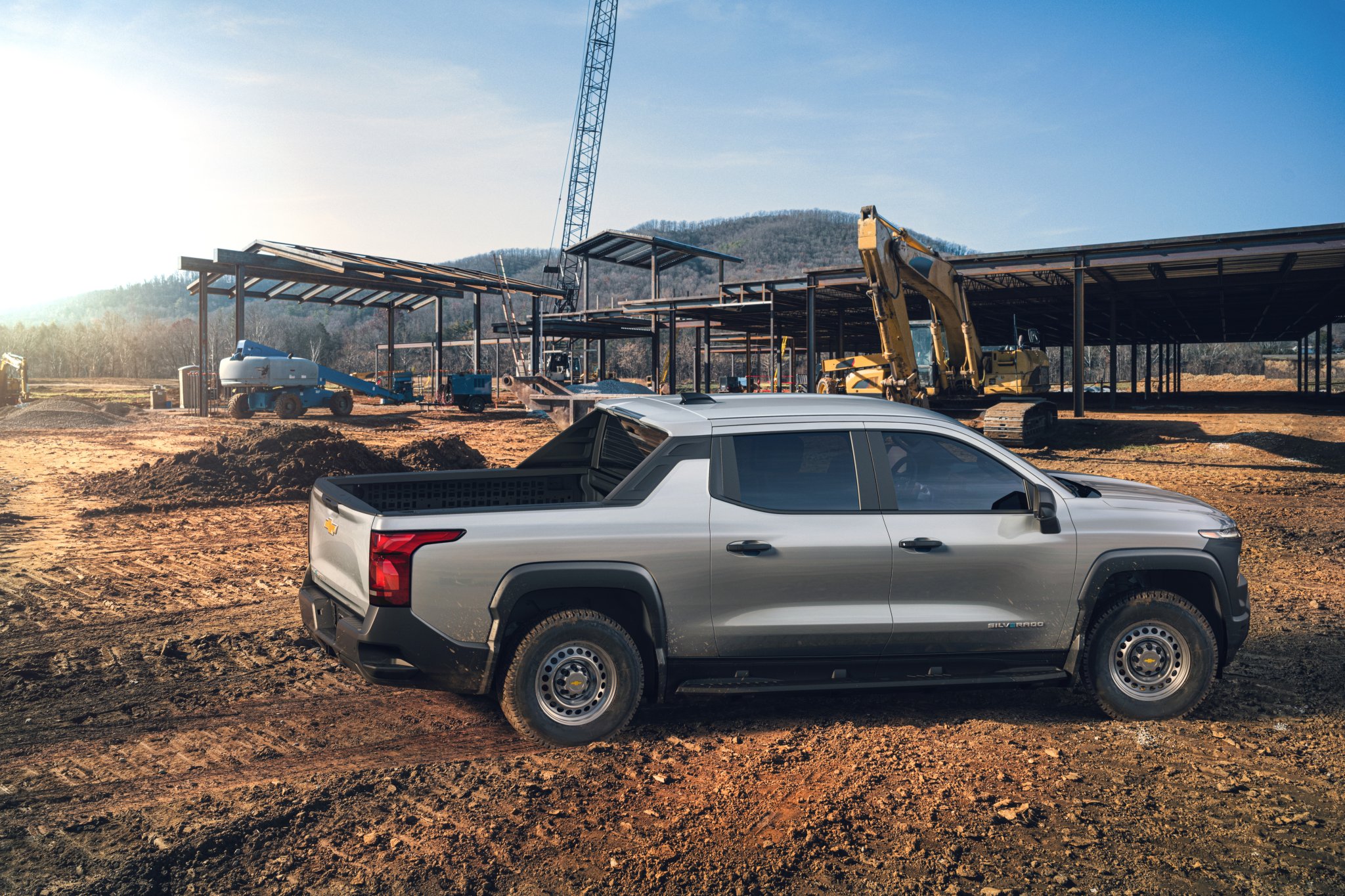
The Chevrolet Silverado EV arrives with the kind of promise that makes people look twice: a full-size electric workhorse that’s meant to earn its keep, not just pose for photographs. Yet the lineup invites an immediate question. Do you buy it as a Work Truck—built for daily hauling, loading docks, and utilitarian repetition—or do you step up to the RST, where performance becomes part of the conversation? This review frames that choice in practical, driver-facing terms. It’s not only about speed and spec sheets. It’s about how the truck feels when the day is long, the roads are rough, and the tasks don’t care whether the powertrain is diesel, gas, or electrons.
To keep things grounded, think of the Work Truck as the “infrastructure” version: straightforward, durability-minded, and optimized for fleet rhythms. The RST is the “expression” version: still capable, but flavored with the kind of enthusiast-aware hardware that turns commutes into events and empty lots into staging areas for bigger plans. Between them lies the same Silverado EV core—electric torque, modern control systems, and a chassis that’s designed to carry real responsibility.
Design Philosophy: Tool Versus Trophy
The first distinction isn’t mechanical. It’s philosophical. The Work Truck wears its purpose close to the surface. The styling cues tend toward clarity—less visual noise, more functional presence. It’s the sort of design that looks equally at home in a contractor’s driveway or a warehouse bay.
The RST, by contrast, leans into a more vivid silhouette. It reads as an EV that wants to be noticed at the intersection of work and recreation. That doesn’t mean it forgets its roots. Instead, it broadens the Silverado EV identity: the same utility, but with a more flamboyant personality in the details.
Cabin Atmosphere: Everyday Usability Meets Upgrade Urgency
A Work Truck cabin should be legible at a glance—controls within reach, displays calibrated for rapid scanning, and surfaces that won’t punish long shifts. The EV layout helps here. Instant-on readiness reduces the “preflight” ritual that older powertrains demanded. Short sentences matter in this context: hop in, shift, go.
The RST cabin tends to feel more immersive. The difference is subtle at first—materials, ambiance, and how the interface communicates performance readiness. Some drivers will notice it when they start the truck and feel a more deliberate kind of anticipation in the steering and pedal response mapping. The RST often feels like it’s tuned for the moments when you’re not just commuting—you’re engaged.
Power Delivery: Electric Torque Without the Guesswork
Electric propulsion brings a shared advantage across both trims: torque arrives immediately. That means hauling and merging become less about momentum management and more about traction, tires, and the driver’s foot discipline. Acceleration isn’t merely “fast.” It’s continuous—less drama, more authority.
Where the trims can diverge is the overall calibration and the emphasis of the driving modes. The Work Truck is typically calibrated to prioritize steadiness and predictable response. The RST is often tuned to highlight performance cues: sharper throttle interpretation, more assertive acceleration characteristics, and sometimes a more rewarding sense of linear pull.
In real work scenarios, the difference is less “which is faster” and more “which feels more controllable under load.” A contractor pulling equipment values composure. A driver seeking thrills values immediacy. Both want confidence, but they define it differently.
Range and Charging Behavior: Planning for Real-Life Schedules
Range matters, but so does how range is managed. A Work Truck is the sort of vehicle that lives inside a predictable loop—job site to job site, often returning to a depot. In that environment, the best range is the one you don’t think about. Charging habits become the deciding variable: overnight replenishment, quick top-ups, and route-aware planning.
The RST can still be a pragmatic choice, but its use profile may be more varied. Weekend trips, longer detours, and “one more errand” moments can extend charging needs beyond the comfort zone of strict dispatch schedules. The RST owner may find themselves thinking in terms of contingency. Not because the truck can’t do it, but because the truck invites spontaneity.
Towing and Hauling: Capability Meets Compliance
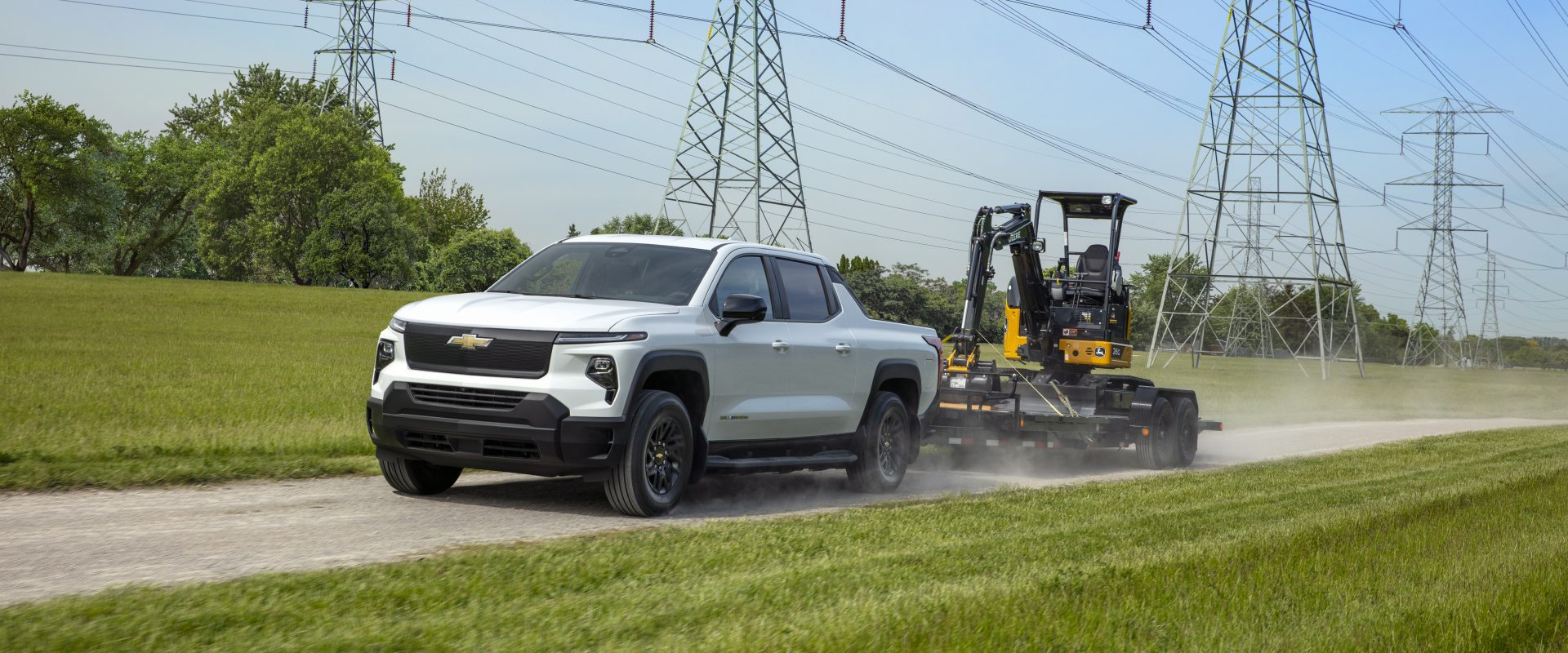
Work doesn’t politely wait for perfect conditions. Payload placement, trailer dynamics, and brake response become the real test. Electric torque is useful, but hauling competence also depends on thermal management, stability controls, and how the drivetrain moderates output when conditions change.
In the Work Truck configuration, the emphasis tends to be on doing the job without theatrics. Stability and control systems are there to help prevent the truck from becoming a moving physics experiment. It’s a calm approach to a chaotic world.
The RST, however, asks a more nuanced question: can performance tuning coexist with serious towing? In most driving realities, yes—because towing isn’t only about acceleration. It’s about composure when speed drops, when grades appear, and when wind starts negotiating for your steering.
Suspension and Ride Character: The Difference Between Comfort and Control
For many buyers, the ride isn’t an aesthetic preference—it’s a productivity factor. A Work Truck spends time on rough pavement, construction site access roads, and patched asphalt that turns potholes into surprise events. A stable suspension tune can reduce fatigue. It can keep drivers confident over time.
The RST may offer a firmer or more performance-oriented demeanor. Sometimes that’s felt as sharper responses around corners. Sometimes it’s felt as a more deliberate sense of road feedback. The trade-off is often fine-grained: more engagement, potentially less “float.” The best choice depends on where the truck spends its life—cautious precision on imperfect roads, or spirited play when the environment allows.
Technology and Driver Assistance: When Features Become Tools
Electric trucks are more than powertrains now; they’re computing platforms with wheels. For the Work Truck, technology needs to be utilitarian. Route planning, vehicle monitoring, and driver-assist systems should reduce stress rather than add it. In day-to-day operation, clarity wins over complexity.
The RST often adds a layer of driver-inviting interaction. Features can feel more “alive,” with menus that seem designed for exploration. Even a small difference—like how quickly certain settings are accessible—can change how often a driver actually uses the capabilities.
Ultimately, the question is not whether the truck has technology. The question is whether that technology respects the driver’s time.
Bed Use and Work Setup: From Toolboxes to Weekend Gear
Truck buyers don’t buy a bed as a feature—they buy it as a system. A Work Truck tends to be built for straightforward loading: tool organization, equipment transport, and the daily scuffs that come with honest labor. That utility extends into how owners outfit the truck: rails, tie-down strategies, and storage methods that reduce clutter.
The RST still supports bed use, but the surrounding context can change. It might carry camping equipment, outdoor gear, and weekend cargo with the same seriousness that a work truck carries tools. The difference lies in how often the truck is used for different “modes of life.”
Cost of Ownership Mindset: Fleets, Personal Drivers, and the Break-Even Question
Buying a Work Truck often involves forecasting. How many miles per week? What are the typical routes? Is home charging available, or is depot charging the norm? That forecasting shapes the break-even narrative—electricity pricing, maintenance expectations, and downtime minimization.
The RST purchase can still be financially rational, but the calculus may be more blended. An RST owner may weigh not only operating cost but also enjoyment value—how much the vehicle improves daily driving satisfaction. The break-even question becomes less purely spreadsheet-based and more emotional with a spreadsheet appendix.
Real-World Fit: Choosing the Trim That Matches the Life
If your workday includes constant starts and stops, tool-heavy loading, and a schedule that rarely tolerates surprises, the Work Truck is the more obvious fit. It’s the vehicle for people who measure value by completion rates. You want an EV that behaves like a seasoned partner: reliable, predictable, and ready.
If your life includes projects on weekdays and open roads on weekends—or if your job rewards quick responsiveness and confident handling—the RST can feel like the more compelling bargain. It’s the Silverado EV that doesn’t just carry responsibility; it carries enthusiasm.

Final Verdict: Work Truck for Purpose, RST for Personality
Choosing between the Silverado EV Work Truck and the RST is essentially choosing between two rhythms. The Work Truck is built around duty—practicality, predictability, and the steady confidence needed to finish jobs. The RST is built around duality—utility with performance flair, confidence with a slightly more celebratory edge.
Whichever trim you choose, the electric foundation reshapes the experience in the same fundamental way: instant response, modern control, and a sense that daily driving can be more efficient without feeling stripped of capability. The deciding factor is what you do with that capability. If your life is a checklist, the Work Truck reads like a reliable work tool. If your life is both labor and liberation, the RST becomes the truck that turns every errand into momentum.