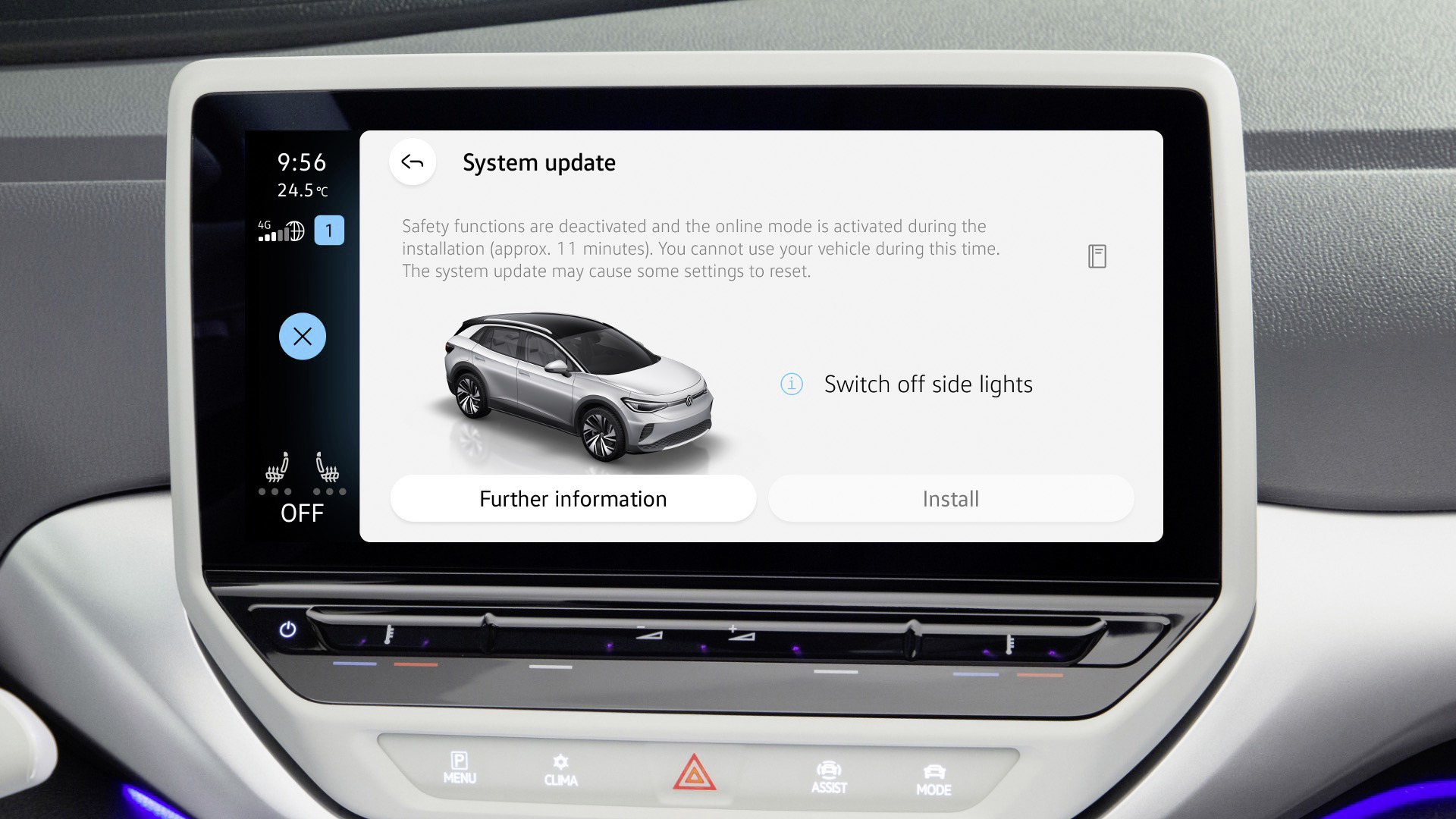
Has your Volkswagen ID.4 ever felt like it was thinking a half-step ahead of you—then suddenly, awkwardly, lost the plot? It’s a playful question, but the stakes are real: propulsion, drivability, and driver confidence. When software becomes the nervous system of a modern EV, a glitch isn’t just a minor inconvenience. It can turn everyday routines—merging onto a highway, pulling out of a parking lot—into a small, worrisome quest for reassurance.
So, is the Volkswagen ID.4 software update actually fixed? The answer is less “yes or no” and more “which problem, which build, and which update?” Because software issues don’t all behave the same way. Some are cosmetic—annoying, not dangerous. Others can affect core vehicle functions. And once the idea of an OTA (over-the-air) fix enters the conversation, a new challenge appears: the idea of waiting, verifying, and ensuring the update truly lands where it should.
Why the ID.4 Software Matters More Than You’d Expect
Unlike cars of the past, where mechanical systems mostly called the shots, the ID.4 runs a symphony of electronic control units. Infotainment screens, driver assistance features, charging logic, and powertrain coordination all communicate through software. That means the experience of ownership can change dramatically based on firmware versions.
Here’s the twist: software doesn’t wear out in the traditional sense. It evolves. Features can improve. Bugs can surface. And sometimes, a fix for one scenario may reveal—or inadvertently fail to address—another edge case.
In other words, “software update” isn’t a monolithic phrase. It’s a chain of code adjustments, testing gates, and integration work. And for drivers, the practical question becomes immediate: will the next update resolve the specific symptoms that started the concern?
The Challenge: When “Fixed” Depends on the Right Version
Imagine you’re given a medication labeled “relief,” but the relief only works for certain symptoms. Software updates can behave similarly. Some issues affect particular production ranges, some appear only with certain phone pairings or network conditions, and some may be triggered by specific driving patterns.
This is where the potential challenge grows teeth. A driver may receive an OTA notification, install it, and still feel uneasy—because the problem that prompted the update isn’t always eliminated in every case. The update may be staged, region-dependent, or delivered in increments.
Therefore, the best mindset is investigative, not fatalistic. Compare firmware statuses. Observe symptoms before and after. If a prior issue was severe—especially anything tied to propulsion or unexpected performance—verification matters.
Loss of Propulsion: The Scenario That Changes Everything
Among software concerns, the ones that intersect with propulsion are the most serious. Propulsion is not a “nice-to-have” feature. It’s the boundary between a normal drive and a sudden, unnerving interruption.
Reports of propulsion-related problems tend to be particularly alarming because they disrupt the fundamental promise of an EV: predictable response. Even if a vehicle doesn’t fully shut down, reduced or lost propulsion can change how you brake, accelerate, and plan maneuvers.
When an update is described as the corrective remedy, drivers naturally want confidence that the underlying logic has been patched—not merely masked by a temporary workaround. That’s why official software fixes are usually accompanied by clear guidance on what will be improved and how the issue should no longer manifest under the previously affected conditions.
OTA vs. Dealer Updates: Two Paths, One Goal
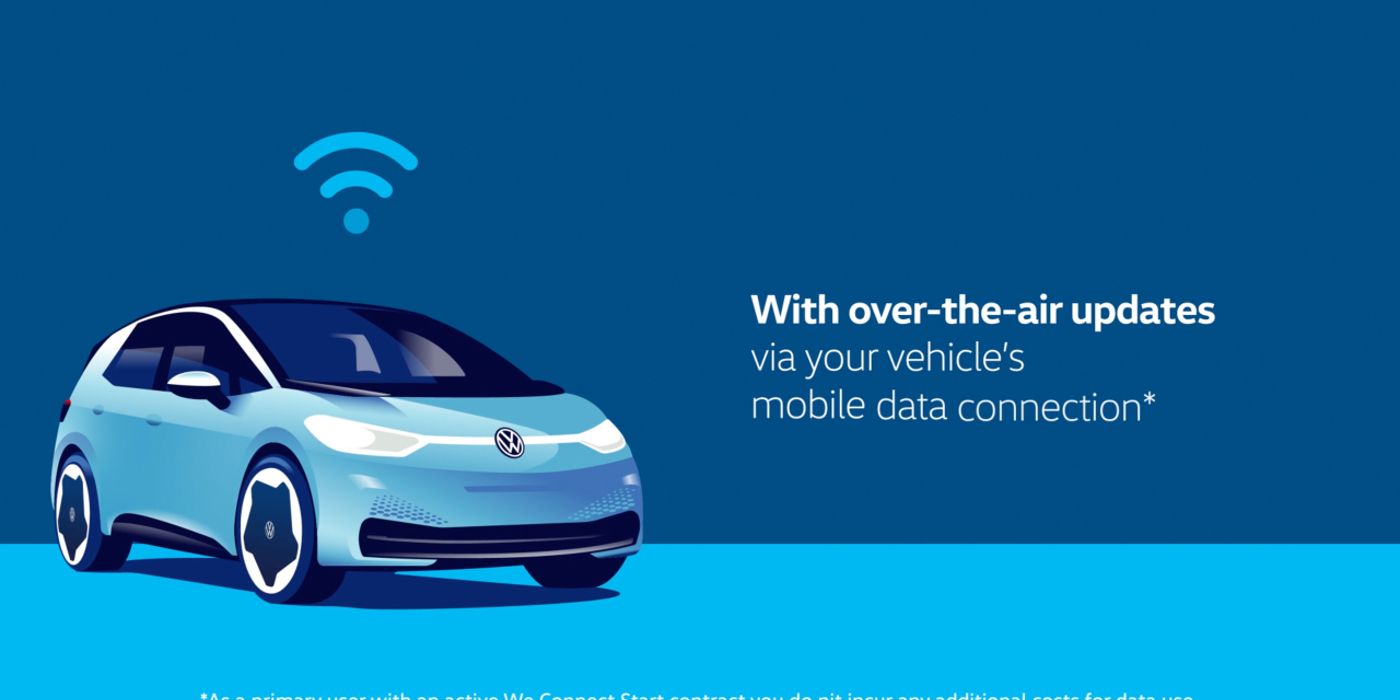
Volkswagen ID.4 owners often encounter a fork in the road: wait for an over-the-air update or schedule service for an updated calibration. OTA updates can be convenient, quick, and elegant—like receiving a digital tune-up without leaving home.
Yet convenience carries risk if the update is incomplete, delayed, or not compatible with certain configurations. Dealer-based updates may take longer, but they can offer a more controlled environment. Technicians can validate version changes and run targeted diagnostics.
Neither path is inherently “better” for every situation. The best choice depends on what’s happening inside the vehicle right now, and whether the issue is urgent, persistent, or intermittent.
How to Tell Whether Your ID.4 Is “Actually Fixed”
Start with evidence, not vibes. After a software installation, watch for specific improvements tied to the original symptoms. Keep it simple. Long sentences can blur; short sentences help you notice patterns.
Here’s a practical approach:
1) Note the symptom pattern. Was it frequent or rare? Did it happen during certain driving conditions—low battery, rapid acceleration, after a reboot, after charging?
2) Confirm the firmware version. Software fixes are version-specific. If your ID.4 didn’t truly move to the corrected release, the issue might continue.
3) Observe for a reasonable sample window. A single trip might not reproduce the bug. Give it time to run its course—carefully.
4) Pay attention to driver-facing notifications. Warning messages and status indicators can hint whether the underlying systems are behaving as expected.
And if anything still feels off—especially anything related to power delivery—treat that as a signal. A “maybe it’s fine” approach is how small doubts become bigger problems.
What Happens if You Still See Symptoms?
If the software update doesn’t extinguish the problem, the next stage becomes triage. That doesn’t mean panic. It means escalation—calmly, systematically, and without delay.
First, document what you experience. Then, contact the appropriate channel for verification. If the issue was severe enough to draw recall-level attention, expect structured remedies and tracking.
In high-stakes scenarios, it’s better to be thorough than fast. Thoroughness can feel slower, but it often prevents repeated visits, wasted time, and lingering uncertainty.
Preventing New Issues: Charging, Connectivity, and Everyday Habits
Software and vehicle behavior don’t live in a vacuum. Connectivity can influence how the vehicle communicates, while charging conditions can stress different subsystems. The goal isn’t to micromanage. The goal is to reduce avoidable variables.
Some drivers find that stable connectivity and consistent charging practices reduce the odds of weird software-adjacent behavior. It’s not magic. It’s risk management. And risk management is what turns “software update anxiety” into “ownership confidence.”
The Bottom Line: Is It Fixed?
So, is the Volkswagen ID.4 software update fixed? In many cases, the corrective release is designed to address the problematic behavior—particularly the concerns that intersect with propulsion. But the real-world answer hinges on the specific update you received, the version installed on your vehicle, and whether your ID.4 environment matches the scenarios the fix was meant to cover.
The playful question remains, but with sharper clarity: is your ID.4 truly sorted, or is it just “quietly waiting” for the rest of the solution? With a careful check of versions, attentive observation, and prompt follow-up if symptoms persist, the uncertainty can shrink dramatically.
Outro: Keep the Confidence, Don’t Ignore the Signals
Modern EV ownership is wonderfully advanced—and occasionally delightfully strange. Software can transform an experience from frustrating to fluent. It can also remind drivers that a car is now a rolling computer, not merely a machine.
If you’re waiting on an update, don’t rush to assume the problem is gone. Verify, observe, and stay ready to escalate if propulsion-related concerns—or other key symptoms—linger. Confidence isn’t something you hope for. It’s something you confirm.